
Sharia 2025: Imminent Danger for Women in the West: Revealing Dossier 2025. Legislative Debates and Restrictions in the U.S. in 2025.
Factors Affecting Women in Islamic Culture
Islamic culture is diverse and varies across countries, religious interpretations and local contexts. However, Muslim women face challenges influenced by religious, cultural, legal and social factors. These include debates about rights, oppressions and advancements, with an emphasis that many oppressive practices are attributed more to cultural traditions than to strict interpretations of Islam. pluralism.org
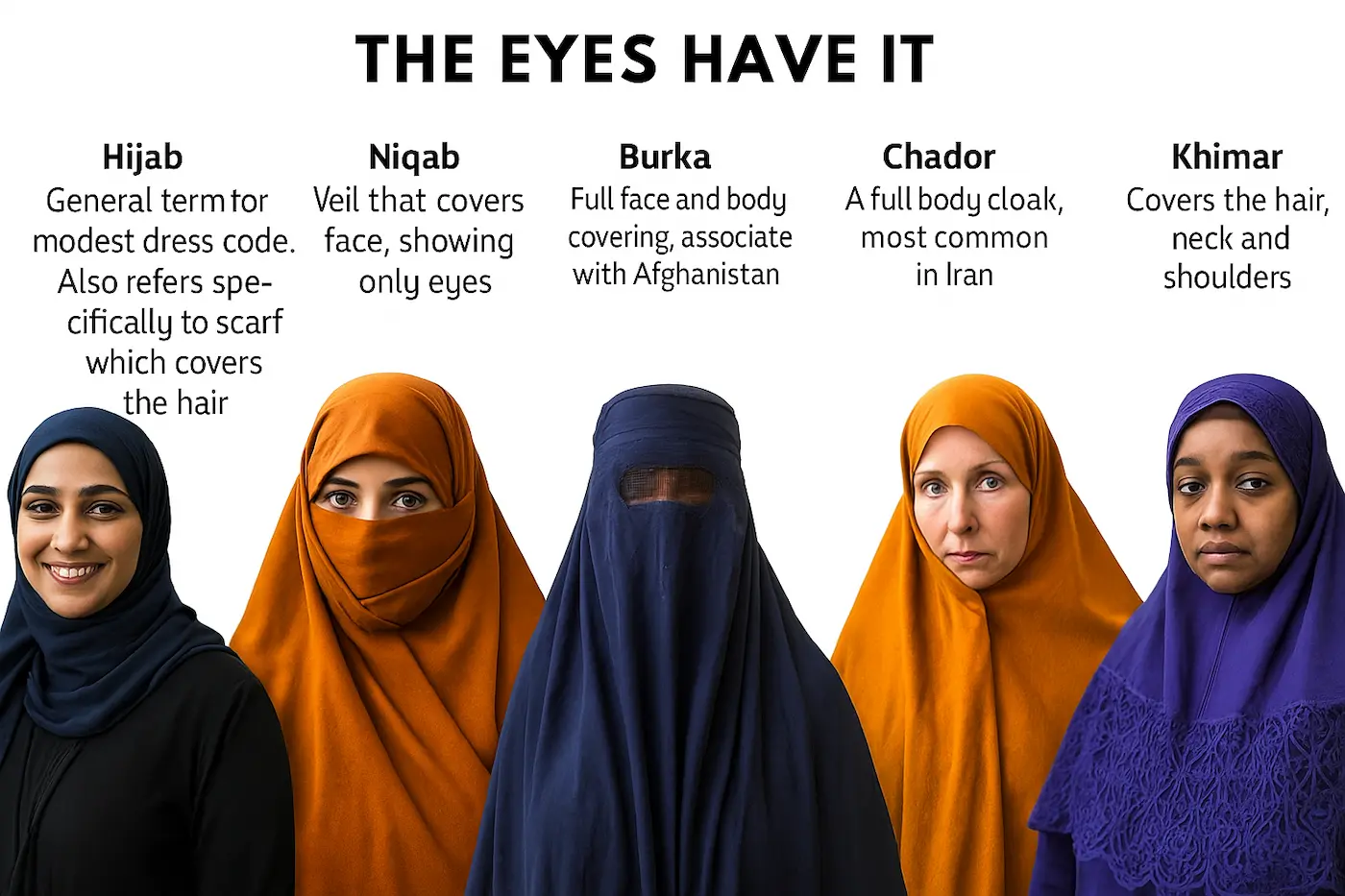
Face Veils (Burqa, Niqab, Hijab, Chador, Khimar) in the West in 2025: Debates, Laws and Culture ShockIn the West, Islamic veils such as the burqa (covers the entire body and face with mesh), niqab (covers face except eyes), hijab (covers hair and neck), chador (full cloak in Iran) and khimar (long veil that covers chest) generate intense debates on religious freedom, security, feminism and multiculturalism. en.wikipedia.org
In 2025, with the rise of right-wing parties in Europe and the U.S., restrictions have intensified over concerns of immigration and Islamophobia, seen as “freedom in disguise.” alhakam.org
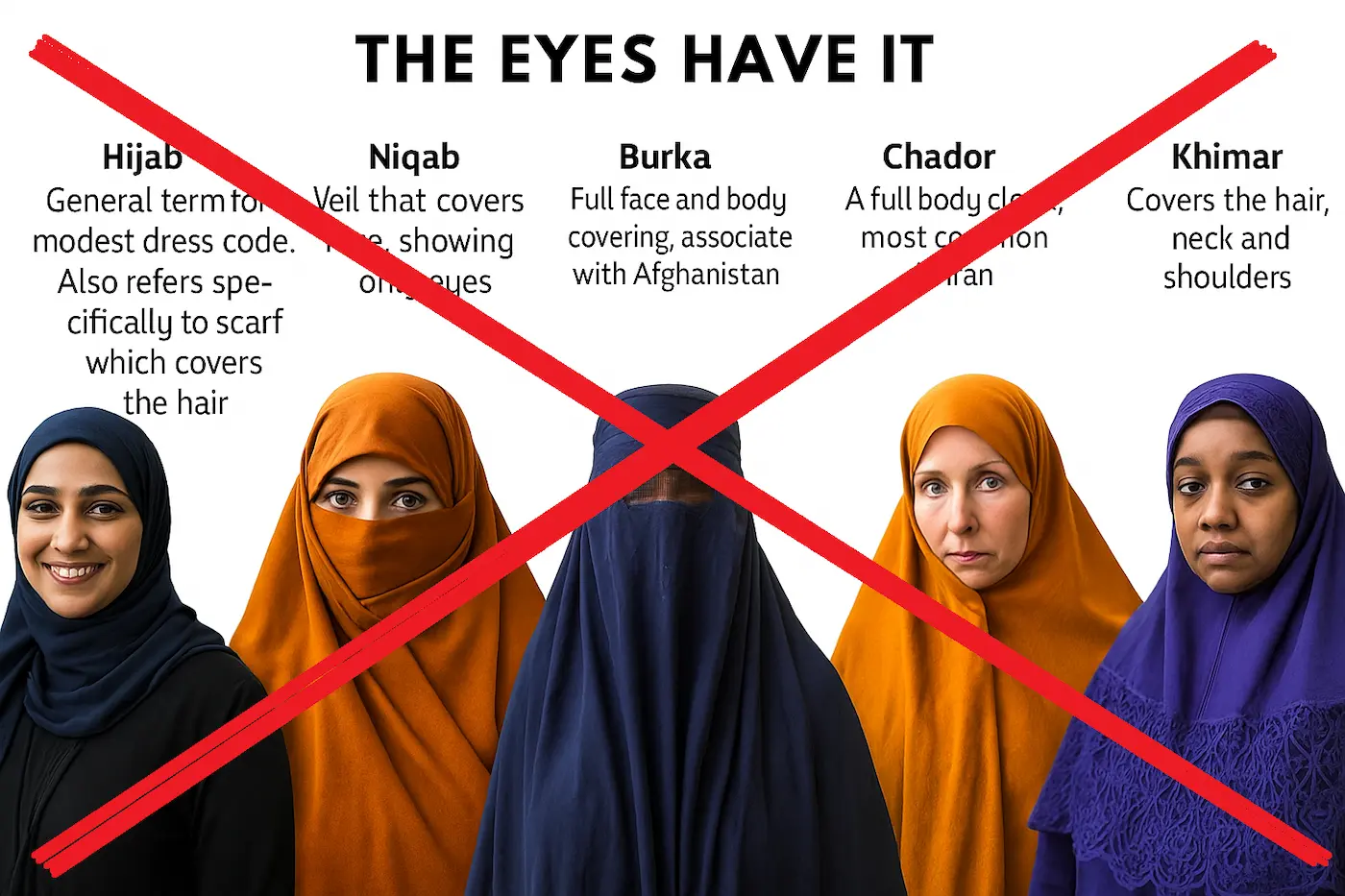
- Laws and Restrictions: More than 20 Western and other countries ban or restrict burqas and niqabs in public places, such as schools, hospitals or transportation. montanarightnow.com
- In 2025, Portugal passed a law banning face veils in public, proposed by the far-right Chega party, with fines of up to €3,000. youtube.com Italy is debating a similar ban. youtube.com Youtube.com
- France, Switzerland and others already have bans from previous years, extended in 2025. In countries such as Iran and Afghanistan, it is mandatory, in contrast to the West. worldpopulationreview.com
- Debates: Bans are argued to promote equality and security, but critics see them as discrimination that marginalizes Muslim women, limiting their access to education and employment. battleofideas.org.uk
- In Europe, there are flashpoints on social cohesion and feminism: do veils oppress or empower? en.wikipedia.org
Culture Shock:
Muslim women in the West face violence, abuse and exclusion for wearing veils, exacerbating Islamophobia. alliance-genderequality.org
Countries with bans or restrictions on full-face veiling (burqa/niqab) or other facial coverings in public spaces or state services. I include the type of measure and the basis with source.
| Region | Country | Primary measure (year) | Scope / key notes |
|---|---|---|---|
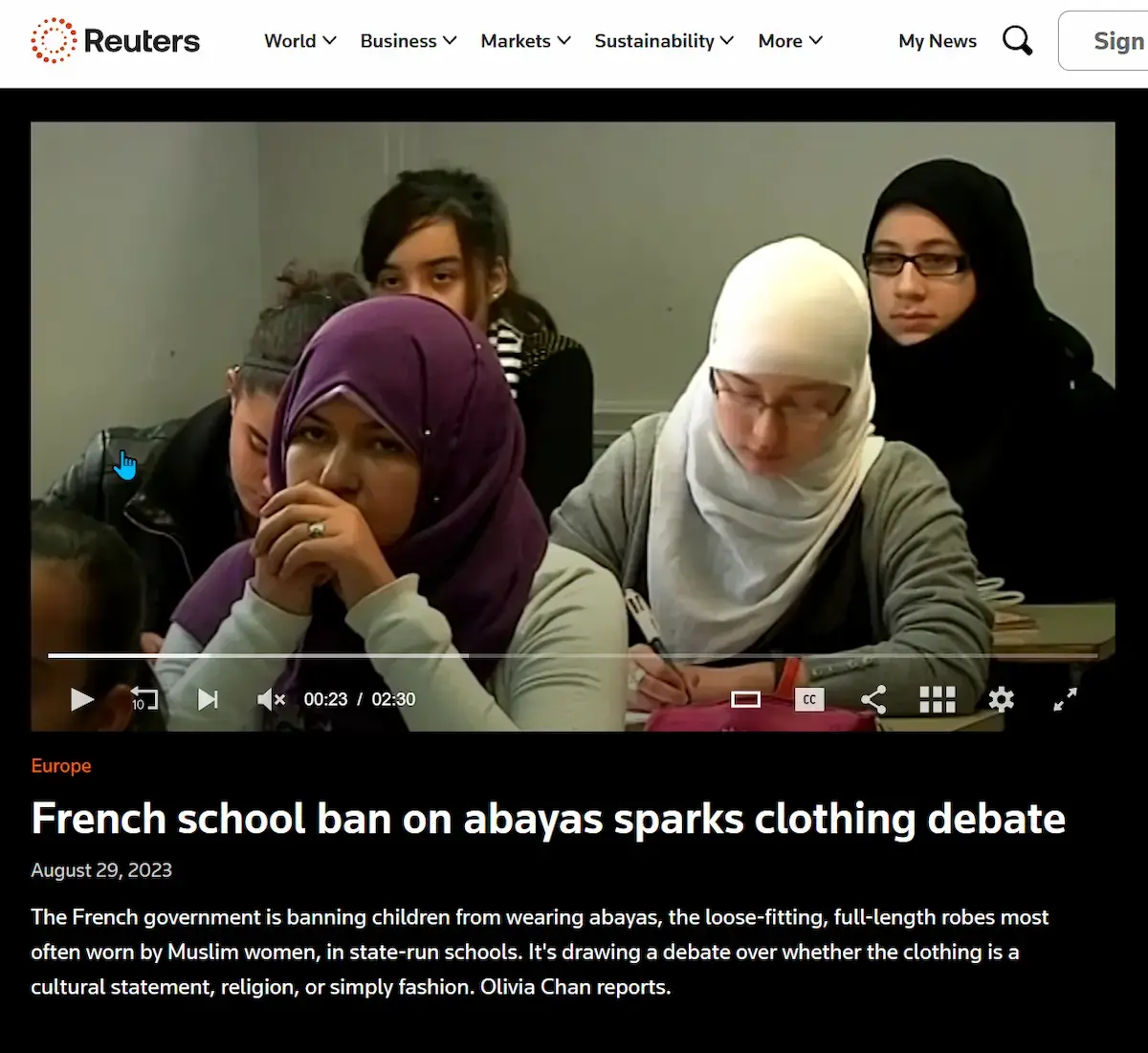
| Europa | France | Law 2010 (in force since 2011) prohibits full face covering in public spaces; ECtHR upheld it (S.A.S. v. France, 2014). | Fines or “civic education”. In 2023 the government banned the abaya in schools and the administrative judiciary upheld it. |
| Belgium | 2011 law prohibits covering the face in public places; ECtHR upheld its legality (2017). | Penalties of a fine or up to 7 days in jail. Reuters | |
| Netherlands | “Partial ban” (2019) on public transport, schools, hospitals and state buildings. | It is not total; it applies in designated areas. | |
| Denmark | Law 2018 prohibits covering the face in public spaces (progressive fines). | Known as anti-burka law. | |
| Switzerland | Referendum 2021 approved ban on face covering in public spaces; federal law implemented (2023). | Entry into force confirmed by PA. | |
| Austria | Law 2017 (“Anti-Face Veil Law”) prohibits covering the face in public spaces. | Fines for non-compliance. AP News | |
| Bulgaria | Banning the full-face veil in public spaces (2016). | National veto with sanctions. The Canadian Jewish News | |
| Germany | Partial restrictions: prohibits face covering for federal officials, military and in certain services; Länder with their own rules. | Staggered measures since 2017; recent extensions for public sector. | |
| Portugal | (Parliamentary Update) Bill 2025 to ban facial coverage in schools and administration. | Still in process. | |
| Asia | China (Xinjiang) | 2017 regulation against “extremism” restricts “abnormally long” veils and beards. | Regional measure (Xinjiang). Wikipedia |
| Sri Lanka | Ban on face veil (2021) for national security. | Subsequent to the 2019 attacks. CCLA | |
| Tajikistan | Law 2024 prohibits the “Arab” hijab in public institutions and state spaces. | Majority Muslim country; veto confirmed by Reuters. Reuters | |
| Oceania | Australia | Sectoral restrictions (e.g., parliament/buildings and security contexts). | There is no total national veto. |
| North America | Canada (Quebec) | Bill 21 (2019): prohibits religious symbols for certain public employees; requires uncovered face to receive/provide some services. In 2017, Bill 62 already required bare face in public services. | In 2025, Supreme Court agreed to review Bill 21; Quebec government defends the law. The Guardian |
| USA. USA. | No federal ban on headscarf. Some states/cities require bare face for identification/services (security, licensing, etc.), but no national “ban” on hijab/niqab. | Constitutional framework for religious freedom (1st Amendment) (General context, no single binding source). |
Quick notes
- “Total ban” = vetoes full face covering in public spaces.
- “Partial/sectoral” = applies to specific services or areas (schools, public buildings, transportation).
- The measures are usually justified by security, identification and/or civic coexistence; European courts (ECtHR) have validated vetoes in France and Belgium. Reuters
Child Marriage

Child marriage affects millions in Islamic countries, often justified by religious interpretations or cultural traditions, although Islam promotes consent and maturity. unicef.org arabstates.unfpa.org
Marrying Girls to Adult Men
Sharia law and its implications in the West, one controversial aspect is its interpretation regarding child marriage, particularly the marriage of minor girls to adult men. Under certain interpretations of sharia (based on the Qur’an, Sunna and scholarly consensus), marriage of prepubescent girls is permitted, with the consent of the guardian (wali, usually the father), although consumption is postponed until the girl can physically endure it without harm. wikiislam.net
This derives primarily from the Qur’anic verse 65:4, which prescribes a three-month waiting period (‘iddah) for “those who have not menstruated,” interpreted by classical tafsir (such as those of al-Tabari and al-Qurtubi) as referring to prepubertal girls who can be married and divorced. wikiislam.net
Jurists from all four Sunni schools (Hanafi, Maliki, Shafi’i and Hanbali) agree that a father may marry his minor daughter without her consent, although some schools give the girl the right to annul it upon reaching puberty (puberty option or khiyar al-bulugh). brandeis.edu law.wm.edu
The prophetic example often cited is the marriage of the Prophet Muhammad to Aisha, contracted at age 6 and consummated at age 9, according to hadiths in Sahih al-Bukhari and Sahih Muslim, which some scholars use to justify lower ages. lawshun.com girlsnotbrides.org icmec.org
However, there are debates: some reformers argue that the Qur’an does not specify a minimum age and emphasize consent and maturity, citing that marriage should be consensual and beneficial, avoiding harm. quran-islam.org
Critics, such as human rights organizations, point to risks such as fistulas (al-ifḍāʾ), abuse and limited education, linking it to poverty and cultural traditions rather than strict sharia.
Child marriage (under 18) by legal exceptions (parental consent, judicial authorization, religious/personal law). I include the base rule and the “shortcut” that allows it.
| Region | Country/Jurisdiction | Basic legal rule | Exception allowing child marriage | Key Note |
|---|---|---|---|---|
| Middle East | Iran | 18 (target), but the Civil Code art. 1041 sets 13 (women) and 15 (men). | Judge may authorize below these ages with guardian’s consent | Framework allows weddings <18; there are official records of thousands of cases/year. facebook.com |
| Middle East | Yemen | No national minimum age in force | Custom/personal law; attempts to set 18 were not approved. | One of the few countries with no legal minimum; high rates of child marriage. Tahirih Justice Center |
| Gulf | Saudi Arabia | Fixed administrative policy 18 | Judge may authorize 16-17; <15 prohibited. | 2019 reforms restricted, not eliminated judicial waivers. Newsweek |
| South Asia | Bangladesh | 18 (women), 21 (men) | “Special circumstances” of the 2017 law allow <18 with judge + parents. | The “special clause” keeps the legal shortcut open. Girls Not Brides |
| South Asia | Pakistan (federal) | 16 (women), 18 (men) | 16 for women in provinces outside Sindh/ICT still 16 for women; judges may endorse | Sindh and Islamabad (2024) rose to 18; other areas still have a gap. FreedomUnited.org |
| Africa | Nigeria | Constit. prohibits marriage <18, but enforcement depends on states. | In shari’a states <18 may be authorized; incomplete harmonization | Legal duality keeps the door open. Missouri Law Review |
| Asia SE | Malaysia | 18 (men), 16 (women) in Muslim population | Sharia courts grant waivers <16/18 | Partial reforms; judicial permits follow. X (formerly Twitter) |
| Asia SE | Indonesia | 19 both sexes (2019) | Frequent judicial dispensation: thousands of authorizations/year | The waiver maintains the practice even if the minimum is 19. Jurnal FH Unila |
| Africa N. | Morocco | 18 | Family judges may authorize <18 (art. 20-21 of the Family Code). | Dispensing rates remain high in rural areas. Rolling Stone |
| NE Africa | Egypt | 18 | Religious/official marriages and late registrations; application gaps | Law says 18, practice and loopholes allow less. Rolling Stone |
| Europe/Asia | Georgia | 18 | Documented use of unregistered “religious marriages” to circumvent the 18 | Gap between law and practice in rural areas. Rolling Stone |
| United States | Several states | No federal minimum | As of 2025, only 16 states totally prohibit; in the rest it is allowed with parental/judicial consent (ages as low as 16 and even lower in some). | Map and continuous updates. 19th News |
Quick notes that matter:
- In 2024-2025 several countries closed the door to child marriage (e.g., Sierra Leone and Colombia banned it without exceptions), but many maintain shortcuts (judicial waivers, religious personal law, late registration). International IDEA
- To compare or expand country by country, the most complete databases are: World Policy Analysis Center (legal maps), Girls Not Brides (legal profiles by country) and UNICEF (legal frameworks + prevalence).
In 2025, there are advances and setbacks:
In Iraq, a controversial law allows marriages of girls as young as 9 years old, eroding rights and increasing risks of violence and poverty. walkfree.org atlanticcouncil.org ohchr.org
Pakistan raised the minimum age to 18 in Islamabad and other areas, but it persists in rural areas (nearly 19 million child brides). girlsnotbrides.org idea.int unwomen.org
In the Middle East and North Africa, it affects 1 in 5 girls, with religious ceremonies circumventing civil laws. unicef.org
Impacts: School dropout, reproductive health and poverty cycles.
Education
Islam emphasizes education for both genders, but cultural and political barriers limit women in some contexts. reviewofreligions.org rferl.org
In 2025, international conferences such as the Muslim World League conference in Pakistan promote equal access. themwl.org new.oic-oci.org arabnews.com eurasiareview.com amu.tv
In Afghanistan, Taliban bans secondary and university education for girls from 2021, violating basic rights. malala.org
Progress:
In many Muslim countries, more women than men in universities; conferences declare education “not forbidden” by Islam. reviewofreligions.org
Challenges:
Poverty, conflicts and cultural norms that prioritize the home.
Civil Rights
Women in Islamic societies face legal and social discrimination, although Islam grants rights such as property and dignity. yaqeeninstitute.org
By 2025:
- In Saudi Arabia, advances in employment and clothing, but restrictions on travel and custody. theweek.com
- Iran: “Gender apartheid” with compulsory veiling laws (penalties such as death or flogging), limitations on marriage, inheritance and politics. impactiran.org
- General: Inequalities in divorce, polygamy and legal testimony; in strict countries such as Afghanistan or Iran, labor and political prohibitions. fairplanet.org +2
- Initiatives such as the Pazmakers Network promote rights based on Islam. peacemakersnetwork.org
More Additional Factors
Searches reveal additional challenges for Muslim women in 2025, influenced by culture, religion and global contexts: arabcenterdc.org +11
- Violence and Conflict: In displacement zones, layers of gender-religious violence; cultural pressures perpetuate oppression. gsdrc.org
- Employment and Economy: Double standards: valued for skills but marginalized by cultural pressures; discrimination in the West. fairobserver.com
- Health and Cultural Practices: Female genital mutilation in some contexts (non-Islamic but cultural); limited access to reproductive health.
- Social and Political Participation: Low in peace and politics due to marginalization; in prisons, religious needs ignored.
- Digital and Global: Social media censorship (Muslim Women’s Day cancelled in 2025 due to deplatforming); assimilation challenges in diaspora. muslimgirl.com
Progress includes gradualism and shura (consultation) for rights, with women active in peace and liberation. arabcenterdc.org +2
Closely related is the debate over Islamic veils such as the burqa (full body and face covering), niqab (face veil) and hijab (headscarf), seen by some as symbols of oppression or incompatible with integration, which has led to bans in several Western countries. As of 2025, more than 20 nations already restrict these in public spaces, citing security, identification or secular values. montanarightnow.com
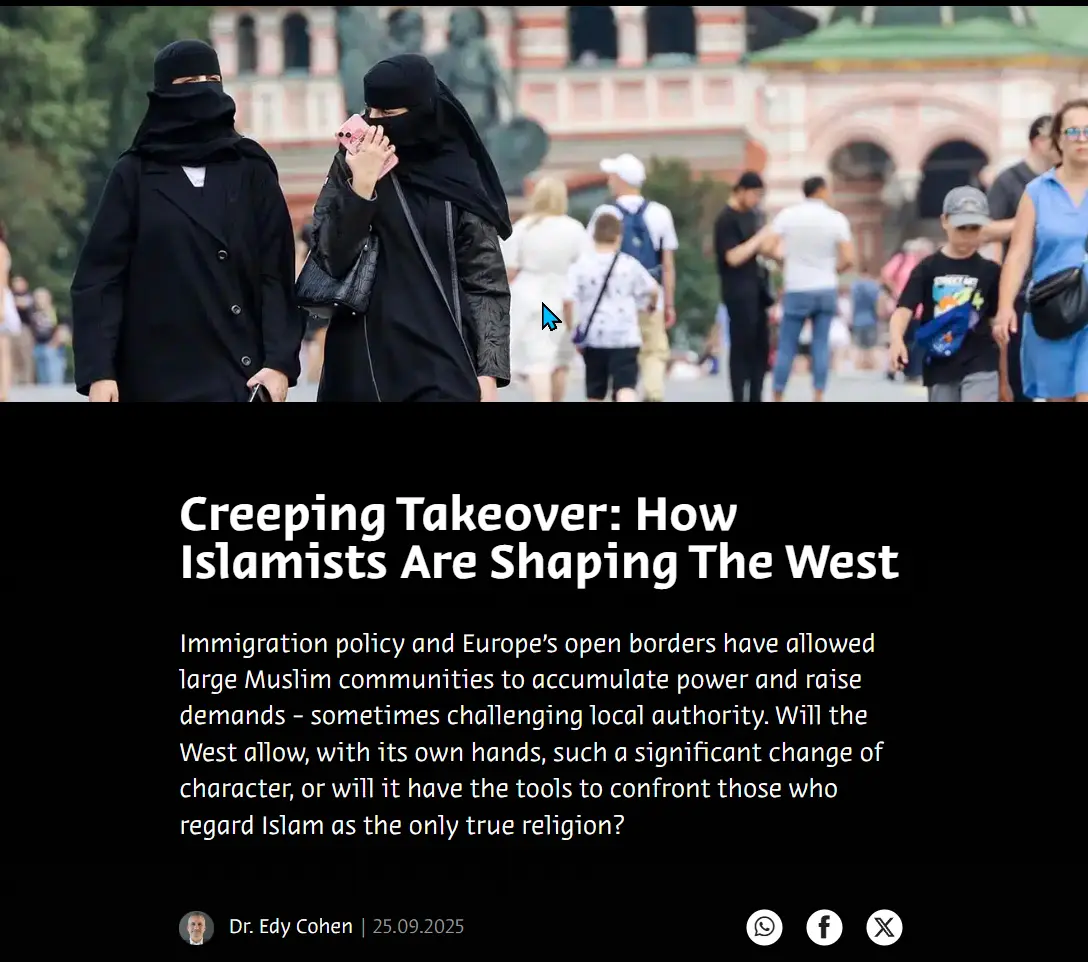
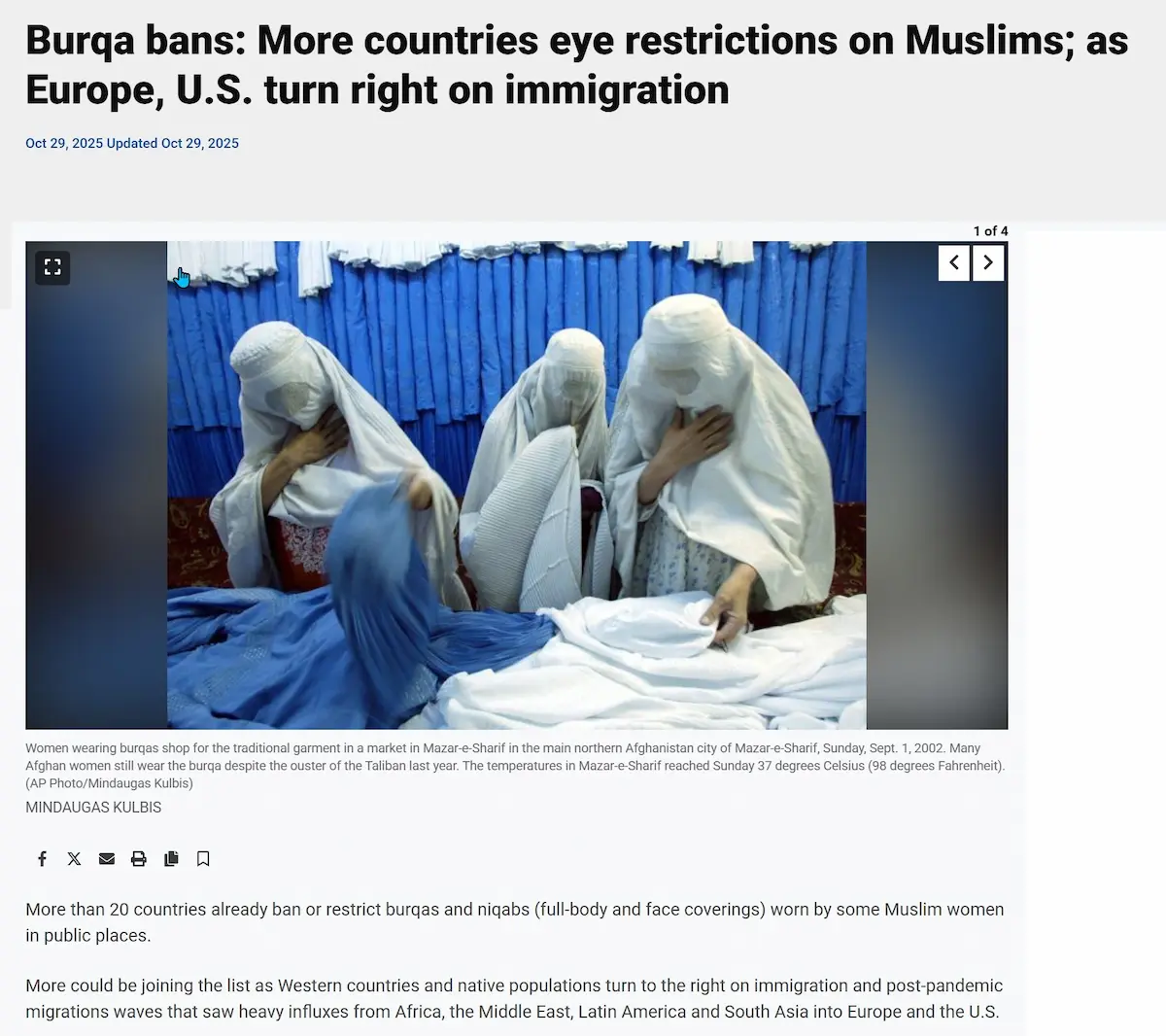
France was a pioneer with its burqa ban in 2010, followed by others in Europe.
Recently:
- Portugal: In October 2025, parliament approved a bill by the far-right Chega party to ban face veils (burqa and niqab) in public spaces, arguing religious neutrality. theguardian.com +3
- Italy: The ruling Brothers of Italy party proposed in October 2025 a ban on the burqa and niqab in all public spaces, including schools and offices, with fines of 300-3,000 euros for violations. reuters.com +2
- Sweden: In October 2025, the leader of the Christian Democrats, Ebba Busch, proposed a national ban on the burqa and niqab in public places. en.wikipedia.org
- United States: Although there are no federal bans, there are calls on networks to ban the hijab and burqa in public, and states such as Texas have linked this to opposition to sharia law. Critics of these bans argue that they violate religious freedoms, while advocates see them as measures to promote equality and safety.
Interested in this topic? Read the next article and stay informed about everything that affects our community. Visit our homepage: newsmiamidade.com/en
Do you prefer it even shorter for social networks? Here is a short variant:
Don’t miss the next article. More information at: newsmiamidade.com/en