
Shielding a Country from External Ideological Threats: An Analytical Perspective on U.S. 2025
How to protect a country’s sovereignty and stability against external influences, particularly incompatible ideologies that could infiltrate through diplomacy or the participation of foreigners in positions of power?
In a structured manner, based on governance principles, constitutional law and historical/real examples, while maintaining a neutral and truth-seeking approach. I am not endorsing or promoting specific changes, but analyzing the topic as a theoretical and practical discussion.
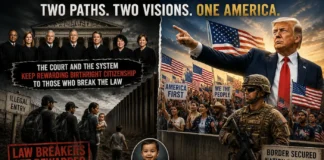
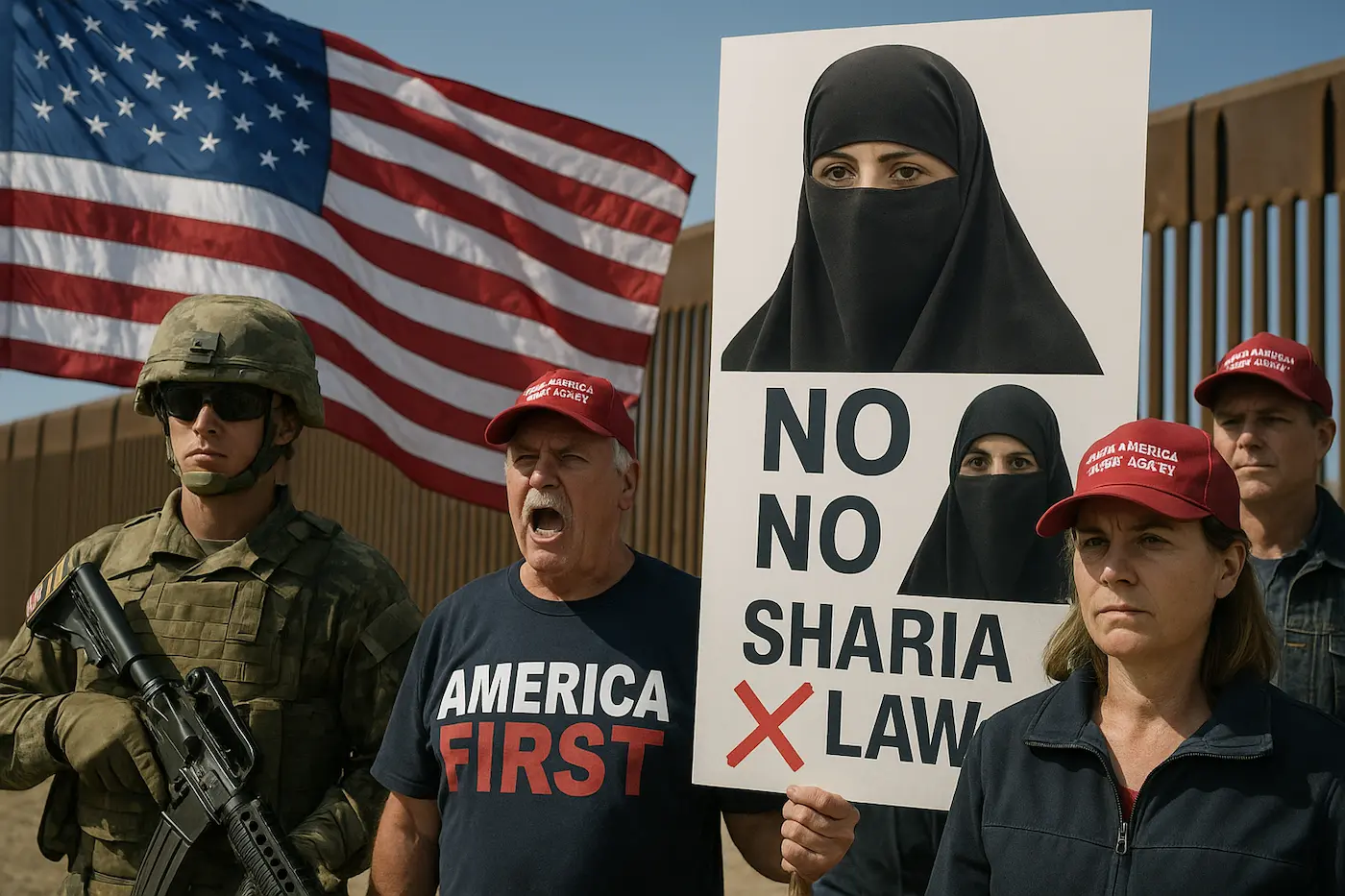
Basic Concept: Restrictions on Foreigners in Positions of Power. Many countries already implement barriers to prevent foreign nationals from accessing key roles, in order to preserve national loyalty and minimize risks of infiltration. This aligns with ideas of “constitutional nationalism” or “strict sovereignty”, and is reinforced by recent approaches in the U.S., where measures have been proposed to allow only native-born citizens to hold positions in Congress and the Senate, extending existing requirements such as “natural-born citizen” for the Presidency, with the argument of preventing foreign influences. facebook.com ifeg facebook.com facebook.com facebook.com
The Law That Could Redefine Who Can Lead America
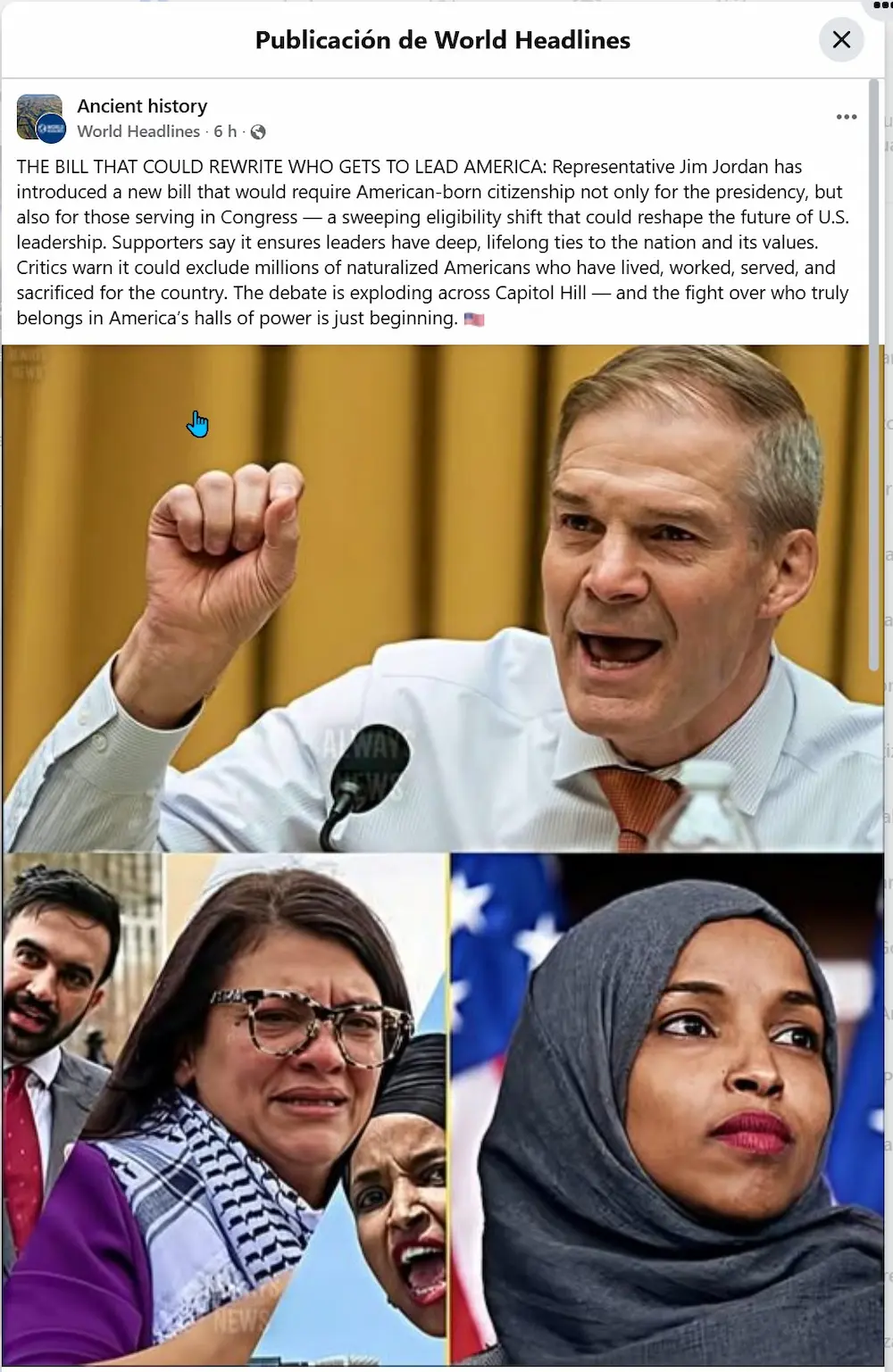
Rep. Jim Jordan has introduced a new bill that would require U.S. birthright citizenship not only for the presidency, but also for members of Congress, which would represent a radical change in eligibility requirements that could transform the landscape of American leadership.
Proponents argue that this ensures that leaders have deep, lifelong ties to the nation and its values. Critics warn that it could marginalize millions of naturalized Americans who have lived, worked, served and sacrificed for the country. The debate is raging on Capitol Hill, and the battle to determine who really belongs in the halls of power in America is just beginning.
Reasons in favor:
Preventing Peaceful Destabilization: As you mention, policies of “permeable diplomacy” can allow external ideologies (e.g., cultural expansionism, geopolitical influences, etc.) to be used as an excuse to destabilize the country, cultural expansionism, geopolitical influences) to seep in via immigrants or dual-nationality in public office.
Current examples include debates in Europe over migration and radicalism, or in the U.S. with concerns over foreign interference (e.g., Russia or China in elections). Proposals such as Rep. Jim Jordan’s seek to shield against this by limiting access to elected office to those born on U.S. soil, arguing inherent loyalty.
Ideological Shielding: By excluding foreigners, the risk of incompatible agendas (e.g., communism in a capitalist country, radical Islamism, covert terrorism) influencing internal decisions is reduced, as has been seen in historical cases such as the Cold War, where foreign spies or sympathizers destabilized governments.
Practical Steps to Implement Such Measures If a country is to be “armored”, the process would involve legal and constitutional reforms.
Here a hypothetical scheme, not as an actionable guide, but as a conceptual explanation:
Constitutional Modification:
- Identify and Eliminate Positions Accessible to Aliens: Analyze the current Constitution to remove any clauses that allow non-citizens (or dual nationals) to occupy roles in the executive, legislative, judicial, military or bureaucracy.
- For example, in the U.S., the President must be a “natural-born citizen” (Article II), but other offices allow naturalized immigrants; recent proposals seek to extend this to Congress to reinforce sovereignty. facebook.com +1
- Specific Amendment: Propose an amendment requiring native citizenship (or at least 20-30 years of exclusive residency) for all levels of power.
- This could include:
- High Level: Presidency, ministries, supreme judges.
- Middle Level: Governors, mayors, agency directors.
- Low Level: Civil servants, police officers, teachers in state institutions.
- Process: Requires legislative majority, popular referendum or constitutional convention, depending on the country (e.g., in Spain, 3/5 of the Congress is required; in Mexico, approval of states).
Creation of Advisory Roles:
It is possible to allow “analysis boards” or advisory committees where outsiders provide expertise (e.g., in economics or technology), but without decision-making power.
Examples:
Panels of international experts, who advise but do not vote. In Singapore, they use foreign financial consultants, but the final control is national.
Limits:
These roles should be temporary, unpaid in key positions, and supervised by citizens.
Control and Compliance Mechanisms:
- Citizenship Verification: Implements strict checks (e.g., biometric databases) for candidates and public employees.
- Secondary Laws: Reform electoral, labor and immigration codes to penalize infiltration attempts (e.g., immediate deportation).
- Education and Propaganda: Campaigns to foster national loyalty, similar to how the country should emphasize citizenship in security roles.
Real Examples of Countries with Similar Approaches
- Israel: Requires citizenship for most positions, with emphasis on Jewish loyalty for sensitive roles. Has “armored” against Arab ideological threats through restrictions.
- Saudi Arabia: Prohibits non-Saudis in government and military, prioritizing Wahhabism as a compatible ideology.
- Hungary (under Orbán): Has amended the Constitution to limit “foreign” influences (e.g., EU or Soros), arguing sovereignty against liberal ideologies.
- United States: The Constitution already requires natural born citizenship for the Presidency, and recently, proposals such as Rep. Jim Jordan’s seek to extend this to Congress and the Senate to avoid divided loyalties and foreign influence, reinforcing debates over sovereignty in 2025.
Contrast:
Canada: Allows immigrants in high positions (e.g., foreign-born ministers), betting on multiculturalism, but with security checks.
Risks and Final Considerations
Unintended Effects: Such policies could foster xenophobia, reduce foreign investment or violate alliances (e.g., NATO requires cooperation). Historically, regimes such as the USSR or North Korea used similar isolationism, but at the cost of stagnation.
More Balanced Alternatives: Instead of outright bans, focus on intelligence (e.g., agencies such as the FBI) to detect threats, or dual citizenship waiver requirements for public office.
Current Context:
Countries such as the U.S.(with debates on “Chinese infiltration”, “radical Islamism” have led to proposals to restrict access to legislative office) or France(against radical Islamism) are adjusting policies, but to strengthen their countries.
Unintended Effects: A Balanced Analysis
Investors and Openness as a Weakness: Foreign investors must understand that their role is purely commercial, not transformative of the host society or government. This resonates with criticisms of the West’s“permeable diplomacy,” where openness to immigration and diversity is perceived as a vulnerability.
For example, some Muslim leaders and analysts have argued that the West is “losing” precisely because of these weaknesses, allowing radical Islam to infiltrate and radicalize infiltrate and radicalize communities from within, taking advantage of human rights and democratic freedoms to subvert the system. infobae.com hatzadhasheni.com iecah.org
Figures such as Rashid Al Ghannouchi have hinted that discord between Islam and the West is aggravated by failures in integration, where radicals use the diaspora to attack host countries. iri.edu.ar
This aligns with views that uncontrolled immigration brings no net benefits, but social and economic chaos, as in debates on assimilation of Muslim groups in Europe, where it is argued that they are the least integrated, exacerbating internal tensions. reddit.com
In favor of this shield: Stricter policies could deter attempts at “cultural invasion” without necessarily scaring off genuine investment, since pure business (e.g., in technology or manufacturing) does not require access to political power. Countries such as Saudi Arabia maintain massive investments (e.g., in sovereign wealth funds) while banning foreigners from government, demonstrating that strict sovereignty does not always equate to economic isolation.
Reasons Against and Persistent Risks: However, critics argue that even “pure” investments depend on inclusive environments; for example, Silicon Valley thrives on naturalized immigrant talent, and total restrictions could reduce innovation by limiting diversity of ideas. elcato.org
In addition, perceptions of xenophobia could deter global capital, as seen in Hungary under Orbán, where anti-foreigner reforms generated EU sanctions and a drop in FDI (foreign direct investment). Western “good action” (e.g., human rights) is seen by some as strength, not weakness, allowing long-term resilience against radicalism through integration, rather than exclusion that could further radicalize marginalized minorities. cari.org.ar +1
In short, while your point highlights how openness can be exploited for ideological destabilization (as in cases of radicalization in diasporas), unintended effects include possible stagnation if shielding goes too far, disconnecting the country from global benefits. A hybrid approach-restrictions in power but selective openness in economics-could balance sovereignty and prosperity.
Case Study: Alleged Links between CAIR and Hamas as an Example of Ideological Infiltration

A contemporary example of how outside ideologies might infiltrate civil institutions is the case of the Council on American-Islamic Relations (CAIR), an organization that presents itself as an advocate for Muslim civil rights in the U.S. but has been linked by judicial evidence to Hamas, the Palestinian branch of the Muslim Brotherhood designated as a terrorist organization by the U.S. State Department, but which has been linked by judicial evidence to Hamas, the Palestinian branch of the Muslim Brotherhood designated as a terrorist organization by the U.S. State Department. congress.gov extremism.gwu.edu cair.com capitol.texas.gov ca5.uscourts.gov adl.org adl .org charityandsecurity.org govinfo.gov
The main evidence comes from the 2007-2008 trial against the Holy Land Foundation for Relief and Development (HLF), an entity accused of funding Hamas. In the U.S. Department of Justice’s 2013 executive summary, it states that “evidence at trial linked CAIR leaders to Hamas, a specially designated terrorist organization, and CAIR was named as an unindicted co-conspirator in the case.”
The government argued that HLF was a front for the Palestine Committee, a covert branch of the Muslim Brotherhood in the U.S., aimed at supporting Hamas financially.
Key Trial Evidence and Related Documents:
Internal Muslim Brotherhood documents presented at trial show that CAIR was created in 1994 as part of a network to influence U.S. public and political opinion in favor of Islamist agendas, including support for Hamas. extremism.gwu.edu +2 Founders of CAIR, such as Nihad Awad and Omar Ahmad, had ties to the Islamic Association for Palestine (IAP), another Hamas-linked group. investigativeproject.org
In 1993, in a meeting taped by the FBI in Philadelphia, leaders of the Islamist network discussed how to use civilian organizations to support Hamas without disclosing direct ties. investigativeproject.org CAIR emerged shortly thereafter.
Funding: CAIR received initial funding from HLF (at least $5,000 in 1994) and significant donations from Saudi Arabia, which have reportedly been concealed. capitol.texas.gov
Former CAIR employees have been convicted on terrorism or fraud-related charges, resulting in fines, imprisonment or deportation. investigativeproject.org
Responses and Criticisms of the Accusations:
CAIR denies ties to Hamas, calling the allegations “conspiracies” and “McCarthyism” based on guilt by association. cair.com +1
They claim to condemn terrorism, including acts by Hamas, and that there is no active criminal investigation against them. cair.com
In 2017, CAIR’s Minnesota executive director, Jaylani Hussein, evaded direct questions about condemning Hamas, redirecting to its role as a civil rights organization. investigativeproject.org
Critics argue that these responses evade substance, and in 2023, Nihad Awad expressed “happiness” over the Gaza breakout on Oct. 7, prompting the White House to repudiate it. cair.com
Balanced Perspectives: While sources such as ADL and Investigative Project on Terrorism argue for links based on judicial evidence, adl.org
In 2025, proposals in Congress seek to designate CAIR as a terrorist organization, citing these links. congress.gov
This case illustrates how civil organizations could serve as vehicles for external ideologies, reinforcing the need for shielding mechanisms such as strict checks or limits on foreign funding, without violating constitutional rights.
How does the U.S. view Islamist organizations (Ghalib/Muslim Brotherhood case)?
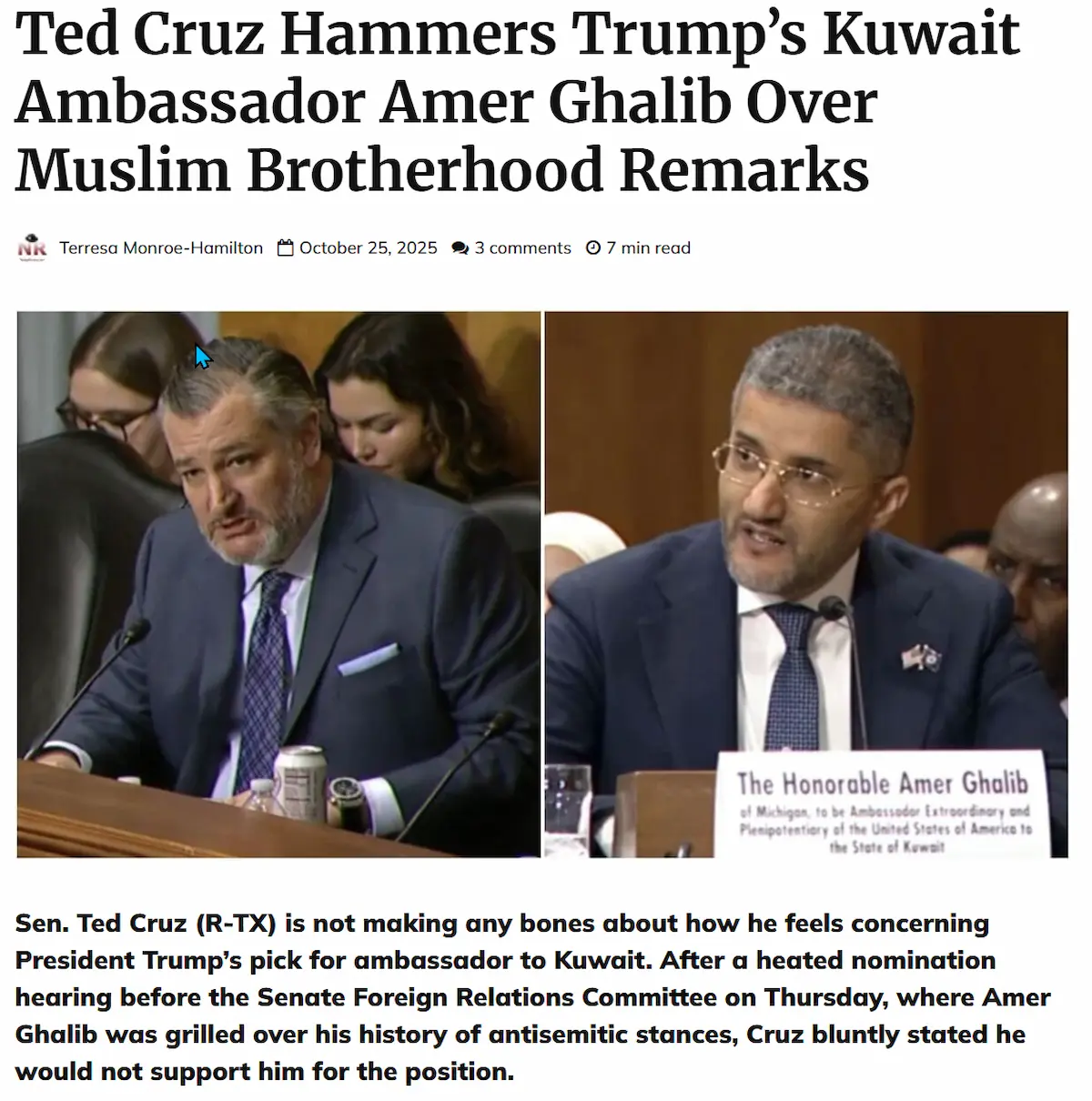
Recent political event. At his nomination hearing as U.S. ambassador to Kuwait, Hamtramck Mayor Amer Ghalib was sharply questioned by senators – including Ted Cruz –for avoiding condemning the Muslim Brotherhood and for previous positions considered anti-Semitic. After the session, Cruz announced he would not support his confirmation. Michigan Advance
Why it matters. Cruz recalled that there is momentum in the Republican Party to designate the Muslim Brotherhood as a terrorist organization, and asked how Ghalib would comply with U.S. foreign policy if that designation comes to fruition. ArabAmericanNews
Nominee context. Ghalib (mayor since 2021) and the Hamtramck Council passed a boycott and divestment resolution related to Israel in 2024, fueling doubts about its alignment with U.S. security priorities and alliances. Detroit Metro Times+1
Clear reading:
- There is bipartisan skepticism in Washington about profiles that minimize or avoid condemning Islamist groups with a history of violent ties; thus Ghalib’s nomination was touched after the hearing. Michigan Advance
- Republican hardliners seek to mark into law treatment of Muslim Brotherhood as terrorist; any diplomat who doesn’t take it up clashes with national security agenda. ArabAmericanNews
What to watch:
- If the Senate blocks the nomination. 2) If it advances a formal Muslim Brotherhood designation and its effect on visas, funding and ally relations. ArabAmericanNews
Key quotes/supports:
- AP / Washington Post: summary of the hearing and rejection of senators (including Cruz). Michigan Advance
- Metro Times / Wikipedia (with local sources): BDS/boycott resolution in Hamtramck under Ghalib. Detroit Metro Times
Infiltration Tactics of the Muslim Brotherhood: A Fact-Based Overview
The Muslim Brotherhood (Ikhwan al-Muslimin), founded in 1928 by Hassan al-Banna in Egypt, is a transnational Sunni Islamist organization with affiliates in more than 70 countries. Although it publicly emphasizes nonviolent reform and social services, critics and government reports describe its strategies as involving gradual infiltration to advance Islamist goals, often referred to as “civilizational jihad” or “entryism.” This involves integrating into societies through institutions rather than open conflict, inspired by internal documents such as the 1991 Explanatory Memorandum seized in the U.S., which details a plan to “destroy Western civilization from within.” These tactics are debated: some see them as subversive threats, while others consider them legitimate defense, with Human Rights Watch opposing bans on the group.
Core Ideology and Strategic Framework
- Gradualism (Tadarruj) and Patience: Inspired by al-Banna and Sayyid Qutb, the Brotherhood promotes step-by-step implementation of Sharia (Islamic law) through adaptation to local contexts. When weak, they focus on persuasion and building strength; when strong, on assertion. This is evident in post-2013 exile networks in Egypt, relocating to Qatar, Turkey and Europe to tap into diaspora communities.
- Decentralized Structure: Operates through a pyramid of cells (usra/family units) and affiliates such as Hamas, Ennahda and front groups. Funding comes from zakat (charity), endowments (waqf) and states such as Qatar/Turkey. Estimated 100,000 members in France alone by 2025.
Key Infiltration Tactics in Western Countries
Based on declassified documents, trials and government inquiries, the Brotherhood’s approach emphasizes subtlety:
- Institutional Penetration:
- Education and Youth: Establish schools, madrasas and student organizations (e.g., Muslim Student Associations in the U.S.) to indoctrinate and recruit. In France, a 2025 Senate report warned of infiltration of schools to gradually impose Sharia. Tripled mosques in Gaza (1967-1987) as a model, providing services in underserved areas to build loyalty.
- Charities and NGOs: Using aid organizations to gain influence, often channeling funds for recruitment. The Holy Land Foundation trial (2007-2008) revealed U.S. fronts such as CAIR financially supporting Hamas. European reports recommend stopping funding to groups like Islamic Relief Worldwide until investigations.
- Political and Legal Maneuvers:
- Electoral Participation: Forming “moderate” parties or running candidates in local elections, targeting democracies. In Europe, lobby for policies such as accommodations for the veil, framing critics as Islamophobes. In the U.S., a “100-year plan” from the 1991 memo targets politics, media and academia via interfaith dialogues and student groups.
- Exploitation of Rights and Narratives: Using human rights laws to protect activities, allying with leftist/DEI movements. Palestinian cause serves as unifying tool to gain sympathy and normalize views. Immigration is highlighted as a method of “peaceful conquest” in videos of leaders discussing maternity wards and ballot boxes to overturn societies.
- Economic and Cultural Development:
- Finance: Promote Shariah compliant banking and control endowments to finance operations. Buying influence in media and lobbying.
- Cultural Infiltration: Youth programs, rallies and alliances replace pluralism with ideology. In the UK, a 2015 review noted “dual discourse”-publicly moderate, privately radical-leading to calls for scrutiny.
Examples in Western Contexts
- United States: Groups like ISNA and MSA accused of subversion; meeting recorded by FBI in 1993 discussed deceptive fronts. Proposals in 2025 seek to designate the Brotherhood as terrorist.
- Europe: French 2025 report highlights infiltration of schools and government; UK investigates, warns of “soft coup”. Sweden investigated associations in 2025.
Criticism and Balanced Perspectives
The Brotherhood isdesignated terrorist by Egypt, Saudi Arabia, UAE and Russia because of ties to violence (e.g., assassinations in the 1940s, affiliation with Hamas), but not in the West, where it is seen as non-violent. Defenders argue that the accusations stem from Islamophobia, and the group condemns terrorism. Reports such as the 2015 UK review and US congressional hearings emphasize monitoring without outright bans, focusing on transparency.
Interested in this topic? Read the next article and stay informed about everything that affects our community. Visit our homepage: newsmiamidade.com/en
Do you prefer it even shorter for social networks? Here’s a short variant:
Don’t miss the next article. More information at: newsmiamidade.com/en
.