
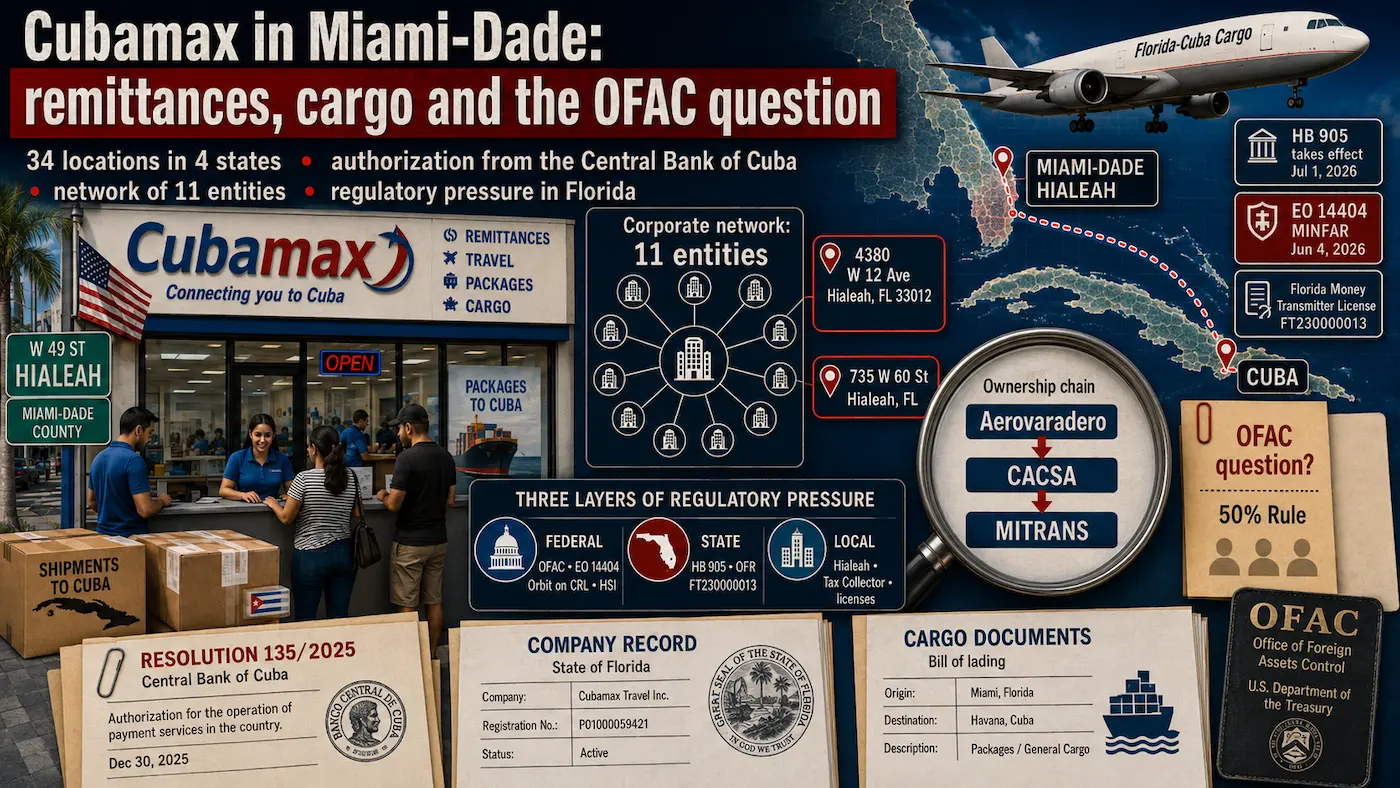
While the federal government intensified measures against the Cuban dictatorship, Cubamax Travel did not scale back operations. It expanded them.
Today, it operates 34 locations across four states. The Central Bank of Cuba formally authorized it to handle remittances in December 2025, designating it by its Florida registration number. Its corporate network links eleven entities. Meanwhile, House Bill 905—which rewrites the powers of state tax collectors regarding the entire Cuba-U.S. sector—takes effect on July 1, 2026.

The question is not just what Cubamax does. The question is how it continues to do it.
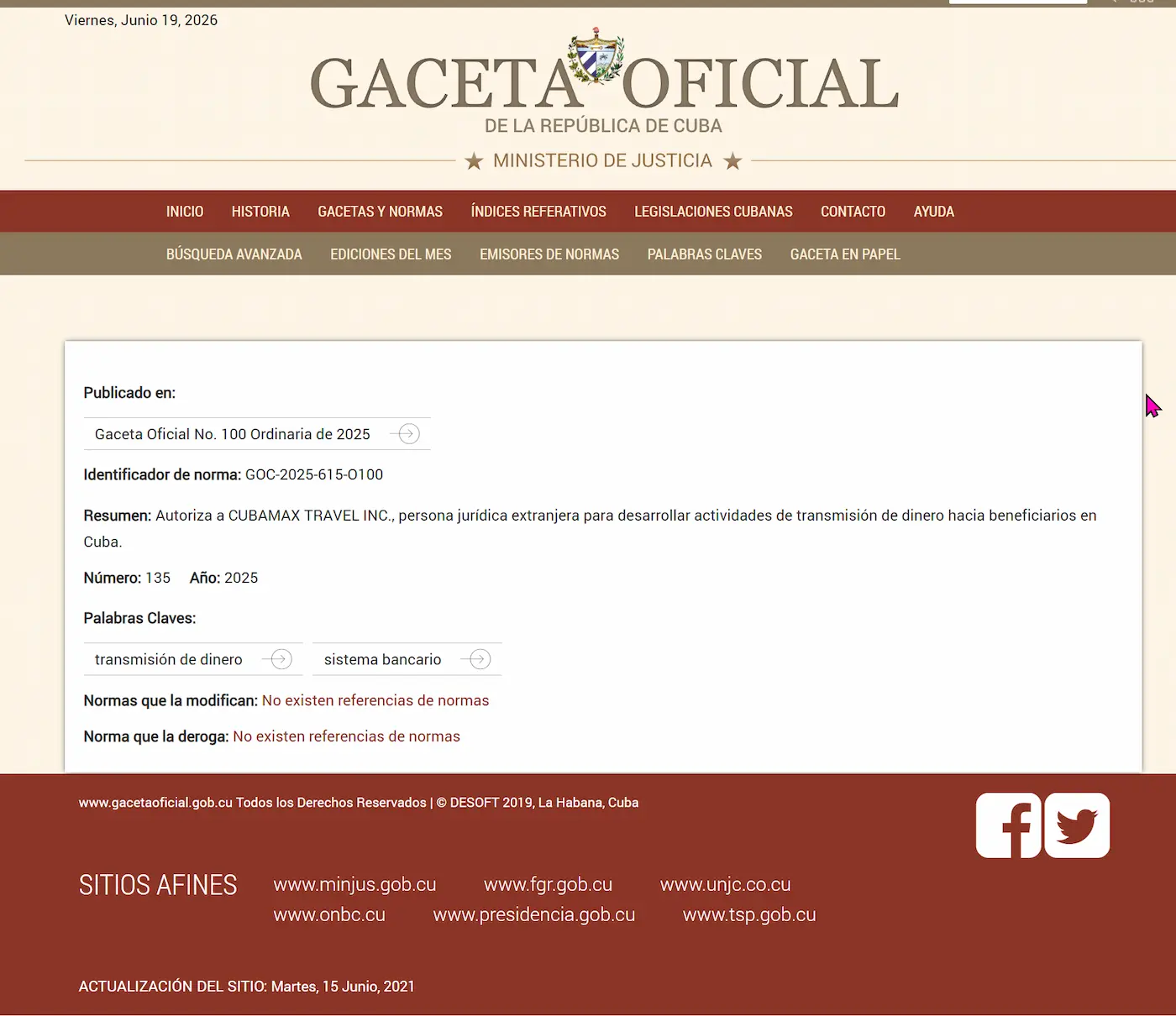
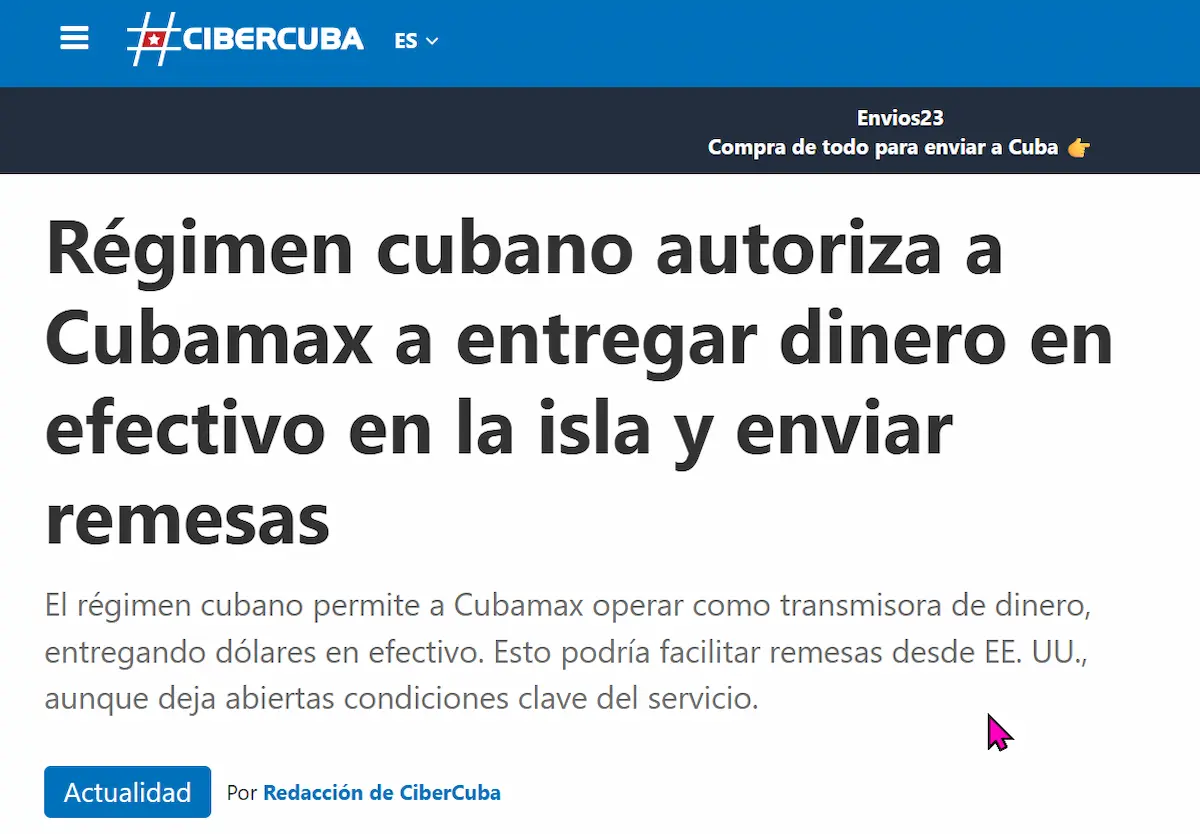
On December 30, 2025, the Official Gazette No. 100 of the Republic of Cuba published Resolution 135/2025 of the Central Bank of Cuba (GOC-2025-615-O100), which expressly authorizes CUBAMAX TRAVEL INC. —a company registered in Florida under number P01000059421, with its headquarters at 4380 W 12th Ave, Hialeah—to conduct money transfer activities to recipients in Cuba.
The authorization makes Cubamax one of the few remittance operators with the Cuban government’s explicit approval in the post-Western Union era: the global money transfer company that suspended services to Cuba in November 2023 following the addition of Orbit S.A. to the Cuba Restricted List.
The resolution, signed by Juana Lilia Delgado Portal, President of the Central Bank of Cuba, authorizes four specific activities, imposes ten obligations—including submitting to the jurisdiction of Cuban courts and being liable with all of the company’s assets, including assets abroad—and does not name any specific Cuban financial institution. The resolution simply states “Cuban financial institutions.” The question raised by this omission is clear: Which Cuban entities process Cubamax’s funds, and does any of them appear on the Cuba Restricted List, the SDN List, or fall under OFAC’s 50 percent rule ?
Cubamax also operates a corporate network of eleven entities linked to Carlos Trujillo and Giraldo Acosta in Florida, comprising 34 locations across four states, and—since April 2024—a cargo agreement with Aerovaradero S.A., a Cuban civil aviation company under the supervision of the Ministry of Transportation. Taken together, these factors place Cubamax at the center of the mounting regulatory pressure that the federal government and local governments in Florida have brought to bear on the Cuba-U.S. sector between 2025 and 2026.
What happened?
On December 30, 2025, the Central Bank of Cuba issued Resolution 135/2025 (GOC-2025-615-O100), authorizing Cubamax Travel Inc. to channel funds to beneficiaries in Cuba through Cuban financial institutions not specified in the document. That same year, records from the Florida Division of Corporations show eleven entities directly or indirectly linked to Carlos Trujillo, Giraldo Acosta, or the Cubamax brand —eight active, three dissolved or inactive—organized around two addresses in Hialeah: 4380 W 12th Ave (Cubamax Travel headquarters) and 735 W 60th St (property registered in the name of Iwaly Investments LLC).
The “About Us” page on the Cubamax website lists thirteen branches; its own operational directory lists a total of 34 locations— 31 in Florida and three outside the state (Kentucky, New Jersey, and Texas)—a discrepancy of 161 percent between two sections of the same website.
On April 9, 2024, during the International Transportation and Logistics Fair in Cuba, Cubamax signed a cargo agreement with Aerovaradero S.A. for shipments of perishable goods from Florida to Cuba.
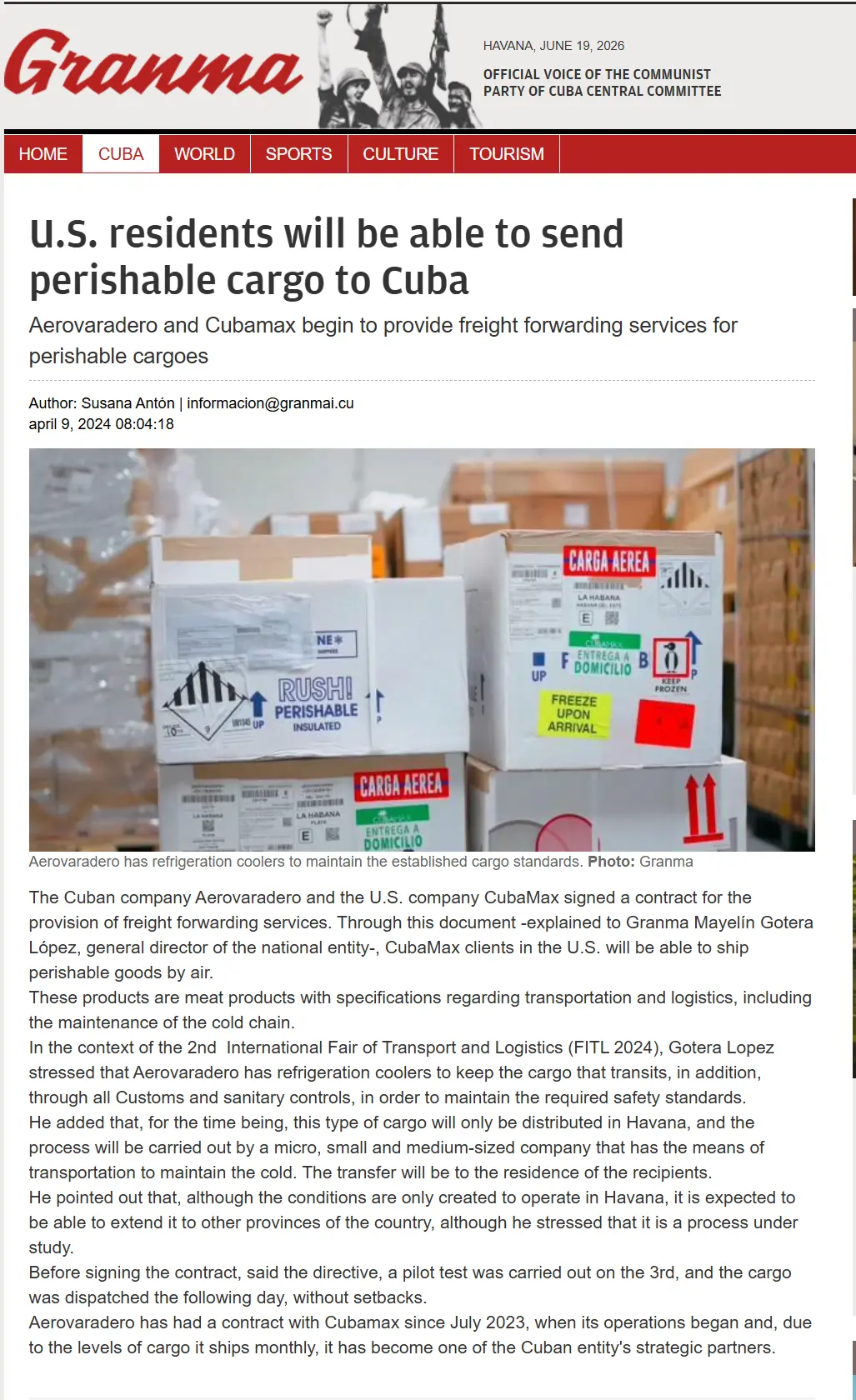
Aerovaradero’s official website identifies CACSA —Corporación de la Aviación Cubana S.A.—as its parent company and the Cuban Ministry of Transportation (MITRANS) as its declared majority shareholder.
On June 4, 2026, the Department of the Treasury designated MINFAR under Executive Order 14404. The question raised by this designation concerns not political or administrative control, but rather direct or indirect ownership: if GAESA or MINFAR holds an ownership stake of 50 percent or more in CACSA or the Ministry of Transport, the cargo agreement with Aerovaradero would be automatically affected, even though neither Aerovaradero nor CACSA appears by name on any list. That chain of ownership has not been established in available public sources.
News Miami Dade does not allege that Cubamax Travel Inc., its executives, CACSA, or Aerovaradero have violated federal sanctions. What is raised, however, is a legitimate compliance question: which entities are involved in the receipt, processing, transport, and final delivery of the cargo, and whether any of them are blocked or are owned, directly or indirectly, 50% or more by an entity blocked by OFAC.
Why It Matters
The Cuban Central Bank’s authorization of Cubamax Travel establishes a direct link—documented in the Official Gazette—between the Hialeah-based company and the Cuban financial system. For the thousands of Cuban-American families in Miami-Dade who rely on its remittance services, the resolution can be interpreted as a guarantee of operational continuity in the void left by Western Union.
For federal regulators at OFAC, this raises a question that is no longer hypothetical: Which Cuban financial institutions are involved in the flow of these funds, and are any of them on the Cuba Restricted List, the SDN List, or subject to the 50 percent rule?
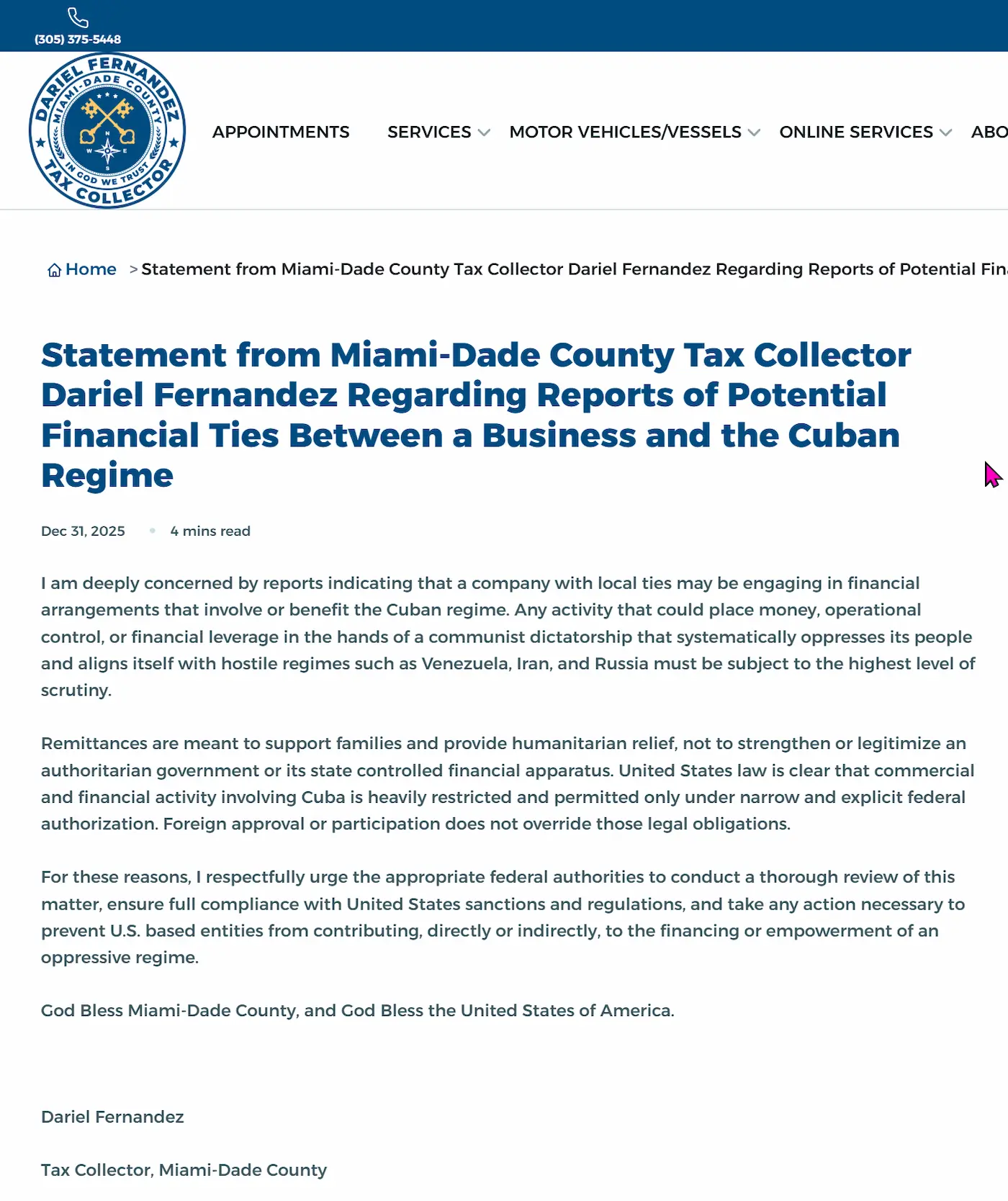
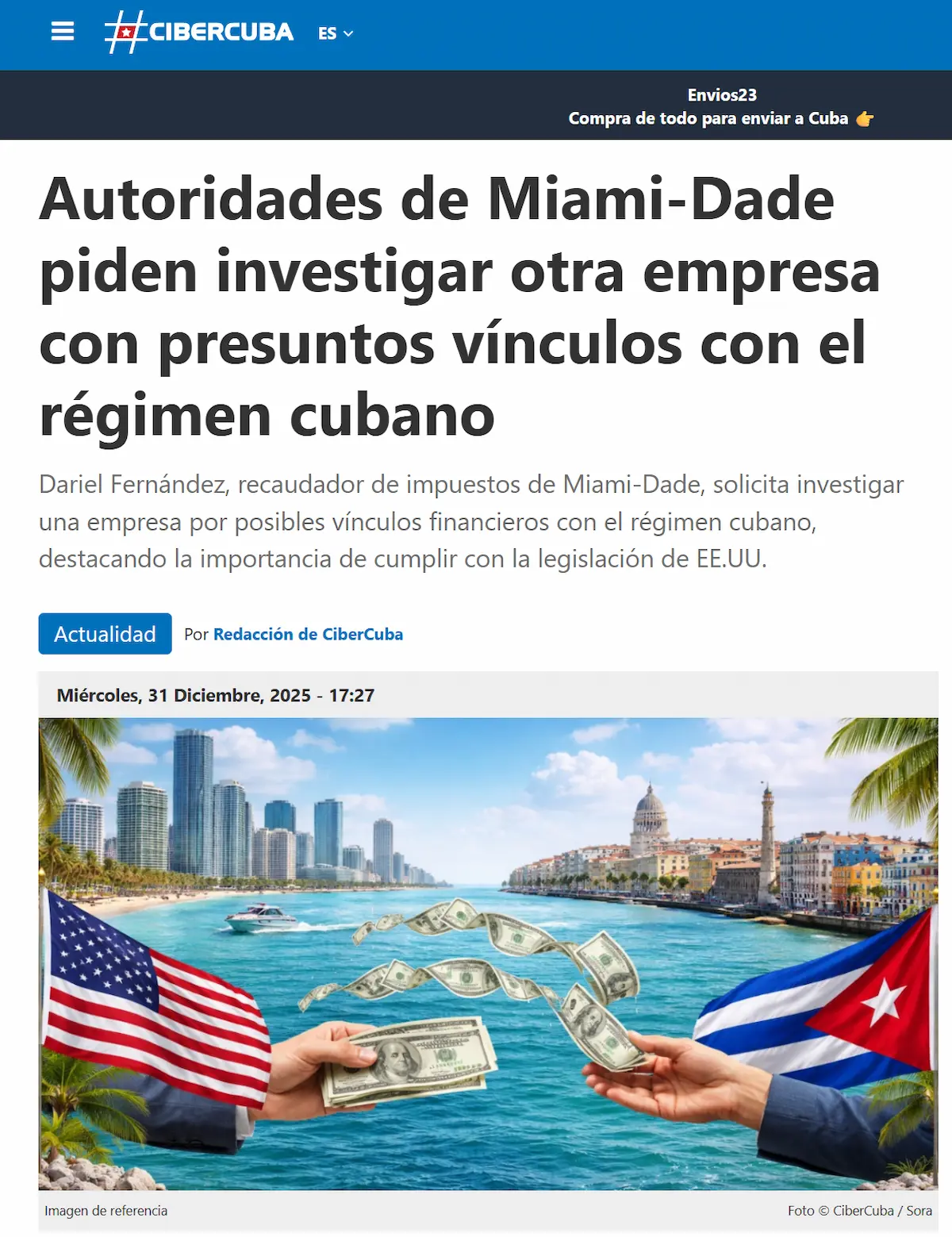
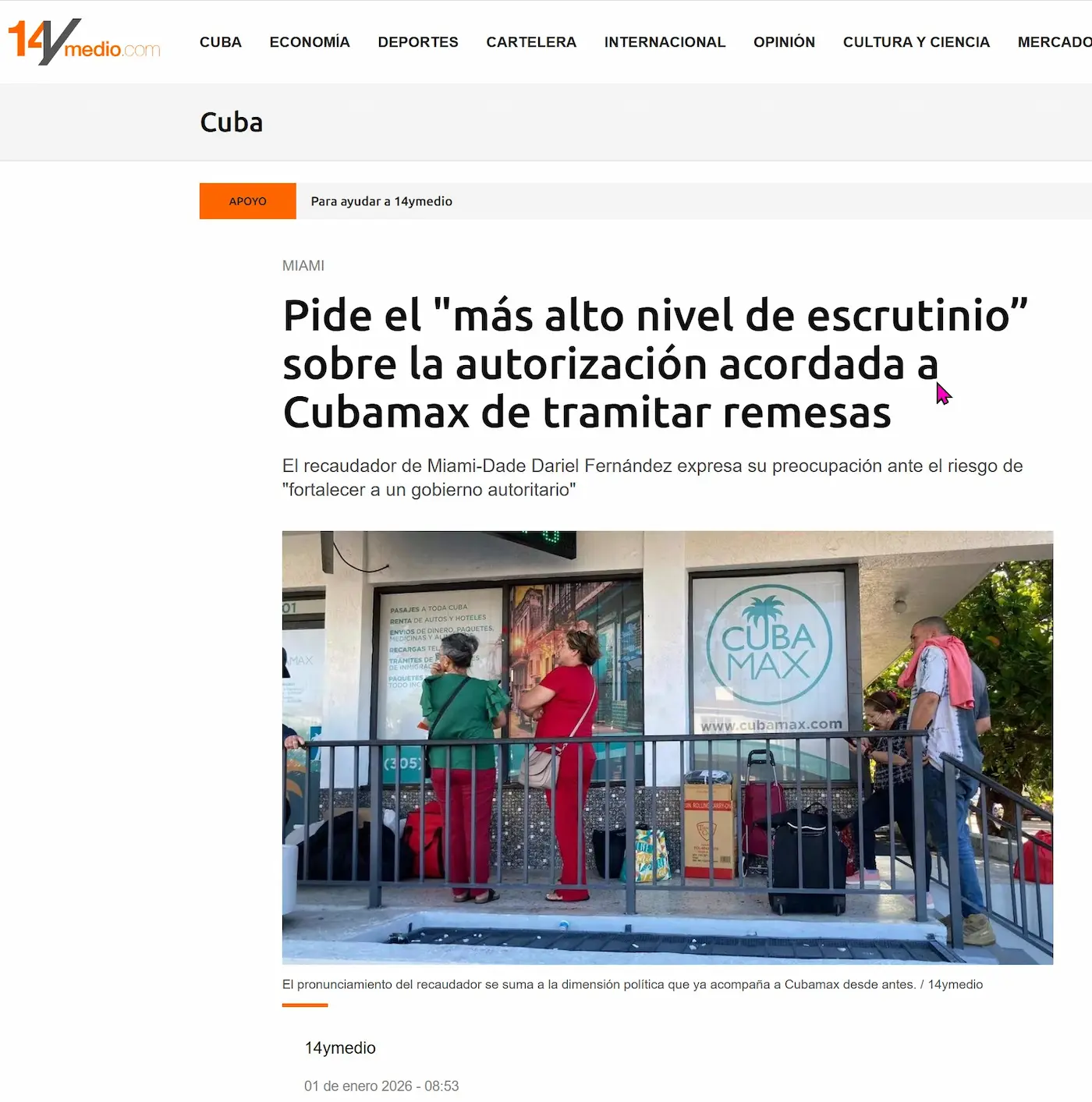
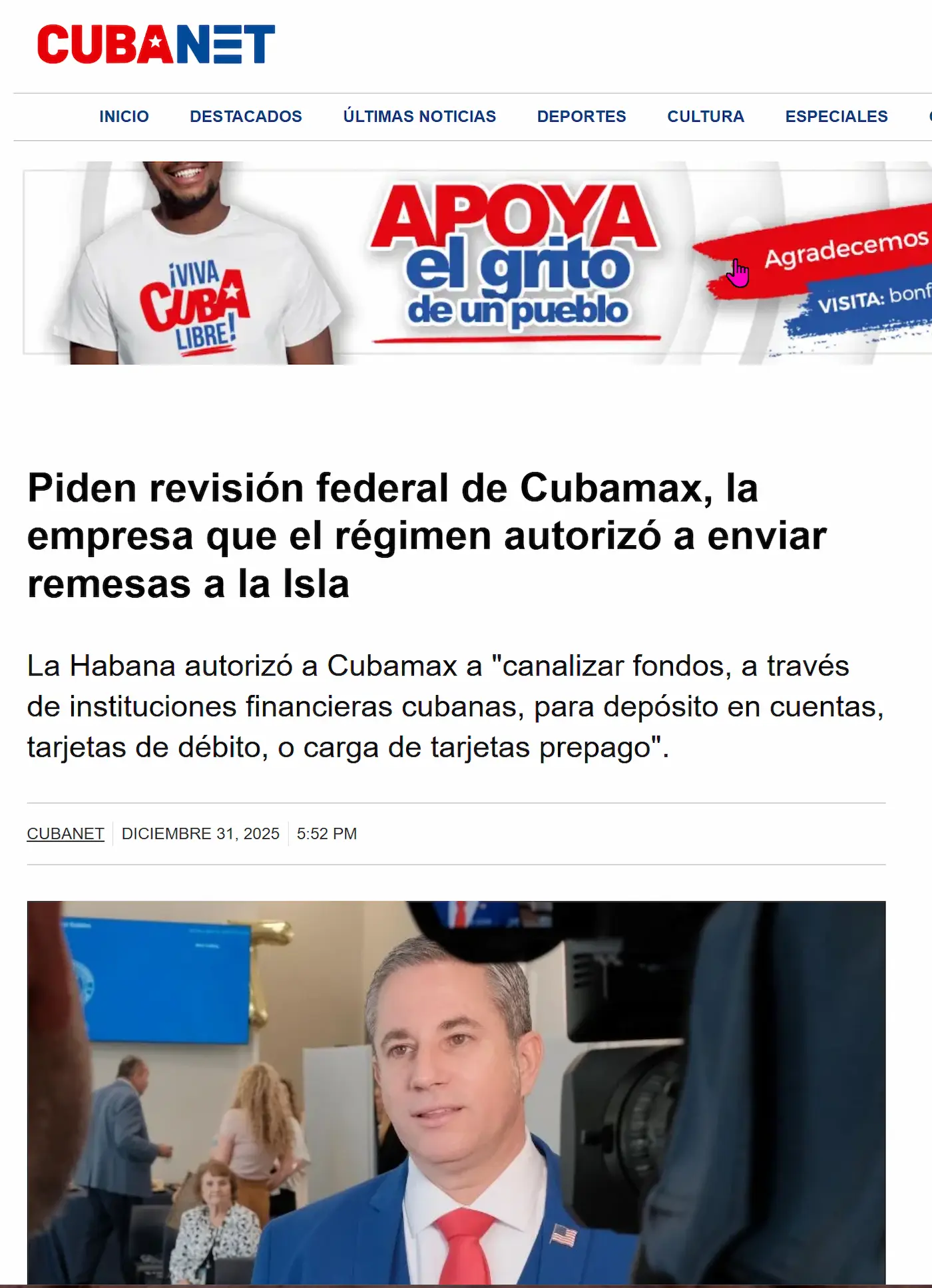
On the same day that the Official Gazette published Resolution 135/2025,Miami-Dade Tax Collector Dariel Fernández issued a public statement calling for the highest level of scrutiny for any activity that places money or financial control in the hands of the Cuban regime. The statement did not mention Cubamax by name. It was the Cuban-American media outlets—14ymedio, CiberCuba, CubitaNOW, and Cubanet—that publicly linked that call to the Hialeah-based company, in the immediate context of the BCC’s authorization.
Dariel Fernández issued a statement in which he said: “Any activity that could place money, operational control, or financial influence in the hands of a communist dictatorship that systematically oppresses its people and aligns itself with hostile regimes such as Venezuela, Iran, and Russia must be subject to the highest level of scrutiny.” Fernández’s statement was general in nature and did not mention Cubamax by name.
OFAC regulations—including Executive Order 14404 and the MINFAR designation of June 4, 2026—have direct implications for any company operating in the U.S.-Cuba space. The community that relies on these services deserves to know the corporate structure behind the brand and the regulatory status of its operations.
The Official Gazette No. 100 (Ordinary) of the Republic of Cuba, published on December 30, 2025, included Resolution 135/2025 of the Central Bank of Cuba (identifier GOC-2025-615-O100) on pages 1–2. The document—signed by Juana Lilia Delgado Portal in her capacity as Minister-President of the Central Bank of Cuba—identifies CUBAMAX TRAVEL INC. as the applicant, with an address at 4380 W 12th Ave, Hialeah, FL 33012, registration number P01000059421, holder of money transmission license FT 230000013 issued on August 4, 2010, by the Florida Office of Financial Regulation.
The resolution authorizes four activities under the heading FIRST, as stated verbatim in the official document:
- “1. Channel funds, through Cuban financial institutions, for deposit into accounts, debit cards, or to load prepaid cards for beneficiaries in Cuba.”
- “2. Deliver cash in local currency or foreign currency to the beneficiaries.”
- “3. Issue transaction receipts for all transactions carried out.”
- “4. Develop, manage, and operate the digital platforms, interfaces, and technological systems necessary to carry out all activities authorized under this authorization.”
Section TWO imposes ten obligations on Cubamax. Among the most significant from a regulatory perspective, paragraph 7 requires the company to “submit to the supervision and information requests of the Central Bank of Cuba, in particular those of the Superintendency of Financial Institutions and the General Directorate for the Investigation of Financial Operations.”
Paragraph 9 stipulates that Cubamax must “be liable with all of its assets, including those held abroad, for the obligations it has incurred and any sanctions that may be imposed on it.”
Paragraph 10 requires “submission to the jurisdiction of the Cuban courts.” The resolution took effect five business days after its publication in the Official Gazette—approximately January 6 or 7, 2026.
The key finding of the document is what it does not say: Resolution 135/2025 authorizes Cubamax to channel funds “through Cuban financial institutions” without naming any of them. Cuba has a state-run financial system whose main operators—Banco Metropolitano, Banco de Crédito y Comercio, Banco Popular de Ahorro, Banco Internacional de Comercio S.A. (BICSA), among others—are under the direct supervision of the Central Bank of Cuba.
Which of these institutions will receive funds from Cubamax is not specified in the Official Gazette, nor in the Florida license, nor in the company’s public communications. It is precisely at this stage that the OFAC question becomes specific: Is any of the Cuban financial institutions channeling Cubamax funds listed on the SDN List or the Cuba Restricted List, or is it directly or indirectly owned or controlled by 50% or more by a designated entity, such that the transactions would be subject to federal sanctions regardless of the authorization issued by the Central Bank of Cuba?
The BCC’s authorization of Cubamax came in the wake of the vacuum created by Western Union’s departure in November 2023, following the addition of Orbit S.A.—a CIMEX subsidiary that processed remittances—to the Cuba Restricted List, effective March 10, 2025.
Corporate Architecture: 11 entities, two people, two offices in Hialeah
Florida state records show twelve entities linked to Trujillo, Acosta, or both. Of the twelve, nine are active. Three are dissolved or inactive. Two are anchor entities confirmed directly on Sunbiz: Cubamax Travel Inc. (P01000059421, incorporated in June 2001) and Cubamax Franchise LLC (L23000210452), the latter of which was voluntarily dissolved in November 2023, seven months after it was incorporated in April of that same year.
The network is physically organized around two locations in Hialeah. At 4380 W 12th Ave —the headquarters of Cubamax Travel—Passport & Visa Expeditors Inc., GIC Group LLC, and Fundacion Vine Inc. are also located, and at the adjacent address, 4382, is National Brand Management LLC. At 735 W 60th St—a property registered in the name of Iwaly Investments LLC—are located Iwaly Investments, General Appliance Trading LLC, and the dissolved entities Sea Charters LLC and Tuyo LLC.
The distribution of the two main entities reveals a clear pattern. They appear together in: Cubamax Travel Inc., Cuba Charter Services LLC, General Appliance Trading LLC, GIC Group LLC, Fundacion Vine Inc., and the now-dissolved Cubamax Franchise LLC. Acosta only, without Trujillo: Iwaly Investments LLC, National Brand Management LLC, Sea Charters LLC (dissolved), and Tuyo LLC (inactive). Trujillo only, without Acosta: Passport & Visa Expeditors Inc.
Neither of the two: Cubamax of Palm Beach Inc., managed by Maritza Milian as president and the Zeballos brothers as managers, with its own FEIN (32-0353271) separate from that of the Hialeah entity. The articles of incorporation for Cubamax of Palm Beach, filed in September 2011 with the State of Florida, do not list either Trujillo or Acosta among its founders or officers.
Four significant findings stand out among the results of the audit.
- First: Cuba Charter Services LLC (L17000156029, active, Trujillo = President, Acosta = VP) was incorporated on July 20, 2017, and its articles of organization filed with the State of Florida state in Article III that its purpose is to be a “PUBLIC CHARTER OPERATOR, OPERATING CHARTER FLIGHTS TO CUBA.” That same entity registered the trademarks AEROCUBA (Reg. 5975580) and AEROCUBA VAMOS CONTIGO with the USPTO, covering charter air transportation, car rentals, travel reservations, and package delivery.
- Second: GIC Group LLC (L23000518526, active, incorporated in November 2023) adds a third manager—Ivan Castro Guzman— alongside Trujillo and Acosta, with all three executives listing the same address as the Cubamax Travel headquarters at 4380 W 12th Ave, Hialeah. It is the only entity in the network that lists a third party who is not identified in the others.
- Third: Fundacion Vine Inc. (N22000010014, active, incorporated in August 2022) is the only nonprofit organization in the network; it shares the same address as Cubamax Travel at 4380 W 12th Ave and has Trujillo as president and Acosta as vice president. Its articles of incorporation state its purpose as: “TO PROVIDE ASSISTANCE WITH OBTAINING LEGAL IMMIGRATION STATUS TO POOR AND/OR UNDERPRIVILEGED MIGRANTS IN THE UNITED STATES.” The foundation’s registered agent is The Legal Team PLLC, a law firm located at 1815 SW 85th Court, Miami, whose authorized signatory is Karel Suarez.
- Fourth: National Brand Management LLC (L19000126604, active, incorporated in May 2019), managed exclusively by Acosta, states its purpose as “COMPANY WHO OWNS AND MANAGES BRANDS.”
The 11 entities in the Cubamax corporate network — Florida state records
Source: Florida Division of Corporations (Sunbiz.org) — Articles of Incorporation and Officer Records. As of June 18, 2026. Please verify the current status directly at search.sunbiz.org before publishing.
| # | Entity | Sunbiz / FEI No. | Status | Incorporated | Main Address | Officials / Representatives |
|---|---|---|---|---|---|---|
| 1 | Cubamax Travel Inc. | P01000059421 / FEI 65-1122055 | ACTIVE | June 14, 2001 | 4380 W 12th Ave, Hialeah, FL 33012 | Carlos Trujillo (President / A.R.) · Giraldo Acosta (Vice President) |
| 2 | Cubamax Franchise LLC | L23000210452 | INACTIVE (voluntarily dissolved in November 2023) | Apr 2023 | 4380 W 12th Ave, Hialeah, FL 33012 | Carlos Trujillo (Bishop) · Giraldo Acosta (Bishop) |
| 3 | Cuba Charter Services LLC | L17000156029 / FEI 82-2227509 | ACTIVE | July 20, 2017 | 12101 SW 1st St, Miami, FL (Trujillo) · 735 W 60th St, Hialeah (Acosta) | Carlos Trujillo (President) · Giraldo Acosta (Vice President) — Stated purpose: “PUBLIC CHARTER OPERATOR, OPERATING CHARTER FLIGHTS TO CUBA” |
| 4 | Sea Charters LLC | L20000212369 | INACTIVE (administratively dissolved in September 2021) | July 21, 2020 | 735 W 60th St, Hialeah, FL | Giraldo Acosta (A.R.) — had no officers at the time of dissolution |
| 5 | General Appliance Trading LLC | L19000075291 / FEI 84-2715027 | ACTIVE | March 18, 2019 | 735 W 60th St, Hialeah, FL | Giraldo Acosta (President / Treasurer / Manager) · Carlos Trujillo (Vice President / Secretary) — Purpose: “IMPORT, EXPORT, AND TRADING” |
| 6 | Passport & Visa Expeditors Inc. | P14000075652 / FEI 47-1834858 | ACTIVE | September 12, 2014 | 4380 W 12th Ave, Hialeah, FL 33012 | Carlos Trujillo (CEO) |
| 7 | National Brand Management LLC | L19000126604 | ACTIVE | May 9, 2019 | 735 W 60th St, Hialeah, FL | Giraldo Acosta (Mgr.) — Purpose: “COMPANY THAT OWNS AND MANAGES BRANDS” |
| 8 | GIC Group LLC | L23000518526 / FEI 93-4620228 | ACTIVE | Nov. 16, 2023 | 4380 W 12th Ave, Hialeah, FL 33012 | Giraldo Acosta (Mgr.) · Carlos Trujillo (Mgr.) · Ivan Castro Guzman (Mgr.) — the only organization in the network with a third executive |
| 9 | Iwaly Investments LLC | L17000163299 / FEI 82-2340546 | ACTIVE | July 28, 2017 | 735 W 60th St, Hialeah, FL | Giraldo Acosta (Pres.) — registered owner of the property at 735 W 60th St |
| 10 | Tuyo LLC | L20000262826 | INACTIVE | Aug. 24, 2020 | 735 W 60th St, Hialeah, FL | Giraldo Acosta (Bishop) |
| 11 | Vine Inc. Foundation | N22000010014 | ACTIVE | Aug. 28, 2022 | 4380 W 12th Ave, Hialeah, FL 33012 | Carlos Trujillo (President) · Giraldo Acosta (Vice President) · Yuli Marrero (Secretary) — Legal Counsel: Karel Suarez / The Legal Team PLLC, 1815 SW 85th Court, Miami — Purpose: immigration assistance for migrants living in poverty |
Expansion: 34 locations listed in the operational directory, 13 on the corporate website
The official Cubamax directory, retrieved by News Miami-Dade on June 18, 2026, from cubamax.com/es/our-offices, lists a total of 34 locations: 31 in Florida spread across eleven counties—with 18 concentrated in Miami-Dade—and three outside the state in Louisville (Jefferson County, Kentucky), North Bergen (Hudson County, New Jersey), and Houston (Harris County, Texas). The company’s “About Us” page lists thirteen branches. The discrepancy between the two sections of the same website exceeds 161 percent.
The network in Miami-Dade spans from the headquarters in Hialeah to Homestead, passing through Sweetwater, Kendall, Palmetto Bay, Cutler Bay, Miami Gardens, Sunset, and Bird Road. Outside Miami-Dade, the network extends to Miramar and Pembroke Pines in Broward; West Palm Beach; Orlando and Kissimmee in the Central Corridor; two locations in Tampa; and locations in Lee, Collier, Marion, Duval, and Bay counties.
Cubamax’s 34 locations — official directory at cubamax.com/es/our-offices (June 18, 2026)
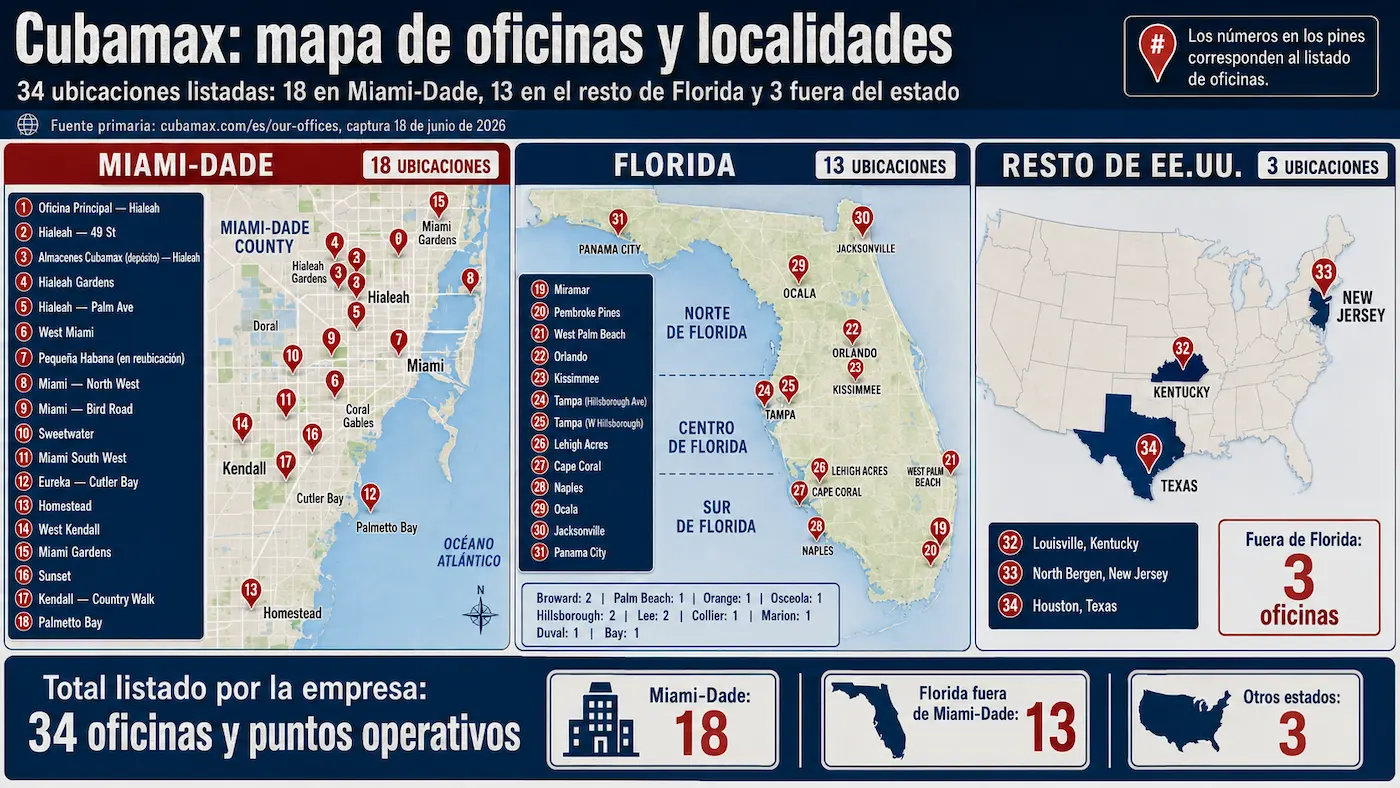
Primary source: cubamax.com/es/our-offices, accessed June 18, 2026.
| # | Location | Address | Phone | County / State |
|---|---|---|---|---|
| 1 | Main Office | 4380 W 12th Ave, Hialeah, FL 33012 | (305) 512-0303 | Miami-Dade |
| 2 | Hialeah — 49th St. | 20 W 49th St, Hialeah, FL 33012 | (305) 512-0303 | Miami-Dade |
| 3 | Cubamax Warehouses (distribution center) | 1601 W 8th Ave, Hialeah, FL 33010 | (305) 512-0392 | Miami-Dade |
| 4 | Hialeah Gardens | 3300 W 84th St #11, Hialeah Gardens, FL 33018 | (305) 705-5918 | Miami-Dade |
| 5 | Hialeah — Palm Ave | 345 Palm Ave, Hialeah, FL 33010 | (305) 967-8226 | Miami-Dade |
| 6 | West Miami | 5735 NW 7th St, Miami, FL 33126 | (305) 512-0303 | Miami-Dade |
| 7 | Little Havana (being relocated) | Miami, FL 33135 | (305) 512-0303 | Miami-Dade |
| 8 | Miami — North West | 2815 NW 7th St, Miami, FL 33125 | (305) 400-4676 | Miami-Dade |
| 9 | Miami — Bird Road | 4110 SW 67th Ave, Miami, FL 33155 | (305) 982-8919 | Miami-Dade |
| 10 | Sweetwater | 10760 W Flagler St, Suite 3, Miami, FL 33174 | (786) 590-3700 | Miami-Dade |
| 11 | Miami South West | 14690 SW 8th St, Miami, FL 33184 | (305) 222-9053 | Miami-Dade |
| 12 | Eureka | 10940 SW 184th St, Cutler Bay, FL 33157 | (305) 512-0303 | Miami-Dade |
| 13 | Homestead | 162 NE 8th St, Homestead, FL 33030 | (305) 400-4475 | Miami-Dade |
| 14 | West Kendall | 15444 SW 88th St, Miami, FL 33196 | (305) 615-4181 | Miami-Dade |
| 15 | Miami Gardens | 6406 NW 186th St, Hialeah, FL 33015 | (786) 607-7755 | Miami-Dade |
| 16 | Sunset | 10855 SW 72nd St, Unit 45, Miami, FL 33173 | (786) 885-2013 | Miami-Dade |
| 17 | Kendall — Country Walk | 15411 SW 137th Ave, Miami, FL 33177 | (305) 705-5521 | Miami-Dade |
| 18 | Palmetto Bay | 14273 S Dixie Hwy, Miami, FL 33176 | (786) 254-8773 | Miami-Dade |
| 19 | Miramar | 3168 S University Dr, Miramar, FL 33025 | (954) 440-5411 | Broward |
| 20 | Pembroke Pines | 9950 NW 6th Ct, Pembroke Pines, FL 33024 | (954) 417-2662 | Broward |
| 21 | West Palm Beach | 1336 S. Military Trail #F, West Palm Beach, FL 33415 | (561) 432-7424 | Palm Beach |
| 22 | Orlando | 1722 Woolco Way, Orlando, FL 32822 | (407) 277-6771 | Orange |
| 23 | Kissimmee | 1330 John Young Pkwy, Kissimmee, FL 34741 | (407) 518-9911 | Osceola |
| 24 | Tampa (Hillsborough Ave) | 601 W Hillsborough Ave, Tampa, FL 33603 | (813) 640-2822 | Hillsborough |
| 25 | Tampa (West Hillsborough) | 11230 W Hillsborough Ave, Tampa, FL 33635 | (656) 240-8631 | Hillsborough |
| 26 | Lehigh Acres | 1175 Homestead Rd N, Unit 2, Lehigh Acres, FL 33936 | (305) 512-0303 | Lee |
| 27 | Cape Coral | 4419 Del Prado Blvd S, Suite #5, Cape Coral, FL 33904 | (305) 512-0303 | Lee |
| 28 | Naples | 12975 Collier Blvd, Suite 106, Naples, FL 34116 | (239) 304-9348 | Necklace |
| 29 | Ocala | 1426 S Pine Ave, Ocala, FL 34471 | (352) 830-6266 | Marion |
| 30 | Jacksonville | 1821 Parenthal Home Rd, Suite 2, Jacksonville, FL 32216 | (904) 374-8869 | Duval |
| 31 | Panama City | 5317 E Highway 22, Suite D, Panama City, FL 32404 | (850) 215-3010 | Bay / Florida |
| 32 | Louisville | 5757 Preston Highway, Louisville, KY 40219 | — | Jefferson, Kentucky |
| 33 | North Bergen | 7611-B Bergenline Ave, North Bergen, NJ 07047 | — | Hudson, New Jersey |
| 34 | Houston | 2424 Greenhouse Rd #210, Houston, TX 77084 | — | Harris / Texas |
The 2019 settlement involving 115,000 customers: $800,000 for unsolicited messages
In August 2018, a plaintiff filed a class action against Cubamax Travel Inc. under the Telephone Consumer Protection Act (TCPA) in the U.S. District Court for the Southern District of Florida (Case No. 1:18-cv-23240, Judge Cecilia M. Altonaga).
The allegation: Cubamax sent unsolicited promotional text messages using an auto-dialer between August 2014 and January 2019 without the recipients’ consent. On June 20, 2019, the court approved the settlement: approximately $800,000, without an admission of liability. There were approximately 115,482 eligible class members. There is no criminal component, nor is any federal agency involved as a plaintiff.
The cargo agreement with Aerovaradero and the ownership structure under the new 2026 framework
In April 2024, during the International Transportation and Logistics Fair (FITL 2024) held in Cuba, Cubamax signed a formal agreement with Aerovaradero S.A. to transport perishable cargo—frozen and refrigerated meat—from Florida to Cuba.
The partnership began in July 2023, when Aerovaradero began operations. The 2024 agreement was formalized with a delivery timeframe of three to four days from Florida to the recipient in Cuba, initial coverage limited to Havana, and last-mile delivery handled by a private Cuban MSME using refrigerated vehicles. Mayelín Gotera López, CEO of Aerovaradero, and Carlos Trujillo confirmed the agreement in the Cuban media, as reported by Granma, Prensa Latina, and Radio Angulo.
Aerovaradero’s official website identifies CACSA —Corporación de la Aviación Cubana S.A.—as its parent company, with the Ministry of Transportation (MITRANS) listed as its majority shareholder. CACSA is a Higher Business Management Organization (OSDE) established in 1996 that brings together the main Cuban civil aviation entities—including Cubana de Aviación, ECASA (Empresa Cubana de Aeropuertos y Servicios Aeroportuarios), and Aerovaradero, among others—and oversees eleven subsidiaries and three international economic associations.
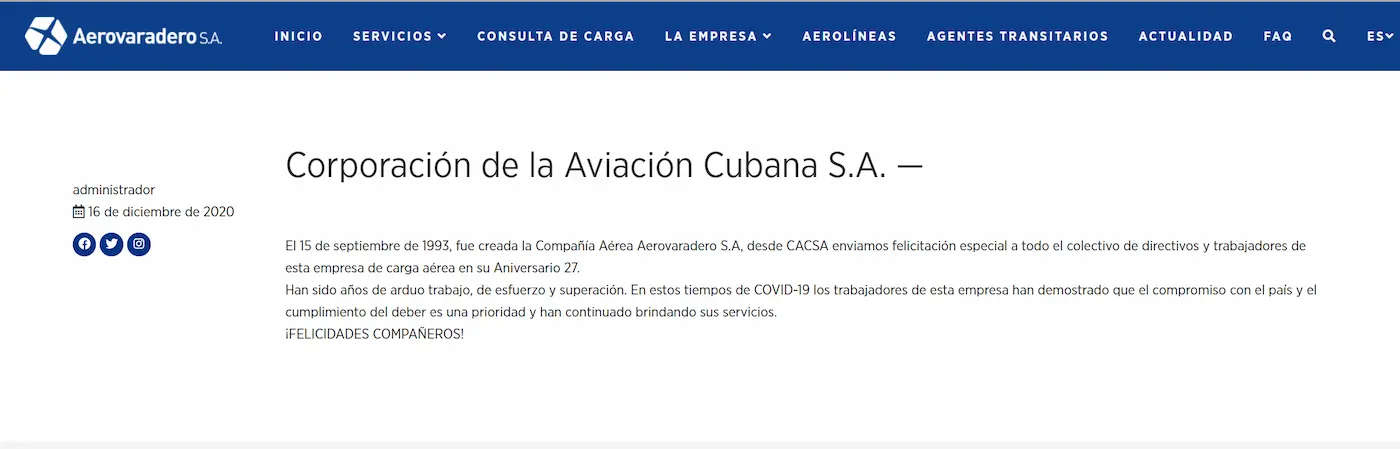
Aerovaradero emerged as a company specializing in air cargo after merging with ECASA’s international cargo department in the 1990s.
CACSA has independent legal status and the ability to finance itself, but it operates under the supervision of the Ministry of Transportation (MITRANS)—not MINFAR or GAESA— according to its articles of incorporation and its official website (cacsa.com.cu).
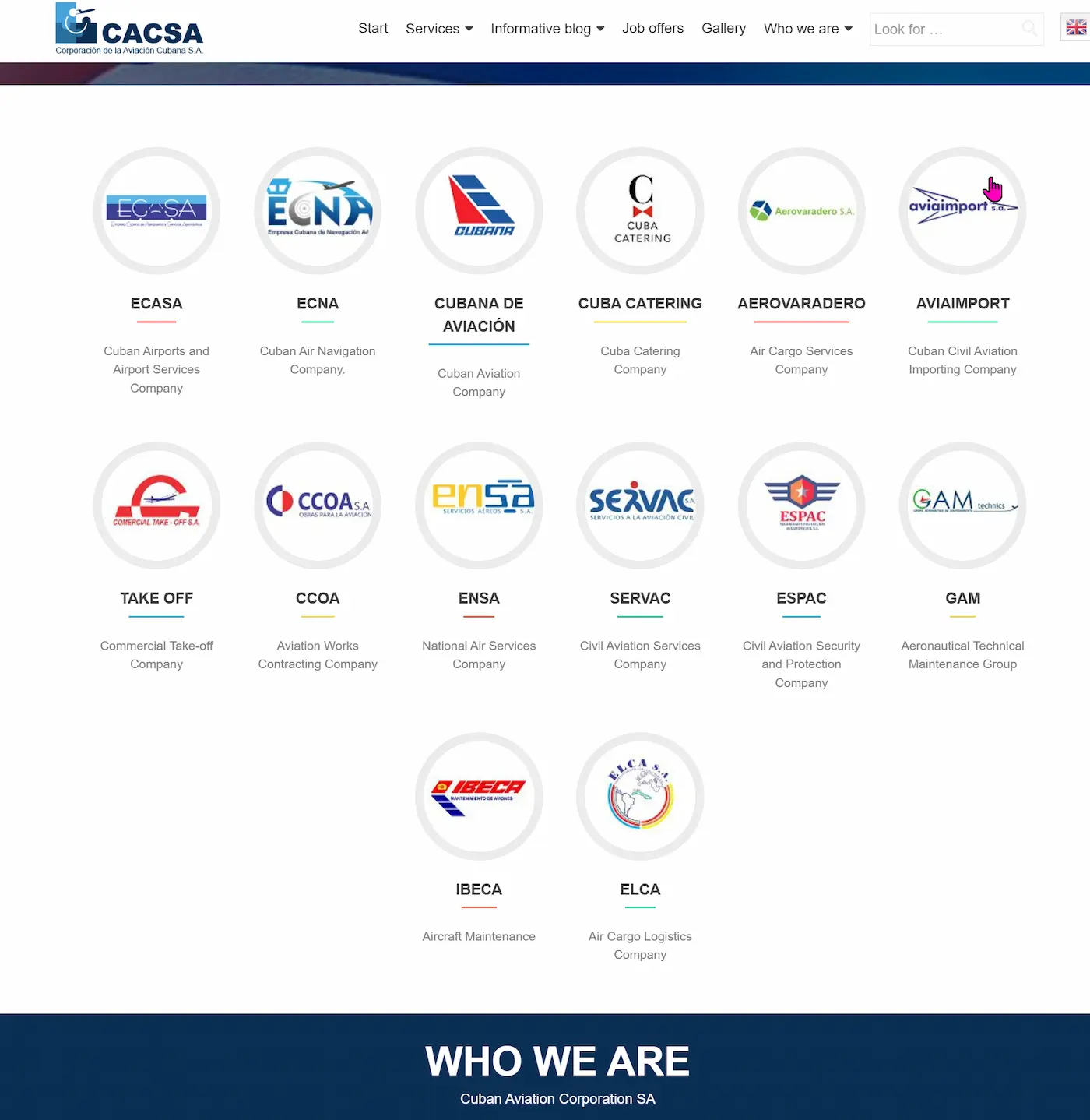
The website itself lists its authorized forwarding agents in the United States: Express Travel Corp., TBTM Global Inc., and Anmart Superior Travel LLC. Cubamax is not listed among the authorized agents.
News Miami Dade verified the complete Cuba Restricted List in the Federal Register 90 FR 31558 (Department of State, July 14, 2025, 24 pages read in their entirety): Aerovaradero does not appear on the CRL by name. Neither CACSA nor MITRANS appear on the list. The document itself includes the following institutional warning: “Entities or subentities owned or controlled by another entity or subentity on this list are not treated as restricted unless also specified by name on the list” — for the purposes of the CRL, neither MITRANS’s ownership of CACSA nor any ownership link to listed entities restricts Aerovaradero unless it is directly named, which is not the case.
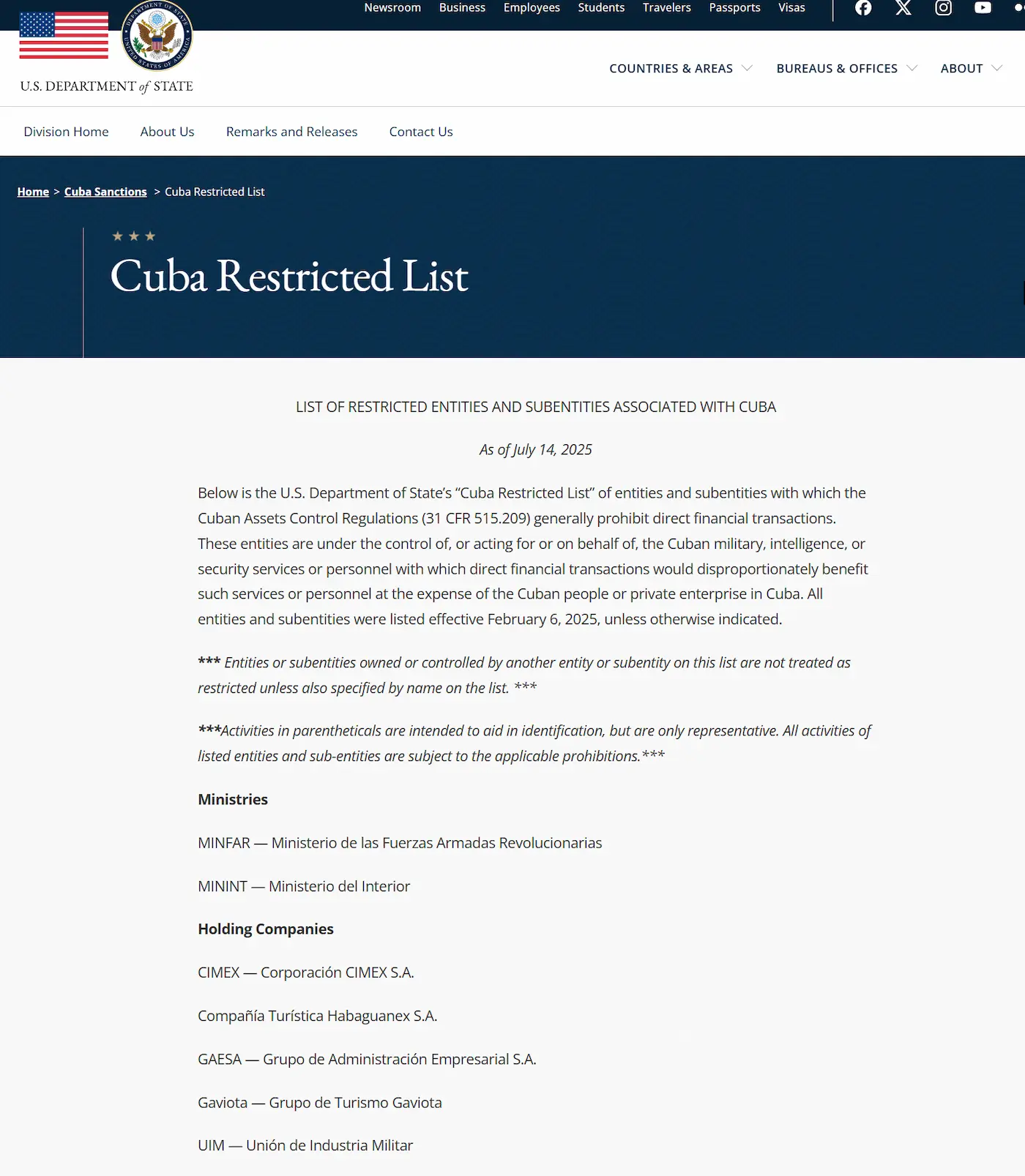
Separately, a search on the OFAC Sanctions List for “Aerovaradero” returned AeroCaribbean Airlines (also known as AERO-CARIBBEAN) as the closest match—a separate entity based in Havana designated under the CUBA program—not Aerovaradero S.A. Both verifications confirm that Aerovaradero does not appear on the CRL or the SDN List under that name. Aerogaviota—a separate company and subsidiary of Gaviota S.A., GAESA’s tourism and military aviation arm—appears on the Cuba Restricted List as a subentity of GAESA and on the SDN List; it should not be confused with Aerovaradero, whose declared chain of ownership includes CACSA and MITRANS.
The regulatory issue raised by the agreement stems from the 2026 sanctions framework, not from Aerovaradero’s inclusion on any list. To understand the risk, it is necessary to distinguish between two institutional tracks within the Cuban economy.
The first is the military track: GAESA—Grupo de Administración Empresarial S.A.—is a holding company conglomerate of the Revolutionary Armed Forces (FAR), overseen by MINFAR, with no public organizational chart or external audits, and subsidiaries in tourism (Gaviota, Aerogaviota), retail (CIMEX), finance (Banco Financiero Internacional), and port logistics (Mariel Special Development Zone). GAESA, Gaviota, and Aerogaviota are designated on the SDN List and the Cuba Restricted List; MINFAR was designated on June 4, 2026, under Executive Order 14404.
The second is the civil aviation sector: CACSA is a top-level corporate management organization (OSDE) whose declared majority shareholder is the Ministry of Transportation (MITRANS), not MINFAR. Aerovaradero is a subsidiary of CACSA. No publicly available source indicates that GAESA or MINFAR holds a direct or indirect ownership stake of 50 percent or more in CACSA or in the Ministry of Transportation.
Regulatory Alert — OFAC’s 50 Percent Rule: The OFAC 50 percent rule stipulates that an entity is automatically blocked if GAESA, MININT, or MINFAR owns it—direct or indirect ownership, not just administrative control—at that percentage or higher, even if the entity does not appear by name on any list. All available official records place Aerovaradero within the civil aviation system under MITRANS: CACSA is an OSDE established in 1996 by public deed, supervised by MITRANS, whose structure is documented by Decree-Law 296/2012 —the instrument that dissolved the IACC and transferred CACSA to the MITRANS system—and is organizationally separate from MINFAR and GAESA.
There is no public evidence that a blocked entity—GAESA, MINFAR, MININT, or any designated subsidiary—holds a direct or indirect ownership interest of 50 percent or more in CACSA or Aerovaradero. Based on that record, the 50 percent rule does not appear to apply to Aerovaradero, unlike Aerogaviota—a subsidiary of Gaviota S.A., a subsidiary of GAESA—which is listed on the SDN List. A definitive determination of compliance would require specialized analysis by an expert in OFAC sanctions; the burden of proving compliance rests with the company under § 515.572(b)(1).
Is there documentary evidence that Cubamax Travel Inc., its executives, or Aerovaradero have violated federal sanctions, or is the central issue a matter of regulatory compliance that should be analyzed as part of due diligence rather than as a conclusion?
The legal framework governing the business
Trade between the United States and Cuba falls exclusively under federal jurisdiction. Miami-Dade, Hialeah, and the other municipalities where Cubamax operates only issue local business licenses (business tax receipts) and approve zoning. Municipal anti-communist resolutions and declarations have no direct legal effect on federal compliance with OFAC—that compliance rests solely with the company under the Cuban Assets Control Regulations (CACR), 31 CFR Part 515.
Cubamax’s operations are authorized under OFAC general licenses that do not require case-by-case approval: The general authorization for remittances under 31 CFR § 515.570 does not constitute an open license for any Cuban financial channel.
The regulatory question is specific: Which entity collects, processes, settles, or delivers the funds within Cuba, and whether any of those entities appears on the Cuba Restricted List, the SDN List, or is blocked under any other applicable federal authority.
Parcel and mail services (§ 515.542(a)); travel and transportation in authorized categories (§§ 515.560, 515.561, and 515.572).
General licenses are self-enforcing, but the burden of proving compliance rests with the company, which must retain records for ten years (§ 515.572(b)(1)).
Commercial cargo transportation is not always fully covered by the CACR’s general licenses and may require specific verification depending on the type of goods, the Cuban counterparties, and the type of agreement.
Executive Order 14404 (May 1, 2026) added an additional sanctions program under the authority of the IEEPA. The Cuba General License 1 (OFAC, May 7, 2026) preserves transactions already authorized or exempted under the CACR. GL 1 does not expand existing authorizations or create a general exception for blocked entities; nor does it protect transactions that were already blocked under the CACR.
Three levels of regulatory oversight: federal, state, and local—with Cubamax at the center
Scrutiny of business dealings with Cuba in Florida does not operate on a single level. During the 2025–2026 period, a three-tiered structure—federal, state, and local—has been established that converges on the same market sector in which Cubamax operates. None of the three levels, on its own, establishes that Cubamax has violated the law. But together, they create—simultaneously and cumulatively—the most restrictive regulatory environment this sector has faced in decades.
Federal level: NSPM-5, EO 14404, and the active presence of HSI
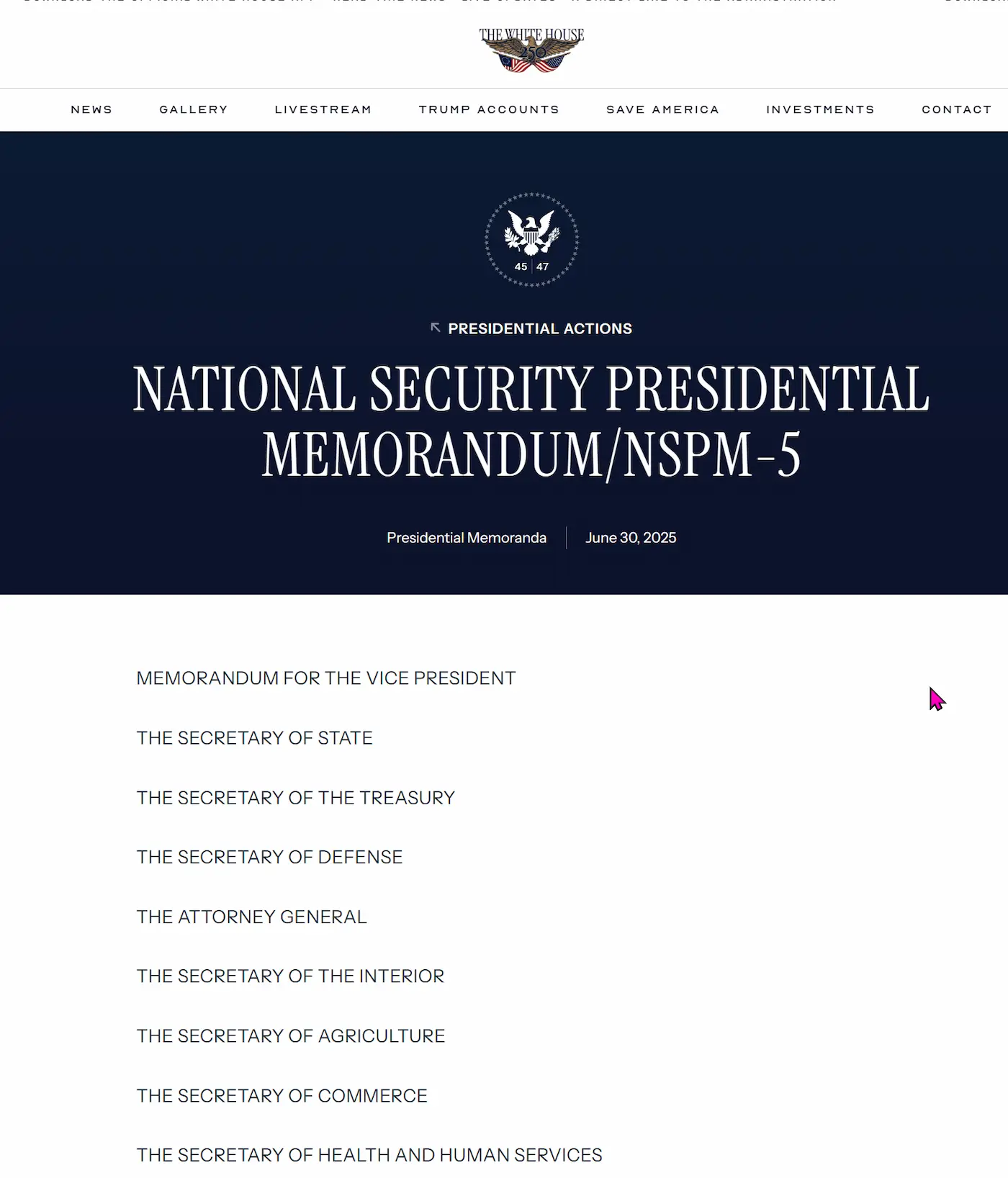
On June 30, 2025, the White House reissued Presidential National Security Directive NSPM-5, the cornerstone of the Trump administration’s Cuba policy. On March 10, 2025, the State Department had added Orbit S.A., a subsidiary of CIMEX that processed remittances to Cuba for companies such as Western Union, to the Cuba Restricted List.
On July 14, 2025, the State Department once again updated the Cuba Restricted List through the notice “Updating Cuba Restricted List,” published in the Federal Register as 90 FR 31558, document 2025-13149. This update added seven hotels controlled by the Cuban military and reorganized the list by province to make it easier for the public to consult.
The July update was not, in and of itself, the initial inclusion of money transfer entities. The notice itself identifies Orbit S.A. —a money transfer entity— as an additional sub-entity of CIMEX, effective March 10, 2025. The list also includes other financial institutions or entities involved in payments and financial services, such as American International Services (AIS Remesas), FINCIMEX, Banco Financiero Internacional S.A., and RAFIN S.A.
Family remittances are one of Cubamax’s core services under 31 CFR § 515.570. Therefore, the regulatory issue is not only whether a remittance is authorized in the abstract, but also which entity collects, processes, settles, or delivers the funds within Cuba. If that entity appears by name on the Cuba Restricted List, the SDN List, or is blocked under another applicable federal authority, the service falls under a significantly stricter compliance framework.
On May 1, 2026, Executive Order 14404 established a parallel sanctions program under IEEPA authority—including secondary sanctions for foreign financial institutions dealing with designated entities—and explicitly directed the heads of all federal executive agencies to take “all appropriate measures within the agency’s authority” to implement it. On June 4, 2026, pursuant to that same Executive Order, the Treasury Department designated MINFAR. OFAC had previously established a transitional “no-targeting” stance for GAESA regarding wind-down transactions, effective until June 5, 2026. That date has already passed as of the publication of this article. The designation of MINFAR is the mechanism that triggers the question regarding Aerovaradero’s ownership chain, as described in the previous section.
On June 4, 2026, OFAC confirmed that GAESA, MININT, and MINFAR were blocked under Executive Order 14404. OFAC also indicated that these three entities are blocked under the Cuban Assets Control Regulations, and warned that non-U.S. persons, including foreign financial institutions, face the risk of sanctions if they conduct transactions with persons designated under E.O. 14404.
The designation of MINFAR does not, in and of itself, prove that Aerovaradero, CACSA, or MITRANS are subject to sanctions. What it does is make a question of ownership legally relevant: if MINFAR, GAESA, or another blocked entity directly or indirectly owns 50% or more of any entity within the Aerovaradero–CACSA–MITRANS chain, that entity could be affected under OFAC’s 50% rule, even if it does not appear by name on a sanctions list. As of the completion of this review, that chain of ownership has not been established in publicly available sources.
Who Can Act Against Cubamax — and What Tools Have Not Been Used?
The map of authorities with real power over Cubamax’s operations spans four levels. Understanding who has acted and who has not clarifies where the levers remain inactive.
Among the figures who have already acted in a documented manner: the Hialeah City Council approved two formal resolutions — 2024-103 and 2024-156 — blocking municipal benefits, contracts, and grants to companies with ties to the Cuban regime. Mayor Bryan Calvo created CUBAT on January 12, 2026, and identified 290 businesses in the city. Miami-Dade Tax Collector Dariel Fernández sent 75 certified letters in October 2025 and revoked the licenses of at least 46 companies in two rounds. Governor DeSantis signed HB 905 on May 8, 2026. Attorney General James Uthmeier participated in the Bay County operation. The Department of the Treasury designated MINFAR on June 4, 2026, under Executive Order 14404. The Department of State added Orbit S.A. to the Cuba Restricted List on March 10, 2025, pushing Western Union out of the market. In all of those cases, Cubamax continued operating.
The tools that exist but have not been publicly activated against Cubamax are equally concrete. The Florida Office of Financial Regulation (OFR) issued money transmitter license FT230000013 to Cubamax on April 8, 2010, and has authority to investigate, suspend, or revoke it if it determines that the operations violate federal law. The OFR’s official monthly money transmitter registry — reviewed by News Miami Dade in June 2026 — confirms that license FT230000013 appears with an Approved status, was renewed on April 1, 2025 — ten months after Hialeah’s June 2024 resolutions — and remains valid through April 30, 2027. The same registry shows that Cubamax’s 34 locations are not registered as individual FT3 sub-agents: all operate under the company’s single primary FT2 license, a structure consistent with the dissolution of Cubamax Franchise LLC in November 2023. Despite the accumulated regulatory pressures since 2024 — Hialeah municipal resolutions, Miami-Dade Tax Collector revocations, HSI operations in Bay County, and HB 905 taking effect on July 1, 2026 — the OFR has not changed the status of license FT230000013. It is the most direct lever over the core of Cubamax’s business — remittances — and there is no public evidence that it has been activated. Florida Administrative Code Rule 69V-560.703, effective since January 2020, additionally requires every money transmitter to maintain written policies and procedures to monitor compliance with OFAC regulations — expressly including 31 CFR §§ 594.201 and 594.204 — applicable to all of its authorized vendors. That written compliance program is examinable by the OFR in any routine audit, without the need for a prior complaint or for OFAC to act first.
The same OFR system contains a second location file — MTLocations — separate from the monthly license registry and reviewed by News Miami Dade in June 2026. That file identifies exactly 12 approved physical facilities in Florida under FT230000013, all with a renewal date of April 1, 2025: seven in Miami-Dade (Hialeah ×3, Miami ×3, Homestead ×1), one in West Palm Beach, one in Tampa, one in Orlando, and one in Kissimmee. The public directory at cubamax.com lists 31 locations in Florida — captured on June 18, 2026. The difference between the OFR registry and the company directory is 19 Florida locations that do not appear in the MTLocations file. The three out-of-state locations — Louisville, North Bergen, and Houston — fall outside the jurisdiction of Florida’s OFR. News Miami Dade is verifying whether Florida Chapter 560 (§ 560.209) requires prior registration of each location in the MT_Locations system, or whether the parent FT2 license covers the company’s direct facilities without a separate entry in that file. If individual registration is required, the 19 unlisted locations would represent a regulatory blind spot over a substantial portion of Cubamax’s Florida network.
FinCEN can require BSA/AML reports on Cubamax transactions, including identification of the Cuban financial institutions receiving the funds. OFAC can require Cubamax to provide documentation of its compliance chain — without designating it — through a nonpublic administrative inquiry with immediate operational consequences. The U.S. Attorney for the Southern District of Florida has criminal jurisdiction if a sanctions violation is documented. And beginning July 1, 2026, the tax collectors in the thirteen counties where Cubamax operates outside Miami-Dade — Hillsborough, Duval, Orange, Osceola, Lee, Collier, Marion, Palm Beach, Bay, and others — will have explicit legal authority under HB 905 to act on local locations.
The South Florida members of Congress with jurisdictional relevance to the issue — María Elvira Salazar (CD-27), Carlos Giménez (CD-26), and Mario Díaz-Balart (CD-25) — can formally ask the Secretary of the Treasury for an OFAC investigation into Cubamax’s payment chain, or convene hearings on the Cuba-remittances sector. That path does not require new legislation; a letter to the OFAC Director with the specific question about the Cuban financial institutions referenced in Resolution 135/2025 would be enough.
One element of the 2026 regulatory framework deserves editorial attention: when the Trump administration signed Executive Order 14404 on May 1, 2026, and designated MINFAR on June 4, OFAC simultaneously issued Cuba General License 1 (GL 1), which explicitly preserved all transactions already authorized under the existing CACR — including general licenses for family remittances under 31 CFR § 515.570 and for money transmitters under § 515.572. GL 1 is, in practical terms, a regulatory shield: the same instrument that designated MINFAR also guaranteed the continuity of remittance operators such as Cubamax. News Miami Dade is verifying whether there is a complementary instrument with a one-year term that released specific embargo points under the Trump administration during the 2025-2026 period, and will update this section once the official document is obtained.
The same period that preserved remittance channels also saw, in parallel, a significant tightening on energy supplies to Cuba operating on a separate track. On February 25, 2026, the Bureau of Industry and Security (BIS) suspended License Exception SCP (Support for the Cuban People) under EAR Part 740 — the mechanism that until then allowed U.S. companies to export gas and petroleum products to Cuba’s private sector. On March 19, 2026, OFAC issued General License 134A, explicitly excluding Cuba from transactions that would have allowed it to benefit from Russian oil operations under existing authorizations. In June 2026, CUPET — Cuba’s state oil company — was sanctioned under the same Executive Order 14404 that, through GL 1, had preserved general remittance licenses. The documented pattern in the official instruments is this: energy restrictions activated; remittance authorizations preserved within the same regulatory framework.
That asymmetry — tightening oil, preserving remittances — has been noted by analysts of Cuban-American electoral behavior as reflecting a concrete political calculation. Cuban Americans vote Republican at significantly higher rates than the Latino electorate overall, a pattern documented in the electoral data from 2020 and 2024: in both elections, President Trump expanded his margins in Miami-Dade, driven in part by Cuban-American and Venezuelan-American voters. The three Cuban-American Republican members of Congress from South Florida with direct capacity to request an OFAC investigation into Cubamax’s payment chain — María Elvira Salazar (CD-27), Carlos Giménez (CD-26), and Mario Díaz-Balart (CD-25) — represent districts where thousands of families use services such as Cubamax to send remittances to relatives in Cuba. The overlap between their role as potential overseers of the sector and their constituents’ reliance on the same channels under scrutiny forms part of the political context behind the regulatory question this article raises.
The combined effect is a regulatory landscape that tightens around the perimeter — more municipalities with authority, more counties under HB 905, more designations of Cuban entities, and now energy restrictions with no equivalent in the remittance sector — while the core of Cubamax’s business operates under the same general licenses it had before E.O. 14404. The editorial question generated by that landscape is not about guilt: it is about which authority, with which instrument, will answer the question left open by the Official Gazette on December 30, 2025.
State level: HB 905, effective July 1, 2026
On May 8, 2026, Governor Ron DeSantis signed HB 905 (Chapter 2026-66, Laws of Florida)—the Foreign Interference Restriction and Enforcement Act. The law takes effect on July 1, 2026. Section 4 creates the new statute F.S. § 205.0532, the verbatim text of which, as set forth in the enrolled version, states:
“(1) Any appropriate tax collector or local governing authority that issues a business tax receipt to any individual, business, or entity under this chapter may revoke or refuse to renew such receipt if the individual, business, or entity—or the parent company of such individual, business, or entity—is conducting business with Cuba in violation of federal law.”
“(3) A person who knowingly makes a false declaration under subsection (2) commits the crime of perjury by false written declaration, a third-degree felony, punishable as provided in § 775.082, § 775.083, or § 775.084.”
The practical effect on Cuba-Florida business is to extend to all municipalities and tax collectors in the state the same authority that Miami-Dade already exercised under its Administrative Order 3-13: to revoke or deny renewal of the business tax receipt to any company that trades with Cuba in violation of federal law. HB 905 also classifies the submission of false statements regarding commercial activity with Cuba as a third-degree felony—perjury by false written statement.
Before HB 905, that authority depended on whether the county or municipality had its own administrative instrument. Miami-Dade did; most counties in central and northern Florida did not.
Effective July 1, 2026 —thirteen days from the publication of this article— the tax collectors of Hillsborough (Tampa), Duval (Jacksonville), Orange (Orlando), Osceola (Kissimmee), Lee (Cape Coral, Lehigh Acres), Collier (Naples), Marion (Ocala), Palm Beach, and Bay will have explicit state legal authority over the thirteen Cubamax locations outside Miami-Dade. The law is uniform: it does not distinguish between large and small businesses.
Local Level: From Hialeah to Miami — The Paradox of the Company That Sparked a Political Controversy and Is Still in Business
In June 2024, a company’s request to expand its facilities triggered the first formal response by a Miami-Dade local government against businesses with ties to the Cuban regime. The company was Cubamax. Bryan Calvo, then a Hialeah city council member, spearheaded the proposal after Cubamax applied to expand its premises in the city.
The Hialeah City Council unanimously approved Resolution No. 2024-103: no business linked to the Cuban regime may receive benefits, concessions, or contracts from the city. Then-Mayor Esteban Bovo stated: “As a city and as a government, we will not engage in any business with entities that are profiting from the suffering of the Cuban people.” Calvo was more direct: “These businesses will not be given the opportunity to grow and receive concessions from the city of Hialeah.”
Cubamax continued to operate. Its operational directory still lists its headquarters at 4380 W 12th Ave, Hialeah, FL 33012, in addition to several other locations within Hialeah and Hialeah Gardens. This operational continuity is significant because the 2024 controversy did not, on its own, result in a public revocation of existing licenses.
Hialeah Resolution 2024-103 was issued following a request by Cubamax to expand its operations in the city, according to a report by CiberCuba citing coverage by Telemundo 51. The measure sought to prevent businesses linked to the Cuban regime from receiving municipal benefits, concessions, or contracts. It was not, in and of itself, an order for the automatic revocation of existing business licenses.
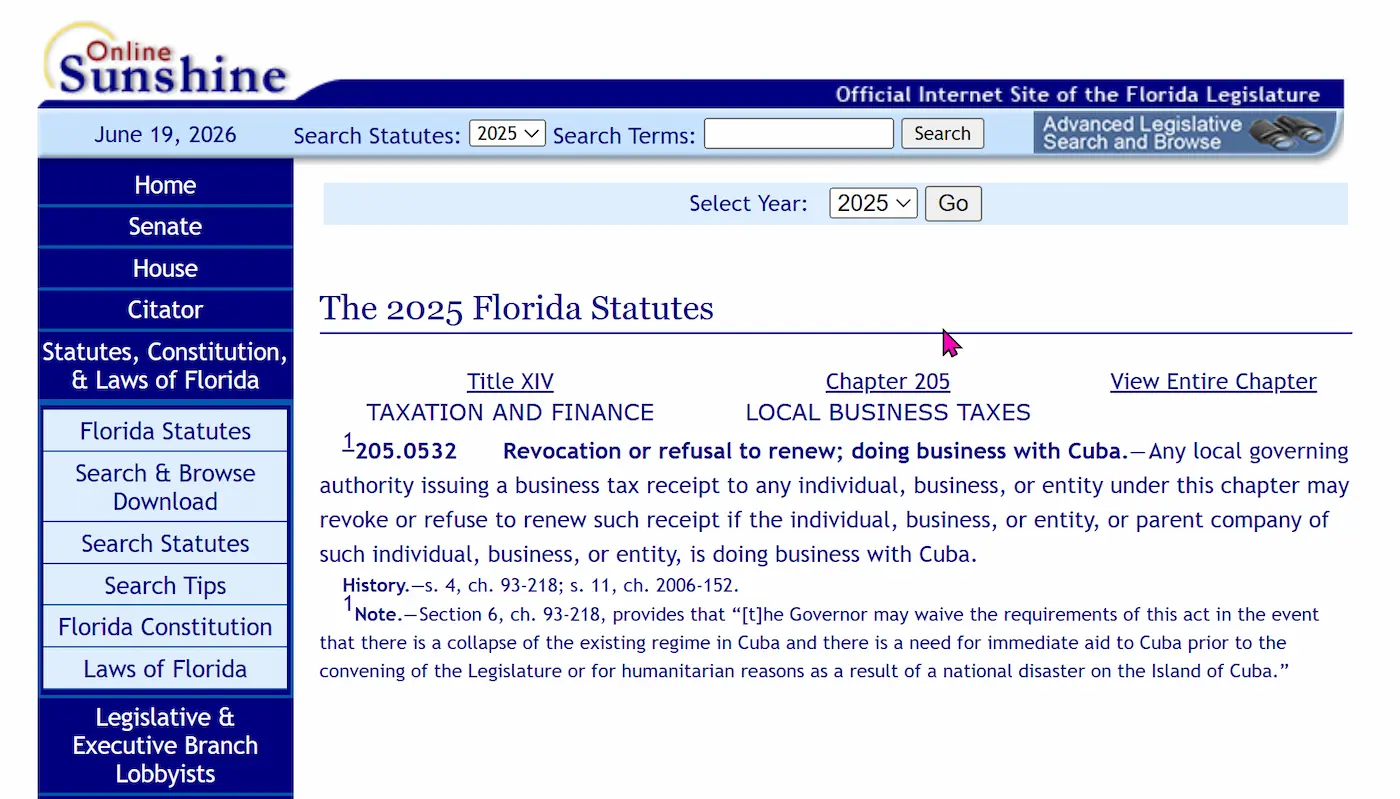
The legal authority to revoke or refuse to renew a business tax receipt for conducting business with Cuba is derived from Florida Statute § 205.0532, which allows a local issuing authority to revoke or refuse to renew the receipt if the business, or its parent company, is conducting business with Cuba.
The Hialeah resolution was the first visible step in an institutional escalation. In January 2026, Hialeah’s new mayor, Bryan Calvo—who, as a city council member, had spearheaded the 2024 resolution—announced the creation of CUBAT, the Cuba Business Advisory Task Force.
According to CBS Miami, Calvo stated that 290 businesses in Hialeah had already been identified for review and would receive certified letters requesting documentation. NBC6 reported a few days later that the City of Miami followed Hialeah’s lead and approved a similar task force to review businesses with possible ties to the Cuban government.
The list of the 290 businesses identified by CUBAT has not been made public. Nor was any publicly available evidence found that Cubamax Travel Inc. is among the businesses reported by that task force.
The City of Miami followed suit: On January 23, 2026, the City Commission approved its own task force, led by the Office of the Municipal Inspector General and sponsored by Commissioner Rolando Escalona of District 3, which includes Little Havana.
The Town of Miami Lakes adopted a fourth municipal ordinance: Mayor Joshua Dieguez and the Town Council unanimously approved a resolution formalizing the procedures for coordinating and overseeing business licenses related to trade with Cuba, strengthening the local licensing process under § 205.0532 and instructing the Tax Collector to apply the law consistently.
The most concrete action at the local level was taken by Miami-Dade County Tax Collector Dariel Fernández. On October 28, 2025, his office sent 75 certified letters to businesses suspected of trading with Cuba, giving them three days to submit federal licenses proving compliance. Of the 75, 26 companies failed to respond and had their business tax receipts revoked. In a second round, Fernández revoked the licenses of 20 additional businesses.
The statement published on the official website mdctaxcollector.gov read: “We know who they are and where they are, and I will shut down businesses that do business with the murderous Cuban communist dictatorship.” Among the documented cases, Xael Charters—a company that operates charter flights to Cuba—sued the Tax Collector in federal court following the revocation and obtained the temporary reinstatement of its license.
The question this situation raises is: Was Hialeah Resolution 2024-103 triggered by Cubamax’s expansion request, and if the Tax Collector revoked licenses from other companies under the same legal authority, what federal documentation did Cubamax submit to keep its business tax receipts active in Hialeah and Miami-Dade? Those records are held by the Tax Collector and OFAC; they are not available in open sources without a formal Public Records Request.
Sources consulted
Level 1 — Official Sources
- 1. Florida Division of Corporations — Cubamax Travel Inc. P01000059421 / FEI 65-1122055 (ACTIVE, 2001).
- 2. Florida Division of Corporations — Cubamax Franchise LLC L23000210452 (INACTIVE, dissolved in November 2023).
- 3. Florida Division of Corporations — articles of incorporation for 10 additional entities: Cuba Charter Services LLC (L17000156029), GIC Group LLC (L23000518526), Fundacion Vine Inc. (N22000010014), General Appliance Trading LLC (L19000075291), Passport & Visa Expeditors Inc. (P14000075652), Iwaly Investments LLC (L17000163299), National Brand Management LLC (L19000126604), Tuyo LLC (L20000262826), Sea Charters LLC (L20000212369), Cubamax of Palm Beach Inc. (P11000083722).
- 4. USPTO Trademark Registry — AEROCUBA (Reg. 5975580) and AEROCUBA VAMOS CONTIGO, registered by Cuba Charter Services LLC.
- 5. OFAC / Department of the Treasury — CACR 31 CFR Part 515. Sections: § 515.542(a), § 515.570, §§ 515.560, 515.561, 515.572, § 515.572(b)(1).
- 6. Federal Register — SDN List: GAESA, Dec. 28, 2020, Doc. 2020-28582. Aerogaviota: GAESA subsidiary on the SDN and CRL (ref. 90 FR 9101).
- 7. Executive Order 14404, May 1, 2026. OFAC action May 7, 2026 — GL 1 + redesignation of GAESA.
- 8. OFAC action on June 4, 2026 — designation of MINFAR under EO 14404. FAQ 1258: 50% risk on entities with GAESA/MINFAR/MININT ownership.
- 9. White House — NSPM-5, June 30, 2025. Cuba Restricted List: Orbit S.A. (CIMEX subsidiary, remittances) added effective March 10, 2025. The July 14, 2025, update (Federal Register 90 FR 31558) added 7 military hotels, not remittance entities.
- 10. Federal civil case Poirier v. Cubamax Travel Inc., 1:18-cv-23240, U.S. District Court for the Southern District of Florida. Settlement approved on June 20, 2019, ~$800,000.
- 11. Directory at cubamax.com/es/our-offices — 34 locations (31 in Florida + 3 out of state). Screenshot taken on June 18, 2026.
- 12. aerovaradero.com website — CACSA is the owner; MITRANS is the declared majority shareholder. Official website cacsa.com.cu: CACSA OSDE, established in 1996, manages 11 subsidiaries and 3 international economic associations under MITRANS supervision — confirms declared civilian track record.
- 13. City of Hialeah — Resolution No. 2024-103 (June 2024). Unanimously approved in response to Cubamax’s expansion request.
- 14. Miami-Dade County Tax Collector Dariel Fernández — official statement (mdctaxcollector.gov). 75 letters (Oct. 28, 2025), 26 revocations (Nov. 2025), 20 additional ones.
- 15. Florida Statute § 205.0532 — Local authority to revoke business tax receipts for trade with Cuba.
- 16. HB 905 enrolled — Chapter 2026-66, Laws of Florida (Foreign Interference Restriction and Enforcement Act), signed May 8, 2026, effective July 1, 2026. Section 4 creates F.S. § 205.0532: statewide authority to revoke business tax receipts for trade with Cuba in violation of federal law; classifies false statements as a third-degree felony. Local file: files/cases/cas-029/sources/hb905er-enrolled-ch2026-66-cubamax.pdf — 19 pages read in their entirety.
- 17. Miami-Dade County Tax Collector — Statement on the Miami Lakes Resolution (mdctaxcollector.gov): The Town of Miami Lakes, Mayor Joshua Dieguez, and the Town Council unanimously approved a resolution regarding compliance with Cuba that formalizes coordination with the Tax Collector under § 205.0532.
- 18. Federal Register 90 FR 31558, doc. 2025-13149 — Department of State, July 14, 2025. Updated Cuba Restricted List: includes 7 military hotels. Signed by Michael G. Kozak, Senior Bureau Official. NMD verification (24 pages read in full): Aerovaradero, CACSA, and MITRANS are NOT listed on the CRL. Verbatim institutional disclaimer: “Entities or subentities owned or controlled by another entity or subentity on this list are not treated as restricted unless also specified by name on the list.” Local file: files/cases/cas-029/sources/Federal Register __ Updating Cuba Restricted List.pdf. Supplementary information: OFAC Sanctions List Search; a search for “Aerovaradero” returned AeroCaribbean Airlines (AERO-CARIBBEAN) as a near-match—a different entity; confirms that Aerovaradero S.A. does not appear on the SDN List.
- 19. Official Gazette of the Republic of Cuba, Regular Edition No. 100, December 30, 2025 — Resolution 135/2025 of the Central Bank of Cuba (GOC-2025-615-O100). Signed by Juana Lilia Delgado Portal, Minister President of the Central Bank of Cuba. Authorizes CUBAMAX TRAVEL INC. (P01000059421, 4380 W 12th Ave, Hialeah, FL 33012, license FT 230000013) to engage in four money transmission activities to Cuba, including the channeling of funds “through Cuban financial institutions” without naming a specific institution. It imposes ten obligations, including submission to the jurisdiction of Cuban courts (paragraph 10) and liability with assets, including those held abroad (paragraph 9). Local file: archivos/casos/cas-029/fuentes/goc-2025-o100.pdf — 2 pages read in their entirety. Legal basis: Decree-Law 362 (September 14, 2018, Art. 2) + Decree-Law 361 (September 14, 2018, Art. 25, subsection d).
- 20. Attorney General James Uthmeier and Bay County Sheriff Tommy Ford — joint press conference, Lynn Haven, Florida, June 12, 2025. Joint investigation by BCSO and Homeland Security Investigations (HSI). Official Florida Attorney General’s Office press release: “Attorney General James Uthmeier Supports Bay County Sheriff Tommy Ford in Takedown of Illegal Alien Driver’s License Scheme” (myfloridalegal.com). Verbatim quote from AG Uthmeier: “Florida’s sheriffs are on the front lines of our state’s fight against illegal immigration, and Sheriff Ford is rooting out the corruption they bring into our state.” The official press release does NOT identify Hialeah-based Cubamax Travel Inc. as a defendant or as the target of the action. Eight people were arrested for fraudulently issuing driver’s licenses at a location operating under the name CubaMax in Callaway. Complete list of defendants and charges: Velazco (9+9), Smith II (8+8), Rosales (24+24), González-Peña (12+12), Gutiérrez (7+7), Du (36+36), Parra (7+7), M. Fernández (1 charge of Unlawful Possession of a Driver’s License). Cash seized: $120,000. Media coverage: WJHG-TV NBC, June 12, 2025.
Level 2 — Verifiable evidence
- 21. Granma, April 9, 2024: Cubamax-Aerovaradero agreement for FITL 2024.
- 22. Prensa Latina, April 22, 2024: Cubamax-Aerovaradero shipments.
- 23. Radio Angulo, April 23, 2024: Cubamax-Aerovaradero shipments.
- 24. CiberCuba, June 18, 2025 + WJHG-TV NBC Panama City + CubaHeadlines — HSI/BCSO Bay County investigation. Trujillo’s statement: “Cubamax Travel Inc., headquartered in South Florida, has no affiliation with the management, operations, or legal decisions of the office located in Panama City.” / “The legal charges facing these individuals are in no way related to the services or operations of Cubamax Travel Inc.”
- 25. OpenSanctions — Aerogaviota (GAESA CRL subentity).
- 26. CiberCuba, June 12, 2024: Hialeah Resolution 2024-103 approved in response to Cubamax’s expansion request.
- 27. CBS Miami: Hialeah Mayor Bryan Calvo Launches CUBAT — 290 Businesses Flagged, January 2026.
- 28. NBC 6 South Florida: Miami OIG Task Force Approved on January 23, 2026; Commissioner Escalona, District 3.
- 29. CBS Miami + WLRN: Tax Collector Fernández’s revocations, Oct.–Nov. 2025. Xael Charters files federal lawsuit.
- 30. Florida Phoenix, May 8, 2026: DeSantis signs HB 905 — “foreign countries of concern.”
- 31. Statement by Tax Collector Dariel Fernández, December 30, 2025 — reproduced and contextualized by Cuban-American media in connection with the BCC’s authorization of Cubamax. Verbatim text: “Any activity that could place money, operational control, or financial influence in the hands of a communist dictatorship that systematically oppresses its people and aligns itself with hostile regimes such as Venezuela, Iran, and Russia must be subject to the highest level of scrutiny.” The statement did NOT mention Cubamax by name. Level 2 sources that linked the statement to Cubamax: 14ymedio + CiberCuba EN + CubitaNOW + Cubanet.
- 32. Documented legal connection between Callaway’s location (5317 E Hwy 22, Suite D, Panama City, FL 32404) and Cubamax Travel Inc. of Hialeah. Cubamax Franchise LLC was dissolved in November 2023.
- 33. Specific Cuban financial institutions that channel funds from Cubamax pursuant to BCC Resolution 135/2025 — not named in the Official Gazette
Do you have any information about Cubamax?
Are you a Cubamax employee or customer with documentation regarding its operations? Do you have information about the agreement with Aerovaradero, the Bay County investigation, or the Tax Collector’s actions? Please contact us confidentially at [email protected], [email protected]
Disclaimer
News Miami Dade displays the original sources of corporate records from the Florida Division of Corporations (Sunbiz), USPTO documents, federal records from the U.S. District Court for the Southern District of Florida, regulations from OFAC and the U.S. Department of the Treasury, Presidential Directive NSPM-5, Executive Order 14404, and the official directory of Cubamax Travel Inc.,
Resolution No. 2024-103 of the Hialeah City Council, official statements from the Miami-Dade County Tax Collector, HB 905 (Chapter 2026-66) signed by the Governor of Florida, the Federal Register 90 FR 31558 from the Department of State, the official websites of Aerovaradero and CACSA, the June 12, 2025, press conference by the Florida Attorney General regarding the arrests in Bay County, and Resolution 135/2025 of the Central Bank of Cuba (GOC-2025-615-O100) published in the Official Gazette of the Republic of Cuba No. 100 on December 30, 2025.
This article references government documents published by the relevant jurisdiction and verifiable statements in official records. Each factual claim is grounded in an identifiable primary source. Statements attributed to officials are cited with the source and quoted verbatim when available.
News Miami Dade does not allege that Cubamax Travel Inc., its executives, or Aerovaradero have violated federal sanctions. The regulatory question regarding Aerovaradero’s chain of ownership and the Cuban financial institutions that process Cubamax funds under Resolution 135/2025 of the Central Bank of Cuba is raised as a matter of due diligence pending verification, not as an accusation or conclusion.
Stay up to date with the latest news!
Would you like to receive more information like this right on your screen? Visit our homepage and stay up to date on everything happening in South Florida: local news, politics, the economy, and much more.
Don’t miss a single detail. #MiamiDade #News #Florida