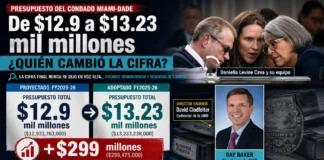

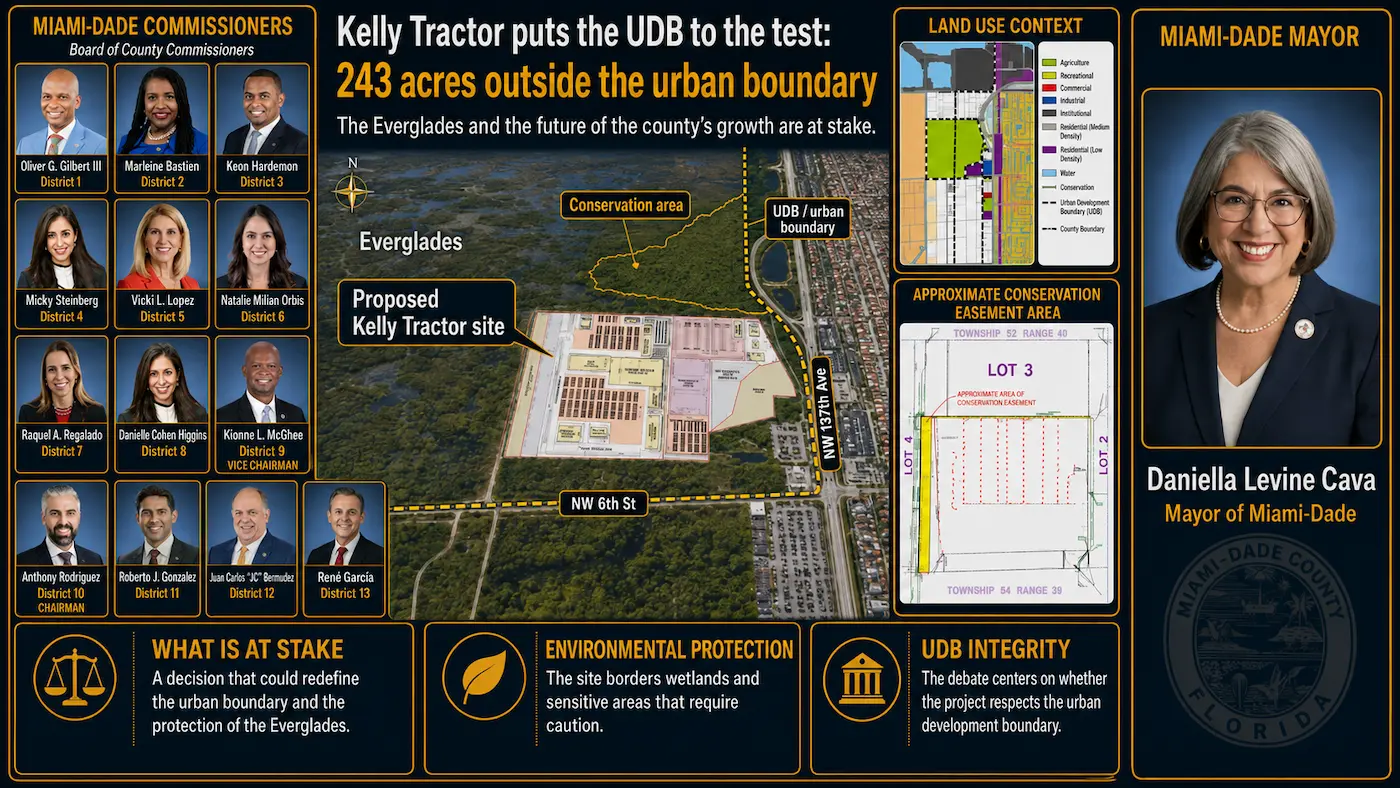
Kelly Tractor challenges Miami-Dade’s UDB: 243 acres, 9 votes, 1 veto. Will Miami-Dade defend its wetlands, agriculture and infrastructure?
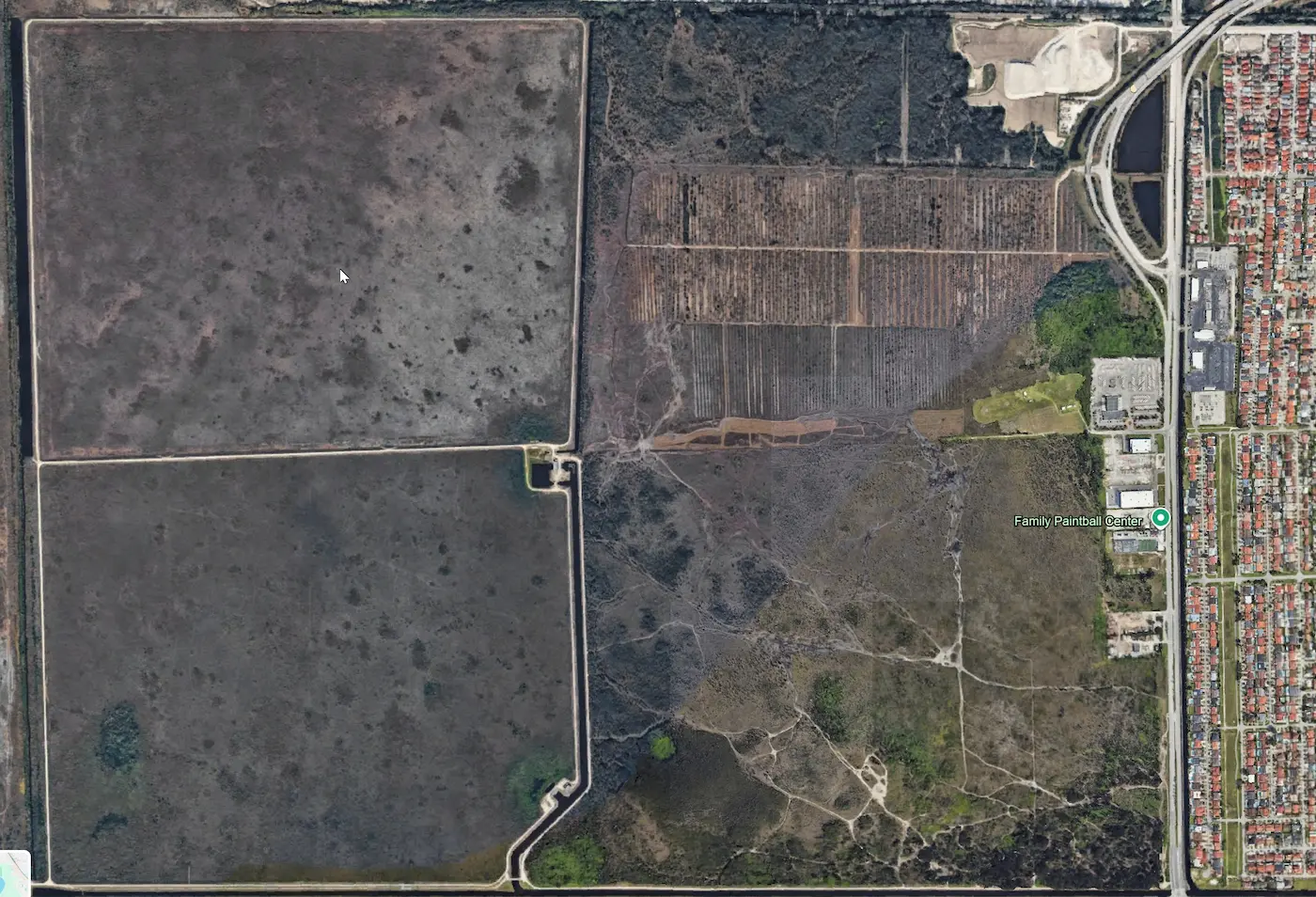
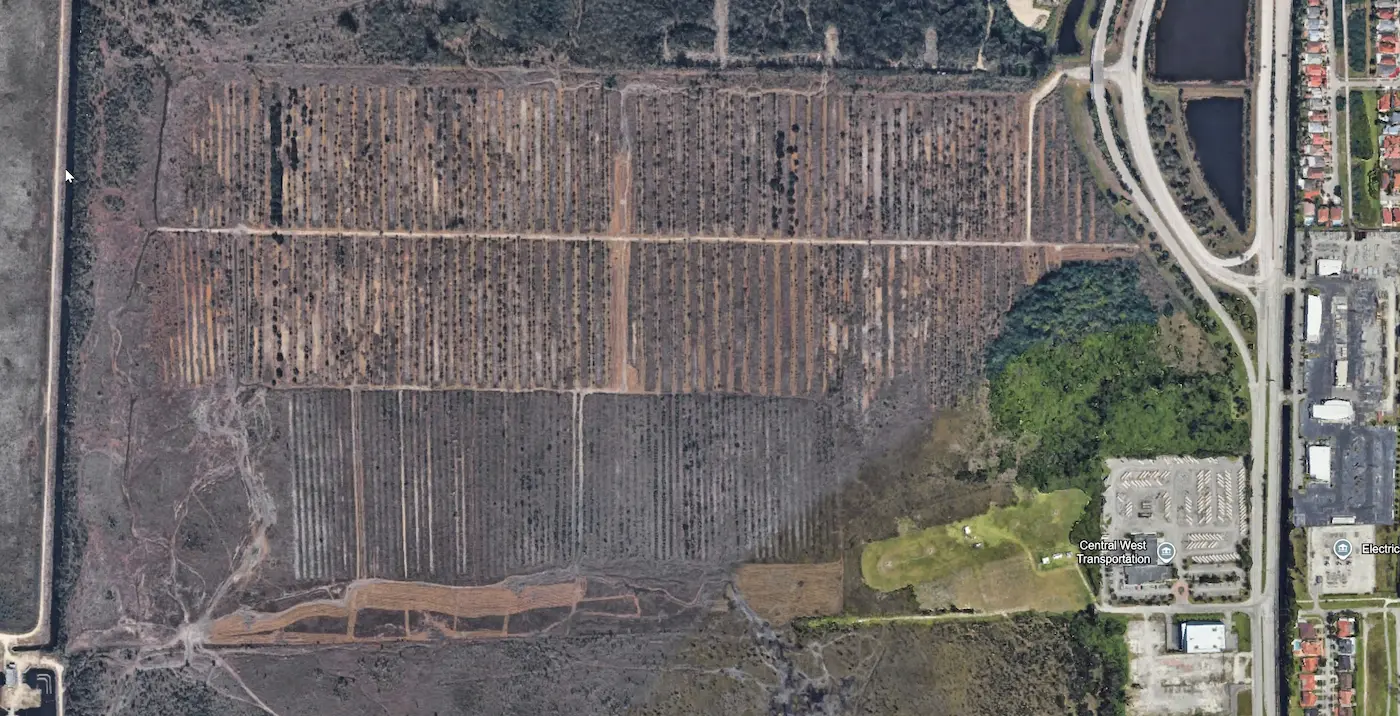
The Miami-Dade Board votes Tuesday, July 21 whether to override Mayor Daniella Levine Cava ‘s veto of the Kelly Tractor project, which sits on a 246.07-acre site, of which approximately 243 acres are outside the Urban Development Boundary (UDB), including 162 acres of wetlands with documented habitat for two federally protected species. The approximate net developable area, according to the applicant’s own statements, would be 158 acres. To overturn it would require 9 out of 13 votes.
The item has been deferred 4 consecutive times (January 22, April 23, May 5 and June 2, 2026). If the override fails, it would be the first UDB veto sustained during Major Cava’s tenure: the only UDB precedent in five and a half years was the South Dade Logistics District in November 2022, where the Board overrode the Cava veto 8 to 3.
The vote on Kelly Tractor reopens a larger question:
Will Miami-Dade defend its wetlands, agriculture and infrastructure, or will it continue to open exceptions under pressure from development interests?
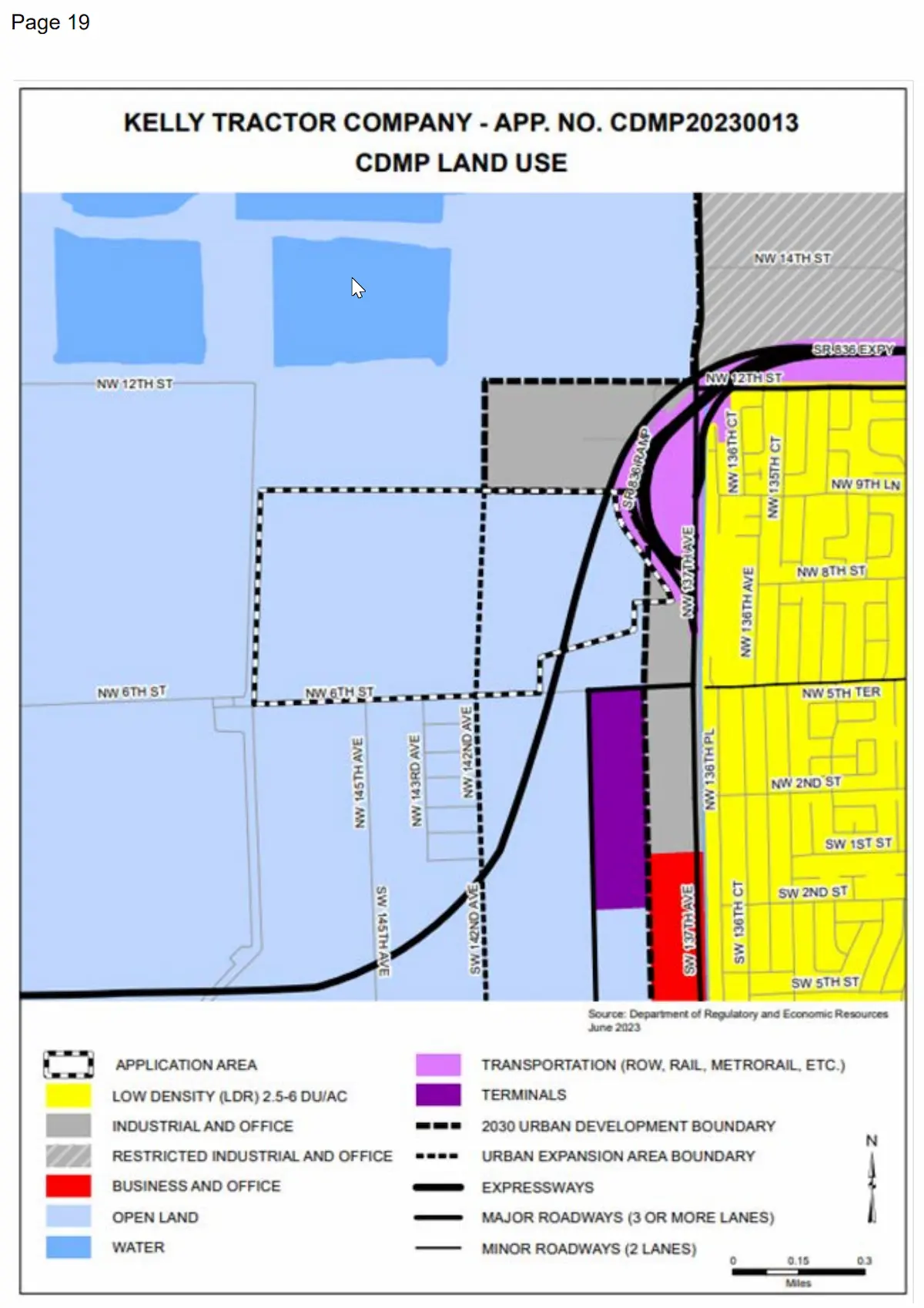
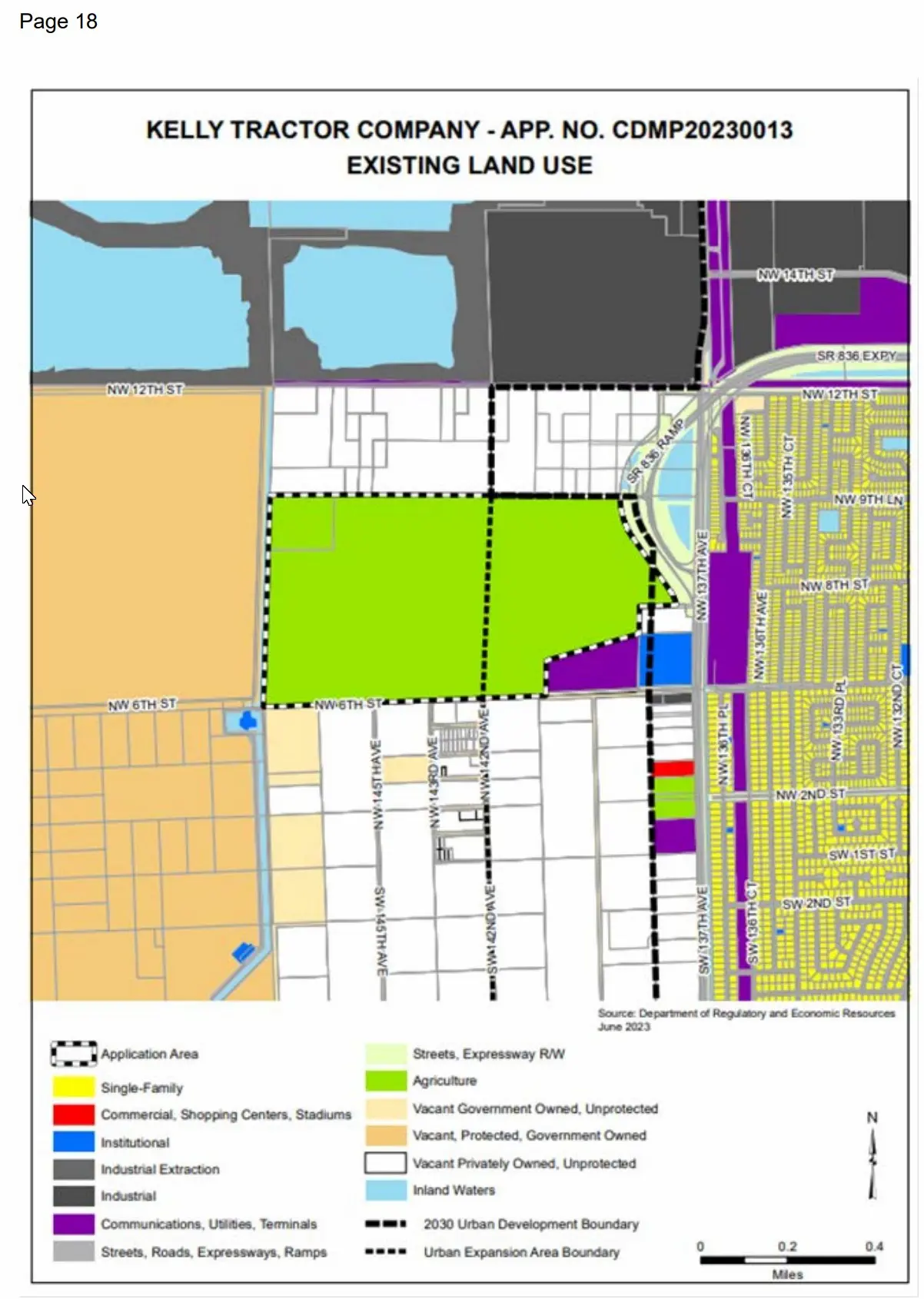
The project totals 243 acres outside the (UDB), including 162 acres of wetlands adjacent to the Everglades restoration area.
Mayor Daniella Levine Cava already vetoed the ordinance on February 1, 2026. The Board of Commissioners will have a new opportunity to override that veto on July 21. If the override fails, it would be the first veto over an application that directly affects the Urban Development Boundary upheld by the Board during Cava’s tenure.
Miami-Dade is facing an institutional test. The Board of County Commissioners will decide on Tuesday, July 21, 2026, the next critical date after several reschedulings, cancellations and deferrals since the veto, whether to override Mayor Daniella Levine Cava ‘s veto of Ordinance 26-4 that approved the Kelly Tractor project: 246.07 total acres west of Sweetwater, of which 243 acres are outside the Urban Development Boundary, including 162 acres of wetlands. It’s not just about Kelly Tractor. Nor is it just about wetlands. It’s about whether the UDB remains a serious public planning line or becomes a negotiable boundary.
Key findings in 3 points
- Kelly Tractor is one of at least three recent or pending 2022-2026 filings with site strictly outside the Urban Development Boundary processed by the Miami-Dade Board: Kelly Tractor (in process), OCLA LLC (adopted 13-0 on April 23, 2026) and Lennar City Park (7,800 units on 990 acres – four times the scale of Kelly Tractor – vote expected in late 2026); the fourth precedent was the South Dade Logistics District (SDLTD) in 2022, where the Cava veto was overridden 8-3.
- Major Daniella Levine Cava vetoed Ordinance 26-4 on February 1, 2026, her fourth verified executive veto in five and a half years in office and the only one directly affecting the pending UDB at the close of this piece, citing protection of the Biscayne Aquifer and wetlands adjacent to Everglades restoration.
- County staff documented the presence of multiple federal and state protected species at the site, as per Legistar matter staff report 260046.
Quick glossary for this part
- UDB (Urban Development Boundary): regulatory line in the Comprehensive Development Master Plan that separates the area where urban development is permitted from rural, agricultural and protected wetlands land in Miami-Dade. Formalized on July 8, 1983 by Ordinance 83-58.
- UEA (Urban Expansion Area): an area identified on the Miami-Dade CDMP Land Use Plan Map as a potential future urban expansion area outside of the UDB. Its designation does not authorize urban development in and of itself; it functions as a planning reserve for cases where the County determines, through the formal CDMP process, that there is a need to expand the Urban Development Boundary. According to CDMP policy, when such a need is established, areas within the UEA should be prioritized for possible expansion before other lands outside the UDB.
- CDMP (Comprehensive Development Master Plan): county development master plan. Defines land uses, densities, infrastructure and the UDB line. Any modifications require formal hearings process.
- Text amendment: type of CDMP amendment that adds or changes plan text without necessarily moving the land use map. Procedurally distinct from a Land Use Map amendment.
- 9-vote supermajority: elevated threshold of 9 of 13 Board votes required by Section 2-116.1(4)(c)(2) of the County Code to approve CDMP amendments affecting the UDB and to override a Major’s executive veto on these matters.
- Sprawl indicators: the 13 indicators set forth in Florida Statute 163.3177(6)9 that county staff apply to evaluate whether an urban sprawl proposal promotes undue sprawl.
- Covenant / Declaration of Restrictions: voluntary legal instrument by which the applicant of a project is bound to specific conditions that are recorded in the title of the property.
What happened
On July 17, 2025, the CDMP and Zoning Committee of BCC
Approved on first reading application CDMP20230013 from Kelly Tractor Company by a vote of 10 in favor and 2 against.
The file was sponsored by Commissioner Juan Carlos Bermudez (D12) and seconded by Kionne McGhee (D9).
On January 22, 2026, the Board adopted Ordinance 26-4 by a vote of 9 to 2.
On February 1, 2026, Major Daniella Levine Cava issued Veto Message against the ordinance before the Clerk of the Board at 1:55 pm.
Since then, the veto override has been scheduled on four consecutive occasions without reaching the required 9 votes:
on March 19, 2026 the meeting was cancelled;
on April 23 the item was deferred by unanimous vote;
on May 5 was deferred 12-0 in the absence of McGhee (D9), at the explicit request of Commissioner Raquel A. Regalado (D7), pursuant to the May 5, 2026 Commission Minutes;
and on June 2 it was deferred for the fourth time, this time with the new date set for July 21, 2026, according to the BCC’s official transcript.
On June 2, 2026, BCC agenda item 7D, Legistar file 251500, was deferred for the fourth consecutive time.
To override the veto requires 9 of the 13 votes of the Board, pursuant to Section 2-116.1(4)(c)(2) of the Code of Miami-Dade County.
Why it matters
The UDB is not a decorative line. It serves to contain urban sprawl, protect the agricultural economy (the county’s second largest industry), preserve the wetlands that recharge the Biscayne Aquifer (the region’s primary source of drinking water) and safeguard the operation of the Comprehensive Everglades Restoration Plan, a $23 billion federal-state project.
In 2026, that line faces simultaneous pressure from several fronts. Kelly Tractor is the most visible file pending outside the UDB, but it is not the only recent case.
Filings strictly outside the city limits include Kelly Tractor, OCLA LLC, Lennar City Park and the predecessor to the South Dade Logistics and Technology District.
What is decided on July 21 is not just Kelly Tractor.
It is whether the UDB survives 2026 as a planning instrument with teeth or whether it becomes a case-by-case negotiable policy.
The July 21 BCC vote would not be the last regulatory hurdle for the project.
On January 8, 2026, 14 days before the vote to adopt Ordinance 26-4, the U.S. Army Corps of Engineers published in the Federal Register the reissuance and modification of Nationwide Permits (NWPs) under Section 404 of the Clean Water Act and Section 10 of the Rivers and Harbors Act of 1899.
Reissuance and Modification of Nationwide Permits
A Rule by the Engineers Corps on 01/08/2026
NWPs authorize categories of activities in waterbodies with “no more than minimal adverse impacts.” Any development at the Kelly Tractor site that involves filling or altering the 162 acres of documented wetlands requires federal authorization from the Corps under Section 404. An intervention of that scale does not qualify for a Nationwide Permit – whose coverage is limited to minimal impact projects – and would instead require an Individual Permit with public environmental review process, coordination with the U.S. Fish and Wildlife Service and evaluation of alternatives.
BCC approval authorizes text amendment to the CDMP, but does not replace federal wetlands authorization. The Corps operates independently of the county and its process can take between 12 and 36 months.
Parallel to the federal process, any alteration of the site’ s wetlands requires an Environmental Resource Permit (ERP) from the South Florida Water Management District (SFWMD), the state agency that manages South Florida’s water resources under Chapter 373 of the Florida Statutes.
SFWMD did not submit comments under §163.3184 during plan review, but its permit authorization operates under separate and more specific criteria: it must evaluate whether practicable alternatives to wetland impacts exist and whether effects on the hydrologic system are compensable.
At the 162-acre scale of functional wetlands documented by county staff, an ERP would require individual review with compensation through mitigation banking or in-kind restoration. The SFWMD operates independently of the county and its process runs parallel to – not in substitution for – that of the Army Corps.
What is UDB and why does it exist?
The Urban Development Boundary is the regulatory line that separates the area where urban development is permitted from rural, agricultural and protected wetlands land in Miami-Dade. The line was conceived during the 1970s and formalized on July 8, 1983 by Ordinance 83-58 of the Miami-Dade County Board of County Commissioners.
Its stated function is to contain sprawl, protect the county’s agricultural economy, preserve the wetlands that recharge the Biscayne Aquifer, and safeguard the integrity of the Everglades restoration. The Biscayne Aquifer is the primary source of drinking water for more than 3 million residents of southeast Florida; approximately 90 percent of the region’s drinking water comes from this aquifer, according to data from the United States Geological Survey (USGS) Caribbean-Florida Water Science Center and the South Florida Water Management District. Recharge to the aquifer is directly dependent on infiltration into wetlands and unsealed areas, many of which fall within the agricultural corridor and wetlands outside the UDB.
Any amendment to the CDMP that affects the line requires a supermajority of 9 of the 13 votes of the Board, pursuant to Section 2-116.1(4)(c)(2) of the Miami-Dade Code.
Since 2004, institutional advocacy for the UDB has been channeled by the Hold the Line Coalition, founded by the Tropical Audubon Society and Friends of the Everglades along with more than 140 other organizations. The coalition emerged in response to proposals to expand the Dolphin Expressway (SR-836) beyond the UDB. The last significant modification to the line recorded by Audubon Florida is from 2013.
This piece focuses exclusively on projects whose site is strictly outside the UDB. Upzoning or significant density change applications within the UDB in sensitive areas are the subject of separate coverage that News Miami Dade will publish in a dedicated piece.
Kelly Tractor: 243 acres outside the urban boundary.
Kelly Tractor Company, a Caterpillar regional dealer, presented the CDMP application CDMP2023230013 at the May 2023 Cycle CDMP.
The request does not seek to move the UDB line itself, but to create new text within the CDMP designating the “MIA Equipment and Supportive Services Area” in Open Land Subarea 3.
The strategy is what county law calls a text amendment. Prior to the July 17, 2025 hearing, the applicant withdrew two amendments it had included in the original application: redesignation of the land use map from “Open Land” and “Industrial and Office” to “Terminals” and “Industrial and Office,” and expansion of the Urban Expansion Area to include the site.
By withdrawing those two applications and proceeding solely with the text amendment, the applicant narrowed its strategy to modifying the CDMP text without changing the land use map or the UEA boundary. It is precisely that decision that Commissioner Cohen Higgins described as an attempt to circumvent the formal UDB expansion process.
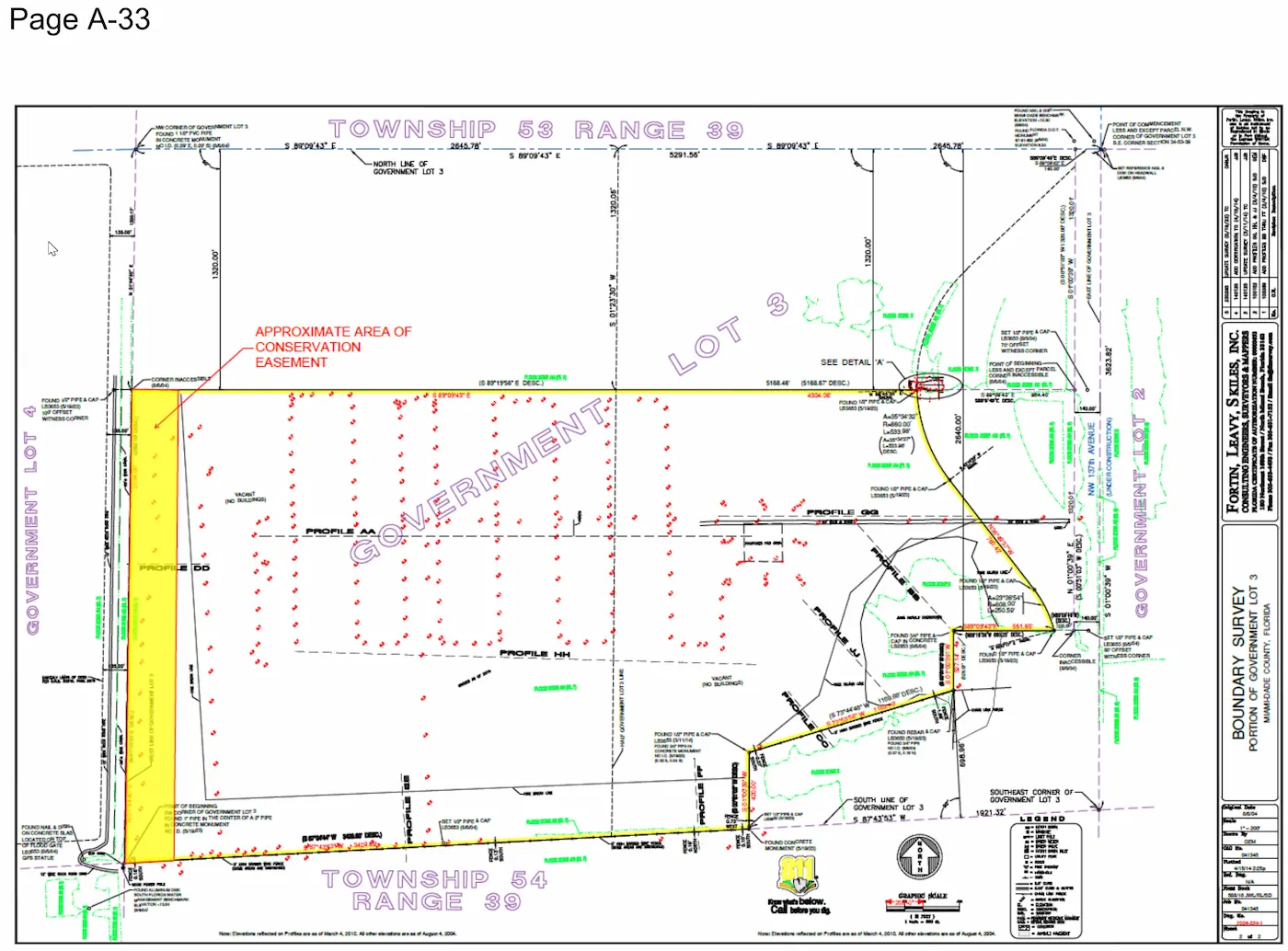
The legal owner of the land is not Kelly Tractor Company but MDXQ LLC, a Florida limited liability company whose President is Christopher Kelly, according to the Declaration of Restrictions filed with the county.
The folios of the site are 30-3953-000-0130 and 30-3953-000-0138. The Kelly family has owned the land since 1984.
In Board session, Christopher Kelly revealed that two decades ago MDX expropriated a portion of the land for the SR-836 extension and that the company returned the expropriation check to MDX to pay for road access – a 40-year investment in public infrastructure that the applicant has invoked as evidence of rootedness in the area.
The site covers 246.07 total acres west of NW 137 Avenue and the SR-836 Interchange, in the Sweetwater area. Of that total, 243 acres are outside the UDB – of which 87 acres are within the Urban Expansion Area (UEA), the zone the county designates for its 2040 planning horizon – and include 162 acres of wetlands – 66 percent of the total area – according to the Department of Regulatory and Economic Resources staff report contained in matter Legistar 260046 (Final Recommendations, January 2026).
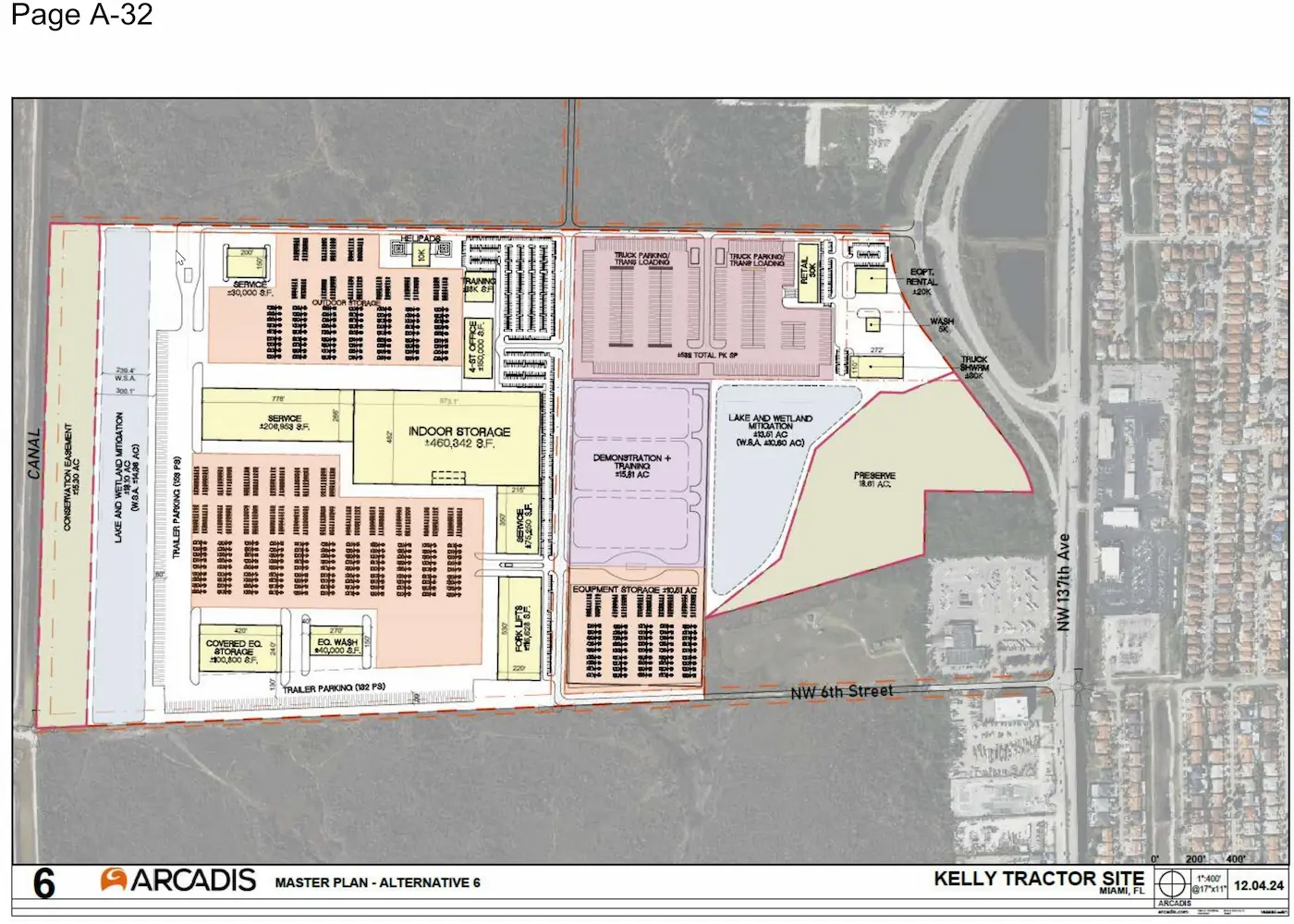
The project proposes to expand the current 260,000-square-foot operation to 2,703,400 square feet, an increase on the order of (x10) ten times the current scale. Kelly Tractor currently employs 300 people in Miami-Dade and 600 in South Florida, with an average hourly wage of $30 per hour, Christopher Kelly told the Board. The company projects to reach 1,300 jobs in the long term with the expansion – a figure that rose from 1,000 in February 2026 to 1,300 in June 2026 with no documented explanation.
The environmental impact of the site is documented in the staff report of matter 260046.
The area contains 162 acres of functional wetlands, including wet prairie, bayhead hammock and agricultural furrows with active hydrologic conditions verified by the Department of Environmental Resources Management in 2009, 2022 and 2024 inspections.
The staff identified
- the site as a core foraging area for wood stork (Mycteria americana, a federally threatened species), with rookeries documented immediately to the west.
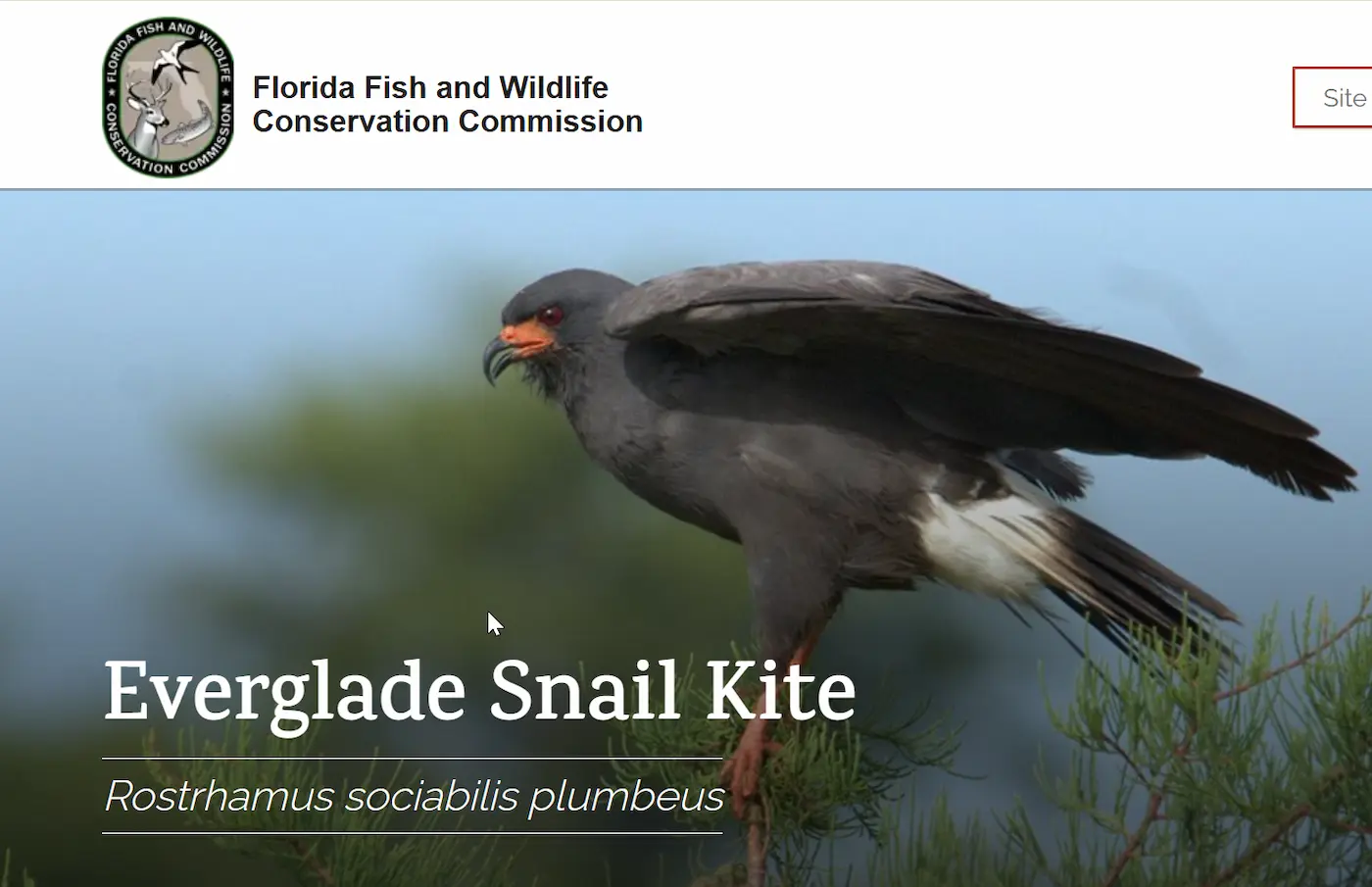
- He also documented the presence of foraging habitat for the federally endangered Everglade snail kite (Rostrhamus sociabilis plumbeus),
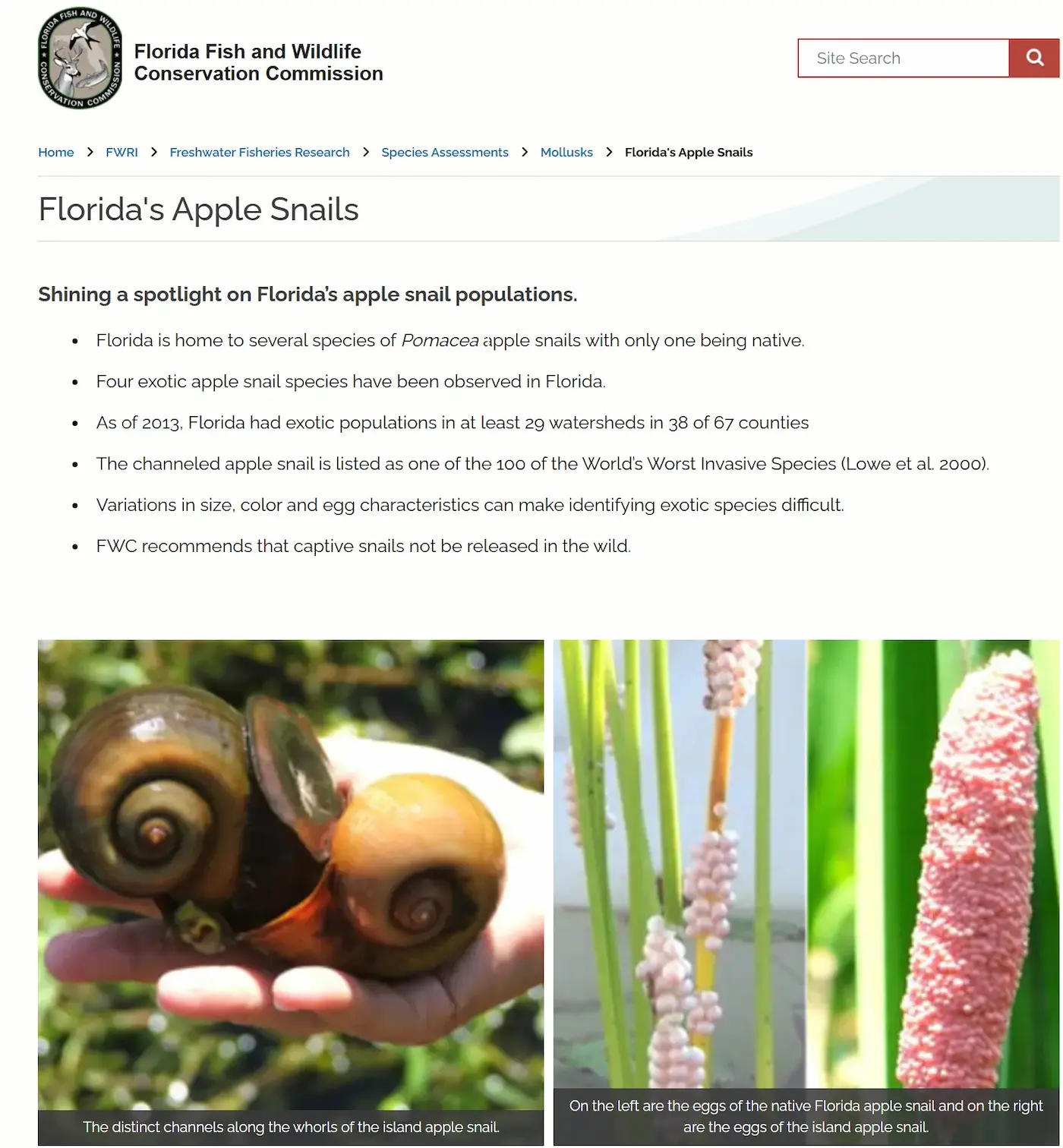
- whose primary food source, the apple snail (Pomacea paludosa), is present in the site’s wetlands.
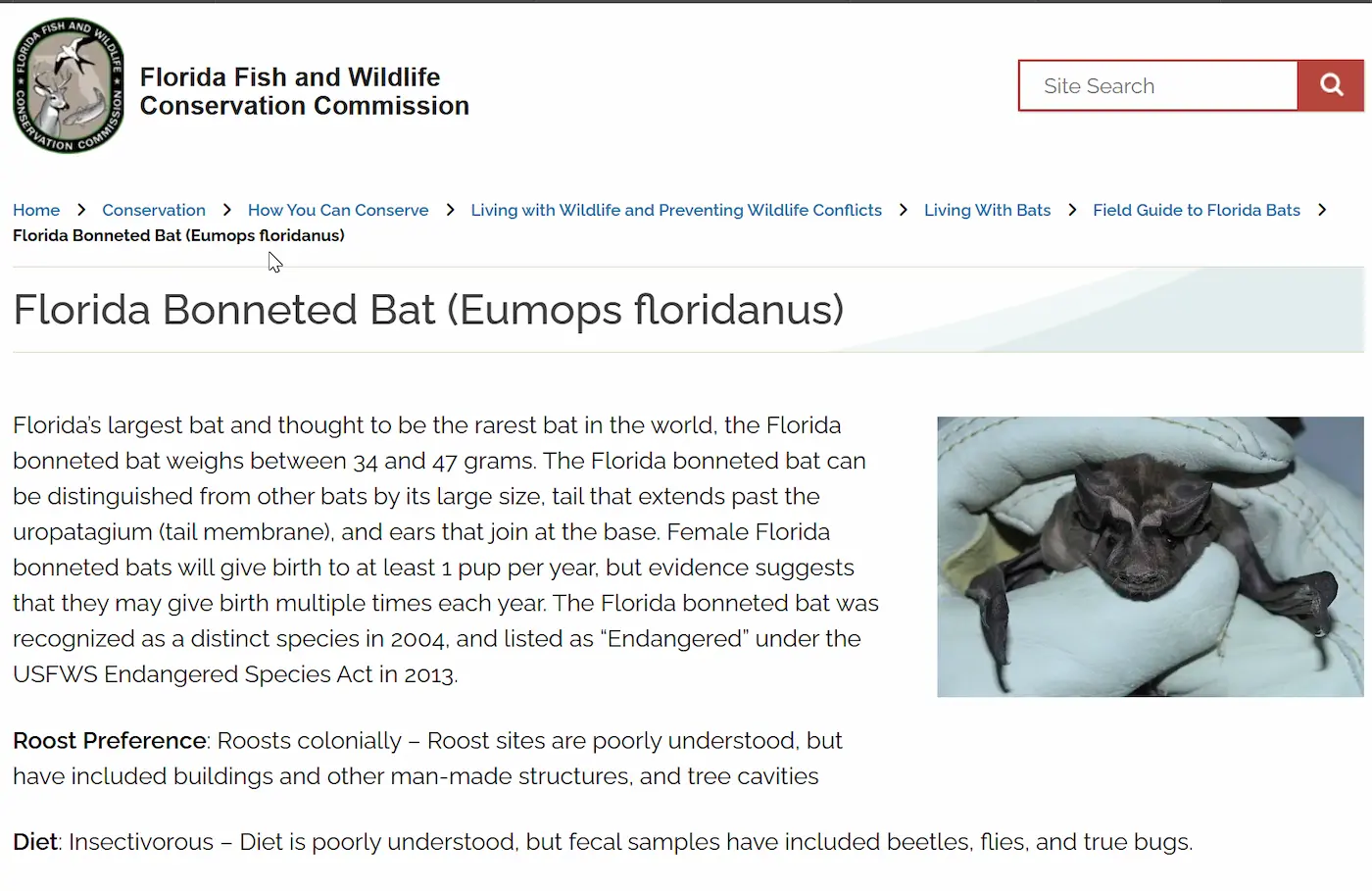
- The federally threatened Florida bonneted bat (Eumops floridanus) is listed in the US Fish and Wildlife Service consultation area for the site.
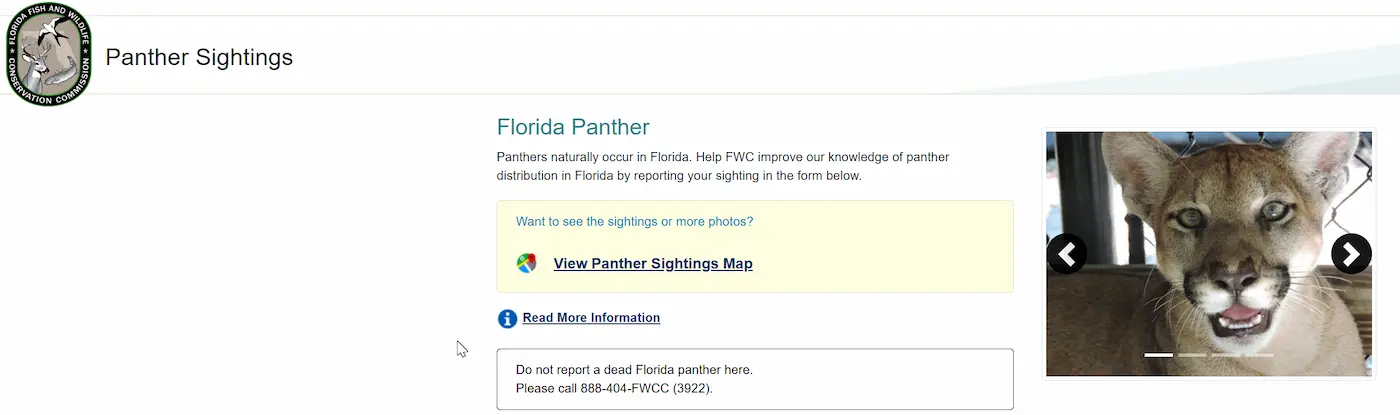
- The site also borders the eastern portion of the US Fish and Wildlife Service’s Florida Panther Focus Area, a critical area for the survival of the federally endangered Florida panther (Puma concolor coryi), according to the South Florida Regional Planning Council (SFRPC) report approved on August 27, 2025.
- Florida panther males disperse up to 25 miles on average, with documented cases up to 139.3 miles.
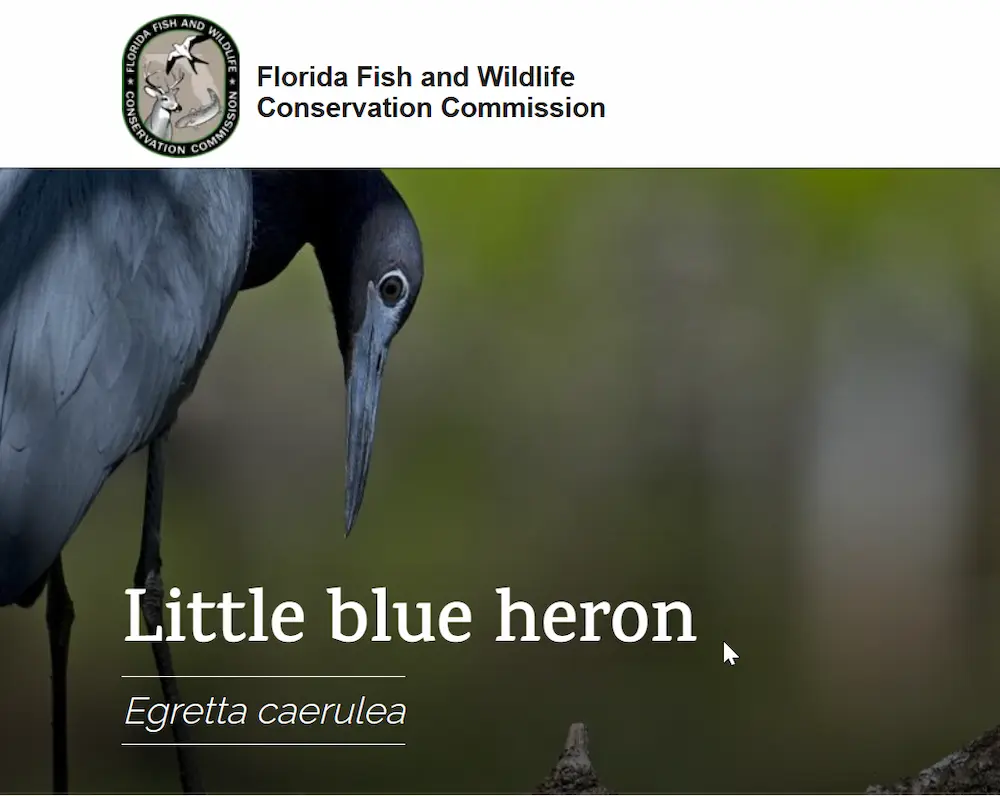
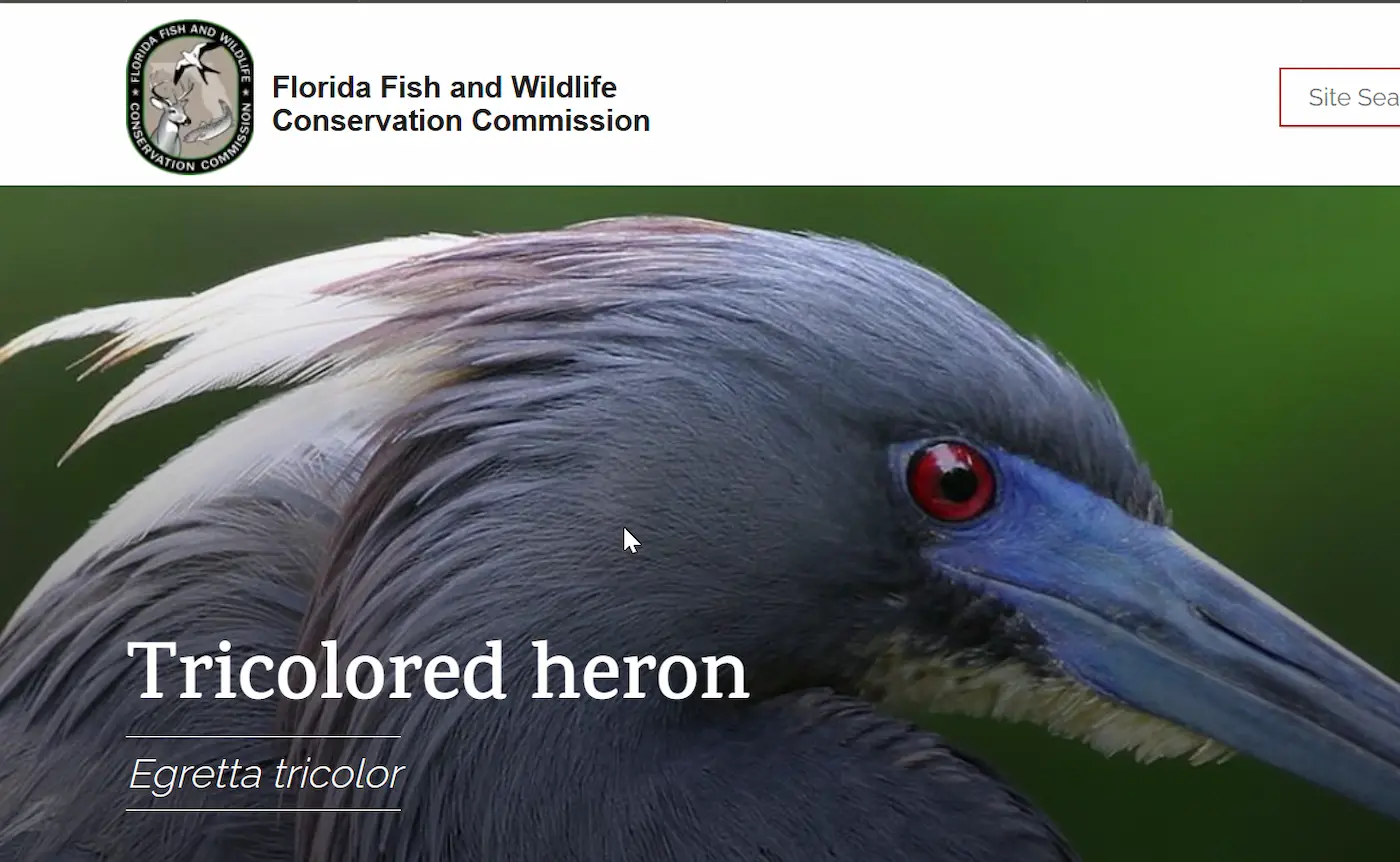
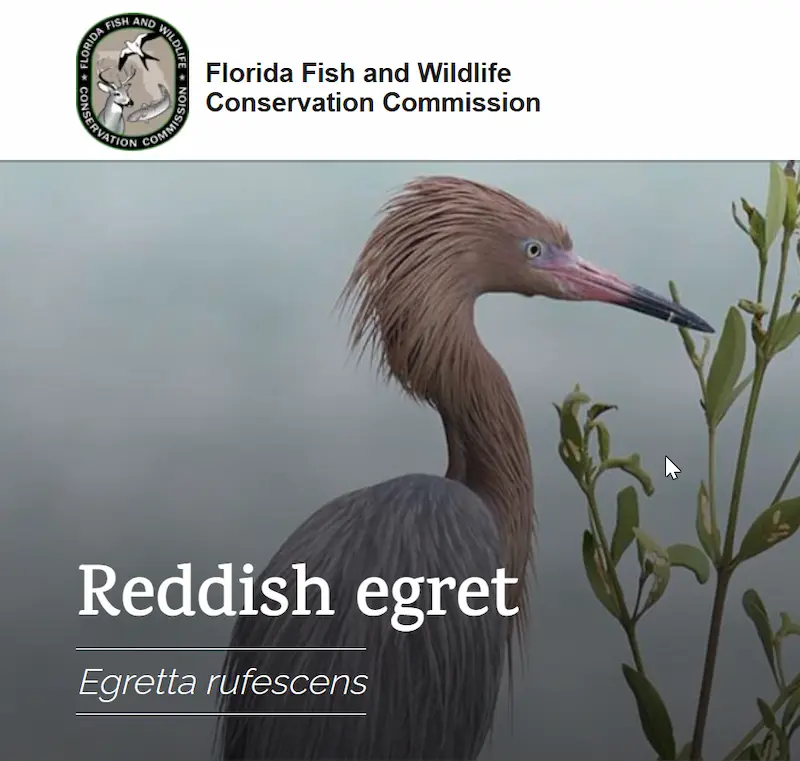
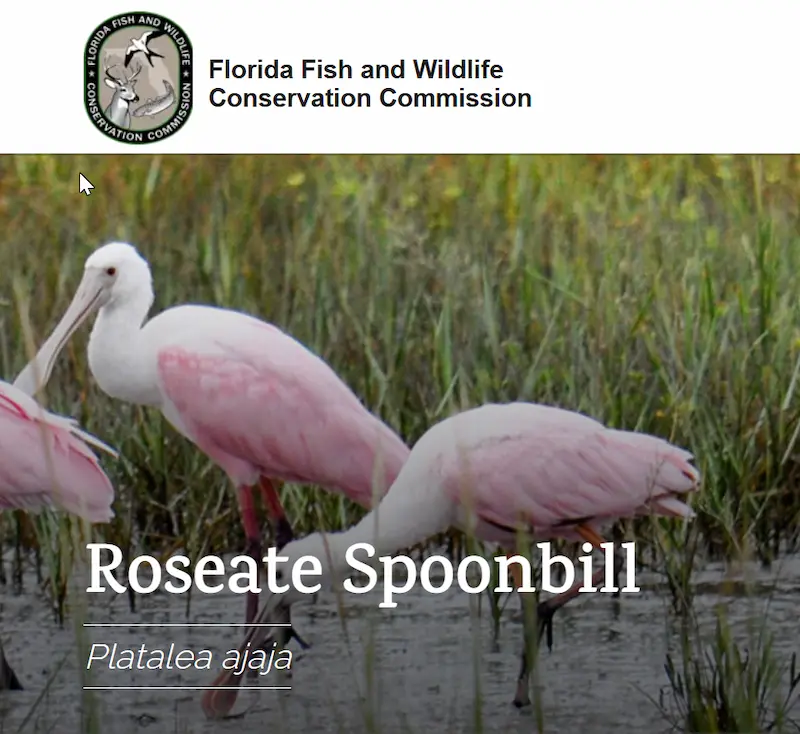
- In addition to the federal species noted in the docket, Florida lists several wetland-associated wading birds as state threatened species, including:
- little blue heron(Egretta caerulea),
- Reddish Eg ret(Egretta rufescens),
- the roseate spoonbill(Platalea ajaja)
- and the tricolored heron(Egretta tricolor).
- According to FWC, these species depend on wetlands, mangroves, shallow waters, mudflats, mudflats and foraging areas close to water.
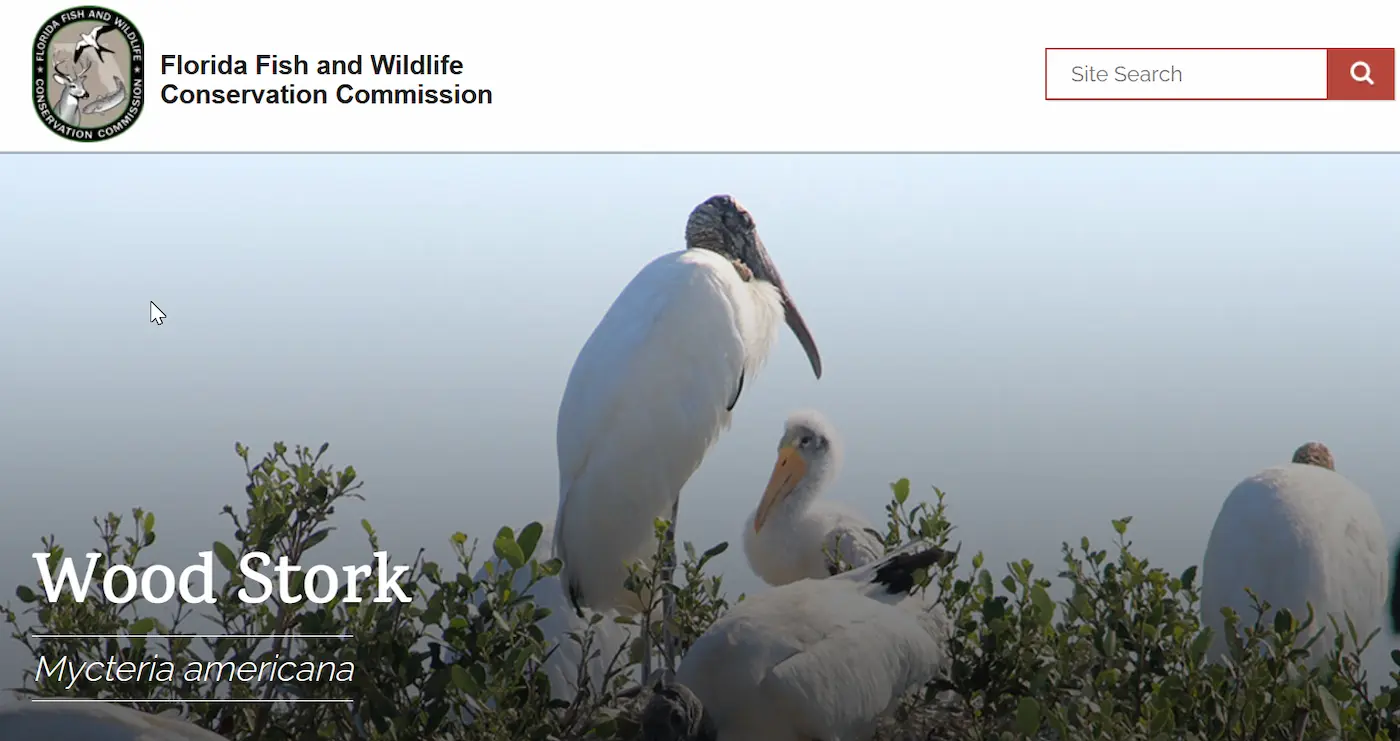
Endangered and Threatened Wildlife and Plants; Removal of the Southeast U.S. Distinct Population Segment of the Wood Stork From the List of Endangered and Threatened Wildlife
A Rule by the Fish and Wildlife Service on 02/10/2026
https://newsmiamidade.com/wp-content/uploads/2026/06/2026-02588.pdf
The property has a documented history of wetland permitting and work dating back to 1984.
The Final Recommendations Report in Matter 260046 confirms that the site is within the North Trail Basin and references previous Class IV permits: permit CC-898 (1985, Osprey Services Inc., 240 acres of wetlands) and permit 2008-CLIV-PER-00056 (2012, MDXQ LLC, 96.04 acres). Exhibit 4A-3 filed with the BCC on July 17, 2025 – prepared by third parties from DERM public records – alleges that in 2005, during a December 6 inspection, the Department detected clearing and filling of approximately 100 acres of wetlands without the required Class IV Permit, and that Notice of Violation and Orders to Cease and Desist were issued.
In March 2006, a subsequent review of historical aerial photographs led DERM to issue a final notice of cessation and correction of violations – Appendix E of the Hold The Line Coalition’s veto request, citing DERM’s administrative record, records the departmental finding of “longstanding, ongoing and unpermitted work in wetlands, including bayhead hammock,” unauthorized work that included bayhead hammock, a type of wetland of high ecological quality.
That allegation is on the BCC exhibit, not staff report 260046; DERM’s original 2005 Notice of Violation is verifiable in the public records on the RER-DERM portal. The county filed a civil lawsuit in November 2008 against Kelly Tractor Company and MDXQ LLC.
During that process, in August 2009 DERM’s Wetland Resources Section conducted a biological assessment of the site – listed in Appendix E of the HTL Coalition’s veto request, which cites DERM’s administrative record – and determined that the entire property consists of approximately 245 acres of historic wet prairie wetland, of which approximately 79.8 acres was unpermitted agricultural activity confirmed by DERM, and approximately 83.2 acres was intact prairie and islet tree. The lawsuit was settled in July 2012 when the county retroactively issued the Class IV permit (2008-CLIV-PER-00056) and dismissed the case.
County staff confirmed in the July 17, 2025 hearing that all violations had been remedied and all permits closed.
The county staff recommended denial of the application in its January 2026 Final Recommendation, modifying its initial July 2025 recommendation to transmit. The project fails 8 of the 13 sprawl indicators set forth in Florida Statute 163.3177(6)9.
Country Club of Miami Community Council 5, the official community review body covering the area, voted in Resolution 5-1-25 on July 8, 2025 to formally recommend “Deny and Do Not Transmit” the application. On July 14, 2025, the Planning Advisory Board – the body that acts as the county’s Local Planning Agency – voted in the opposite direction: TRANSMIT. The Board followed the PAB’s recommendation, not CC5’s, approving TRANSMIT AND ADOPT on July 17, 2025 with 10 to 2, and adopting Ordinance 26-4 on January 22, 2026 with 9 to 2.
The applicant’s consultant, Paul Lambert (Lambert Advisory), argued in a May 5, 2026 hearing that the county will run out of land in the North Central area between 2030 and 2032, and that Kelly Tractor is a critical provider of the Everglades restoration project. County staff, however, documented in matter 260046 that there are 782 acres of industrial land available in the North Central Planning Analysis Tier with capacity for 18 years at the current absorption rate of 42.54 acres per year, which calls into question the extraordinary need claim.
Staff itself noted that Kelly Tractor’s Fort Myers facility and those of its regional competitors operate on 40 to 43 acres, without the 246-acre scale the company is requesting.
One question that runs throughout the record is why Kelly Tractor chose that specific piece of land and not one available within the UDB. The official documents do not contain a formal site selection analysis. What the applicant presented are four arguments in its Business Plan:
- First, the property has been owned by the Kelly family since 1984 and was acquired to ensure the company’s future growth in the South Florida market;
- Second, the site is in the Rockmining Overlay Zoning Area with direct access to SR-836, near the Lake Belt mining operations that are its customer base;
- third, they need 246 contiguous acres to store heavy inventory, operate workshops and provide emergency hurricane service;
- and fourth, there is no other parcel of that contiguous size available within the UDB, according to consultant Lambert’s analysis.
County staff responded point by point: Kelly already has 50 acres in Doral designated for industrial use that could be expanded; the Business Plan does not demonstrate why that 246-acre scale is necessary when its competitors and its own Fort Myers headquarters operate on 40 to 43 acres; and the very industrial fabric available within the UDB offers 782 acres for 18 years of absorption.
RER’s dataset of vacant North-Central Tier industrial parcels, produced by the Department of Regulatory and Economic Resources in July 2025 and submitted as Appendix D to the HTL Coalition’s own veto request, further lists a 9.6-acre parcel owned by Kelly Tractor Co. (MAP ID 221, folio 3030150010410, classified as a parking lot, DOR 2865) within the North-Central Tier – the very territory whose industrial land shortage the applicant invokes as a necessity argument. The most notable omission in the record is that Kelly never presented an alternatives analysis that formally ruled out industrial sites within the UDB before requesting an exception outside it.
The staff pointed this out as a reason for denial: the company did not justify the extraordinary need required to leave the urban boundary.
The application is legally represented by Holland and Knight LLP, with Luis Figueredo, Joseph Goldstein, Juan Mayol Jr. and Alessandria San Roman registered. Additionally, 13 lobbyists are listed as active in the Miami-Dade Commission on Ethics Lobbyist Report System associated with Kelly Tractor between 2023 and 2026. Matter Legistar 251500 lists, in its corresponding section, “Registered Lobbyist: None Listed,” a discrepancy with the official Commission on Ethics registry that warrants additional verification under Section 2-11.1(s) of the County Code.
The South Florida Regional Planning Council (SFRPC) reviewed application CDMP20230013 under Florida Statute 163.3184, which review is limited to impacts on regional resources and facilities identified in the Strategic Regional Policy Plan and extra-jurisdictional impacts on other local governments.
On August 27, 2025, the SFRPC found the amendment “generally consistent” with the Strategic Regional Policy Plan for South Florida and approved transmitting its report to Miami-Dade County and the State Land Planning Agency, with recommendations. Its determination is advisory and not binding on the Board of County Commissioners.
The SFRPC analysis left two relevant facts out of the center of the public debate.
- First, the South Florida Water Management District (SFWMD) reviewed the amendment and did not submit comments under Section 163.3184, F.S.
- Second, although FDOT did not identify adverse impacts on state transportation facilities, the report did note impacts on the local roadway network: the segment of NW/SW 137 Avenue between NW 6th Street and SW 8th Street is projected to fall below the adopted level of service, and the application does not address those impacts. The project would also generate 3,561 new daily vehicle trips and, because it is outside the UDB, would not be eligible for county transit service.
There is one fiscal angle that Political Cortadito documented in its April 23, 2026 coverage that the public debate has not sufficiently highlighted: the proposed extension of SR-836 runs directly through MDXQ LLC property. If the project gets development approval before the county acquires that right-of-way, the value of the land will go up – and that increase in acquisition price would be paid by taxpayers. The relationship between project approval and the future cost of the public highway is an element of fiscal interest that has yet to be officially answered.
One item of context reported by The Real Deal on May 6, 2026 is that Chris Kelly, president of Kelly Tractor, contended that it was county administrators who directed the company to use the text amendment process to submit the application. According to the same coverage, county staff members rejected that claim. The point remains without public documentary resolution at the close of this piece, but it is relevant because it bears directly on the debate over whether text amendment was a unilateral strategy of the applicant or an internally suggested route.
Cava’s veto and the battle for the 9 votes
The veto was filed with the Clerk of the Board on February 1, 2026 and publicly announced by the Mayor’s office on February 2, 2026. In subsequent official Granicus transcripts, the Mayor upheld the veto in institutional terms. In Granicus clip 8830, she stated:
“The urban development boundary exists for a reason, and it has served us very well. It protects our agricultural economy, still number two in our county. And it protects the wetlands that safeguards our drinking water. Because our water flows directly from the aquifer exactly in these areas. And it also reduces flooding in our community and protects our bay.”
The Major added that the veto was not issued lightly: “I have provided very few vetoes during my term as Mayor”. That statement is verifiable. Between November 17, 2020 and June 2, 2026, public records identify four executive vetoes:
- the first, against the electric bus depot in Homestead (February 2022, supported by the Board);
- the second, against the UDB expansion of the South Dade Logistics and Technology District (November 2022, overturned 8 to 3);
- the third, against the removal of fluoride from county drinking water (April 2025, resolution R-370-25, nullified 8 to 4);
- and the fourth, against Kelly Tractor Ordinance 26-4 (February 2026, pending). Of the four, only two directly affect the UDB: SDLTD (annulled) and Kelly Tractor (in process).
In the April 23 Granicus 8896 clip, Cava reiterated that the application required a substantial showing of the need for expansion outside of the UDB and that standard remained unmet:
“As required by the Comprehensive Development Master Plan for UDB applications, I requested a substantial data-driven demonstration of the necessity for expansion outside the UDB, and that showing has still not been provided.”
To override the veto requires 9 of the Board’s 13 votes. In the January 22 adoption vote, Ordinance 26-4 passed 9 to 2. Following the veto, in subsequent attempts to schedule the override, the Board has deferred the item four consecutive times without reaching the required 9 votes. Tuesday, July 21 will be the next critical date to determine if the required 9 votes exist.
The direct UDB precedent is the Cava veto of SDLTD in November 2022. The County Board overrode that veto 8 to 3 a few weeks later, according to coverage by Local 10 News, NBC 6, CBS Miami, WSVN, The Real Deal, Florida Politics and Islander News. The eight commissioners who voted in favor of the override in November 2022 were Diaz, Gilbert, Hardemon, Monestime, McGhee, Regalado, Sosa and Souto; the three who sustained the veto were Heyman, Cohen Higgins and Eileen Higgins. If the Kelly Tractor override fails on July 21, it would be the first UDB veto sustained by the Board during Major Cava’s tenure.
Commissioners who changed their position
The voting pattern documented in official transcripts and Board agendas shows a group of seven commissioners voting consistently in favor of the project:
- Chairman Anthony Rodriguez (D10), Vice Chairman Kionne McGhee (D9), Oliver Gilbert III (D1), Keon Hardemon (D3), Natalie Milian Orbis (D6), Roberto J. Gonzalez (D11) and Juan Carlos Bermudez (D12), original sponsor of the item.
- Two commissioners have consistently held opposing positions since the first reading on July 17, 2025: Danielle Cohen Higgins (D8) and Micky Steinberg (D4), the only dissenting votes at that hearing.
- Commissioner Marleine Bastien (D2) voted in favor on first reading and aligned her position with sustaining the veto in the period following the February 2026 veto.
- Senator Rene Garcia (D13) has maintained a mixed position between absences and spot votes. Garcia also serves as First Vice Chair of the South Florida Regional Planning Council, the regional body that unanimously approved the transmittal of the same file on August 27, 2025 – a separate advisory vote and prior to the BCC hearings.
| Block | Commissioner | District | Documented position |
|---|---|---|---|
| Consistently in favor | Anthony Rodriguez | D10 | Chairman – yes |
| Consistently in favor | Kionne McGhee | D9 | Vice Chairman – Yes |
| Consistently in favor | Oliver Gilbert III | D1 | Yes |
| Consistently in favor | Keon Hardemon | D3 | Yes |
| Consistently in favor | Natalie Milian Orbis | D6 | Yes |
| Consistently in favor | Roberto J. Gonzalez | D11 | Yes |
| Consistently in favor | Juan Carlos “JC” Bermudez | D12 | Original sponsor – yes |
| Post-veto change | Vicki L. Lopez | D5 | Yes → No |
| Exchange / negotiating | Raquel A. Regalado | D7 | Yes → No / “90% there” |
| Against consistent | Danielle Cohen Higgins | D8 | No |
| Against consistent | Micky Steinberg | D4 | No |
| Post-veto change | Marleine Bastien | D2 | Yes (Jul 2025) → No |
| Mixed | René García | D13 | Absences and one-time votes |
Critical to the July 21 vote are the two commissioners who changed positions between the Jan. 22 adoption vote and subsequent hearings: Vicki L. Lopez (D5) and Raquel A. Regalado (D7). Both voted in favor of Ordinance 26-4 on January 22. In subsequent hearings, both are among those who have aligned themselves with sustaining the veto.
Lopez’s position has not registered public signs of openness to the override. Regalado stated in May that the bill was “90% there” but has not confirmed a vote in favor. If the two commissioners maintain their current position on July 21, the seven votes of the pro-bill group fall two short of the nine needed to override the veto.
Regalado noted in the April 23 hearing his explicit reasons for blocking the override: the applicant has not demonstrated the extraordinary need required to expand outside the UDB. Verbatim of Granicus official transcript clip 8896:
“I really think that you answered all of the concerns that I had regarding the wetlands…. But I really feel like you ran out of tarmac. I appreciate the wetland bit, but I think you could have gotten to the need… I just can’t do that right now with the information that I’ve been given.”
Regalado’s record deserves documented note. In November 2022, Regalado voted in favor of the Cava veto override on the South Dade Logistics and Technology District. Following the Kelly Tractor veto in February 2026, he changed his position. At the April 23 session, he told the applicant that he had answered his wetlands concerns, but had not demonstrated the extraordinary need to get out of the UDB. By May 6, The Real Deal picked up that Regalado appeared to soften his opposition by stating, “I think we’re 90% there.” News Miami Dade documents the change in position without stating his motivation.
Commissioner Danielle Cohen Higgins has denounced in public hearings what she describes as a procedural shortcut through the use of a text amendment instead of the ordinary UDB expansion process. Verbatim of the official April 23 transcript:
“This applicant has attempted to bypass the county’s longestablished UDB amendment process by using a CDMP text amendment, expanding more than 200 acres outside the UDB. The bottom line, this application undermines the integrity of the UDB amendment process.”
Cohen Higgins has further requested, in session on June 2, that the administration and its lawyers develop stricter rules to prevent the use of text amendments as an alternative route to the formal UDB expansion process, thus documenting an institutional consequence of the case that transcends the Kelly Tractor file.
Commissioner Gilbert offered at the April 23, 2026 hearing, according to the official Granicus transcript clip 8896, a direct indictment of the administration’s argument: “I remain awed by the unimaginable hypocrisy of an administration that can recommend building a waste to energy facility outside the UDB but object to this.” Bermudez, in the same session, expressed his reading of the impasse: “I believe that there’s a lot of hypocrisy going on here…. They know where they’re going. It is about politics.” Both statements are part of the Granicus public record.
There are two statements about the historical origin of the UDB that provide relevant context for how some commissioners interpret the line today. Commissioner Gilbert stated at the February 18, 2026 hearing:
“The UDB wasn’t put in place to actually protect the environment. It was put in place to be a confinement because we didn’t have the ability to stretch our resources and infrastructure out that far. We’ve made it something it isn’t.”
Commissioner Bermudez noted in session on July 17, 2025 that the UDB was mapped more than 50 years ago “and probably for the benefit of certain individuals.” The two statements reflect an interpretation of the historical origin of the UDB that differs from the institutional narrative held by Audubon Florida, Tropical Audubon Society and the South Florida Water Management District, agencies for whom wetland protection, Biscayne Aquifer recharge and Everglades restoration are stated functions of the line, regardless of what their original infrastructure planning motivation may have been. Both statements are part of the Granicus public record.
What the audience said and the campaign finance data
At the CDMP and Zoning hearing on April 23, 2026, more than a dozen speakers spoke in opposition to the project. Among those identified in the official transcript were Mary Waters, president of Tropical Fruit Growers of South Florida and the Redland Citizens Association; Lauren Adele Jonadis, Executive Director of the Tropical Audubon Society; Laura Reynolds of the Hold the Line Coalition; Noel Cleland and Stephen Lightner of the Sierra Club Florida; Amanda Prieto, leader of Save Calusa; and a group of students from Florida International University. The testimonies converged on a central idea: the integrity of the UDB as a precedent.
On January 28, 2026, six days after the adoption vote, the Hold The Line Coalition – a coalition of environmental and civic organizations whose Steering Committee includes Eve Samples (Executive Director, Friends of the Everglades), Lauren Jonaitis (Tropical Audubon Society), Paul Owens (1000 Friends of Florida), Cathy Dos Santos (Transit Alliance) and former District 8 Commissioner Katy Sorenson – submitted to Mayor Levine Cava a formal 44-page document requesting a veto of Ordinance 26-4, signed by its Science Director Laura Reynolds on behalf of the Steering Committee.
The document was not an opinion letter: it included as backup the inventory of 283 vacant North-Central Tier industrial parcels produced by Miami-Dade’s own Department of Regulatory and Economic Resources in July 2025 (Appendix D), and a detailed chronology of permits and regulatory actions on the Kelly property between 1984 and 2015 (Appendix E), compiled from DERM public records.
The application argued that approval by text amendment established a dangerous precedent that would allow the CDMP to be altered at the convenience of a single applicant without complying with the formal UDB expansion process.
The coalition also noted that no reviewing state agency formally objected during the process under §163.3184: the State Land Planning Agency (Florida Department of Commerce) determined that the application would not generate adverse impacts if approved; the SFWMD did not submit comments; and FDEP and the Florida Fish and Wildlife Conservation Commission provided technical recommendations without raising them to objection.
For HTL, the absence of state objection did not solve county policy problems: “With just a text amendment, we have no control over what they do on that property, so we started to sound the alarm…. We can’t allow [someone] to just carve out and change the rules with just a text amendment,” Reynolds told WLRN on Feb. 2, 2026. Verbatim of the April 23 hearing:
- “Please don’t make the urban development boundary irrelevant.”
- “Uphold this urban development line, because if it doesn’t stop here, then where does it stop?”
- “So I say hold the line.”
The Miccosukee Tribe of Indians of Florida supports the Kelly Tractor application explicitly and signed, with one central condition: the preservation in perpetuity of archaeological site 8DA93. Chairman Talbert Cypress signed a letter dated September 20, 2023 addressed to Major Levine Cava and the Board of County Commissioners, filed as Appendix H to matter Legistar 251499 (pages MDC165-MDC166), which describes the site in these terms:
“Tree islands are sacred places to the Miccosukee people, as they provided shelter from the U.S. Cavalry in the Seminole Wars and provided continuing refuge for our communities in the century which followed. Our ancestors have been laid to rest on these islands. The island which your staff knows as 8DA93, we know to be a traditional home of the Takashaadthe Clan, and a burial site. The island has documented inhabitation going back to the ‘Glades I’ period, as far back as 500 BCE, and many generations have been laid to rest on its soil. The soil itself, and the plants which grow from it, contain our ancestors.”
The letter states that the tribe would oppose destruction of the islet tree by roads or ground disturbance, but supports the application because Kelly Tractor committed to its preservation in the Declaration of Restrictions:
“We support Kelly Tractor’s application to relocate its headquarters to the 246-acre parcel west of NW 137 Avenue and State Road 836, conditional upon their preservation of the tree island…. We believe that Kelly Tractor’s proposed development offers a model of this balance, and we encourage you to accept their application to relocate their headquarters in recognition of and conditioned upon their preservation of the important cultural sites therein.”
The tribal support is genuine and is signed by Chairman Cypress – it is not a characterization of interested parties. The condition is specific and is already incorporated in the Kelly Tractor covenant (the applicant committed to “preserve and make no physical alteration to the Archaeological Site” in the Declaration of Restrictions). One documented difference between Kelly Tractor and the South Dade Logistics and Technology District (SDLTD, 2022) is that Kelly Tractor incorporated specific protection of cultural site 8DA93 into its covenant. However, News Miami Dade has not obtained an independent tribal statement that fully explains the change in position between the two dockets, according to WLRN ‘s January 16, 2023 coverage.
OCLA, Lennar City Park and SDLTD: projects outside the UDB are not isolated cases
Kelly Tractor is the most visible file pending outside the UDB, but it is not the only recent case. Dockets strictly outside the urban boundary include Kelly Tractor, OCLA LLC, Lennar City Park and the predecessor to the South Dade Logistics and Technology District.
Christopher Kelly himself pointed out in Board session a precedent he considers relevant: the application known as Tamiami 137, a truck terminal approved by the commission about three years ago on a site adjacent to the land Kelly Tractor proposes to use. “The county commission three years ago passed the Tamiami 137, which is a truck terminal … right next door to ours,” Kelly stated as covered by Local 10. It is a compelling fact because it is the applicant himself who invokes a precedent approved by the same agency that is now considering the override.
All 3 cases strictly outside the active or recent UDB:
- OCLA LLC (CDMP20230018): commercial application outside of the UDB on approximately 4.38 acres at the northwest corner of SW 192 Street and SW 177 Avenue, west side of Krome Avenue. The application sought to change the land use from Agriculture to Business and Office, with proffered restrictions for a grocery store up to approximately 18,000 square feet and additional commercial uses. County staff recommended denial; the Planning Advisory Board recommended adoption; and the Board adopted the application 13-0 on April 23, 2026, the same day Kelly Tractor was first deferred. This is the recent example of a commercial application unanimously approved out of the UDB despite staff recommendation of denial. The file is contained in Legistar matter 241091.
- Lennar City Park: 7,800 housing units on 990 acres of agricultural land outside the UDB, at the intersection of Krome Avenue and SW 144 Street in West Kendall. Application submitted in October 2025 by Lennar Corp with partners Easton Group and MPKA LLC. Estimated investment of $2 billion. Board vote expected in late 2026. At 990 acres, Lennar City Park is among the largest publicly known off-UDB proposals in Miami-Dade, quadrupling the scale of Kelly Tractor.
- South Dade Logistics and Technology District (SDLTD): 2022 proposal for industrial expansion outside the UDB. Mayor Cava vetoed the application in November 2022. The Board overrode the veto 8 to 3 a few weeks later; the eight commissioners voting to override the veto were Diaz, Gilbert, Hardemon, Monestime, McGhee, Regalado, Sosa and Souto; the three sustaining the veto were Heyman, Cohen Higgins and Eileen Higgins, pursuant to cross-coverage by CBS Miami, NBC 6, WSVN, The Real Deal, Florida Politics, Islander News, Miami Waterkeeper and Commercial Observer. What the SDLTD precedent demonstrates is that the political outcome is not the end of the process: a Florida judge reversed the approval in March 2024, according to Axios Miami coverage. The BCC had overridden the veto; the courts overturned that override. It is the most comparable direct antecedent to the Kelly Tractor case, and also its clearest warning to both sides.
- If Kelly Tractor and Lennar City Park move forward, more than 1,200 acres outside the UDB would be in play in less than one political cycle.
The final question: development, yes, but with limits.
If the Board passes by 9 votes on July 21, the CDMP amendment would not automatically become final. Under §163.3184, any “affected person” – adjacent property owners, environmental organizations with a demonstrated interest, or the Florida Department of Commerce itself – has 30 days from formal adoption to challenge the amendment before the Division of Administrative Hearings (DOAH).
The standard of review in DOAH is not one of public policy but of legal compliance: whether the amendment is consistent with the Florida Statutes, the State Comprehensive Plan and the Strategic Regional Policy Plan. A ruling declaring the amendment “not in compliance” would force the county to withdraw or correct it. The process can take an additional 6 to 18 months after the BCC vote.
Miami-Dade also needs economic activity, jobs and industrial growth. The land need argument presented by consultant Paul Lambert (the county will run out of land in the north central area between 2030 and 2032) deserves serious technical evaluation. Also worthy of technical evaluation is Major Cava’s argument that wetlands are natural infrastructure and not obstacles to development.
What the July 21 vote will decide is not just 243 acres outside the UDB west of Sweetwater. It’s whether the Urban Development Boundary remains a county policy with teeth or becomes a negotiable boundary on a docket-by-docket basis. Recent and pending non-UDB dockets (Kelly Tractor in process, OCLA adopted April 23, 2026, Lennar City Park – with 990 acres among the largest scale publicly known non-UDB proposals – with vote expected in late 2026, and the antecedent SDLTD where the Cava veto was overridden 8 to 3 in November 2022) suggest that the pressure on the line is not conjunctural.
There is also a relevant historical dimension. If the Kelly Tractor override fails on Tuesday, July 21, it would be the first veto over a UDB application sustained by the Board during Major Cava’s tenure – the only comparable precedent, the SDLTD in November 2022, was overturned 8 to 3. The stakes on July 21 thus include not only the fate of Kelly Tractor but also the institutional weight of the executive veto as a tool for protecting the UDB during Cava’s tenure.
The question is one that Commissioner Milian Orbis herself asked at a public hearing: today it may be fine, but tomorrow a great deal of authority over these developments is being delegated. That question is not resolved on July 21. But the July 21 vote does send a signal about how the Board understands the limits of its own planning function.
Sources consulted
Level 1 – Official sources
- Miami-Dade County Legistar matter 251500 (Kelly Tractor CDMP20230013, Ordinance 26-4, base docket). URL: https://www.miamidade.gov/govaction/legistarfiles/Matters/Y2025/251500.pdf
- Miami-Dade County Legistar matter 260046 (Kelly Tractor Final Recommendations January 2026, staff report DENY). URL: https://www.miamidade.gov/govaction/legistarfiles/Matters/Y2026/260046.pdf
- Miami-Dade County Legistar matter 260182 (Major Veto – formal veto docket Ordinance 26-4 / CDMP20230013). URL: https://www.miamidade.gov/govaction/legistarfiles/Matters/Y2026/260182.pdf
- 4. Official Statement Major Daniella Levine Cava – “Mayor Daniella Levine Cava Vetoes Land Use Application to Protect Miami-Dade’s Wetlands” (February 2, 2026). Formal justification for veto: impact to Wetlands of Regional Significance (~160 acres North Trail Basin), insufficient enforceable commitments, use of text amendment to circumvent traditional UDB process. URL: https://www.miamidade.gov/global/mayor/releases/2026-02-02-kelly-tractor-veto.page
- 5. Miami-Dade BCC Commission Minutes – May 5, 2026. Confirms: Kelly Tractor deferred to June 2, 2026, motion Regalado D7, second Bermudez D12, vote 12-0, absent McGhee D9. Official Timeline: first reading 17 July 2025, reconsidered 22 January 2026, vetoed 1 February 2026, meeting 19 March cancelled, deferred 23 April, deferred 5 May. URL: https://www.miamidade.gov/govaction/legistarfiles/Agendas/5506.pdf
- 6. Miami-Dade County Legistar matter 260753 (Kelly Tractor Supplement; Attachment 1 List of Persons who Commented; Appendix H letter Miccosukee). URL: https://www.miamidade.gov/govaction/legistarfiles/Matters/Y2026/260753.pdf
- 7. South Florida Regional Planning Council (SFRPC) – Memorandum Final Adopted, Agenda Item III.D, August 27, 2025. Miami-Dade County 25-03ESR (CDMP 20230013). Finding: record “generally consistent” with the Strategic Regional Policy Plan for South Florida. 6-0 vote. Includes analysis of impacts to transportation, protected species, regionally significant wetlands, UEA 87 acres, and advisory recommendations. URL: https://sfregionalcouncil.org/wp-content/uploads/2025/09/3.D-AgendaAUG27_III.D-LGCP-FINAL-ADOPTED-1.pdf
- 8. Miami-Dade County Legistar matter 251499 (Kelly Tractor – Appendix H Miccosukee Tribe letter, pages MDC165-MDC166, signed Chairman Talbert Cypress 20 September 2023). URL: https://www.miamidade.gov/govaction/legistarfiles/Matters/Y2025/251499.pdf
- 9. Miami-Dade County Legistar matter 241091 (OCLA LLC CDMP20230018). URL: https://www.miamidade.gov/govaction/legistarfiles/Matters/Y2024/241091.pdf
- 10. Miami-Dade County Legistar matter 251737 (amendment substituting A3 Foundation for Parks Foundation MD Inc. as beneficiary of Loud and Live contract, September 3, 2025). URL: https://www.miamidade.gov/govaction/legistarfiles/Matters/Y2025/251737.pdf
- 11. Miami-Dade County BCC Granicus clip 8830 (holding veto Cava + verbatim). URL: https://miamidade.granicus.com/player/clip/8830
- 12. Miami-Dade County BCC Granicus clip 8896 (CDMP and Zoning Meeting 23 April 2026). URL: https://miamidade.granicus.com/player/clip/8896
- 13. Miami-Dade County BCC Granicus clip 8906 (BCC Regular 5 May 2026 – defer + Lambert needs analysis). URL: https://miamidade.granicus.com/player/clip/8906
- 14. Miami-Dade County CDMP and Zoning Meeting transcript February 19, 2026 (verbatim Dani Rivera, GL Homes financing campaigns). Processed via Whisper by NMD.
- 15. Miami-Dade County BCC transcript 2 June 2026 – deferral to July 21 + Christopher Kelly testimony. URL: https://www.youtube.com/watch?v=pid1w4mhNsY (processed via Whisper by NMD)
- 16. Miami-Dade County BCC Agenda 2 Jun 2026. URL: https://www.miamidade.gov/govaction/legistarfiles/Agendas/5520.pdf
- 17. Code of Miami-Dade County Section 2-116.1 (CDMP 9-vote supermajority requirement). URL: https://library.municode.com/fl/miami_-_dade_county/codes/code_of_ordinances
- 18. Code of Miami-Dade County Section 2-11.1(s) (Lobbyist Registration). URL: https://library.municode.com/fl/miami_-_dade_county/codes/code_of_ordinances
- Florida Statute Chapter 163 Part II (Community Planning Act). URL: http://www.leg.state.fl.us/statutes/index.cfm?App_mode=Display_Statute&URL=0100-0199/0163/0163.html
- Florida Division of Elections – Contributors Search. URL: https://dos.fl.gov/elections/contributors-search/
- Miami-Dade Commission on Ethics – Lobbyist Report System. URL: https://ethics.miamidade.gov/lobbyist/lobbyistSearch.aspx
- 22. Audubon Florida – Miami-Dade County Fails to Hold Urban Development Boundary Line. URL: https://fl.audubon.org/news/miami-dade-county-fails-hold-urban-development-boundary-line
- 23. United States Geological Survey (USGS) – Caribbean-Florida Water Science Center. URL: https://www.usgs.gov/centers/caribbean-florida-water-science-center
- South Florida Water Management District – Water Supply program. URL: https://www.sfwmd.gov/our-work/water-supply
- 25. U.S. Fish and Wildlife Service – Federal Register Final Rule: “Removing the Southeastern U.S. Population of the Wood Stork From the Federal List of Endangered and Threatened Wildlife” – published February 10, 2026. Docket: FWS-R4-ES-2024-0168 (exact URL verification pending). General source: https://www.fws.gov/species/wood-stork-mycteria-americana
- U.S. Army Corps of Engineers – Federal Register: “Reissuance and Modification of Nationwide Permits” – published January 8, 2026. Section 404 Clean Water Act + Section 10 Rivers and Harbors Act 1899. General source: https://www.usace.army.mil/Missions/Civil-Works/Regulatory-Program-and-Permits/Nationwide-Permits/
Level 2 – Verifiable means
- WLRN – “Miami-Dade commission clears way for heavy equipment center on protected wetlands” (Jenny Staletovich, 22 January 2026). URL: https://www.wlrn.org/environment/2026-01-22/miami-dade-commission-clears-way-for-heavy-equipment-center-on-protected-wetlands
- WLRN – “Rather than overturn rare veto, Miami-Dade commissioners extend time for major wetlands project” (18 February 2026). URL: https://www.wlrn.org/environment/2026-02-18/rather-then-overturn-rare-veto-miami-dade-commissioners-extend-time-for-major-wetlands-project
- WLRN – “Vote on Kelly Tractor Miami-Dade urban boundary delayed” / scale 2.2M sq ft + 500 truck spots + helipad (23 April 2026). URL: https://www.wlrn.org/environment/2026-04-23/vote-kelly-tractors-miami-dade-urban-boundary-delay
- WLRN – additional deferral 5 May 2026. URL: https://www.wlrn.org/news-in-brief/2026-05-05/miami-dade-commissioners-again-delay-vote-on-kelly-tractor-headquarters-outside-udb
- 31. Local 10 News – “Miami-Dade Mayor blocks Kelly Tractor expansion, protects sensitive wetlands” + embedded Miccosukee letter + wastewater 2017 (Louis Aguirre, 4 February 2026). URL: https://www.local10.com/news/local/2026/02/04/miami-dade-mayor-blocks-kelly-tractor-expansion-protects-sensitive-wetlands/
- 32. Local 10 News – deferral 23 April 2026 + Regalado habitat corridor posture. URL: https://www.local10.com/news/local/2026/04/23/miami-dade-commissioners-defer-controversial-kelly-tractor-project-amid-environmental-worries/
- 33. Local 10 News – deferral 5 May 2026 + Cohen Higgins quote “We need to put a stop to this”. URL: https://www.local10.com/news/local/2026/05/05/after-vigorous-debate-miami-dade-commissioners-again-defer-vote-on-controversial-kelly-tractor-plan/
- The Real Deal – “Miami-Dade approves massive industrial project outside UDB, partly on wetlands” (22 January 2026). URL: https://therealdeal.com/miami/2026/01/22/industrial-headquarters-plan-approved-in-part-of-wetlands/
- The Real Deal – veto 3 February 2026. URL: https://therealdeal.com/miami/2026/02/03/miami-dades-daniella-levine-cava-nixes-project-outside-udb/
- The Real Deal – deferral April 23, 2026 + employment data (1,300 jobs / $30/hr / 600 SF employees). URL: https://therealdeal.com/miami/2026/04/24/vote-on-kelly-tractors-industrial-hq-outside-udb-deferred/
- The Real Deal – “Miami-Dade Delays Vote on Kelly Tractor Project Outside UDB” + Regalado “90% there” + Chris Kelly on county admins and text amendment (May 6, 2026). URL: https://therealdeal.com/miami/2026/05/06/miami-dade-delays-vote-on-kelly-tractor-project-outside-udb/
- The Real Deal – “Lennar, partners revive plan for 7K-plus homes outside Miami-Dade’s UDB” (7 August 2025). URL: https://therealdeal.com/miami/
- Miami Herald via AOL – veto Cava + Regalado flip + chronology: “‘I tried my best to amend this application to protect as many wetlands as possible,’ Regalado said” (February 2026). URL: https://www.aol.com/articles/miami-dade-mayor-win-veto-215627611.html
- Miami Herald via AOL – reconstruction session April 23 + only 8 confirmed votes (April 24, 2026). URL: https://www.aol.com/articles/tractor-headquarters-unleashed-environmental-battle-195103273.html
- Miami Herald (Douglas Hanks) – “Delay gives Kelly Tractor more time to sway Miami-Dade vote” (5 May 2026). URL: https://www.miamiherald.com/ (paywall)
- Miami Herald (Douglas Hanks) – “Kelly Tractor vote delayed after Mayor Levine Cava objects” (23 April 2026). URL: https://www.miamiherald.com/ (paywall)
- 43. Political Cortadito – text amendment analysis as a procedural shortcut (22 January 2026). URL: https://www.politicalcortadito.com/2026/01/22/miami-dade-considers-an-industrial-hub-on-245-acres-of-protected-wetlands/
- 44. Political Cortadito – “Parliamentary yoga” / reconsideration (19 February 2026). URL: https://www.politicalcortadito.com/2026/02/19/kelly-tractor-miami-dade-commission-sidesteps-veto/
- 45. Political Cortadito – Kelly + Calusa + bonds 23 April 2026 + SR-836 crosses property / expropriation cost. URL: https://www.politicalcortadito.com/2026/04/23/miami-miami-dade-450-million-bond-kelly-tractor-calusa-ultra/
- 46. Political Cortadito – “Calusa project is back at Miami-Dade County so is developer’s checkbook” – GL Homes $100K+ 2025 (21 January 2026). URL: https://www.politicalcortadito.com/2026/01/21/calusa-project-is-back-at-miami-dade-county-so-is-developers-checkbook/
- 47. Political Cortadito – “After months of delays… it stopped being a story about Kelly Tractor. It’s become a referendum on whether the UDB still means anything” (1 June 2026). URL: https://www.politicalcortadito.com/2026/06/01/kelly-tractor-udb-miami-dade/
- 48. Florida Politics – Cava re-election $3.5M + $25K Kendall Associates I (24 March 2026). URL: https://floridapolitics.com/archives/639443-daniella-levine-cava-re-election-campaign-for-miami-dade-mayor-crosses-3-5m-raised/
- 49. Axios Miami – “Judge overturns approval for logistics district” – SDLTD reversed March 2024. URL: https://www.axios.com/local/miami/2024/03/26/judge-overturns-approval-for-logistics-district
- 50. The Real Deal – “County commissioners vote to quash mayor’s veto of SDLTD” override 8-3 November 2022. URL: https://therealdeal.com/miami/2022/11/15/miami-dade-commissioners-override-mayors-vote-on-industrial-megaproject-outside-udb/
- 51. CBS Miami – “Commission’s 8-3 vote” SDLTD + full roll call. URL: https://www.cbsnews.com/miami/news/miami-dade-county-commission-vote-8-3-to-override-mayor-levine-cava-veto-over-urban-boundary-project
- NBC Miami – override SDLTD. URL: https://www.nbcmiami.com/news/local/miami-dade-commissioners-override-mayors-veto-of-urban-development-boundary-expansion/2909298/
- Miami Waterkeeper – SDLTD coalition. URL: https://www.miamiwaterkeeper.org/miami_dade_commissioners_override_veto_to_approve_industrial_project
- Miami Hurricane – veto Cava SDLTD November 2022. URL: https://themiamihurricane.com/2022/11/13/mayor-vetoes-urban-development-boundary-expansion-halting-development-project-plans/
- WLRN – SDLTD opposition coalition including Miccosukee Tribe (January 16, 2023). URL: https://www.wlrn.org/environment/2023-01-16/
- Miami Herald (Douglas Hanks) – “Cava orders comprehensive audit of A3 Foundation” (28 November 2025). URL: https://www.miamiherald.com/ (paywall)
- 57. Miami Herald (Douglas Hanks) – “Kelly Tractor donation $25K to A3 Foundation” (11 February 2026). URL: https://www.miamiherald.com/ (paywall)
- 58. CBS Miami – “Audit of A3 Foundation still incomplete after nine months” (10 May 2026). URL: https://www.cbsnews.com/miami/
- Miami Airport Warehouses – previous covenant 62 acres + parallel projects (March and May 2026). URL: https://miamiairportwarehouses.com/controversial-industrial-hq-back-for-vote-despite-unresolved-wetlands-deal/
Disclaimer
News Miami Dade shows the original sources of the public hearings, Legistar documents, County Attorney’s Office memos, Department of Regulatory and Economic Resources staff recommendations, Granicus files, and records from the Florida Division of Elections or the Miami-Dade Commission on Ethics. This piece references government material published by the relevant jurisdiction and direct quotes from public hearings broadcast by Granicus.
Each factual statement is anchored to its identifiable primary source. Position attributions are cited with source and verbatim when available. The documented overlaps in section 5 (Kelly Tractor, A3 Foundation and the Chairman of the Board) and Commissioner Regalado’s change of position between the two UDB vetoes of the Cava mandate (section 4) are presented as concatenated public facts, without asserting intent, internal motivation or misconduct. The residual information gaps are explicitly stated in the methodology section. Interpretation of the facts is up to the reader.
Stay informed with the latest news!
Would you like to receive more information like this right on your screen? Visit our home page and find out what’s going on in South Florida: local news, events, and much more.
#MiamiDade #News #Florida