
Possible Election Irregularities in Miami-Dade Municipalities: Hialeah 2025. Pre-ballot fraud: what does happen and how to stop it.
In the Hialeah municipal elections -a hot seat with a history of controversy- the debate is not the machine: it is what happens before the ballot is inserted. This analysis focuses on pre-voting behaviors that can skew the process, especially on older adults and vulnerable voters. These are allegations based on documented cases, state laws and public reports. If you detect irregularities, report them immediately to Florida state authorities.
Handling of older adults (ALF/clinics)
How it operates:
- “Aids” that end in coercion: staff or third parties suggesting, guiding or marking for the older adult.
- Economic dependence (pensions, licenses, contracts) used as pressure to favor the incumbent or the “dinosaur” in power.
- Organized transportation with political messages, promises or concealed gifts.
What the law says (in plain English):
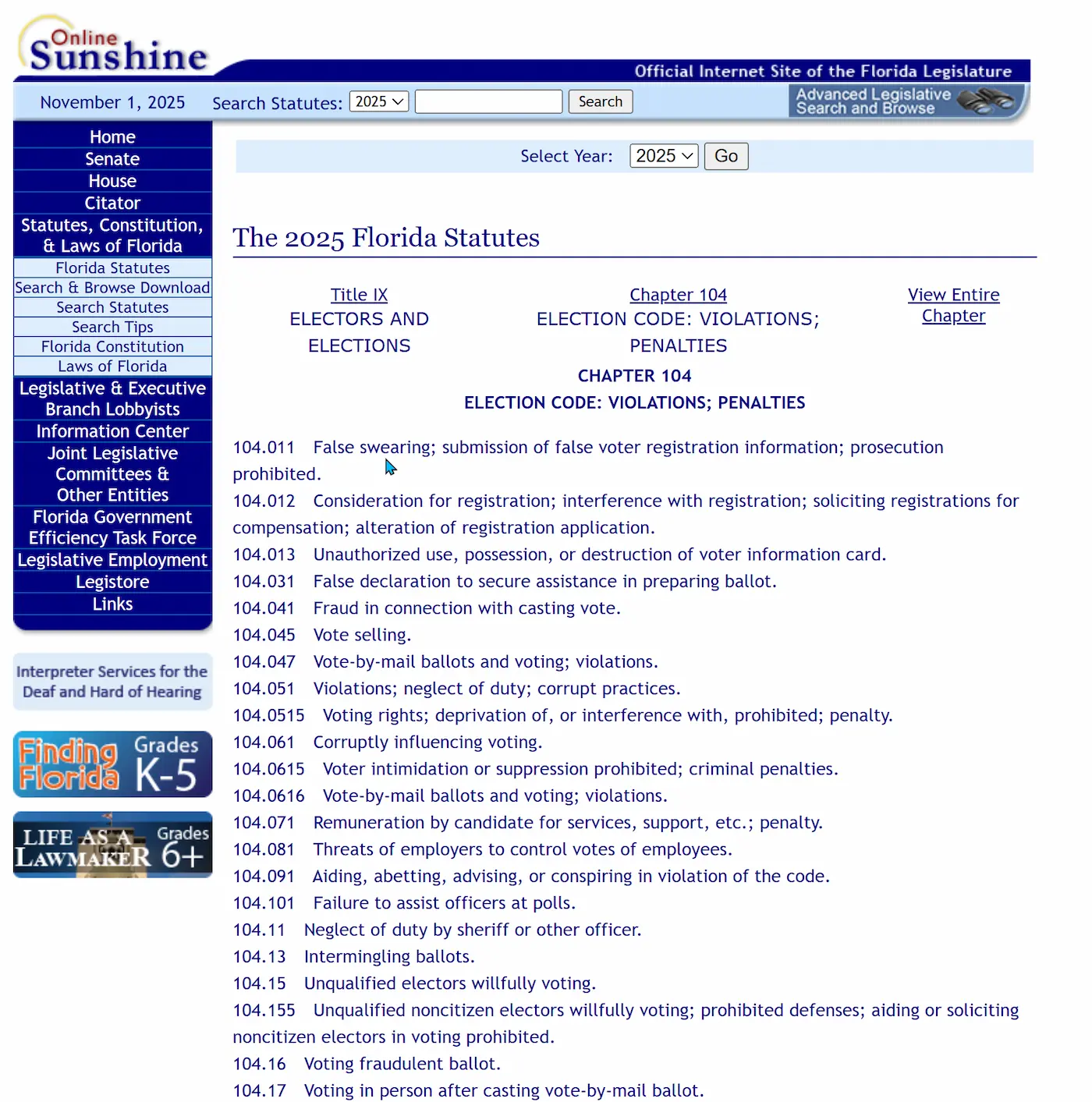
- Buying or selling votes is prohibited (e.g. gifts for support).
- Voter assistance is legal only if it executes the will of the voter (does not decide for him).
- Supervised voting in health centers should be coordinated by the electoral office, not by a campaign.
Hialeah and Miami-Dade have a large population of older adults, many dependent on city- or county-subsidized health clinics. These facilities often rely on government permits and funding, which can create indirect pressures. Candidates or campaign teams (especially those aligned with established power “dinosaurs”) could exploit this:
- Coercion at health care facilities: Clinic operators, in order to maintain political favors, may pressure vulnerable residents (with dementia or financial dependency) to vote for incumbent candidates. In landmark Miami-Dade cases, such as the 1997 absentee ballot fraud that led to the removal of Miami Mayor Xavier Suarez, it was alleged that ballots were collected from seniors in nursing homes, signing them without their full knowledge. Similarly, in recent elections, posts on X have reported caregivers or family members forcing seniors with Alzheimer’s to vote, as in a case in Puerto Rico where an 81-year-old woman was used for a fraudulent ballot.
- Economic influence: Seniors on fixed income from Social Security may give in for fear of losing benefits. PACs (Political Action Committees) with funding from powerful donors (often tied to local governments) may offer subtle “help,” such as transportation or gifts, in exchange for votes. In Florida, this violates Section 104.045 of the statute (vote selling), but it is difficult to prove if it is disguised as “community assistance.” In Hialeah, past allegations include PACs funded by former officials influencing vulnerable communities, maintaining the status quo.
Non-proselytizing zone violation (150 ft.)
Incident – possible violation of the no-proselytizing zone (150 feet)
On October 31, 2025, a bus with elderly voters arrived at the Hialeah precinct and, unexpectedly, we observed candidate Gelien Perez get off the same vehicle.
This fact, in the context of the 150-foot non-solicitation zone (F.S. 102.031(4)), calls into question the level playing field vis-à-vis the other candidates who stayed within the rules all day. To protect the integrity of the process, it is urgent to establish and communicate clear guidelines: prohibit candidates from escorting or disembarking with groups of voters in the protected perimeter; strictly separate voter transportation and campaign activities; and require the Clerk and poll deputies to apply the rule uniformly, with written records of any incidents and preservation of evidence.

Door-to-door pressure and “boleteros”.
How it operates:
- Coercive visits to lonely elderly people to “help” them with absentee voting.
- Ballot harvesting: third parties accumulating ballots from various electors, sometimes marked under pressure.
- Obsolete addresses or inflated voter rolls to push votes from non-residents.
What the law says:
- Possession of multiple ballots by a third party is limited; outside of what is permitted, it is a crime.
- Cheating, pressuring or withholding ballots is a crime.
- Holding registrations with false addresses or voting out of district is voter fraud.
Prior to voting, campaigns may commit irregularities by contacting voters directly:
- Coercive visits: Campaign teams go to homes to pressure, especially elderly people alone. In Miami-Dade, there have been reported cases where ballot collectors (boleteros) collect absentee ballots under pressure, as in the 2012 scandal where ballots passed through multiple hands, increasing the risk of fraud. In Hialeah, posts on X allege that candidates lead elderly people by the hand beyond the no-solicitation line, violating distancing rules.
- Voter registration fraud: Maintaining obsolete addresses of people who have moved (to Miami Beach or elsewhere) allows for voting in their name or for mail-ballot lobbying. In Florida, maintaining voter lists is key to preventing this, but irregularities such as “dead” or duplicate votes have been alleged in counties such as Miami-Dade. Tools such as EagleAI, used in Florida to detect fraud, have identified non-resident voters, but critics see them as voter suppression. In Hialeah, with its high mobility, this could inflate registrations for established candidates.
Influence of CAPs and resources on vulnerable people
How it operates:
- Indirect purchase of will with meals, “aids”, trips or promises.
- Campaigns that exploit fear (losing a service or a license) to align the vote.
The red line:
- If the “support” is conditional on the vote, it is illegal.
- If there are explicit instructions at the time of dialing, it is coercion.
PACs with large funds (often from hidden “dinosaurs”) exercise power over low-income groups:
- Indirect vote buying: Offering incentives to seniors on fixed income, such as food or transportation, in exchange for support. In Pennsylvania, a 2022 case involved “ringing up” fraudulent votes on machines, but pre-ballot includes collecting rigged ballots. In Miami-Dade, PACs linked to incumbents have been accused of targeting Cuban exiles, promising anti-communism while maintaining corruption.
- Pressure by fear: Vulnerable people give in for fear of reprisals-lossof services, procedures or support. In Hialeah, public criticism of former Hialeah mayors like Carlos Hernandez and noisy conferences by active officials -selling electoral fables about “who is ahead” in polls- create the perfect climate for machineries to block new blood, like Bryan Calvo, even when he receives the backing of exile figures like Otaola.
“Bar not equal” at polling places.
How it operates:
- Rules applied selectively: some are allowed to set up tents or loudspeakers, others have even a microphone removed without clear criteria.
- Accompanying candidates/officials to the door, within the protected area.
The golden rule – No proselytizing zone:
- In Florida the strip is 150 ft (≈45.7 m) from the entrance to the premises.
- Within that radius: it is not possible to persuade, exhibit propaganda, distribute material, sound messages, or “guide” the voter with political orientation.
Officials at polling places may show bias, allowing access to some candidates while restricting others. Florida requires equality under the law, but complaints include favoritism toward incumbents. If there are complaints, the Division of Elections investigates, but inequities could invalidate results if proven systematic. In Hialeah, with its history of “challenged actions,” this could favor the establishment over anti-establishment.
Recent Allegations in 2025 Elections: Alleged Fraud Scheme
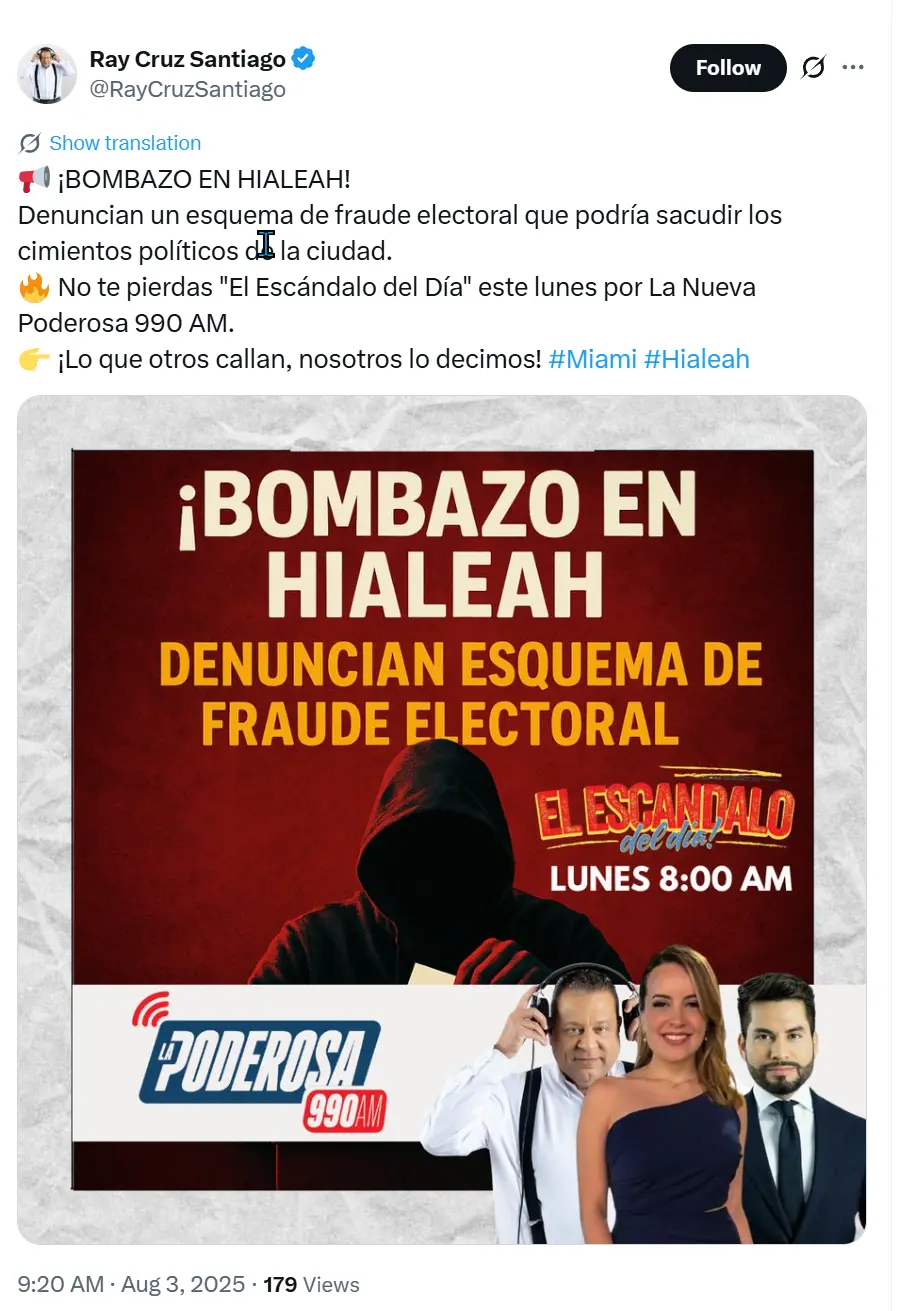
- Description: In August 2025, an alleged election fraud scheme was reported in Hialeah involving ballot tampering and voter pressure. Local media reports and posts on X describe a “scandal” that could affect municipal elections, with accusations of former government officials or allies using tactics to favor establishment candidates. @RayCruzSantiago This includes obsession with selective fraud, possibly to distract from larger irregularities, as mentioned in discussions of FBI investigating Hialeah while ignoring other states.
- Impact: Although under investigation, reinforces concerns about bias in enforcement, where Hialeah is targeted to maintain political control, similar to past cases.
Speakers, music
How it operates:
- Loudspeakers and music with partisan or religious messages or symbols near the premises.
For example, in 2020 elections in Highlands County, a truck with loudspeakers generated complaints, but it was not illegal because it was outside.
What about the police? Risk of selective enforcement
- Police presence is for order and security, not to favor anyone.
- Ignoring violations by some and hardening with others contaminates the process.
- Any action must be recorded (reports, body cams), and be proportional.
Possible Police Involvement in Electoral Irregularities
Although there is no massive evidence of systematic police manipulation in recent elections, historical reports and allegations suggest that some officers may lend themselves to favoring established candidates, either through selective inaction, intimidation or political connections. This is especially troubling in areas like Hialeah, with its history of “challenged actions” and a strong political establishment.

- Selective enforcement of the no-solicitation zone (150 feet): Officers may ignore favored campaign violations, such as guiding vulnerable voters (e.g., seniors) into the zone, while ticketing or removing anti-establishment candidate volunteers. In Miami-Dade, complaints in past elections (such as 2012) allege that police allowed pro-incumbent activities near polls, violating Statute 102.031. Historically, in areas such as Homestead, arrests for absentee ballot fraud involved campaign workers, but critics question whether police initially looked the other way.
- Voter or observer intimidation: Police may pressure minority voters or “new blood” supporters (such as Bryan Calvo) through excessive presence or interrogation, deterring participation.
- Political Connections and Removal of Investigative Units: In Hialeah, critics point out that mayors like Bovo failed to restore the Miami-Dade Police Public Corruption Unit, which investigated voter fraud, allowing “dinosaurs of power” to operate without fear. Current Miami-Dade Mayor Daniella Levine Cava has not revived it either, and posts on X suggest this maintains the status quo.
- Influence through appointments: Mayors or commissioners could appoint loyal police chiefs, who then prioritize protection for allied campaigns.
- Absentee Ballot Tampering and Community Pressure: Police may indirectly engage in pre-ballot fraud by failing to investigate complaints or by assisting in coercive collections. In past Miami-Dade scandals (e.g., 1997 and 2012), police were criticized for failing to intervene in absentee ballot collections by “boleteros” linked to incumbent candidates, allowing manipulation of seniors in clinics or homes. In Hialeah, allegations include officers escorting or ignoring door-to-door lobbying by favored campaigns.
USEFUL LEGAL BOX (in English)
- No proselytizing zone: 150 feet from the entrance of the premises. Inside: zero propaganda, zero requests for votes, zero partisan “orientation”.
- Voter assistance: the voter may bring someone of his/her choice (not employer/union). That person does not decide; he/she only executes the will of the voter.
- Mail ballots: coercion, destruction, withholding or mass “collection” outside of what is permitted = crime.
- ALF/clinics: any “supervised voting” should be managed by Elections, not campaigns.
- Poll watchers: accredited, observe, do not interact with voters; report to the Clerk.
How to document (and win the case at the table)
- Measure 150 feet (wheel/tape) and photograph the perimeter from the official entrance.
- Record horizontal video with: precinct sign, your measurement and observed behavior.
- Report to Clerk immediately and note name/time.
- If there is coercion/bullying/threats: call the police and ask for incident number.
- Preserve evidence: ask them to keep CCTV, body cams, incident logs and communications.
- Escalation to the Supervisor of Elections and State Election Fraud (hotline).
- Make a writtenreport with photos, maps and cited regulations.
“Clean and pure water” also in the vote.
Hialeah needs clean competition, clear rules and even enforcement. The machines count paper: what defines integrity is what happens before. If there is major pressure, ballot harvesting, political noise at the door or unequal yardstick, it is denounced and corrected. Democracy without shortcuts: evidence, report and law. The rest is smoke.
Hialeah decides without cheating. The machine is not the story: the fraud is cooked before. Zone 150 feet without proselytizing, zero coercion to adults, no “boleteros”. Measure, record and report. Even law or it’s not law. #HialeahVotaLimpio #150Feet #NoMoreSmoke
VOTER COMPLAINT PROCEDURES
Revised 10/01/2022
The following is important information for voters who wish to file a complaint of possible fraud or alleged irregularities in election activities.
Miami-Dade Ethics & Public Trust Commission
19 West Flagler, Suite 820
Miami, Florida 33130
Phone: (305) 579-2594
Ethics Hotline: (305) 579-9093 or (786) 314-9560
Fax: (305) 579-0273
E-mail: [email protected]: http://ethics.miamidade.gov/
Complaint form: https://ethics.miamidade.gov/complaints-how-to-file.asp
Miami-Dade State Attorney’s Office, 11th Judicial Circuit
Katherine Fernandez Rundle, Miami-Dade State Attorney Main Office
Felony Prosecutions & Administration
1350 NW 12th Avenue, Miami, FL 33136-2111
Phone: (305) 547-0100
Elections Hotline: (305) 547-3300
Website: https://miamisao.com/
Complaint for electoral fraud
Pursuant to section 97.012(15), Florida Statutes, the Department of State has the authority to conduct preliminary investigations into any allegation of irregularities or fraud related to voter registration, voting, or candidate or proposition petition activities. The Department may report its findings to the Office of the Statewide Prosecutor or the Prosecutor of the judicial circuit where the alleged violation occurred for prosecution, where appropriate. It should be noted that the term “election fraud” does not include violations of Chapter 106, Florida Statutes, which fall under the jurisdiction of the Florida Elections Commission.
Other complaint forms can be found on the Complaint Forms page.
- Voter Fraud Hotline (in English and Spanish): 1.877.868.3737, Monday through Friday, 8:00 a.m. to 5:00 p.m. (Eastern Time).
- Electoral Fraud Complaint (DS-DE 34)
- If you observe or witness a possible case of election fraud, please complete and submit a report form so we can investigate. Please provide the date, time, location and as much specific information and credible evidence as possible.
o English – PDF
o Español – PDF
Florida Elections Commission
107 West Gaines Street, The Collins Building, Suite 224
Tallahassee, Florida 32399-1050
Phone: (850) 922-4539
Website: http://www.fec.state.fl.us/FECWebFi.nsf/pages/Complaints
Complaint form: http://www.fec.state.fl.us/FECWebFi.nsf/pages/Complaints
Interested in this topic? Read the next article and stay informed about everything that affects our community. Visit our homepage: newsmiamidade.com
Do you prefer it even shorter for social networks? Here’s a short variant:
Don’t miss the next article. More information at: newsmiamidade.com