
Does Miami-Dade need to replace its politicians with AI: Deficits, stalled buses, Amazon, Calusa, MIA, PortMiami and agriculture: 7 cases show why Miami-Dade needs real audit, not propaganda AI
A parody… but too well aimed.
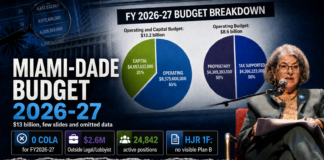
Miami-Dade operates with a budget of more than $13 billion and faced a deficit of approximately $402 million. Purchased 69 Proterra electric buses for tens of millions of dollars, while later reports noted dozens of out-of-service units. Sold 76.862 acres of public land to Amazon for $22,056,853 under an agreement conditioned on investment and 325 permanent jobs. Its airport was flagged in audit for contracts not released on time and, as of April 25, 2026, the official MIA website did not show the March Aviation Capital Program Report, despite Ordinance 19-122.
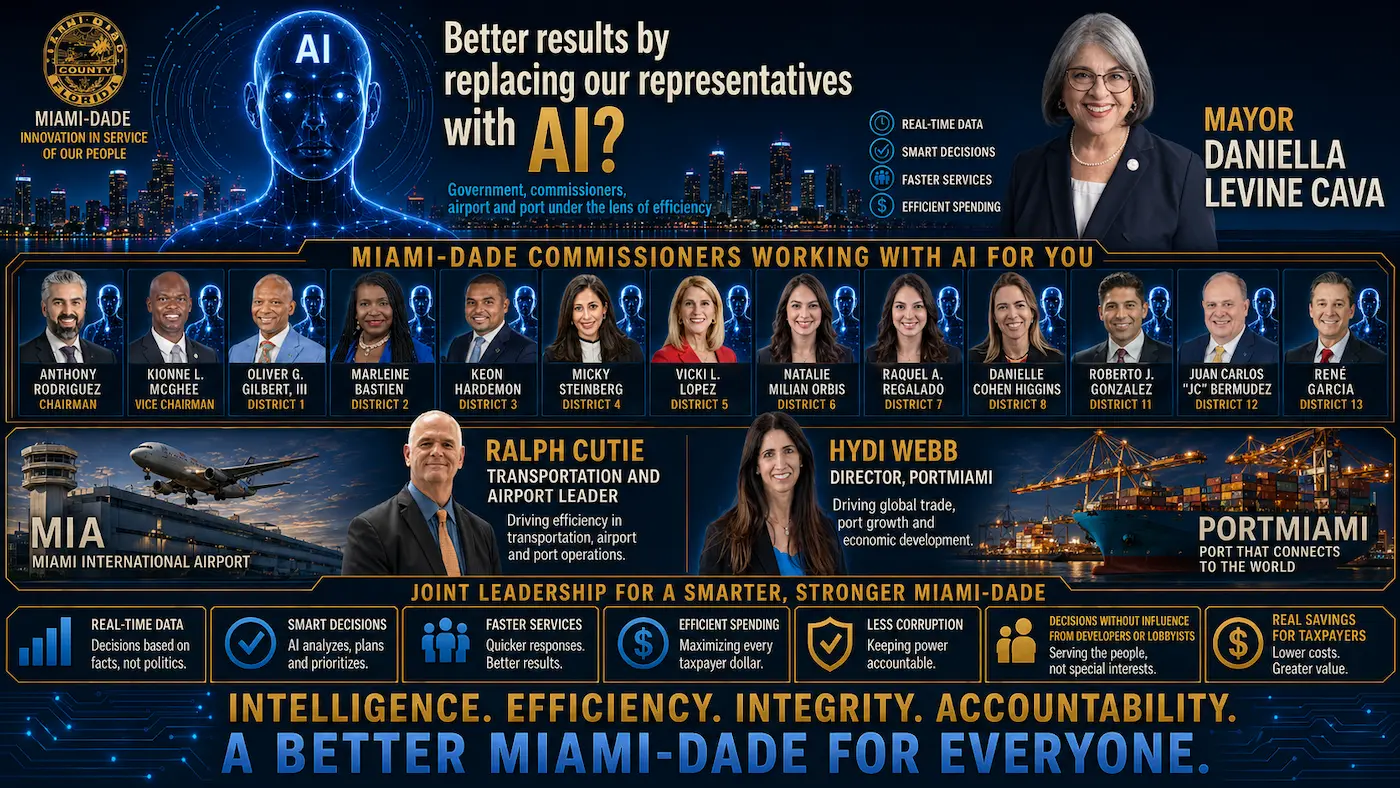
Against that backdrop, a satirical image created by News Miami Dade raises an uncomfortable question: does Miami-Dade need to replace its politicians with Artificial Intelligence, or does it simply need officials who work with data, discipline and common sense?
It sounds exaggerated. It sounds absurd. It sounds like a scene from a dystopian comedy. But in Miami-Dade—after years of deficits, modified contracts, rezonings riddled with exceptions, grandiose projects, the loss of agricultural land, and decisions that often seem to respond more to pressure from private or political interests than to actual metrics—the joke ceases to be quite so funny.
Because the underlying message is not that a machine should rule us.
The message is more uncomfortable:
If an AI promises real-time data, fact-based decisions, faster services, efficient spending, and fewer risks of corruption, then the real question is why the humans currently on the public payroll are not already doing exactly that.
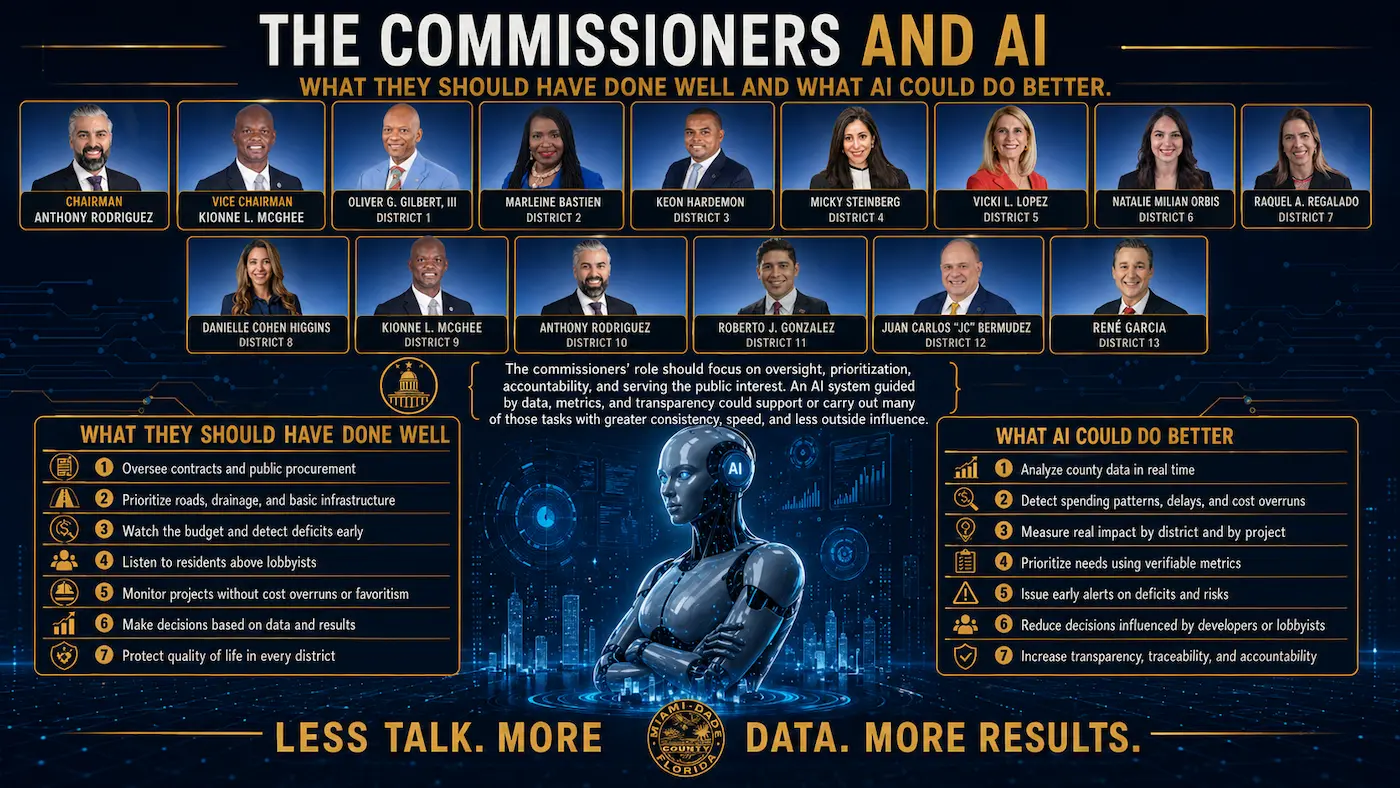
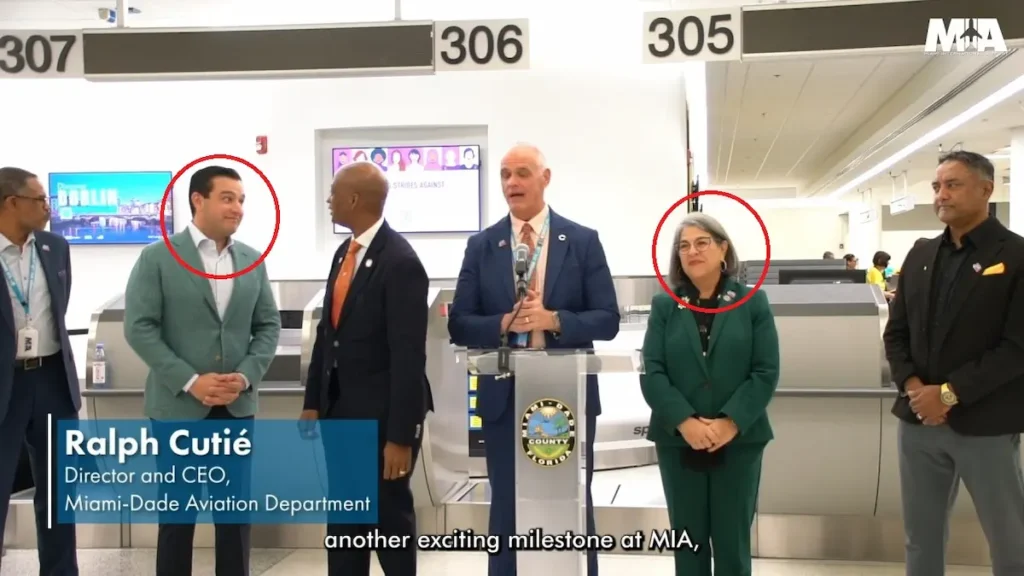
The image—futuristic, institutional, and almost propagandistic—shows Mayor Daniella Levine Cava alongside a blue robot with “AI” on its forehead. Below, the 13 commissioners pose with their cybernetic versions. Ralph Cutié appears linked to Miami International Airport, and Hydi Webb to PortMiami.
The message is direct:
Better results by replacing our reps with AI?
Ideally, our commissioners would meet, at a minimum, the following standards: genuine oversight, serious review of contracts, protection of the public interest, thorough review of case files, respect for residents, and decisions based on evidence—not political pressure.
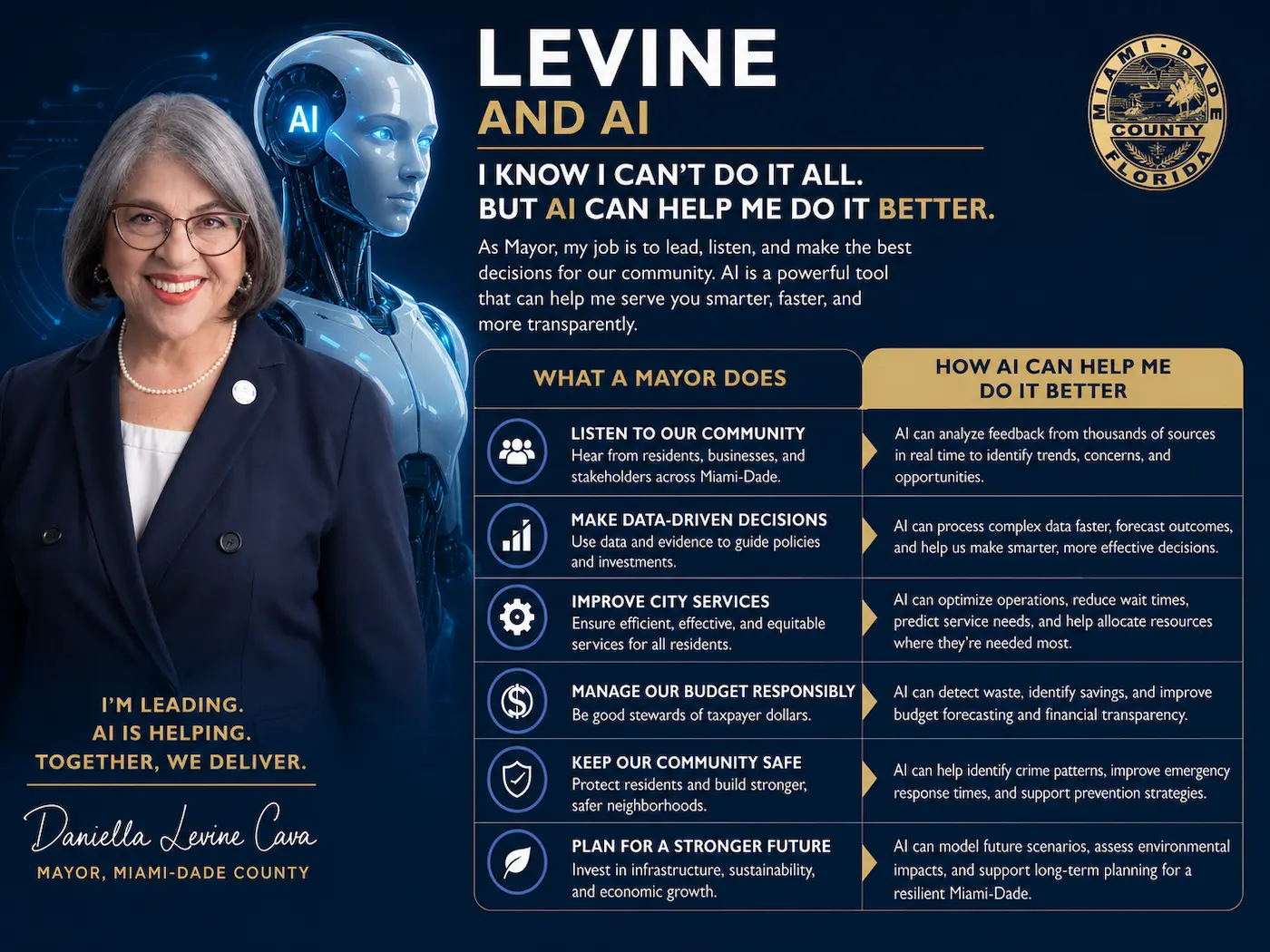
Reduced risk of corruption, conflicts of interest, and undue influence. Decisions shielded from pressure by developers, lobbyists, or private interests.
Sounds wonderful. It sounds dangerous. And, above all, it sounds like an involuntary confession.
Ideally, our commissioners should, at a minimum, comply with the following:
Because the real question is not whether a machine can govern better. The question is why so many human officials need a machine to remind them of the basics: to fulfill contracts, respect deadlines, publish reports, notify correctly, supervise works, protect agricultural land and react before the damage is irreversible.
A huge device… and still reacting late.
Miami-Dade is not a small or poor government. The FY 2025-26 adopted budget exceeds $13.2 billion in annual operations, while the multi-year capital plan totals $42.897 billion. The executive summary of the adopted budget itself reports position increases and a huge public structure to manage services, infrastructure, contracts and projects.
In street language: we are not talking about four employees improvising from a borrowed office. We are talking about a gigantic government machinery.
And yet, too often it seems that it takes thousands of employees to bring coffee to the meeting of the commissioners and the mayor, but not to detect in time a contract that moves, an employment obligation that weakens, a hearing that confuses the neighbors or a transparency page that does not publish the corresponding monthly report.
That’s where the poster’s AI wins the argument without saying a word.
A well-designed AI would not need institutional ego. It would not need to sell that Miami-Dade wants to compete with Dubai or Qatar. It would not need to embellish the county with “best in the world” speeches while there are broken streets, unbearable traffic, insufficient drainage, backward basic infrastructure and agricultural land disappearing hectare by hectare.
AI would start with what human government often avoids:
data, metrics, priorities and compliance.
Roads first.
Drainage first.
Basic infrastructure first.
First water, transit, services, realistic housing and protection of agricultural land.
Then the frills.
But Miami-Dade seems to do the opposite all too often: monument first, photo first, bridge of lights first, global city branding first, political ego first.
The example of the I-395/SR 836/I-95 Signature Bridge says it all. The official project is listed at a cost of $866 million and estimated completion by the end of 2029. It’s not about being against urban beauty. A city can aspire to look good. But order matters.
First the backbone is built.
Then you put in the lights.
Condal Budget Case: The deficit that an AI would have detected earlier
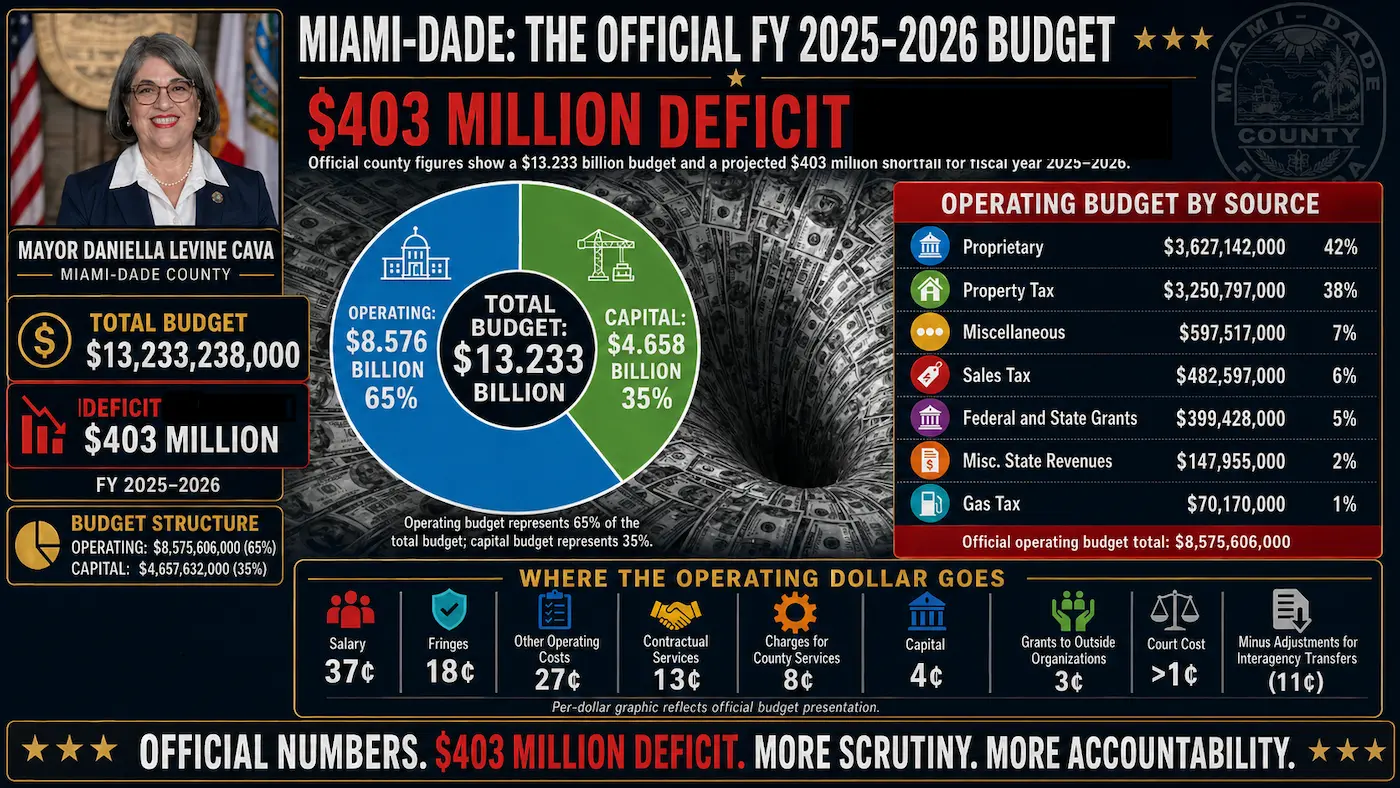
The budget process also exposes the problem. In July 2025, the Levine Cava administration presented the FY 2025-26 budget facing a gap of approximately $402 million, according to public reports and the official context of the budget process itself.
Therein lies the difference between marketing and smart management.
An efficient government does not discover a gap of hundreds of millions when it is already over the budget calendar. An AI system would have projected alerts months in advance: spending trends, weakened revenues, inflated contracts, duplicative offices, programs with no measurable results, unnecessary positions, questionable subsidies, and accumulated financial risks.
AI alone would not solve the deficit. But it would have asked questions that many prefer not to hear:
Who authorized the expenditure?
Which contract was not a priority?
Which program works and which one only justifies payroll?
Which office grew without producing measurable results?
Which budget alert was ignored?
Who benefited?
Who paid?
A budget of more than $13 billion cannot be managed as a campaign notebook.
Amazoncase : public land, job promises and a moving contract clock

The parody hurts because the official records explain it better than any satire.
In the Amazon case, Miami-Dade authorized in 2020 the sale of 76.862 acres of public land in the area of 13200 SW 272 Street for $22,056,853, for a distribution center of no less than 1,000,000 square feet. The filing required a minimum investment of $80 million and the creation of 325 permanent jobs, maintained for years, under Resolution R-655-20 and the Declaration of Restrictions.
So far, the deal looked strong on paper: public land in exchange for investment, construction, economic activity and jobs.
But in 2023 the county itself approved an amendment that extended the terms by 12 months, redefined elements of the contractual schedule and extended the total term of compliance to 21 years. The official justification was that Amazon had already invested more than $129 million and was facing macroeconomic pressures, inflation and supply chain issues. The same document admitted that the extension would delay economic benefits to the community for up to a year.
In April 2026, following the announcement of the temporary closure and elimination of approximately 1,000 jobs, the Board ordered enforcement, requested a 30-day report and authorized legal action.
The problem is not that the county demands compliance. It must.
The problem is that he had to activate enforcement after moving the contractual clock two years earlier. That doesn’t look like preventive control. It looks like reactive management.
An elementary AI would have scored:
Contract conditioned on jobs.
Date modified.
Benefits delayed.
Job Requirement under risk.
Public Alert required.
Monitoring officer pending.
That doesn’t require science fiction. It requires follow-up.
Calusacase : when the rule becomes the exception
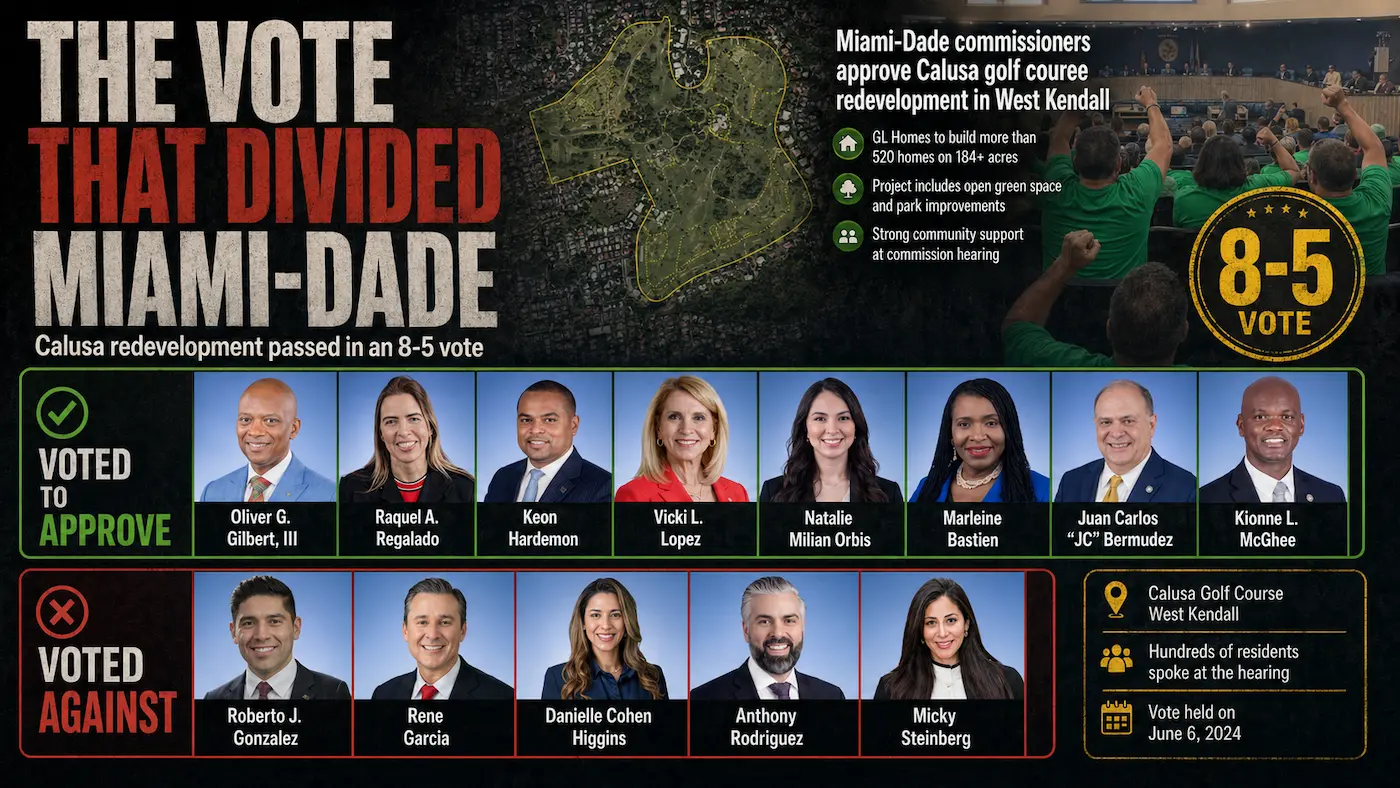
Calusa follows the same script, but in the field of urban planning.
The 2021 filing shows a request to rezone the former golf course, allow more residential units, excavate new lakes, fill in existing lakes, reduce private open space, allow more lawn area, locate residences on private drives and waive certain right-of-way dedications.
Simply put, it was not a minor request. It was a package of rezoning, variances, exceptions, physical changes to the land, neighborhood impact, environmental impact and pressure on infrastructure.
In 2026, the dossier reflects new changes: reduction of units from 540 to 524, lake adjustments, preservation of a rookery, open space, traffic, buffers and future conditions. Observed species, environmental requirements and management measures are also mentioned.
The question here is not whether all of this can be technically justified in a file of hundreds of pages. The question is whether the ordinary resident can follow the process without getting lost among notices, hearings, deferrals, revised documents, conditions, covenants and administrative language.
A serious AI would not decide for the neighbors. But it could verify in real time:
who was notified, when, by what route, with what map, with what version of the project, what was changed, what was voted on, who voted, and what condition was left pending.
That would be transparency.
The rest is to leave the neighbor fighting against a file that only lawyers, consultants and developers understand.
Agriculturecase : AI would not look at land, it would look at food infrastructure
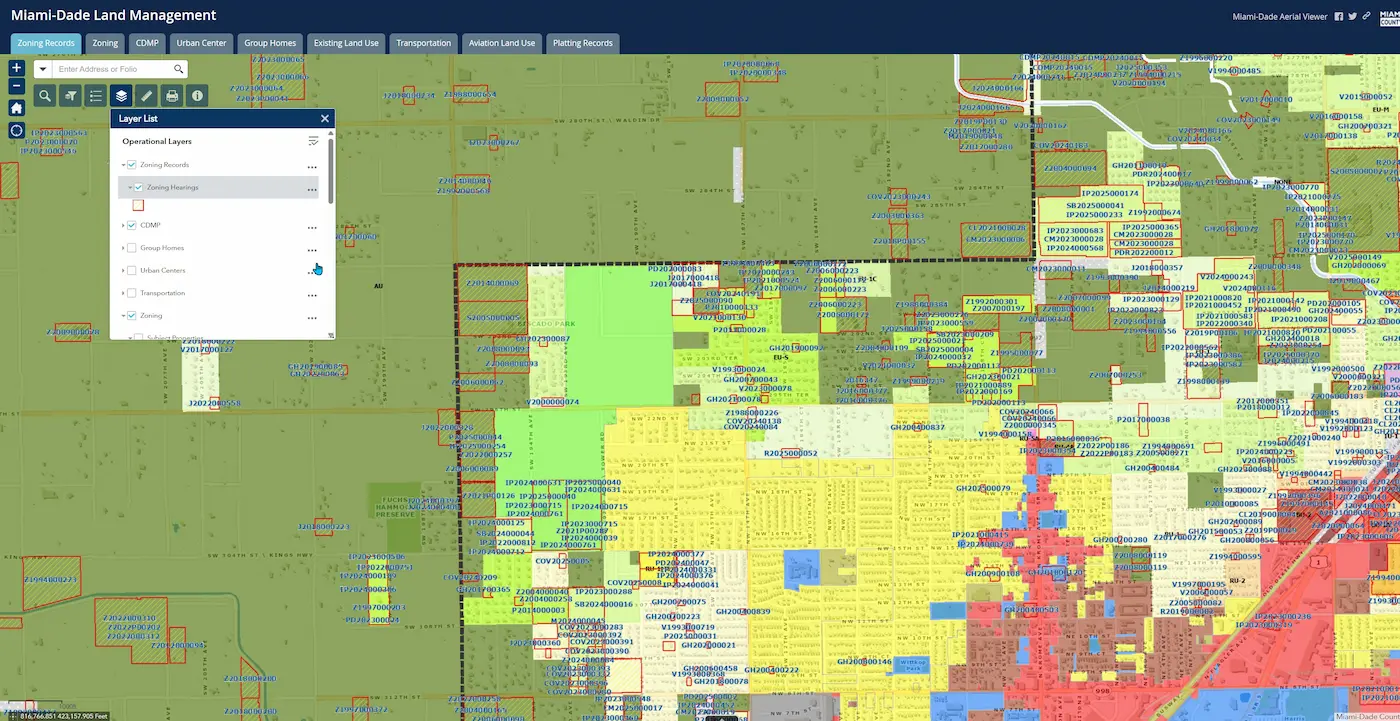
Another point that the poster does not show, but that Miami-Dade cannot ignore, is the progressive loss of agricultural land.
A serious AI would not look at agricultural land as “available land” awaiting rezoning. It would look at it as food, environmental, economic and cultural infrastructure.
The AI would cross-reference permits, rezonings, political donations, PACs, lobbyists, changes to the CDMP, impacts on traffic, schools, drainage, water, habitat and cumulative loss of agricultural land.
And if it detects recurring patterns of benefit favoring the same private interests, it would raise a red flag warranting a public audit.
No phone calls.
No dinners.
No favors.
No “let’s check it out later”.
Data only.
MIAcase : AI for visual propaganda or AI for governing with intelligence
Ideally, our MIA director should, at a minimum, comply with the following:

The best example of this contradiction is at Miami International Airport.
The county can present holograms, chatbots, robots and AI assistants at eMerge Americas. It can sell the image of a futuristic, modern, “world-class” and technologically advanced MIA.
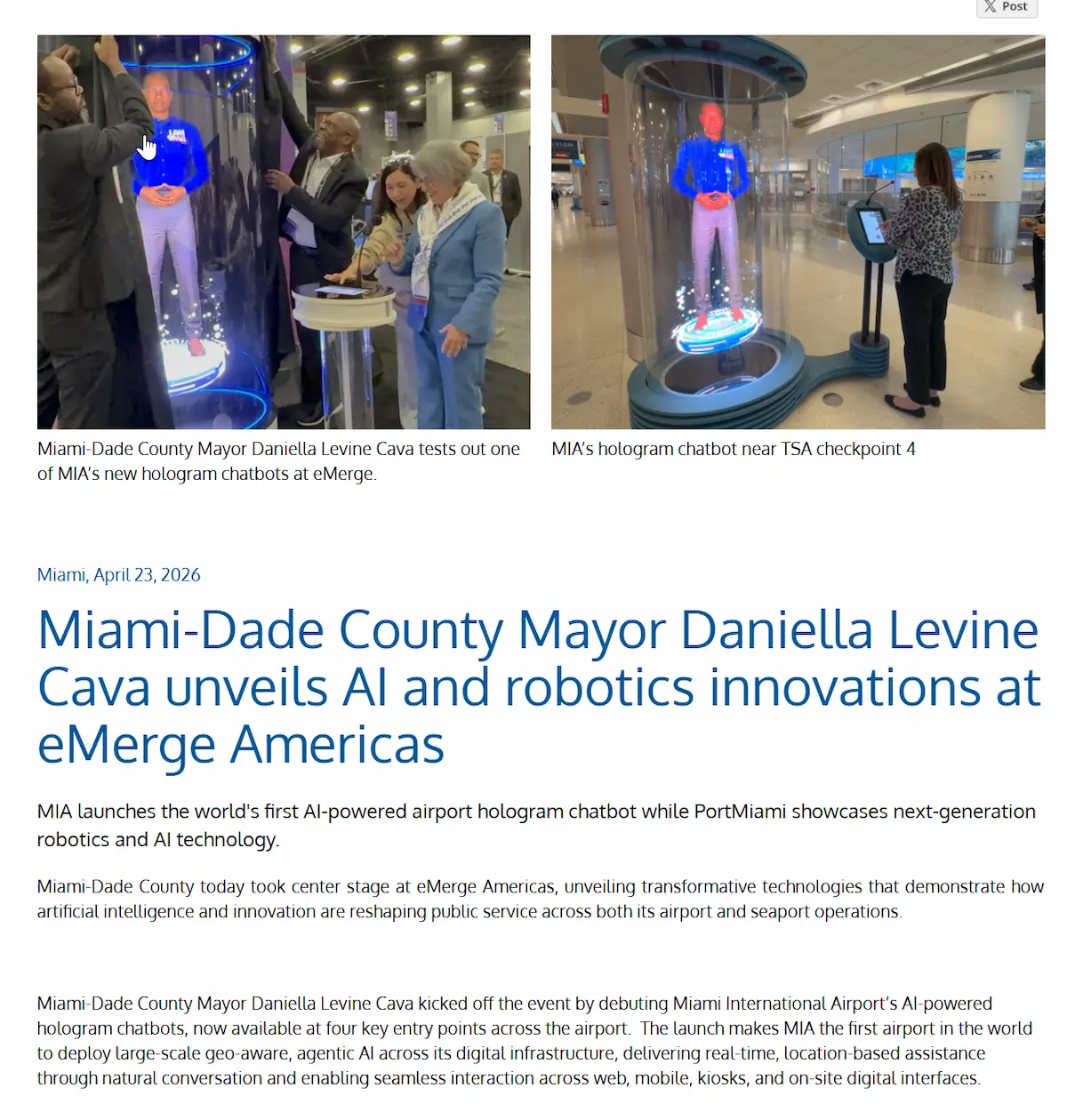
But the underlying question is different:
What good is a shiny hologram if the airport still has problems with infrastructure, maintenance, transparency and oversight?
AI cannot become institutional decoration. It can’t just be a tech trade show photo, a blue screen, a futuristic booth or a headline saying Miami-Dade is leading innovation.
That is marketing.
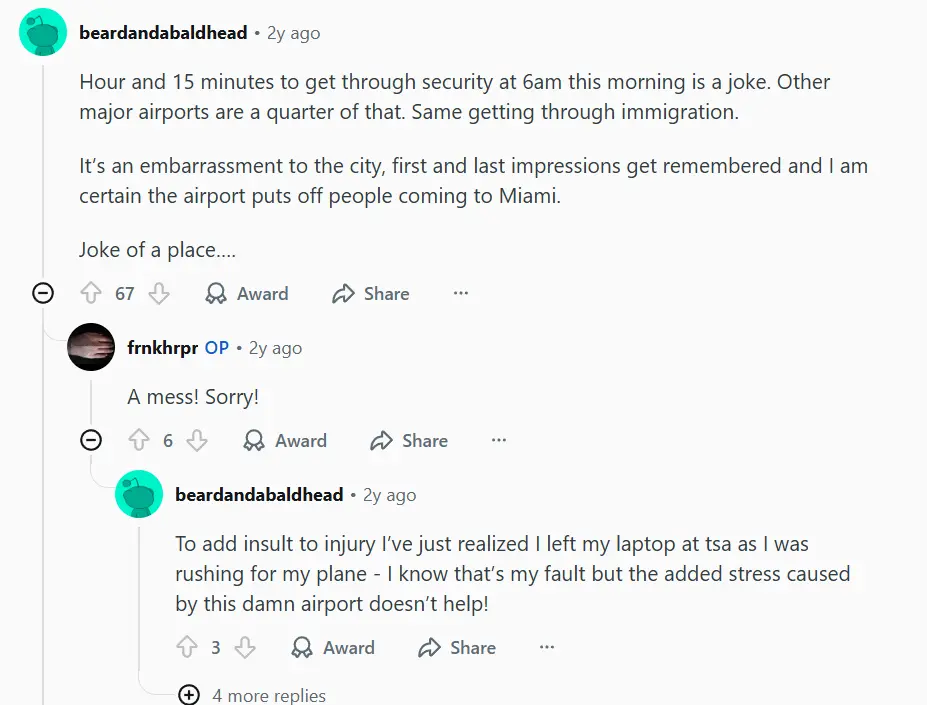
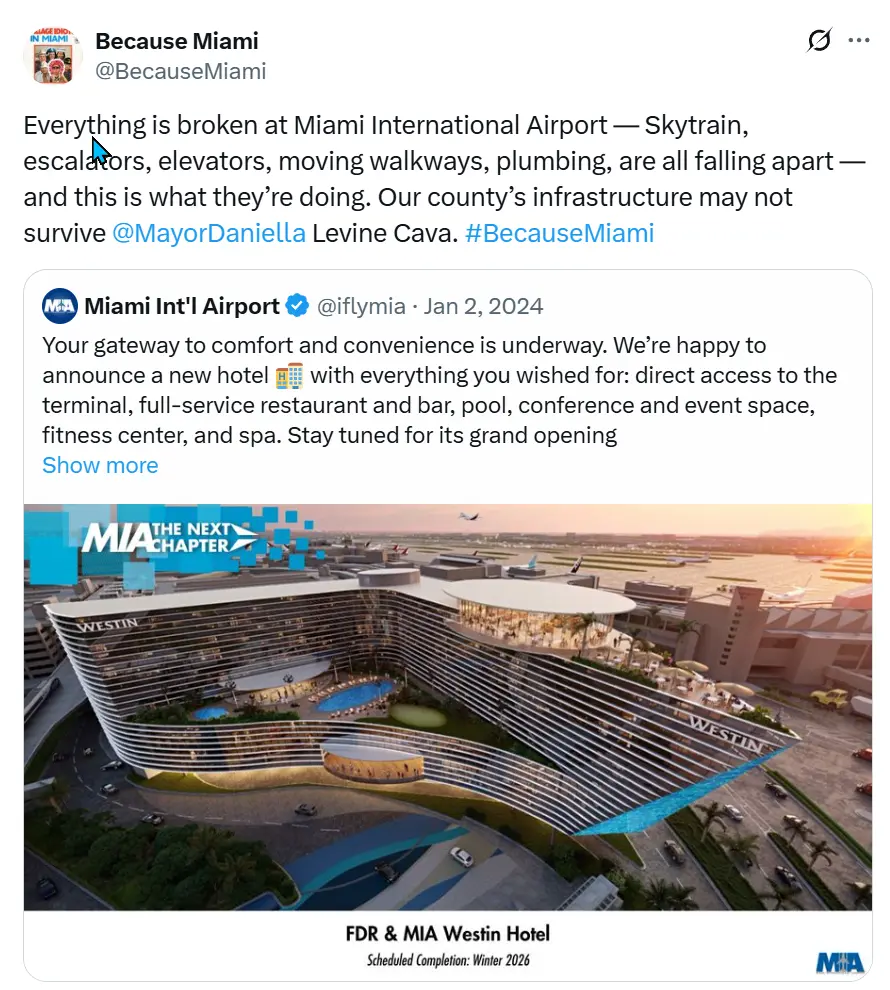
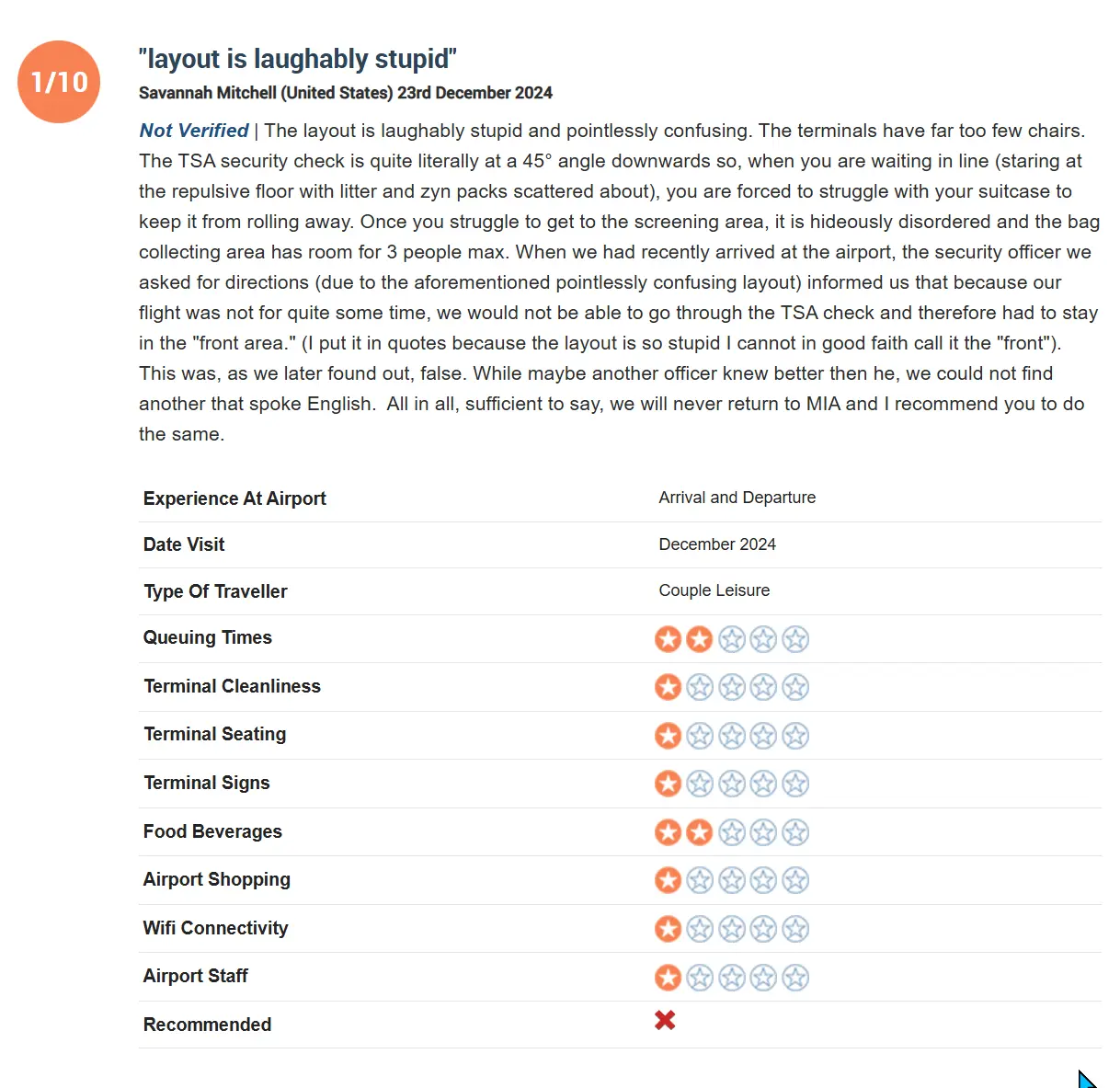
While the county boasts holograms, robots and intelligent assistants, the real problems remain in the same place: contracts without sufficient transparency, aging infrastructure, deferred maintenance, delays, cost overruns and weak political oversight.
Real innovation is measured elsewhere: contracts published on time, working bathrooms, operating stairways, modern generators, monthly reports, preventive maintenance, clear audits and administrative accountability.
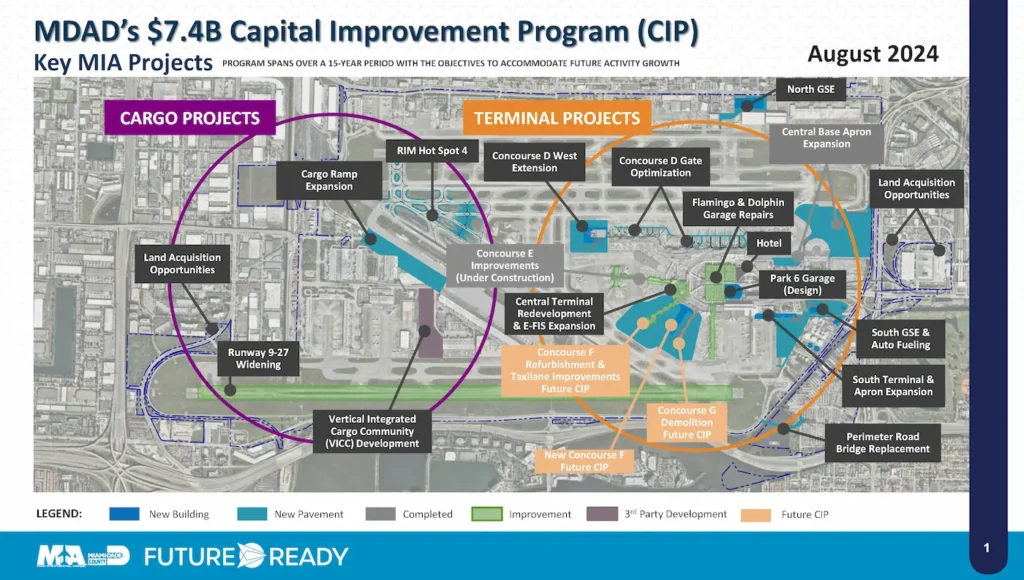
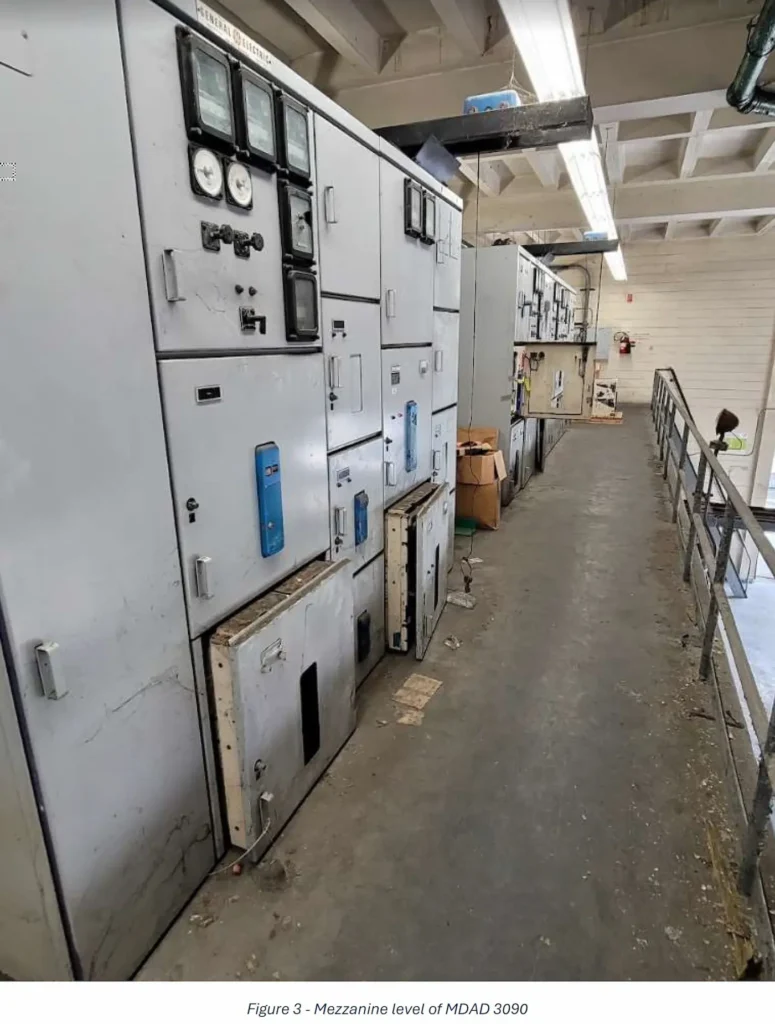
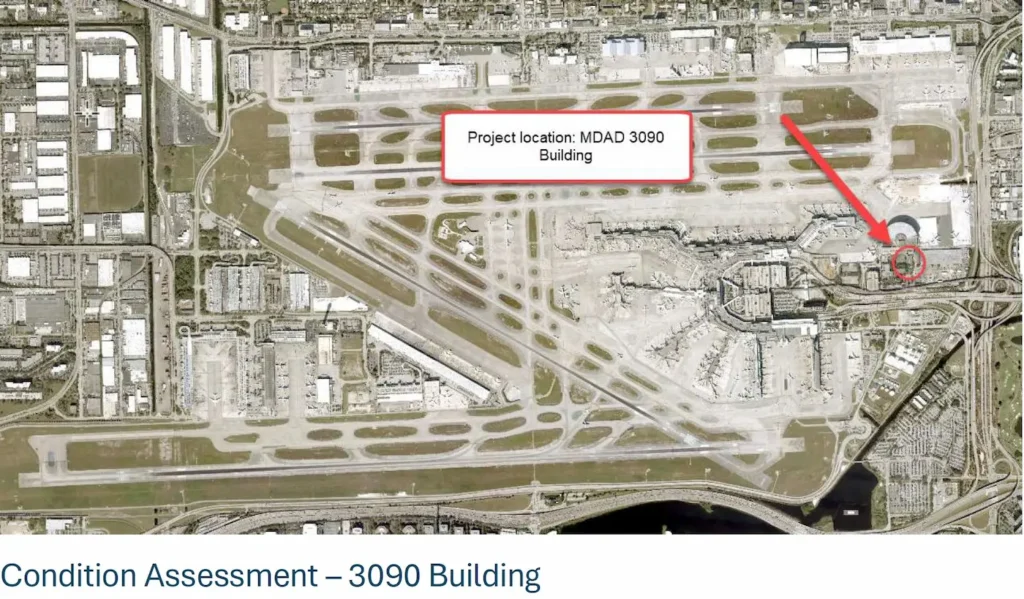
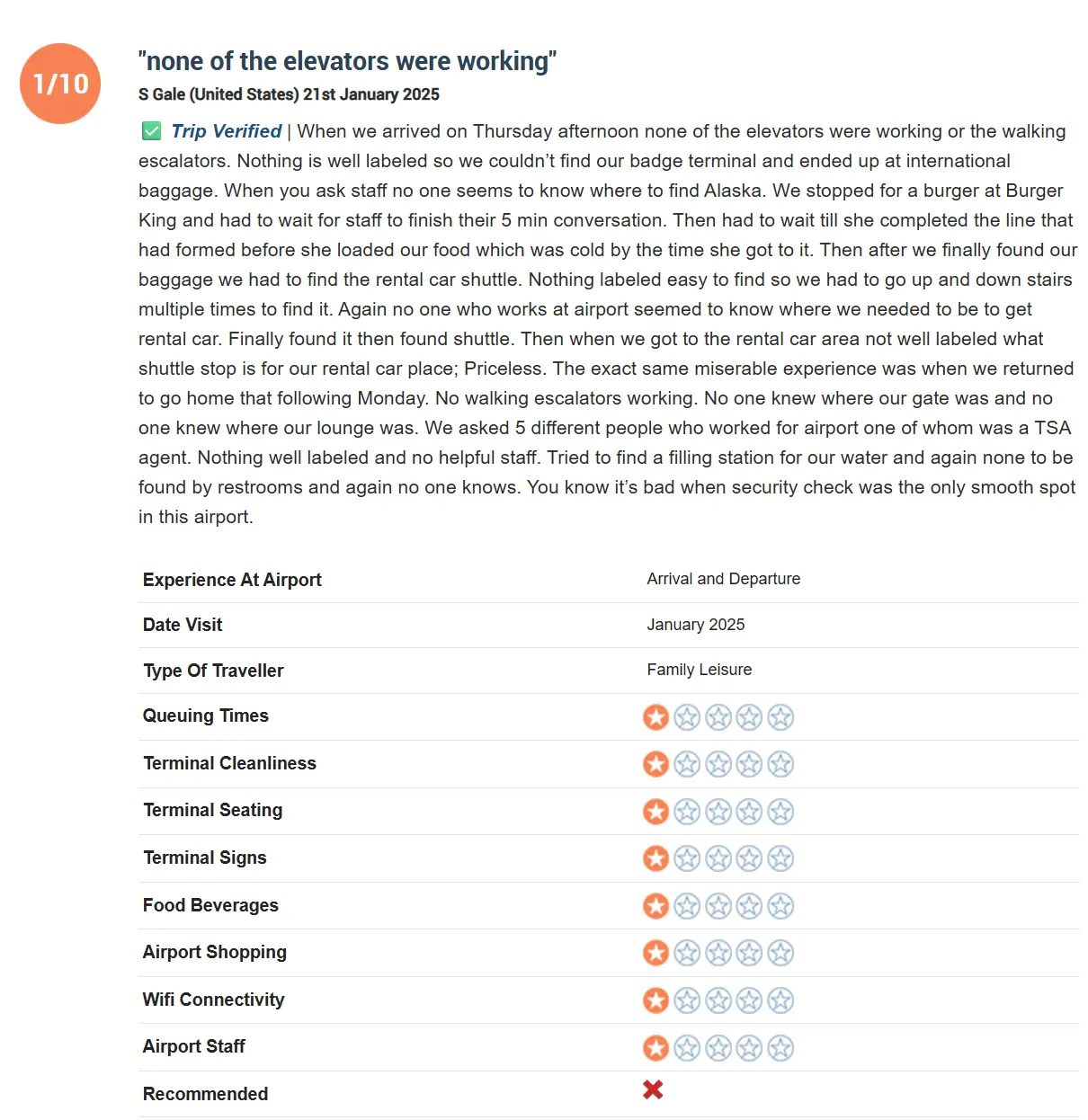
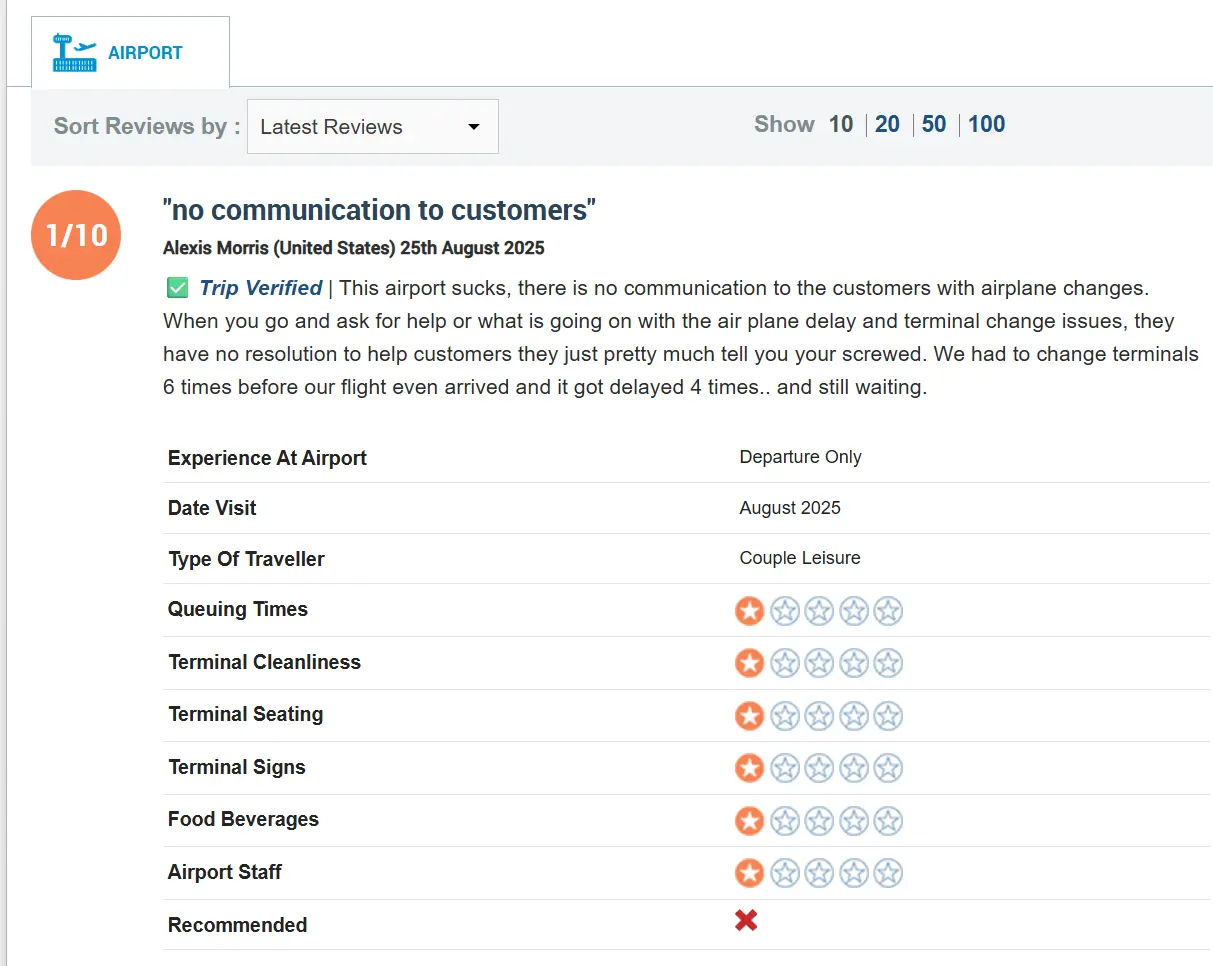
The MIA analyses show a less glamorous situation. In the case of Building 3090, it describes a critical electrical system with obsolete equipment, an emergency generator that failed years ago and was replaced by a rented one, electrical components more than 50 years old, , and a modernization financed over 20 years with total estimated cost between $15.5 million and $18.6 million.
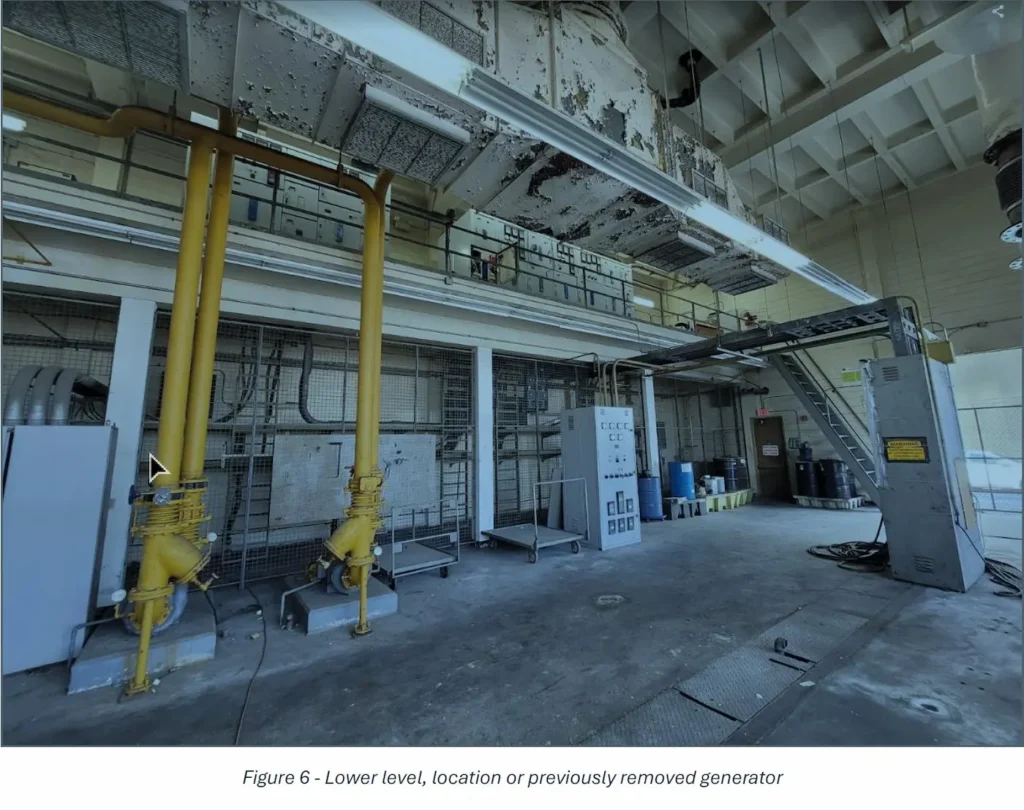
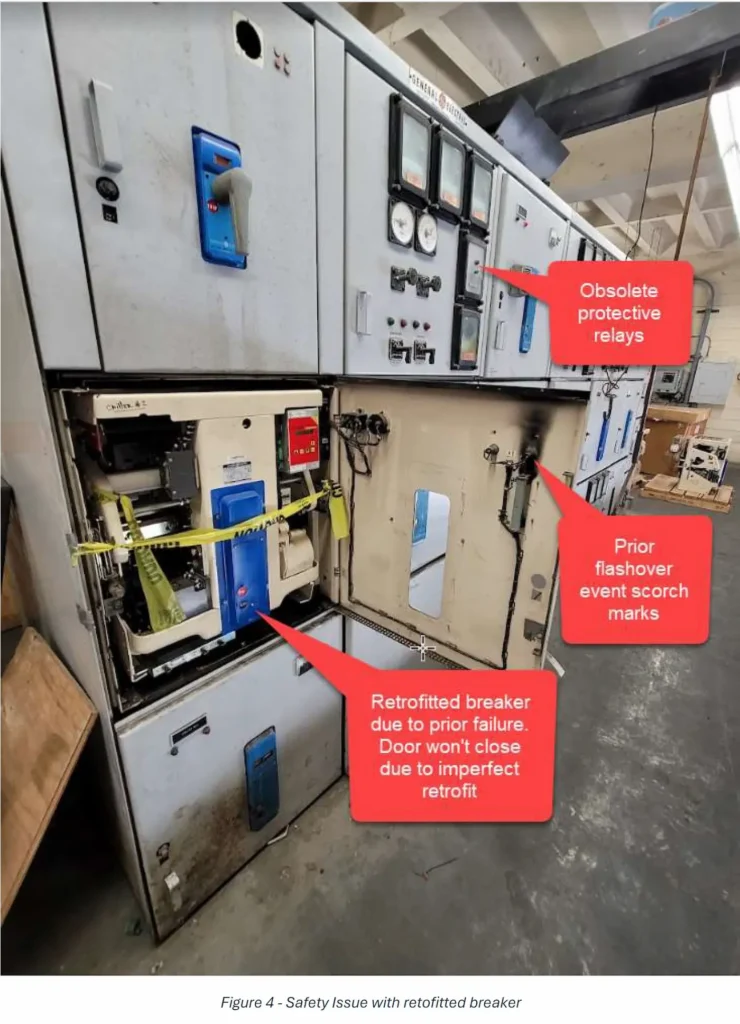
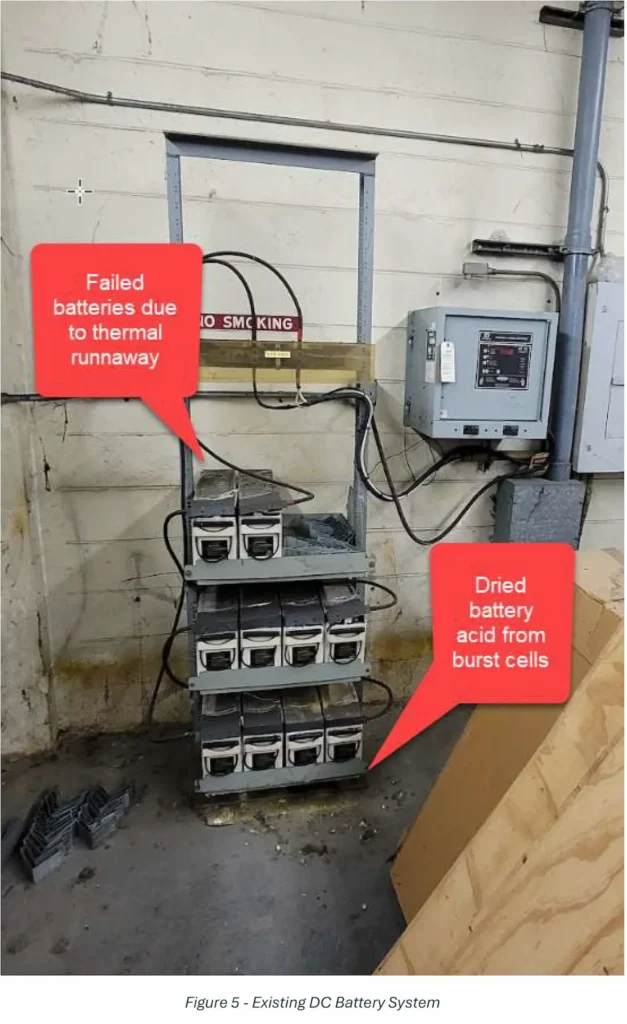



That is not innovation.
This is deferred maintenance.
Ordinance 19-122: transparency that doesn’t even appear on time
The airport case becomes more serious when you look at the very rule that supposedly exists to prevent this type of disorder.
On December 3, 2019, the Board of Commissioners passed Ordinance 19-122, creating Miami-Dade Code Section 2-285.2, relating to the Department of Aviation’s capital improvement acceleration. The MIA’s own official website says that ordinance requires a monthly report called the “Aviation Capital Program Report,” designed to report the procurement status and financial status of capital projects.
The official website explains that the report can be viewed in full or by sections: Summary of Changes, Procurement Status, Financial Status and Photos. It is not an administrative courtesy. It is a monthly tool for residents, passengers, commissioners and taxpayers to know what changed, what was purchased, how much was spent and the status of airport projects.
But as of April 25, 2026, the official website showed only the January and February reports published for 2026. The Aviation Capital Program Report for March 2026 was not listed.
That’s the point.
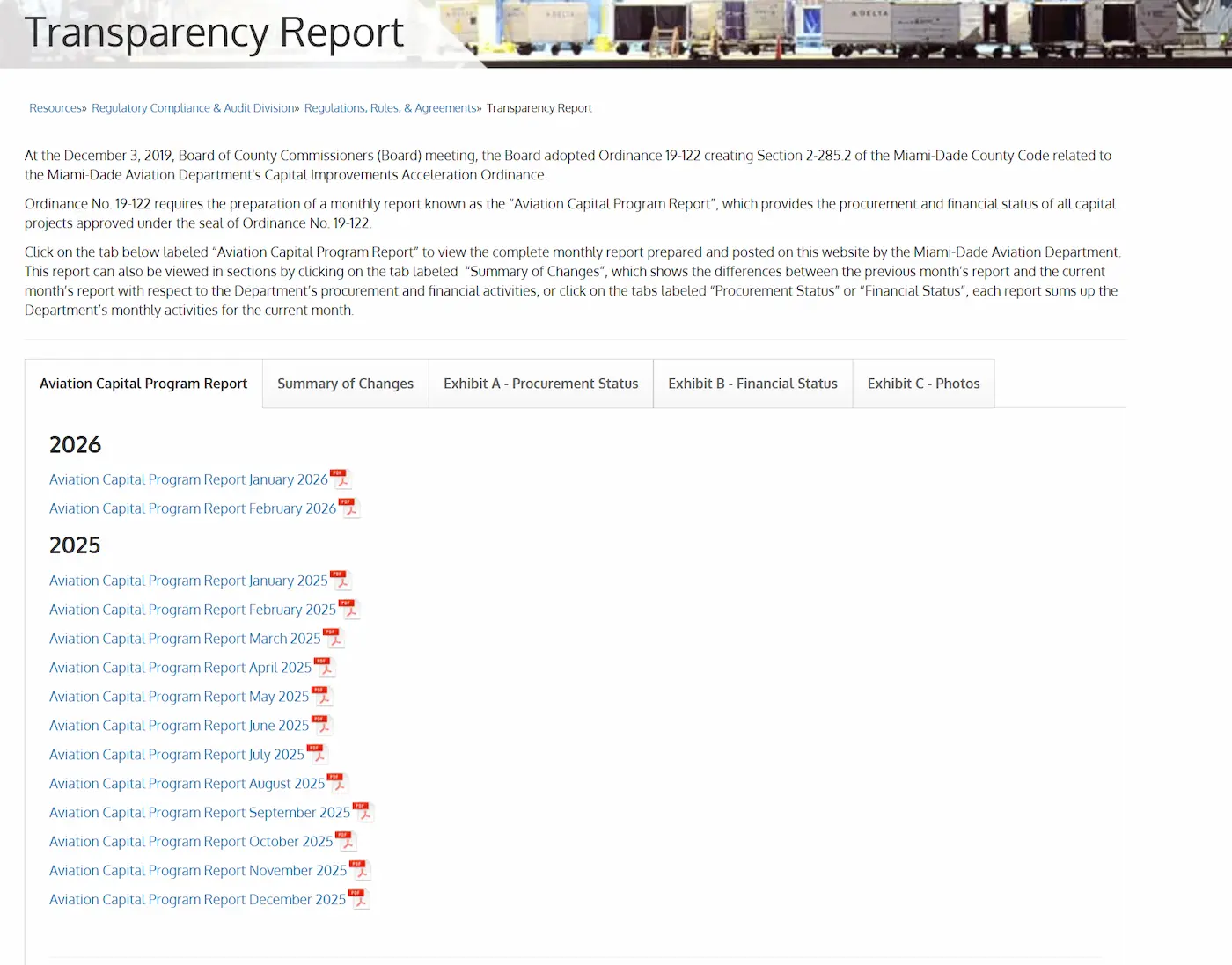
While the county showcases holograms, chatbots, and futuristic technology at eMerge Americas, the airport’s official transparency page does not display the monthly report for March—even as April was just days away from closing.
That’s not innovation. That’s exactly the kind of backwardness that a true government AI would have automatically flagged:
Monthly report due.
March 2026 not published.
Ordinance 19-122 requires monthly report.
Responsible party due.
Publication date due.
Financial status due.
Procurement Status due.
Summary of Changes due.
Now that would be useful technology.
Transparency cannot depend on a citizen manually checking a page and discovering that a month is missing. The system should say so itself. It should record when the report was prepared, when it was placed on the agenda, when it was approved, when it was published and who was responsible for the delay.
The IA would not replace Ordinance 19-122.
I would enforce it.
The airport audit: when AI would have real work to do
The operational audit cited in the documents is even stronger. It points to transparency and compliance failures: airport contracts that should have been published in a timely manner, delays in budget publication, failures in mandatory ethics training, and lack of declarations of financial interests by procurement agents.
The report indicates that 22 contracts for $560.9 million were not published in a timely manner and were placed later, with delays ranging from 30 to 1,002 days.
There the satire ceases to be a joke.
A useful AI wouldn’t just be greeting passengers in a futuristic capsule near TSA. It would be checking in real time:
which contracts were not published,
which projects are behind schedule,
which stairways are out of service,
which bathrooms remain unrenovated,
which maintenance is being delayed,
which budget was moved,
which supplier defaulted,
which officer received ethics training,
which purchasing agent did not file financial disclosure.
That would be serious governmental AI.
No AI for advertising.
No AI for photos.
No AI for officials to stand next to a hologram and sell modernization.
AI to audit.
Miami-Dade doesn’t need a cute robot to tell tourists where the gate is. It needs smart systems to keep critical infrastructure like MIA from deteriorating for years while leaders pose for pictures.
The AI Miami-Dade needs is not the AI that impresses at eMerge Americas.
It is the one that makes the Government Center uncomfortable.
PortMiamicase : AI not to sell “global trade”, but to protect critical assets
Ideally, our port director should, at a minimum, comply with the following:
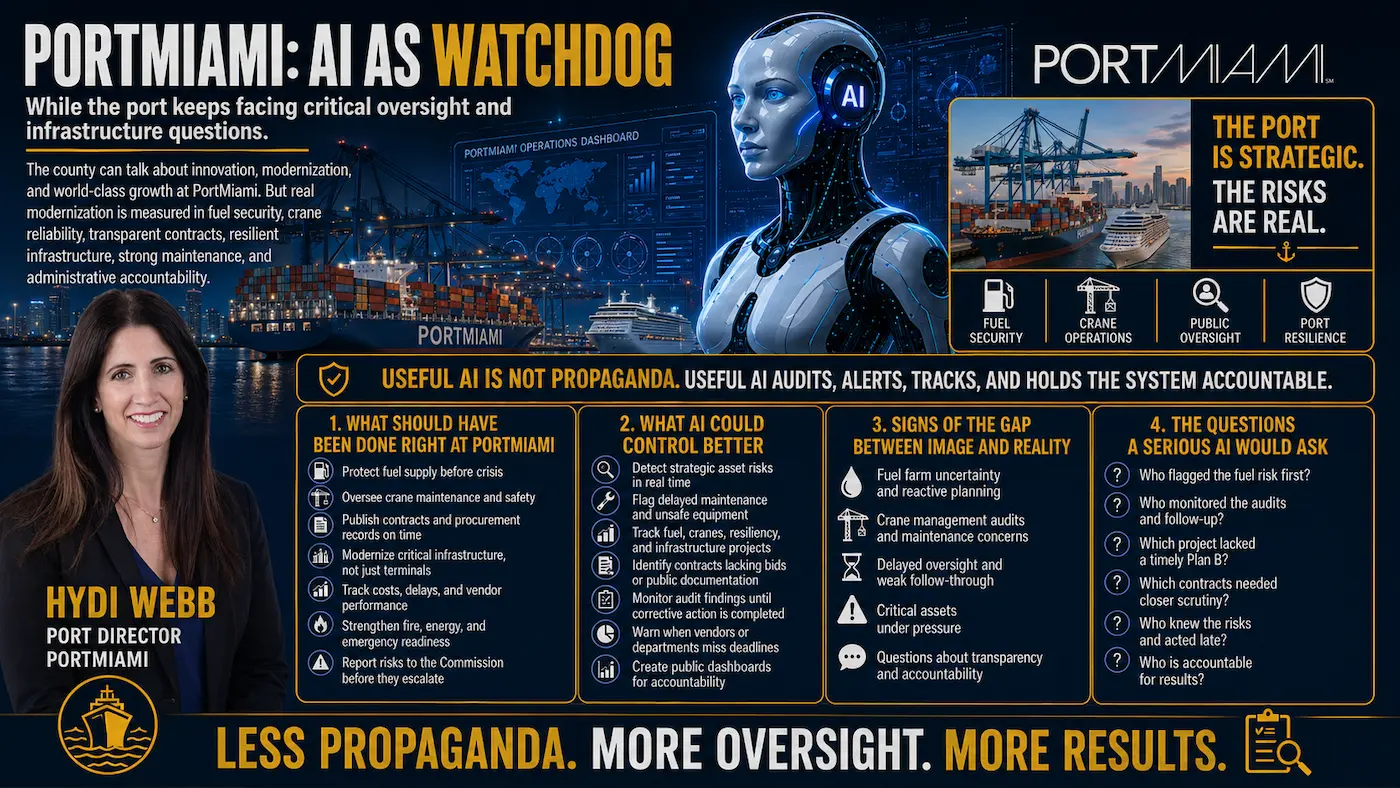
The poster also features Hydi Webb, director of PortMiami, alongside cranes, ships and containers, with the message “port that connects the world.”
It sounds nice. But PortMiami doesn’t need more aesthetics of grandeur. It needs real control, real maintenance and real strategic planning.
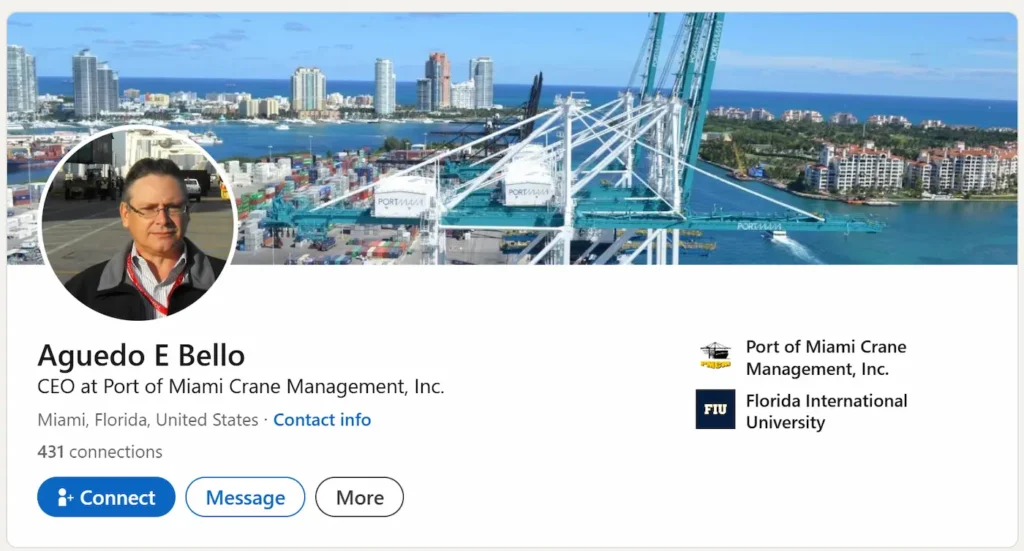
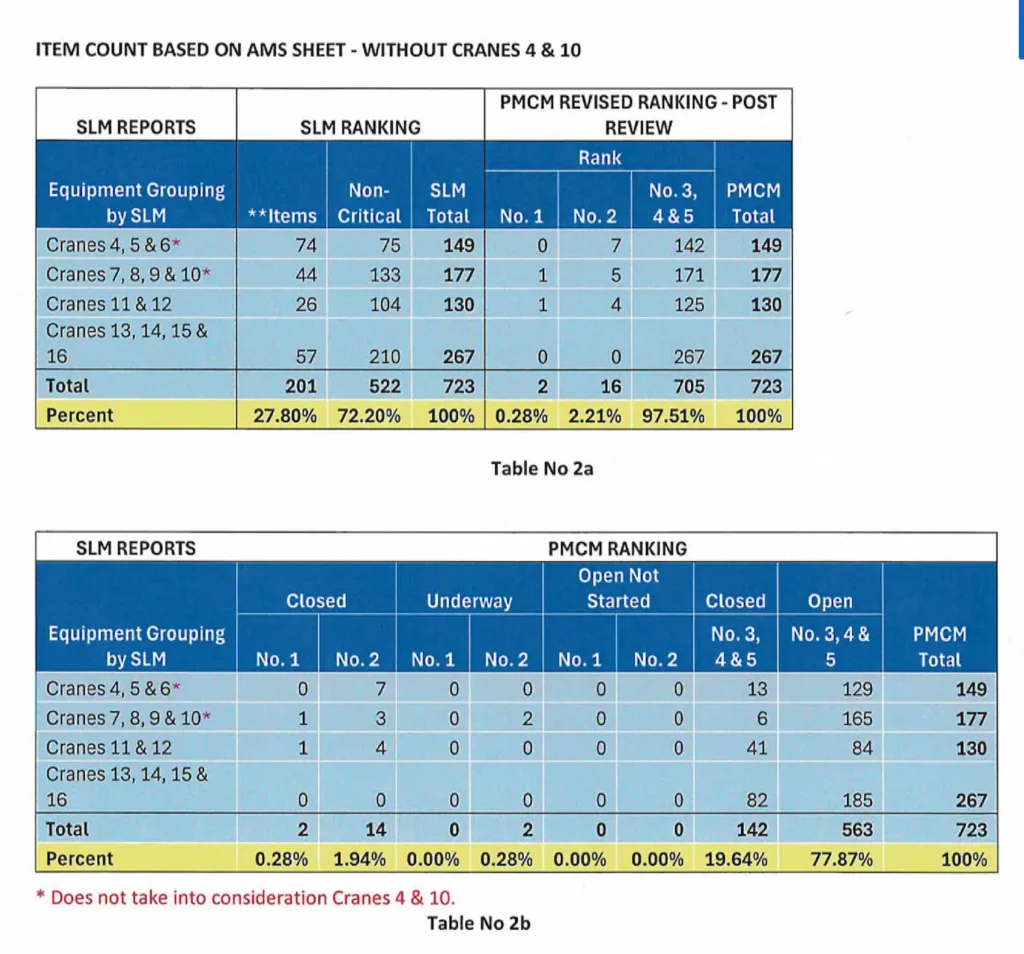
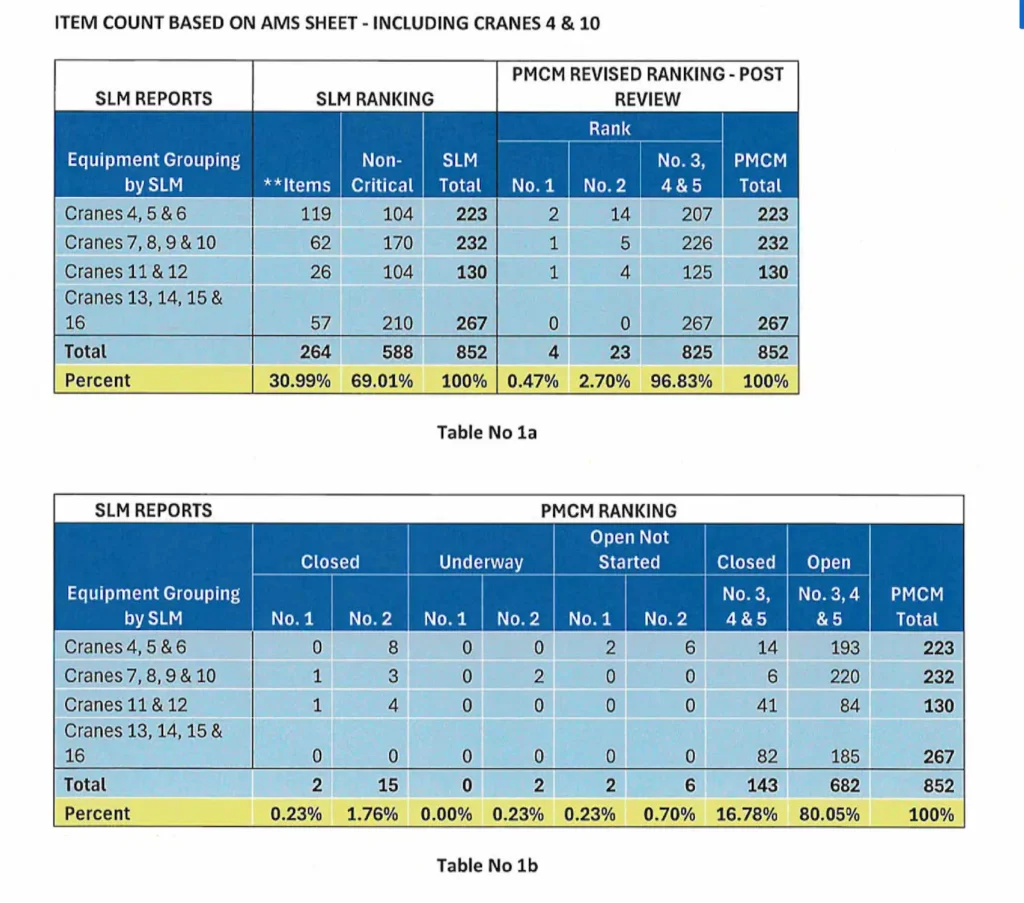
Documents regarding Port of Miami Crane Management, Inc. (PMCM) outline a troubling history: audits conducted between 2020 and 2024 identified structural defects, maintenance issues, questionable financial management, non-competitively bid contracts, and a lack of county oversight.
Audits and journalistic reports highlight serious maintenance issues, purchases lacking evidence of competitive bidding, a $2.7 million contract awarded without a competitive process, cranes taken out of service, and persistent deficiencies in the safe operation of critical equipment.






That is exactly what a serious AI would have detected earlier.
An AI would not have waited for another audit to say that a critical crane was still corroded.
It would not have allowed critical problems to be reclassified as “non-critical” without raising a red flag.
It would not have let contracts pass without bidding without flagging compliance risk.
It would not have waited for a waiver to make visible what the system should have corrected earlier.
In 2025, PortMiami also faced a fuel crisis at Fisher Island. Historically, PortMiami relied on a private fueling facility on Fisher Island—described in county documents as the primary source of marine fuel supply for cruise and cargo lines; the county reacted belatedly, only doing so under mounting pressure and after receiving warnings from the cruise industry regarding the risk posed to port operations.
This case is an x-ray of the problem.
A smart government would have had a master inventory of critical assets:
fuel, cranes, power, fire station, access, dredging, security, cybersecurity and resilience.
It would have marked which assets are in private hands, which are vulnerable, which have expiring contracts, which require replacement and what alternative is activated if the supplier fails.
But the county operated again as it has so often done: first the urgency, then the special meeting, then public pressure, then the debate on purchase, expropriation or negotiation.
That is not strategy.
This is institutional improvisation.
PortMiami does not need AI for propaganda. It needs AI so it doesn’t lose control of its critical assets again.
A well-used AI would have created early warnings about PMCM.
A well-used AI would have monitored the status of cranes.
A well-used AI would have tracked no-bid contracts.
A well-used AI would have detected fuel farm risk prior to sale.
A well-used AI would have required plan A, plan B and plan C before reaching a public emergency.
Now that would be “smart government”.
The rest is just another nice poster about a system that continues to react late.
Electric busescase : AI would have detected the “green disaster” before it became an equipment graveyard
Ideally, our public representatives should, at a minimum, comply with the following:
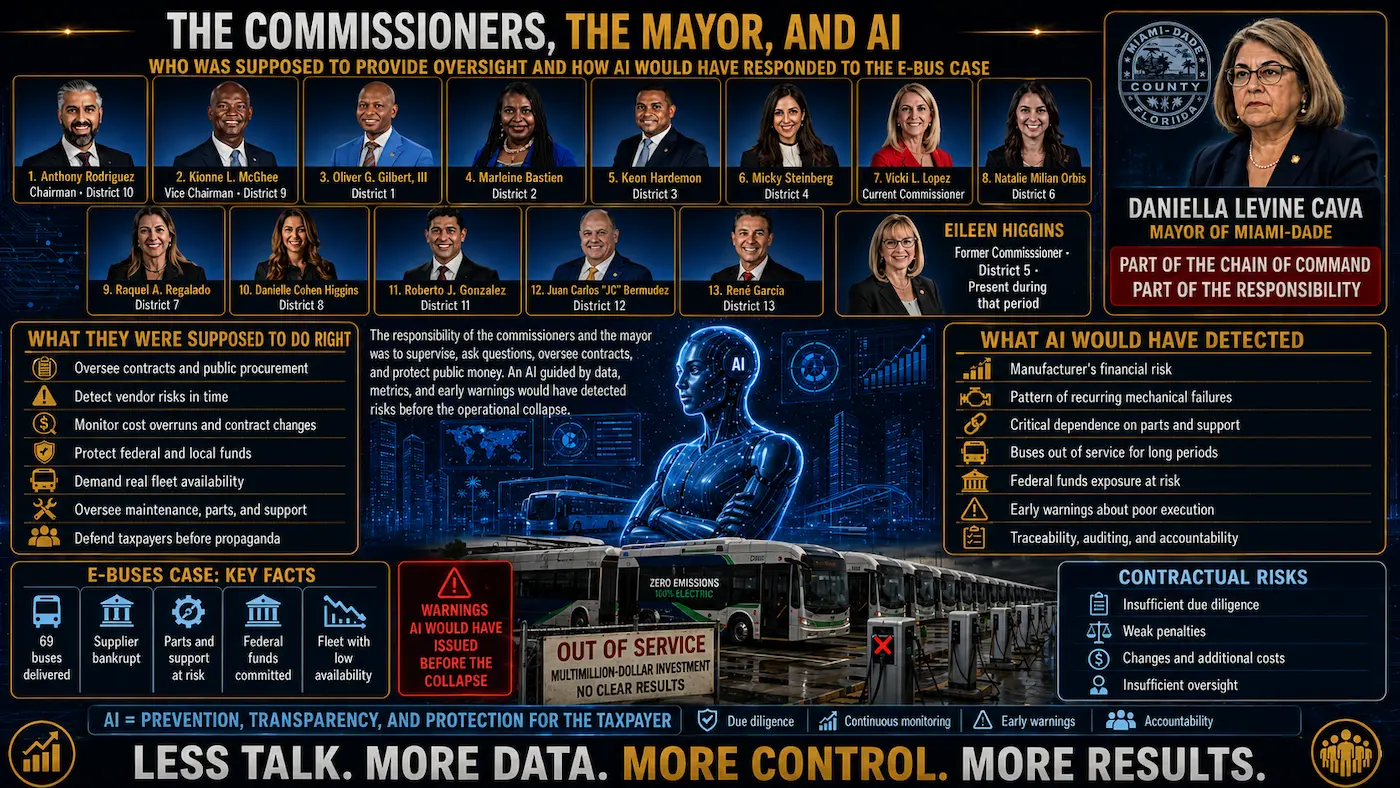
Another case that should enter the discussion is Miami-Dade’s electric buses.
The administration sold the electrification of public transport as modernization, sustainability and the future. In theory, it sounded impeccable: lower emissions, less noise, cleaner transport and a public fleet aligned with the environmental agenda.
But reality struck again.



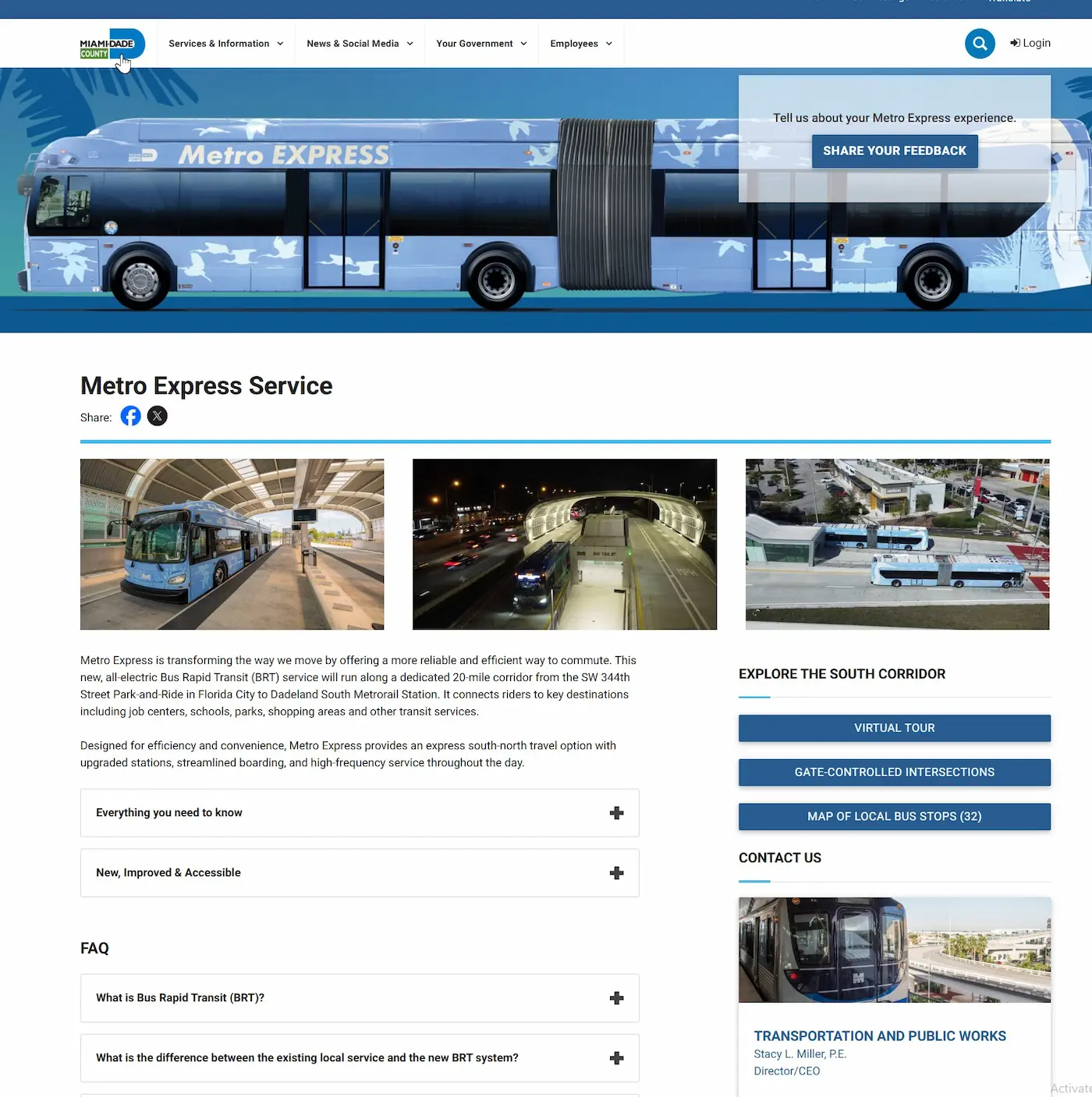
In April 2026, Local 10 reported that Miami-Dade purchased 69 Proterra electric buses for $61.8 million, using federal, state and local surtax funds. Many of those buses remain parked at locations such as the Homestead Air Reserve Base and the Northeast Bus Facility, representing a significant public investment that is not currently generating operational return.
The problem was not simply that “the technology failed”. The problem was that the county bet on a supplier that ended up bankrupt, with specialized buses, hard-to-get parts, recurring mechanical failures, and a critical dependence on outside technical support. Proterra filed for bankruptcy, its assets were sold to Phoenix Motor, and Miami-Dade was stuck with a fleet that was difficult to maintain and repair.
In October 2025, Miami Today had already reported that Proterra was supposed to deliver 75 buses and 75 charging stations, but only delivered 69 buses before filing for bankruptcy. The report stated that the fleet faced chronic gearbox and battery problems, and that 66 buses were waiting for parts and personnel from Phoenix to complete repairs.
The Miami Herald also reported that the majority of the Proterra buses broke down within the first year of deployment, that only 3 to 7 buses were operating at any given time, and that Miami-Dade paid for 69 buses, funded primarily by the half-cent transportation tax, state funds, and federal funds.
There comes back the AI question:
Where was the early warning system?
A serious AI would have cross-referenced data prior to purchase:
manufacturer’s financial history,
dependence on subsidies,
actual volume of buses sold,
risk of bankruptcy,
failure history in other cities,
parts availability,
warranties,
recalls,
local support capability,
actual operating costs,
lifetime mandated by federal funds.
But the county did what it too often does: it held the announcement before shielding the execution.
And the problem may get worse. Local 10 reported on April 16, 2026 that, because a significant portion of these fleets were federally funded, there are rules about how long they must remain in service. If the buses are retired too soon, counties may have to pay back some of those funds. Broward has already apologized to the Federal Transit Administration; Miami-Dade, on the other hand, is still trying to find a way to put them back on the road, but has not presented a clear plan if those efforts fail.
This data is brutal.
Not only were buses purchased that ended up parked. Now there is a risk that the taxpayer will pay again for the failure: first for the purchase, then for repairs, then for lawsuits or renegotiations, and potentially for repayment of federal funds if the assets fail to live up to their useful life.
AI would not have magically prevented Proterra’s bankruptcy. But it would have forced the county to design a more serious public buyout:
escrow of critical parts,
enforceable warranties,
performance bonds,
local minimum inventory,
penalties for out-of-service buses,
monthly availability audit,
prohibition of verbal changes without documentation,
supplier financial risk matrix,
plan B if manufacturer goes down,
and clear clauses to protect the taxpayer.
The official 2024 file itself shows that Miami-Dade had to authorize a non-competitive designated purchase and contract amendment to assign the Proterra contract to Phoenix Motor due to bankruptcy. That same document talks about accepting 69 electric buses, 75 chargers, modifying warranties and ratifying an economic adjustment of $5,150,046.66. It also warns that, if the amendment was not approved, the county would be left without a warranty for the fleet and charging system.
Translation into plain language:
the county was left negotiating from a weak position after purchasing an expensive, dependent and difficult to sustain technology.
And that’s not “smart government.”
That is exactly the opposite.
A well-used AI would have detected the pattern earlier:
Vulnerable supplier.
Fragile contract.
Critical parts not guaranteed.
Support risk.
Risk of federal funds.
Risk of immobilized buses.
Alert the BCC.
Mandatory audit before further purchase.
But in Miami-Dade, too often the sequence is different:
first the green ad,
then the photo,
then the fault,
then the report,
then the audit,
then the lawsuit,
and in the end the taxpayer pays.
This case is not an argument against electric buses. It is an argument against buying public technology without hard due diligence, without availability metrics and without real protection for the citizen’s money.
Because if AI is used solely for propaganda, we will have holograms at the airport and electric buses sitting idle in parking lots.
But if AI is used as a real tool of governance, every bus would have a public dashboard:
how much it cost,
when it was purchased,
how many days it operated,
how many days it was out of service,
what part is missing,
who is responsible,
what warranty applies,
what federal funds are at risk
and when it is back on the street.
That would be transparency.
That would be efficiency.
That would be Artificial Intelligence at the service of the taxpayer.
The rest is just painting a bad management decision green.
The real fear is not that AI will replace the politician. The real fear is that AI will take away the politician’s gray area.
An AI should not allow contractual dates to be modified without explaining the public cost. It should not permit extensions without verifiable metrics. It should not allow pressure from private interests—developers, lobbyists, or campaign donors—to create a public perception of regulatory capture without raising a red flag.
An AI would not have to look good to anyone.
And that’s why the poster works as satire: because the imaginary robot seems more reliable than a system where too many important decisions are cooked up among long dockets, technical language, amendments, variances, exceptions, PACs and meetings that the average resident can barely follow.
AI would not be perfect. But it would have a virtue that is in short supply today:
would have no political ego.
I wouldn’t want to compete with Dubai.
It would not want to pose like Qatar.
It would not want to inaugurate lights before fixing streets.
It would not want to sell grandeur while the budget bleeds.
It would not accept that agricultural land disappears hectare by hectare without a metric of accumulated damage.
The AI would simply ask:
What is the data?
What is the priority?
What is the cost?
Who benefits?
Who pays?
Who donated?
Who voted?
Who monitored?
Who failed? Who failed?
That, precisely, is the question that many actors in the political and economic power structure of Miami-Dade would prefer not to face.
AI, yes, but as a transparency whip.
Miami-Dade does not need a government run by robots. It needs a human government subject to control systems that cannot be politically manipulated.
Artificial Intelligence can serve a very specific purpose:
auditing in real time.
Detect expired contracts.
Cross-reference employment promises with employment data.
Identify potential conflicts of interest, patterns of undue influence, and decisions that warrant public scrutiny.
Alert on rezonings.
Translate complex agendas for residents.
Identify silent changes in public documents.
Show who voted what, when and why.
That would be useful.
However, replacing representatives should not be the goal. The goal should be to compel them to work as if every decision were being audited by a machine designed to record traceability, detect pressure from private interests, and reduce the public perception of regulatory capture.
Therein lies the real fear of some:
not that the AI governs, but that the AI reveals how they govern.
The final question for Miami-Dade
So, neighbor, the question is not whether we want a robot mayor or commissioners with blue lights behind them.
The question is simpler and tougher:
Do we want to continue applauding press releases, posters, speeches and promises of “efficiency”, while the same problems are repeated year after year?
Or are we going to demand that civil servants on public salaries act with the accuracy, speed and transparency that they now attribute to Artificial Intelligence?
Because if AI promises decisions based on facts and not policy, the scandal is not the poster.
The scandal is that we have to imagine robots for Miami-Dade to be governed with common sense.
Now it remains to be seen if the humans who govern Miami-Dade are still able to do their job without a machine having to remind them.
A parody about replacing politicians with Artificial Intelligence ends up exposing something more serious: Miami-Dade doesn’t need robots, it needs officials who act with data, transparency and common sense.
EDITORIAL NOTE
This article is a critical and satirical analysis piece based on public documents, official records, audits, institutional pages and verifiable journalistic reports. The satirical image was created by News Miami Dade. The purpose is to scrutinize public management and promote citizen debate on transparency, efficiency and accountability.
Join us at News Miami Dade and stay up to date with everything that’s happening in our county.
Visit us at: Website: newsmiamidade.com