
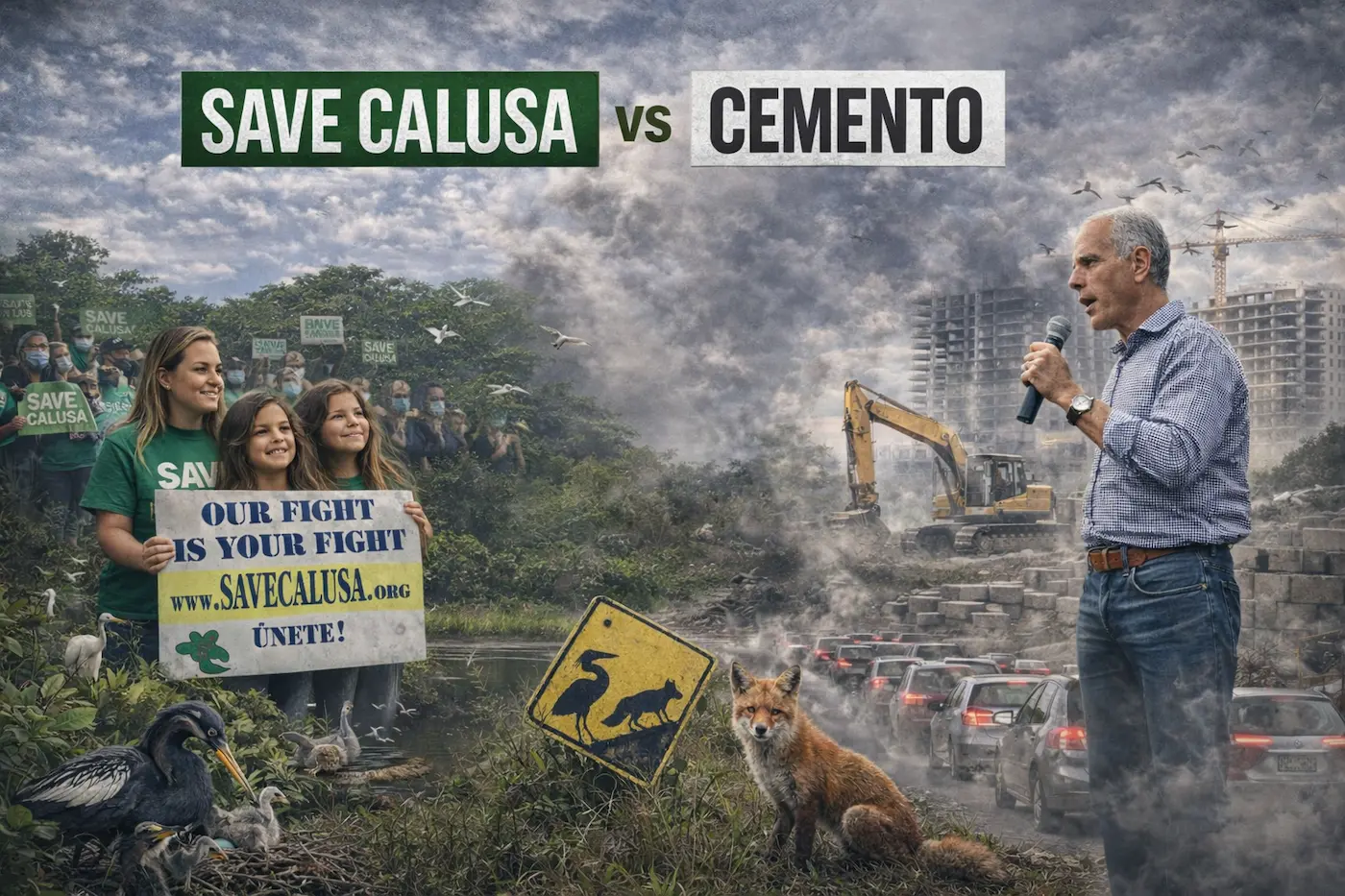
SaveCalusa: 2026 serious signs that the political system failed to protect the community. This is the root of the problem
The Calusa case reveals a pattern that too many Miami-Dade residents already recognize: institutionalism does not start with protecting neighbor, nature and due process first. It starts with accommodating the project, managing opposition, and then asking the community to decide how much damage it is willing to tolerate.
#Savecalusa

In Calusa, it’s not just a fight over a plot of land. A fight is being waged over a much more serious question: whether the Miami-Dade government is acting as an impartial arbiter or as an accompanying structure for the developer to come in, insist, adjust the plan and eventually pass.
Kendall neighborhood forum made it clear that the resistance is alive and well
With a week to go before the key vote on March 19, 2026, the Kendall Federation of Homeowner Associations convened a public forum on Tuesday, March 10 at 7:00 p.m. at the Kendall Village Center Civic Pavilion to hear the final “thoughts” of Calusa, Kendall and West Kendall residents on what is about to happen to the former Calusa Golf Course. The call was no accident: it came after commissioners postponed the vote from Feb. 19 to March 19 to allow more time for talks between the developer and neighbors.
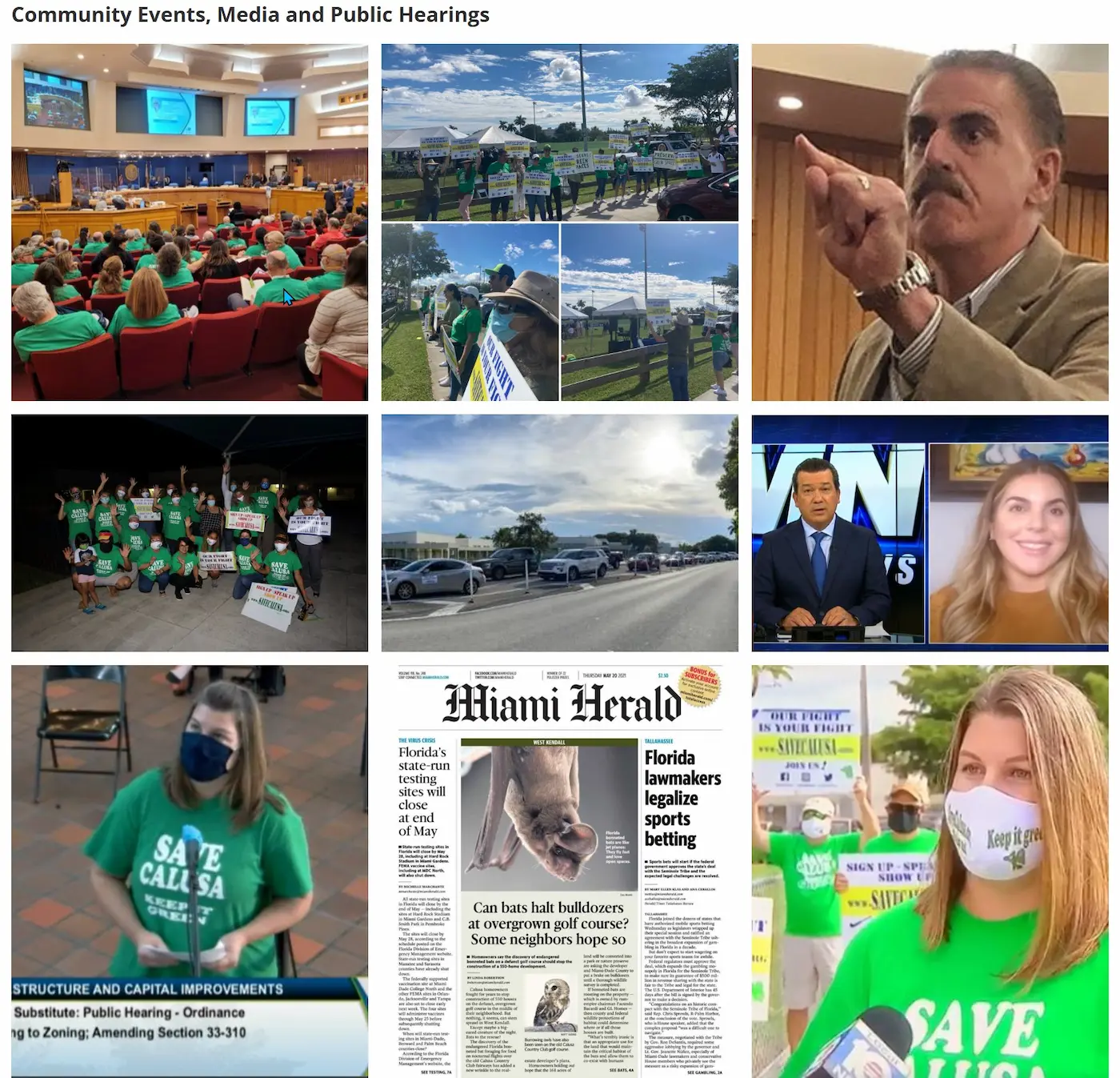
The videos of that meeting are important because they document something that is often diluted in memos, blueprints and technical presentations: the human impact of the process.
In this forum, it is not a consulting firm or a corporate rendering that speaks; it is the community that has been trying for years to defend green space, habitat, quality of life and a minimum of institutional respect.
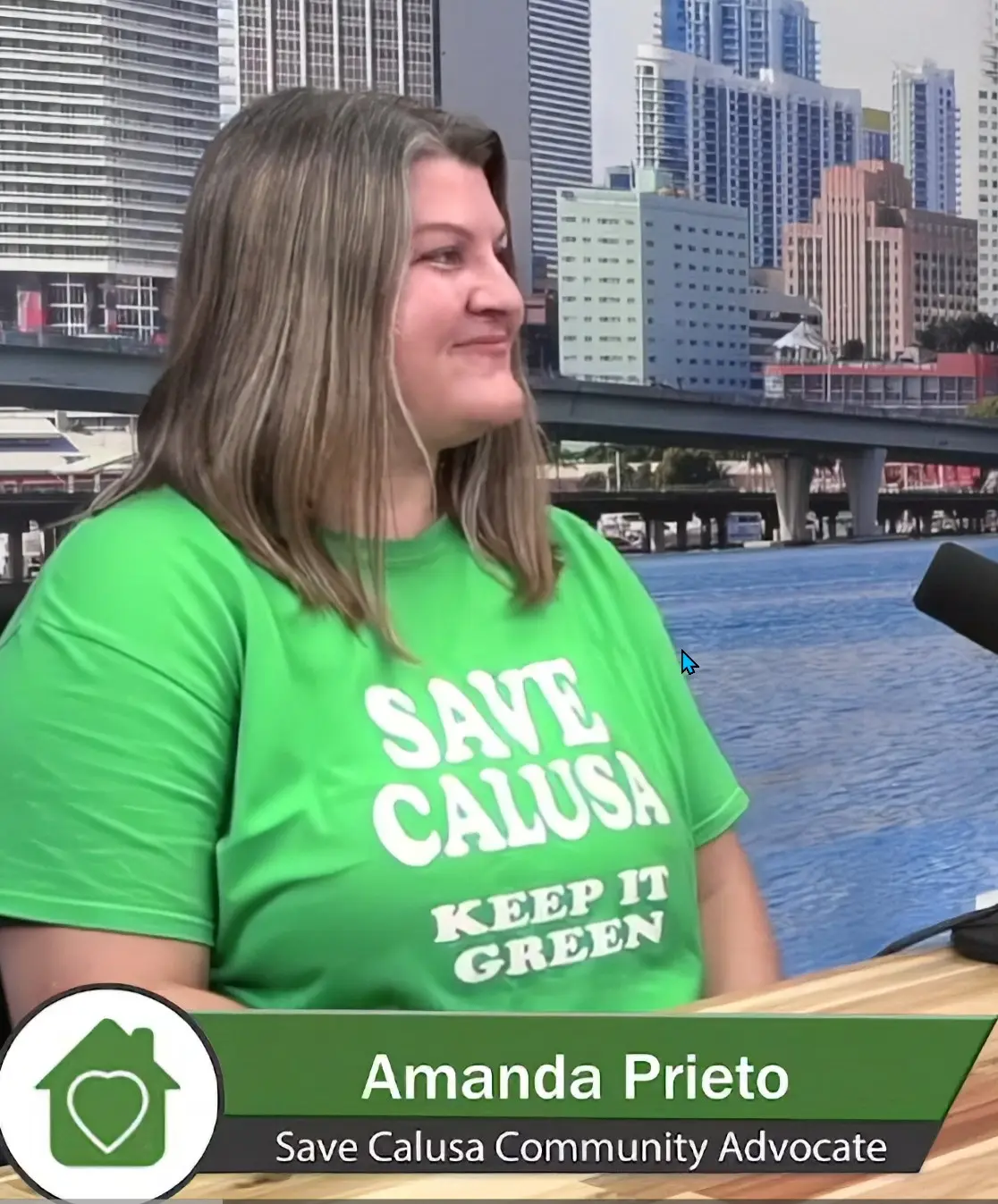
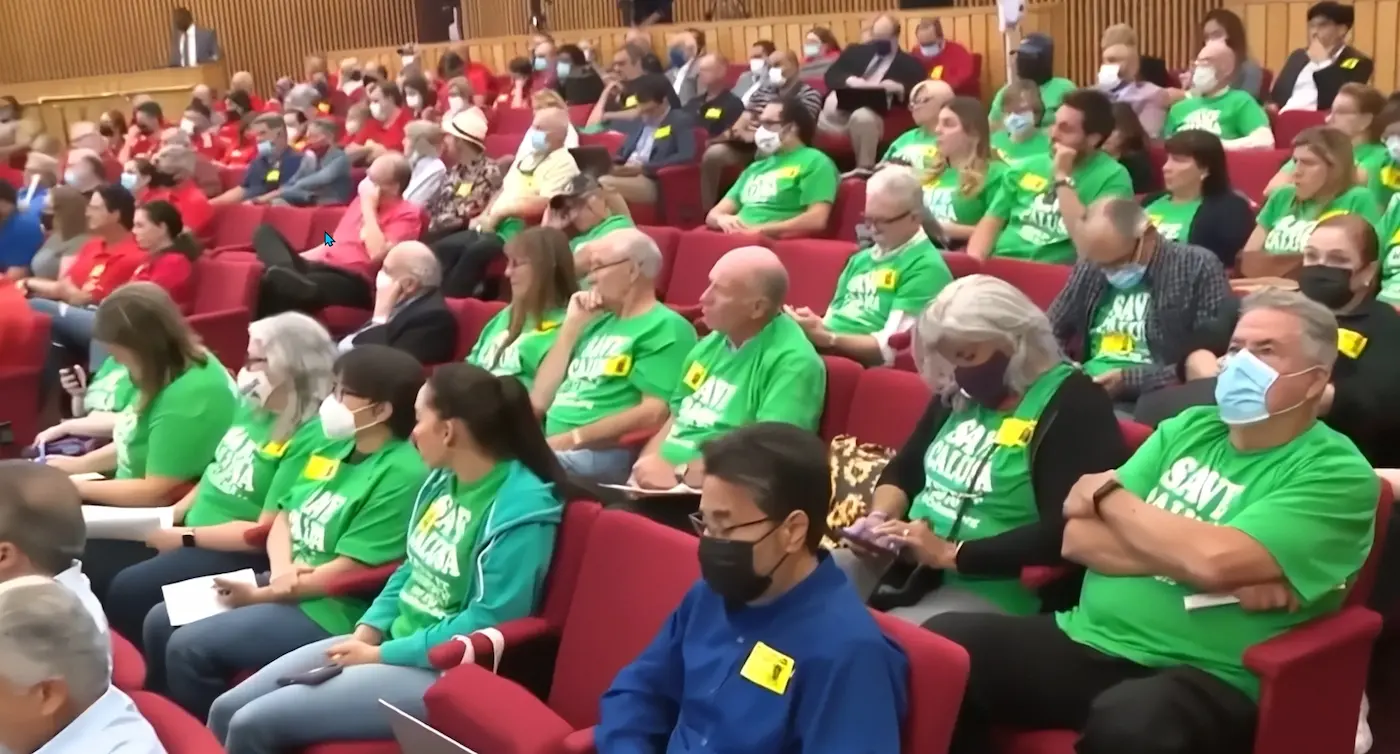
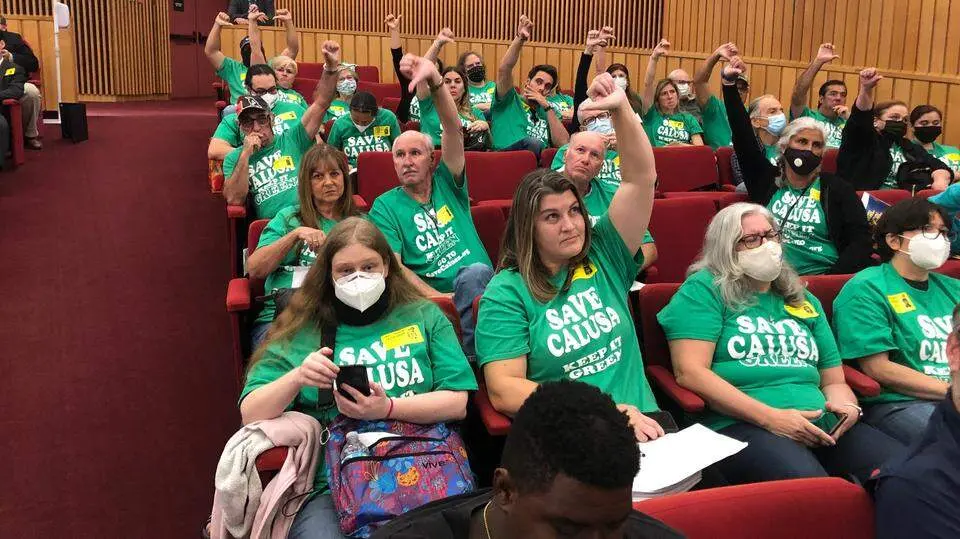
These images: show that Calusa is not a cold zoning file, but a living controversy in which residents keep trying to make their voices heard as they feel the system, time and again, accommodates the way for the project to move forward. KFHA itself framed the meeting as part of the “next battle” and as possibly “the end of a decades-long journey” to preserve the last remaining large green space in Calusa.


Chronology of the Calusa project
The Calusa case was not born yesterday. It is a long sequence of administrative, judicial and political decisions that shows how a project rejected in court came back to the table with a reworked version, without the underlying conflict disappearing.
1968. The covenant restricting the use of the land to golf course, clubhouse and accessory uses is recorded. In the official 2020 filing, the County Attorney herself explained that this restriction was recorded in 1968 as a condition attached to the approved use for the golf course. Miami-Dade
October 29, 2020. The County Commission approves the partial release of that restriction under Docket Z2017000338 / File 200102. The county then made clear that, upon lifting the covenant, the land reverted to its underlying GU and EU-M zoning, which would allow for approximately 30 homes without a new rezoning, but any higher density development would require another public process. Miami-Dade, Miami-Dade
October 20, 2021. The original hearing on the new file Z2021000031 was not held and was carried over due to lack of a quorum. Official minutes record that the matter was then carried over to the November 17, 2021 zoning meeting. Miami-Dade, Miami-Dade
November 17, 2021. The Board of Commissioners approves Docket 212537 / Resolution Z-34-21, which authorizes rezoning to PAD and a 550 single-family home project, plus lake excavation, partial fill of existing lakes, less private open space than required on certain lots, and other regulatory flexibilities. Also in the minutes that day, traffic impacts, rookery, Florida bonneted bats, environmental studies and DERM’s proposed conditions were discussed. Miami-Dade, Miami-Dade
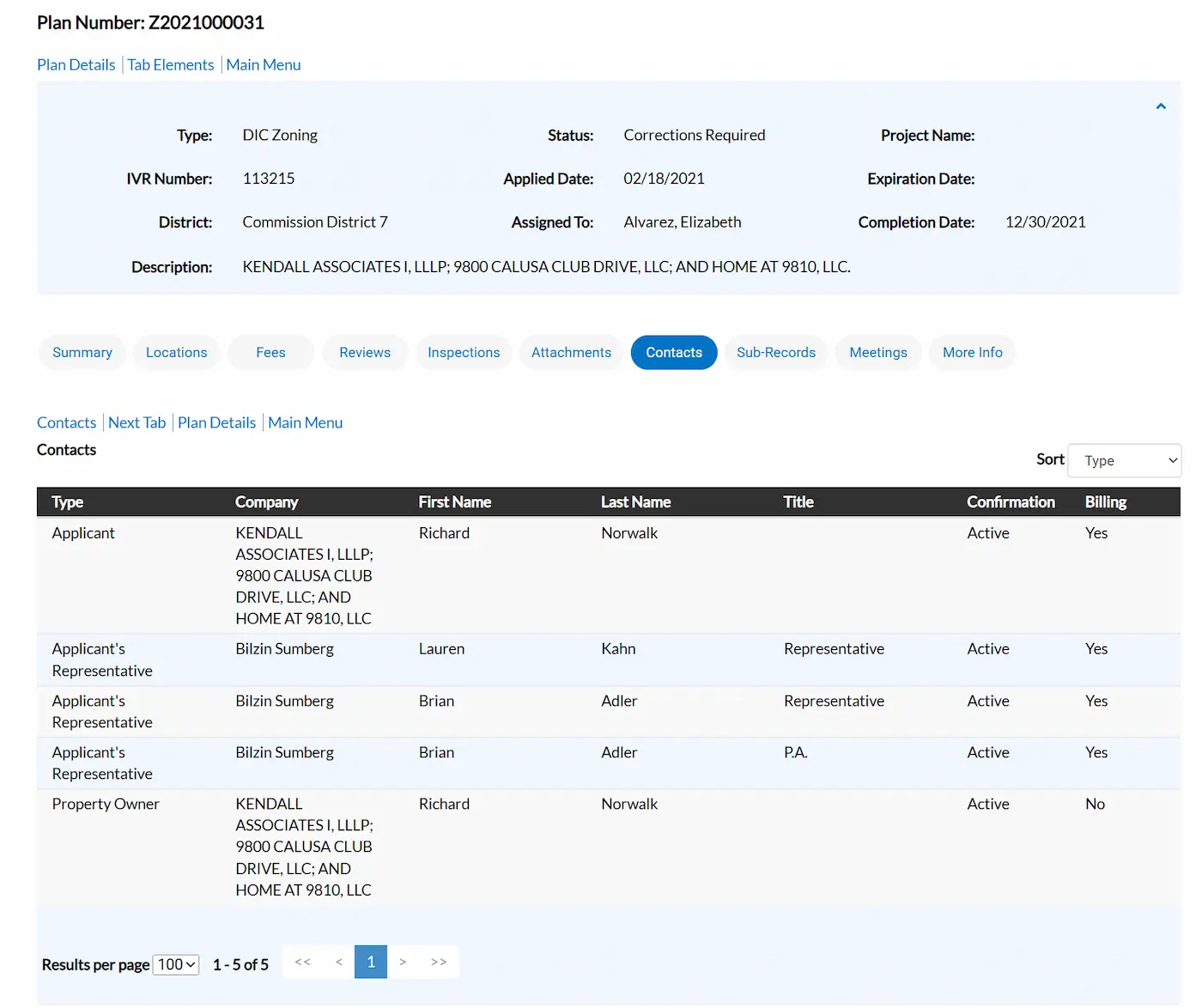
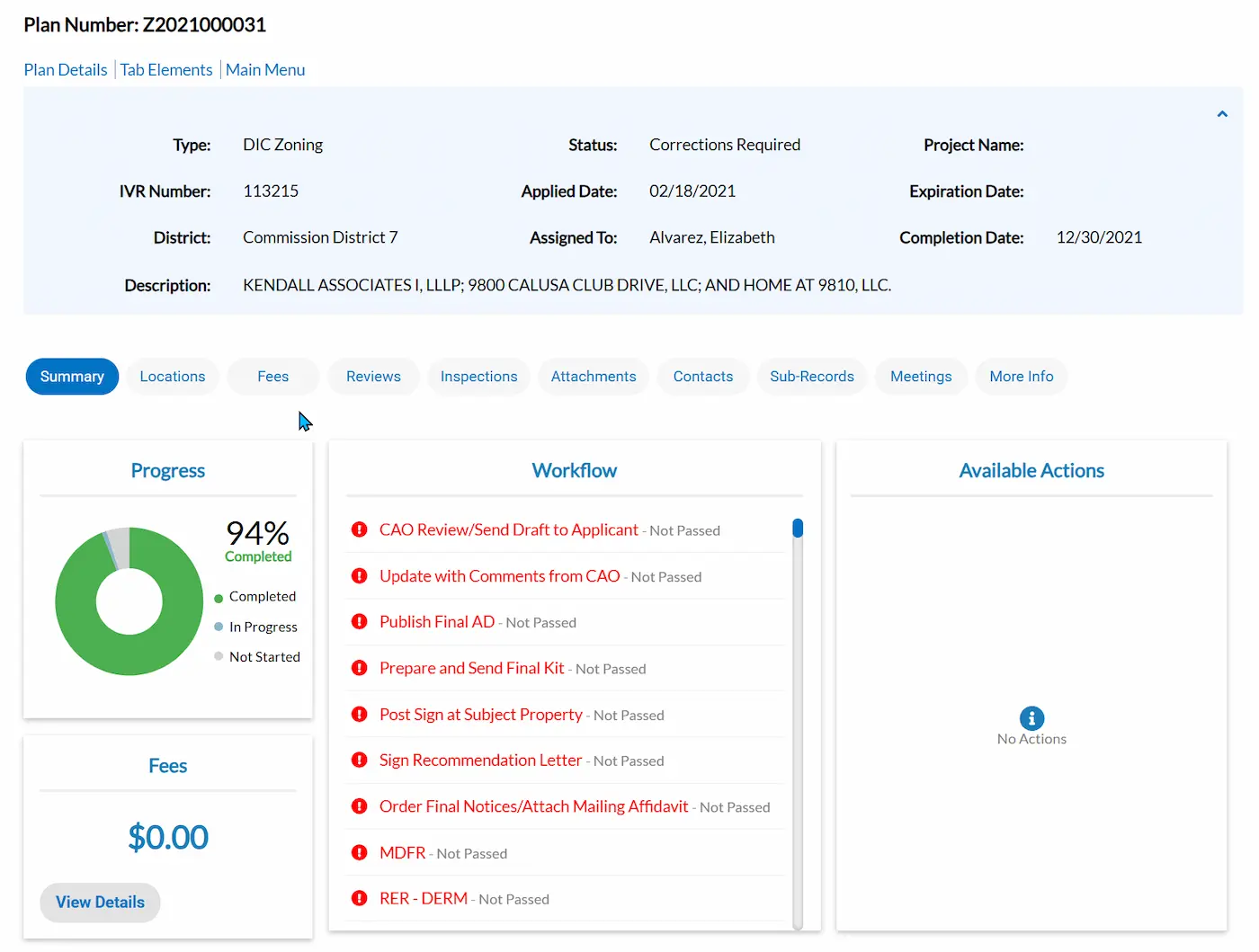
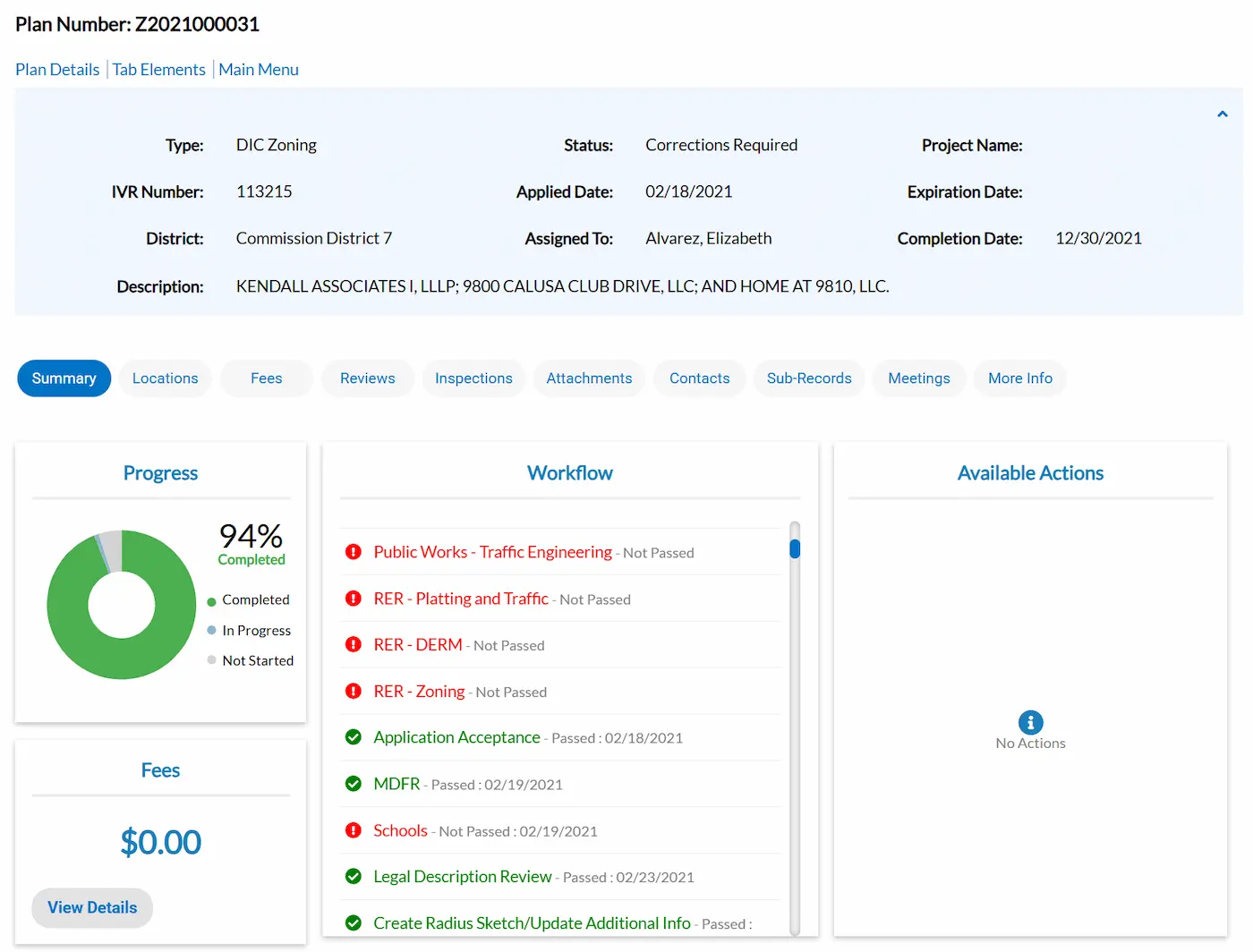
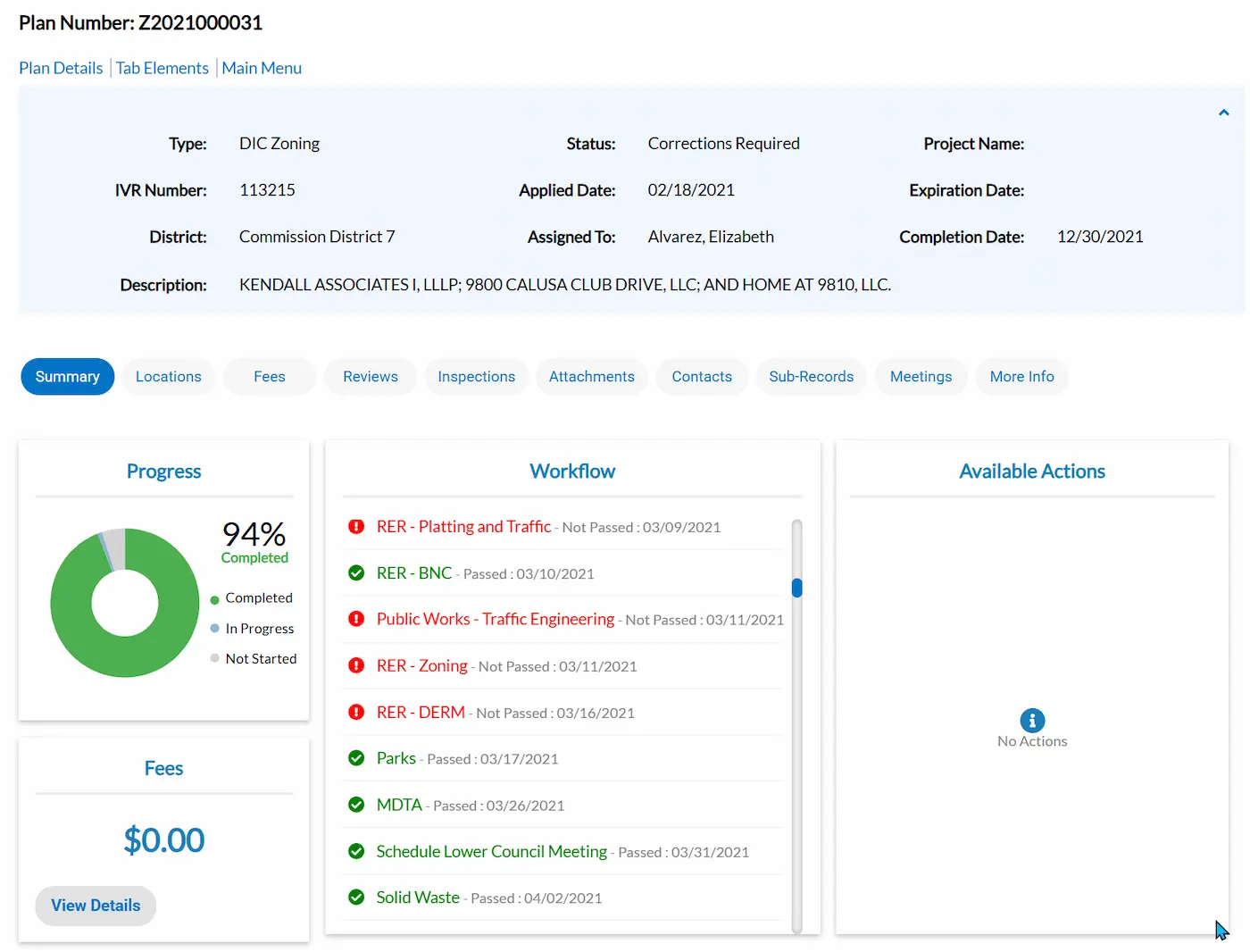
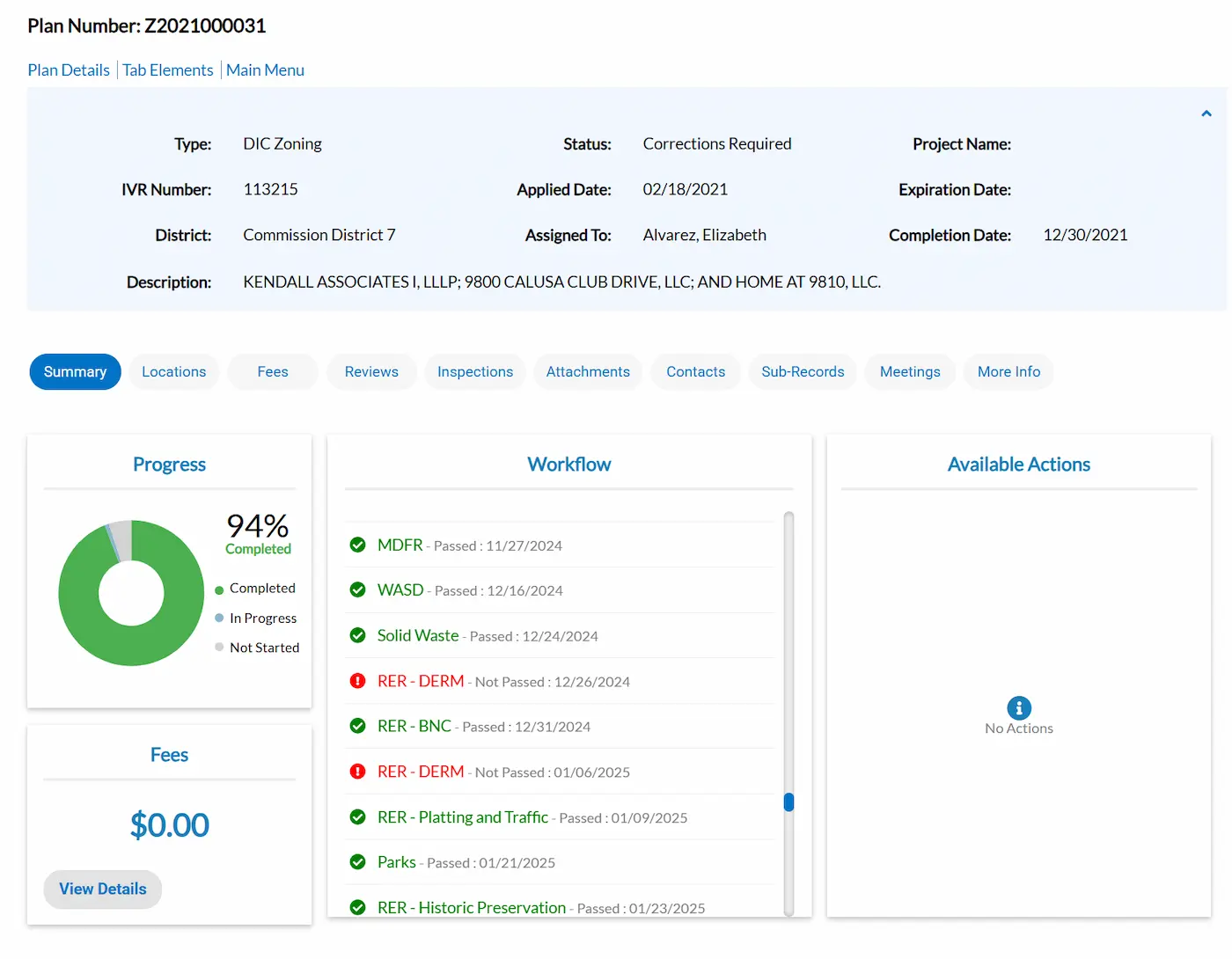
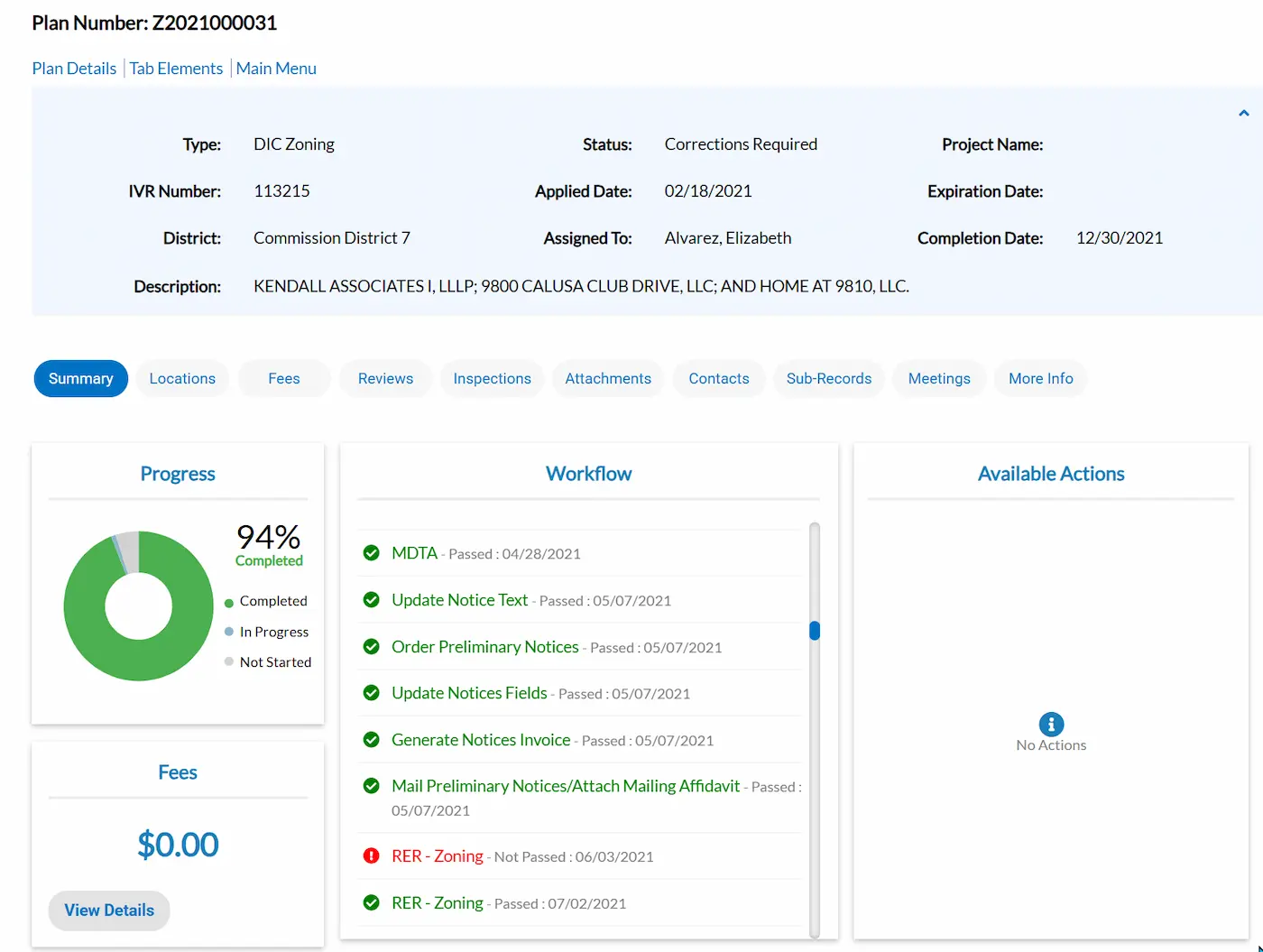
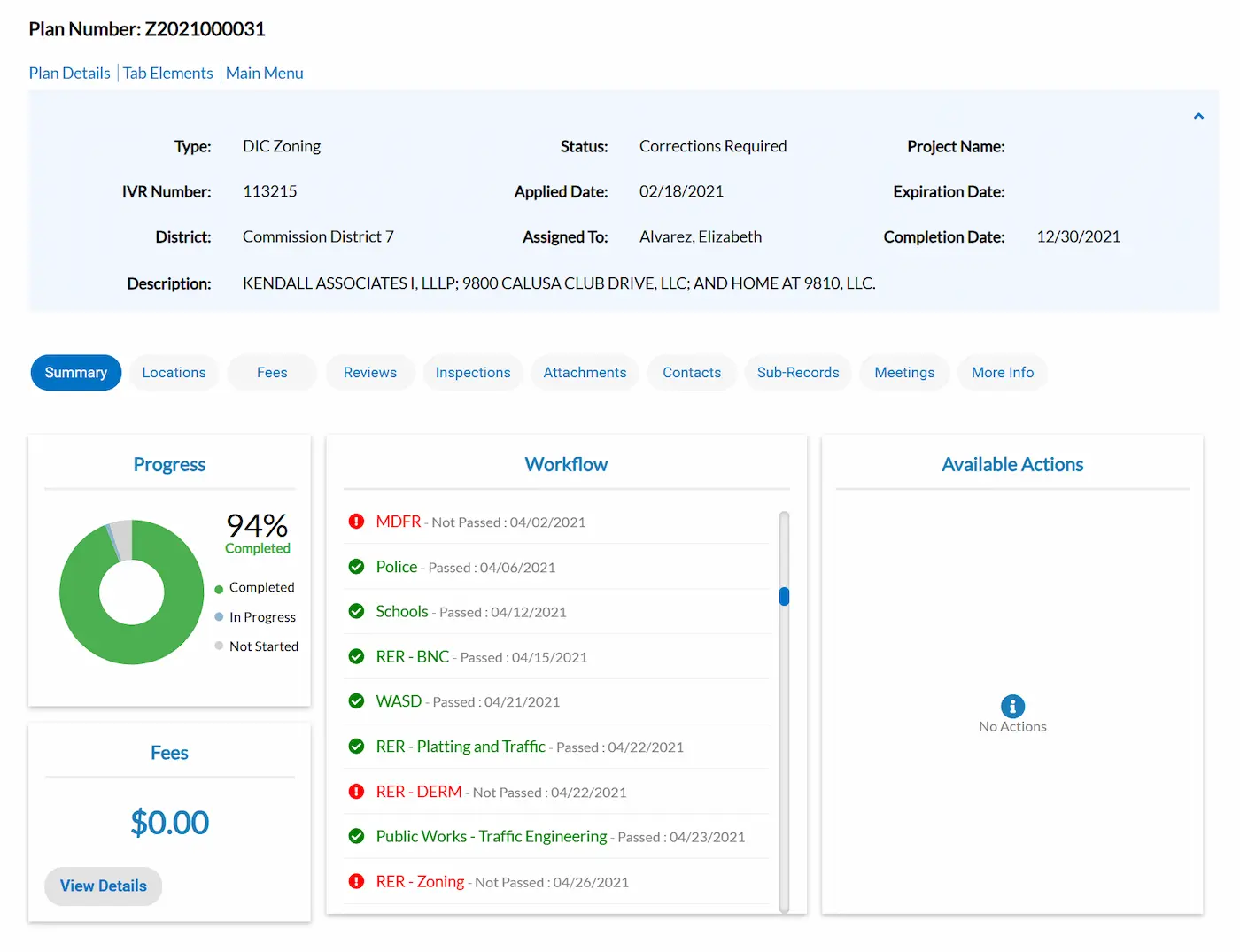
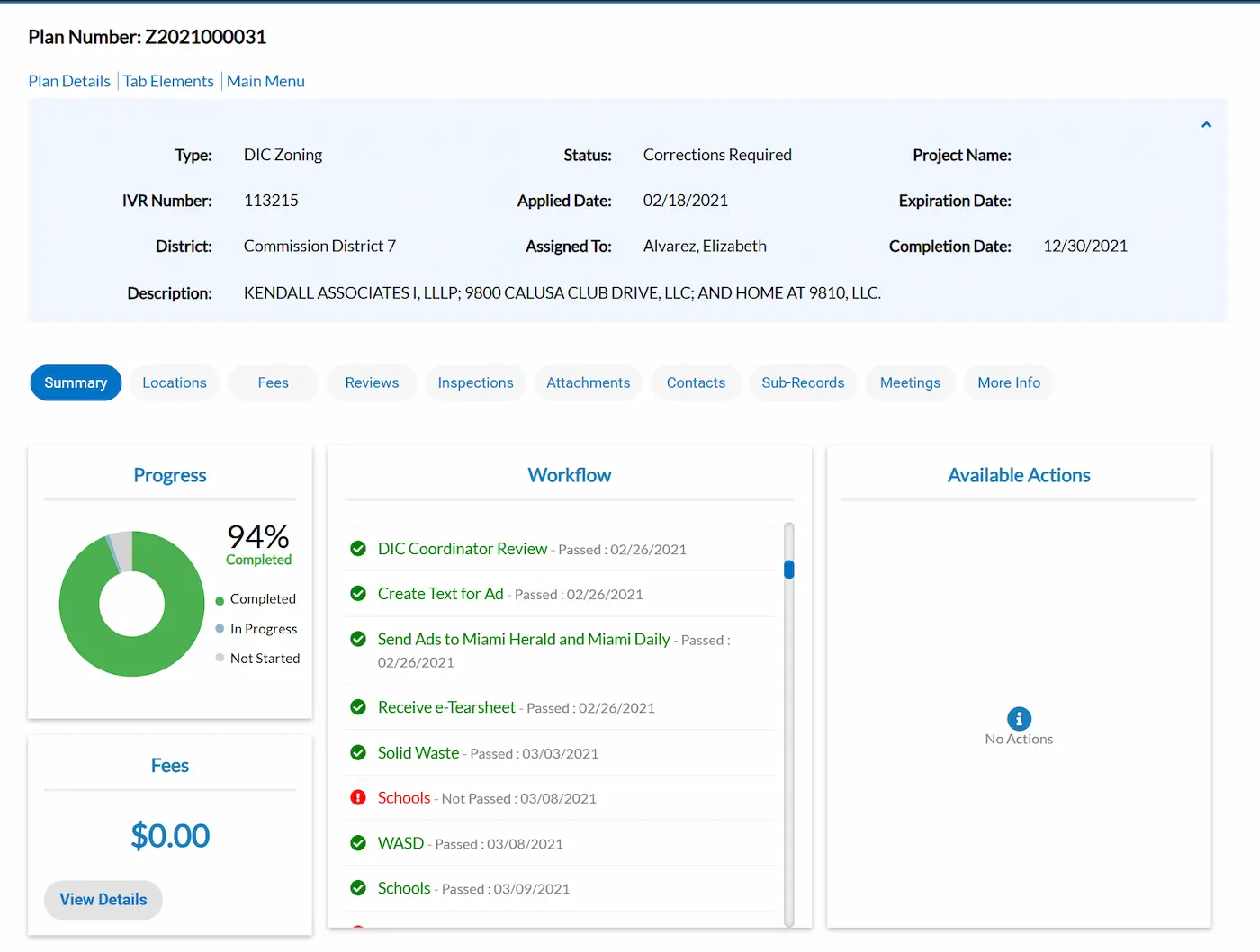
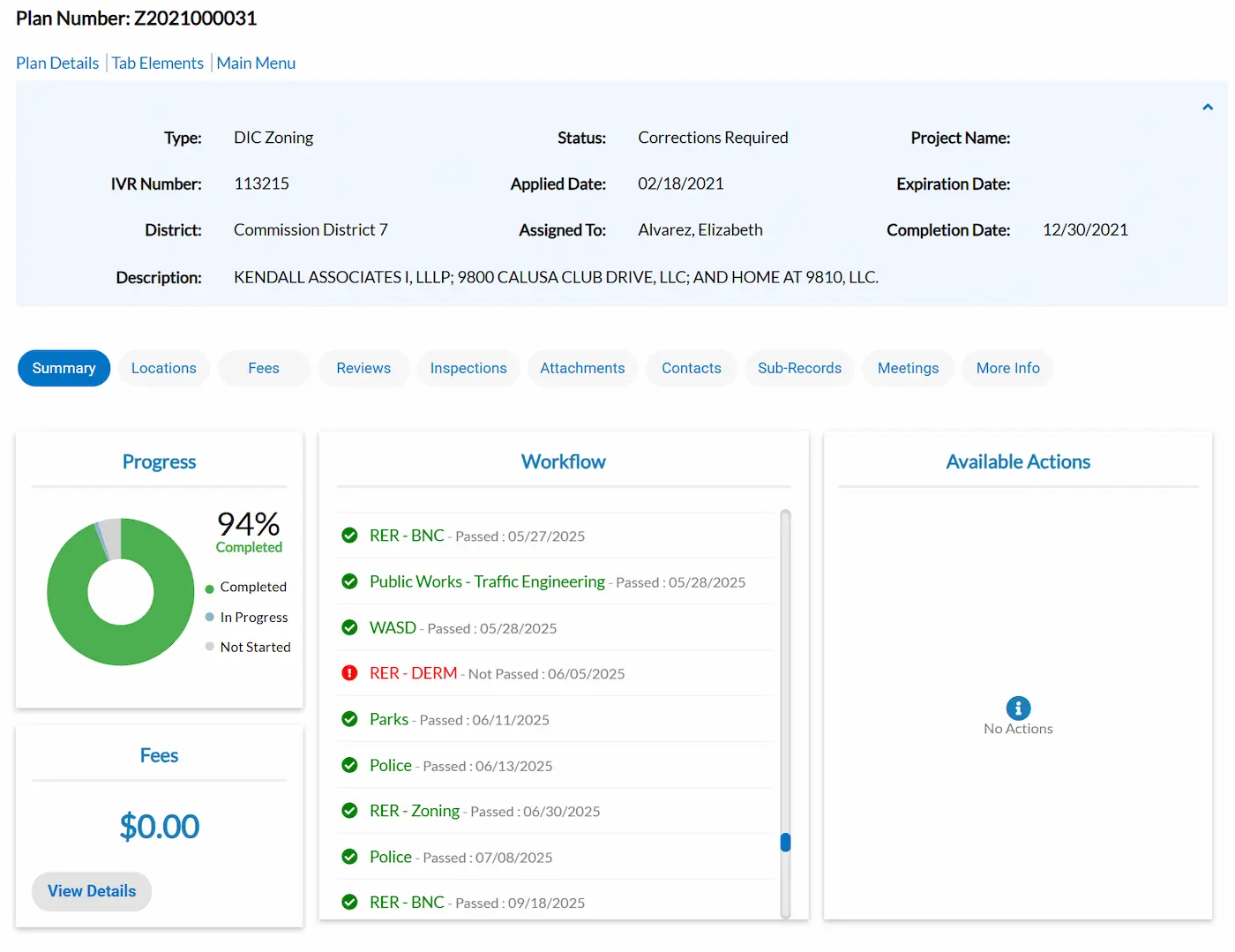
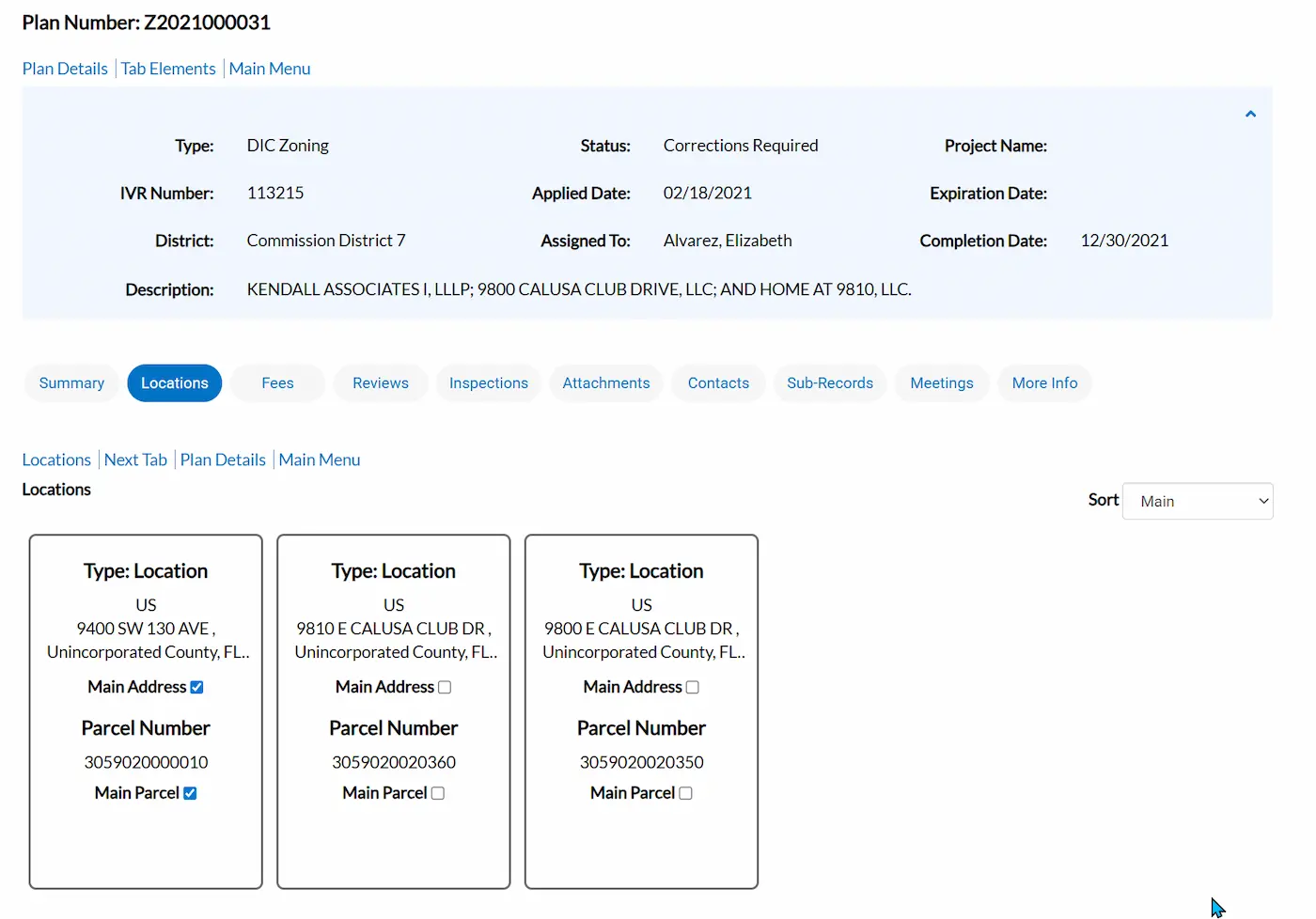
December 27, 2021. Save Calusa files litigation to overturn November 2021 approval and halt removal permits while environmental studies are completed. savecalusa.org
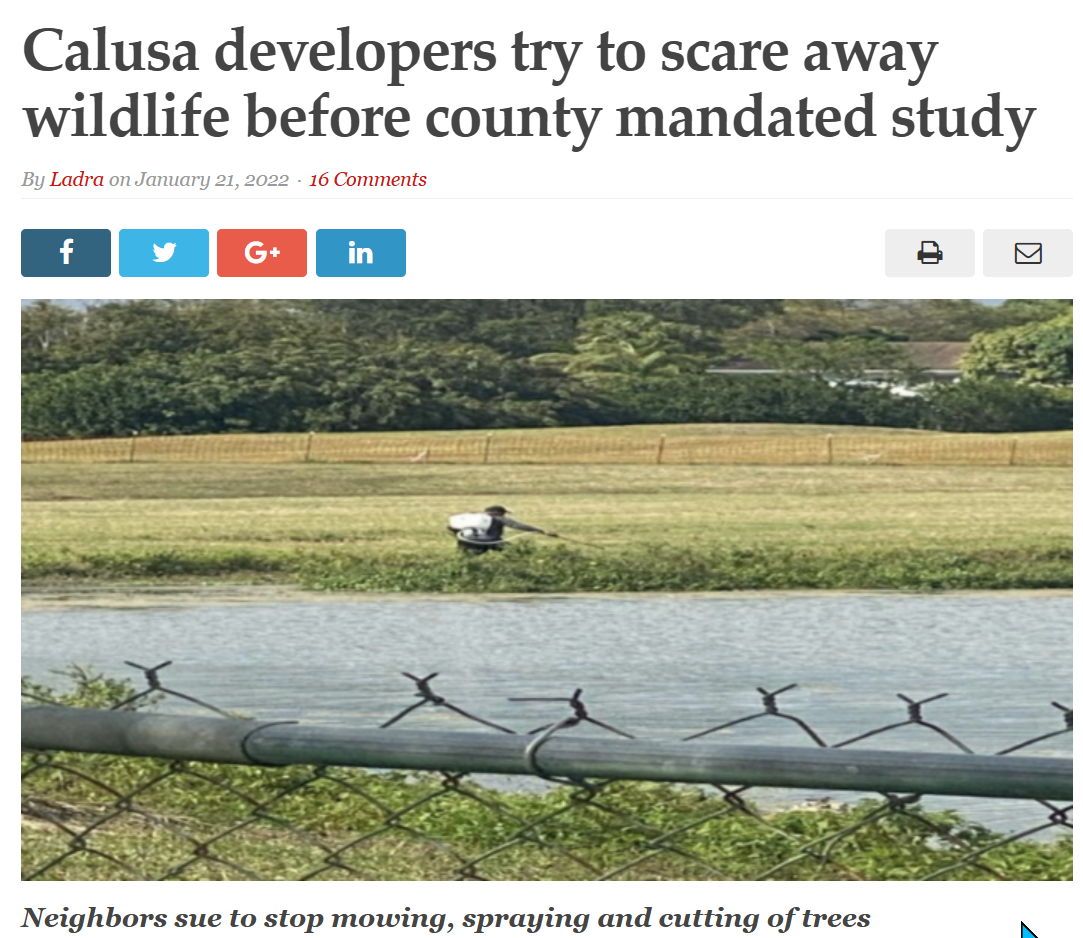
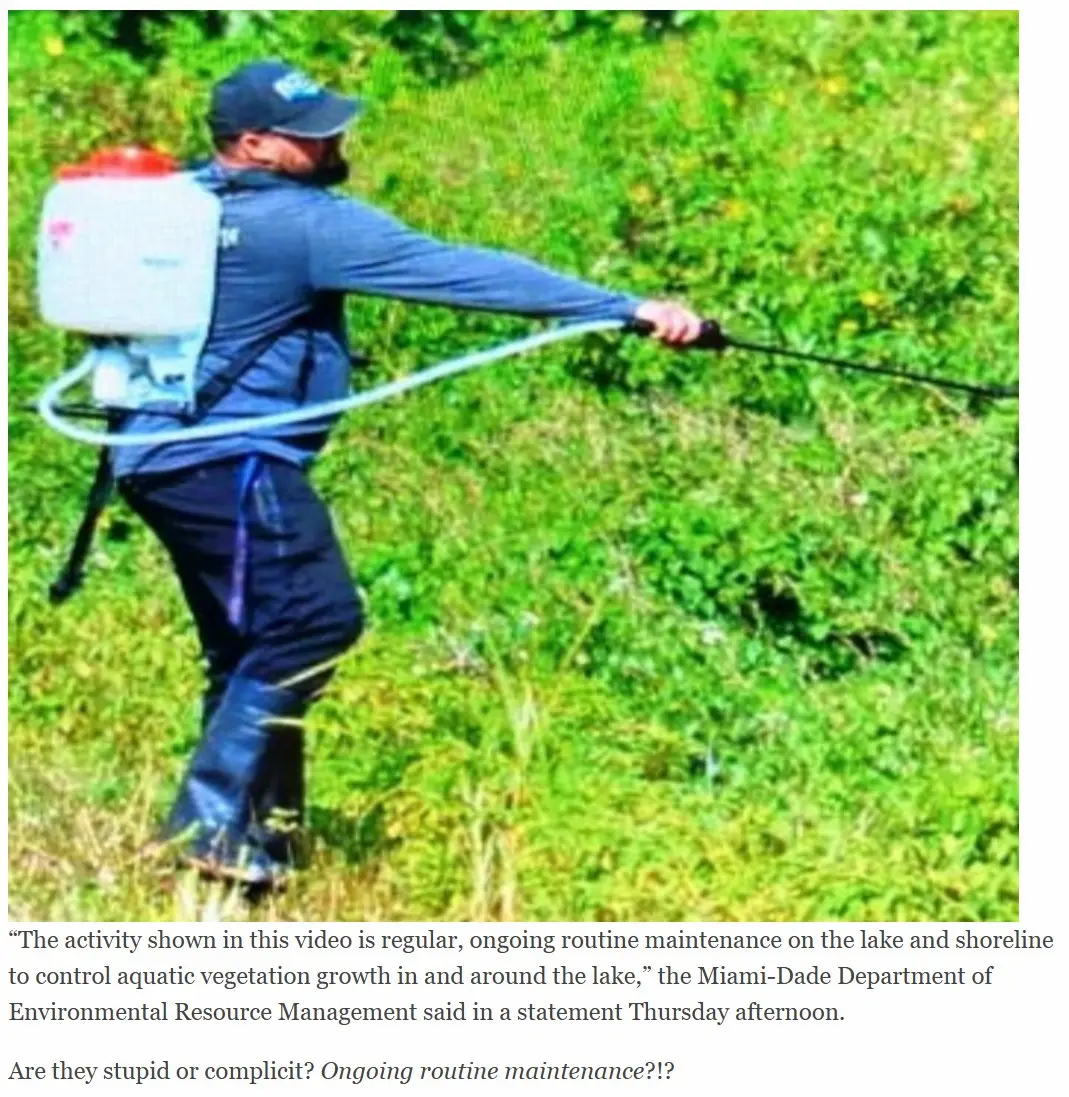
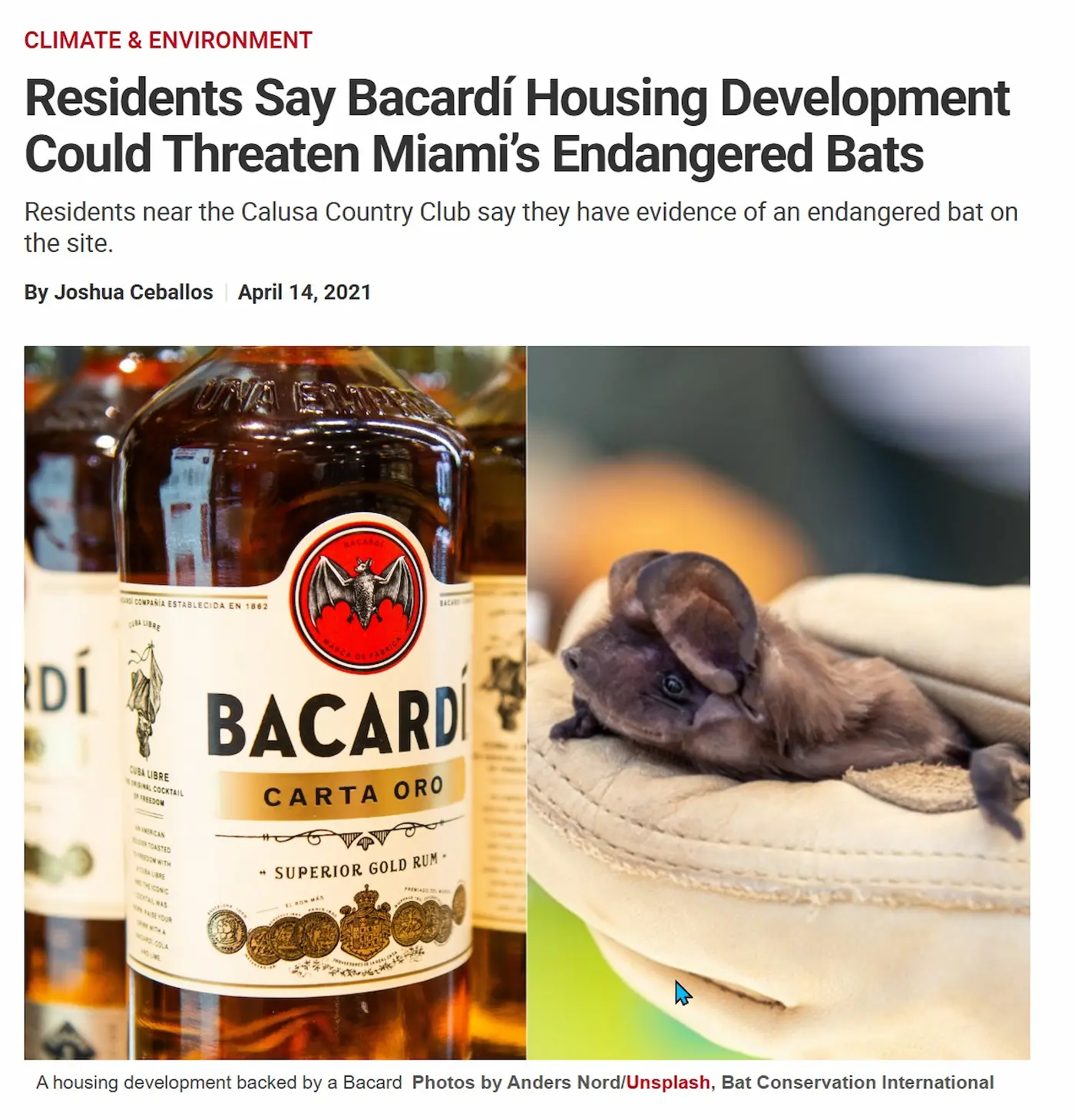
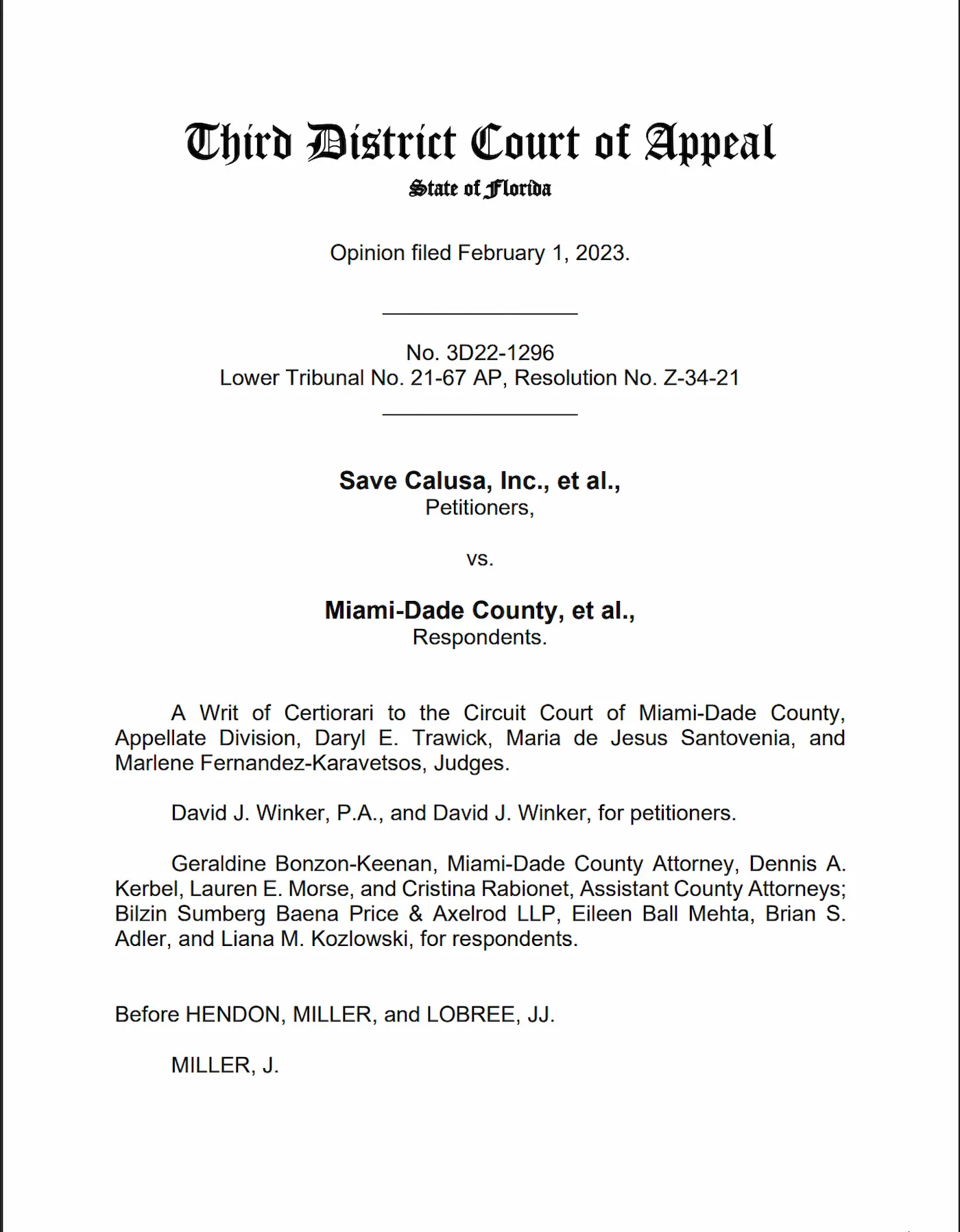
November 16, 2022. The Third District Court of Appeal rules in favor of Save Calusa and overturns the approval. The court concluded that letting the decision stand compromised the due process that the regulatory framework was meant to ensure. savecalusa.org, law.justia.com, law.justia.com
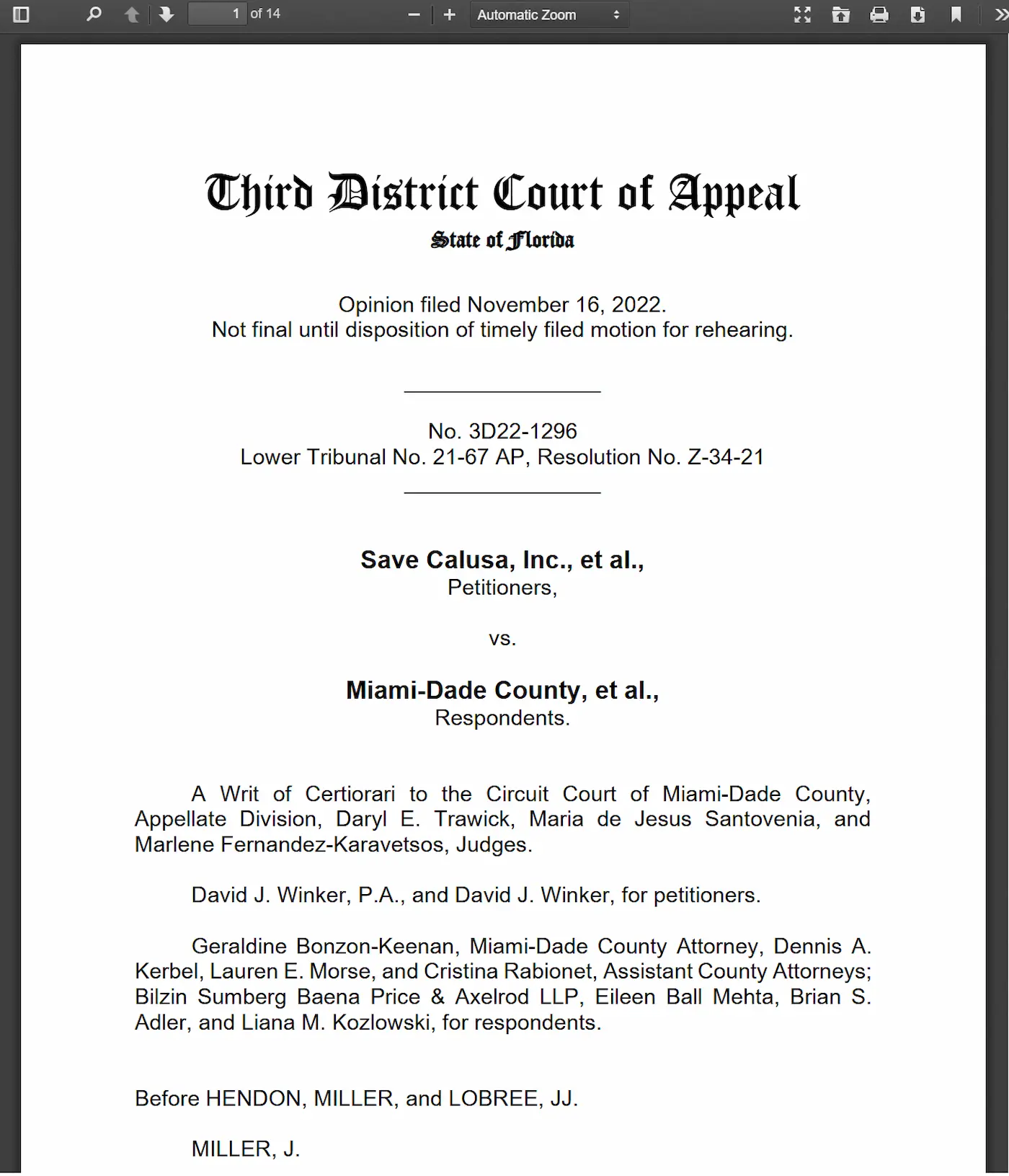
February 1, 2023. The 3rd DCA denies the rehearing request, leaving its decision in favor of Save Calusa. flcourts-media.flcourts.gov
The courts had already warned what was wrong.
The Third DCA concluded that letting the challenged approval stand threatened to “compromise the due process the regulatory framework strives to afford.” That sentence matters a lot. Because this isn’t simply a neighborhood temper tantrum against growth. It’s a controversy where an appeals court said, in essence, that the process couldn’t work that way. Instead of turning that judicial defeat into a profound institutional correction, however, the system absorbed the blow and got the project back on track.
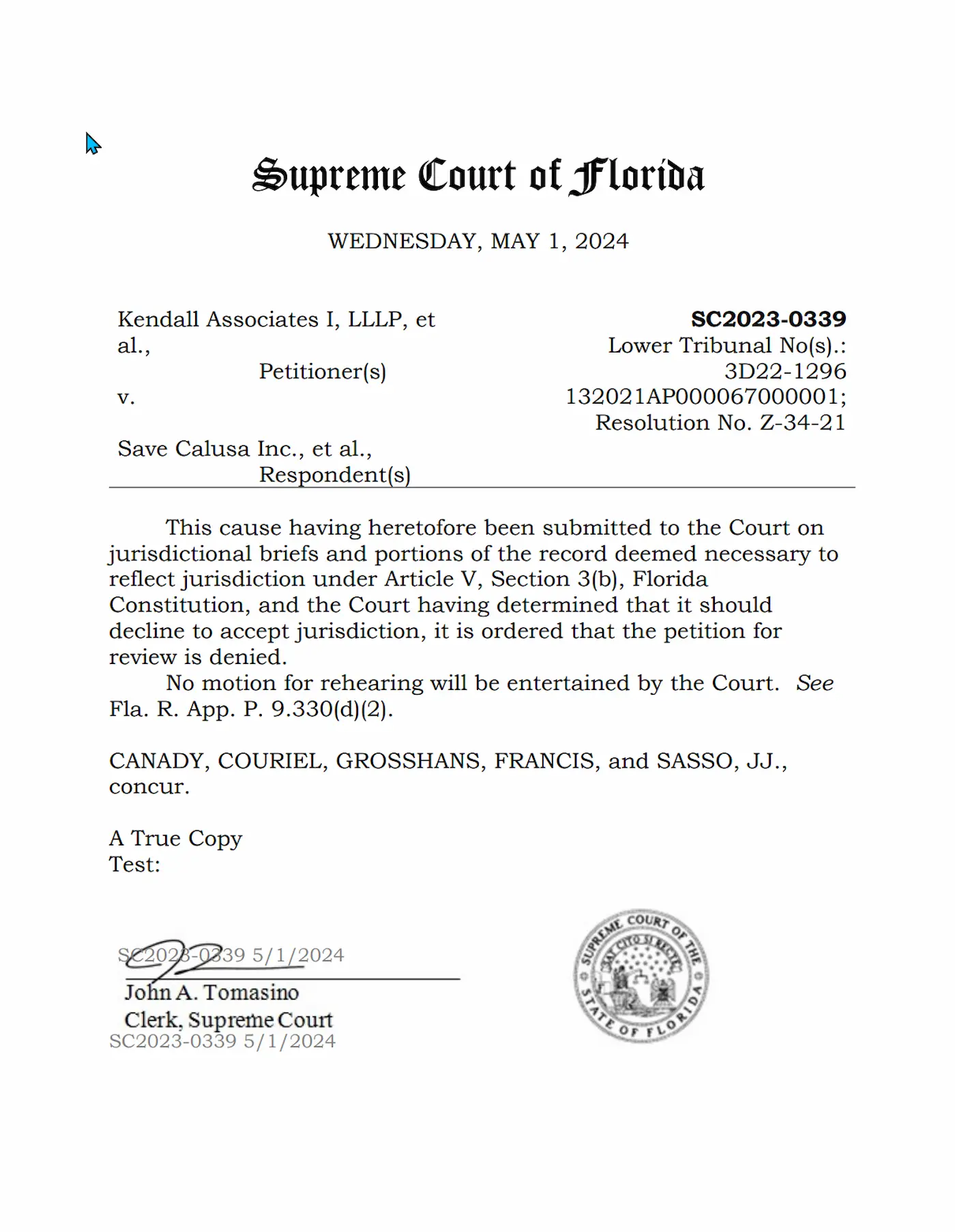
May 1, 2024. The Florida Supreme Court declines to assume jurisdiction in case SC2023-0339, thus making Save Calusa’s court victory and the cancellation of the 2021 permit final. The order further states that no rehearing will be allowed. acis.api.flcourts.gov
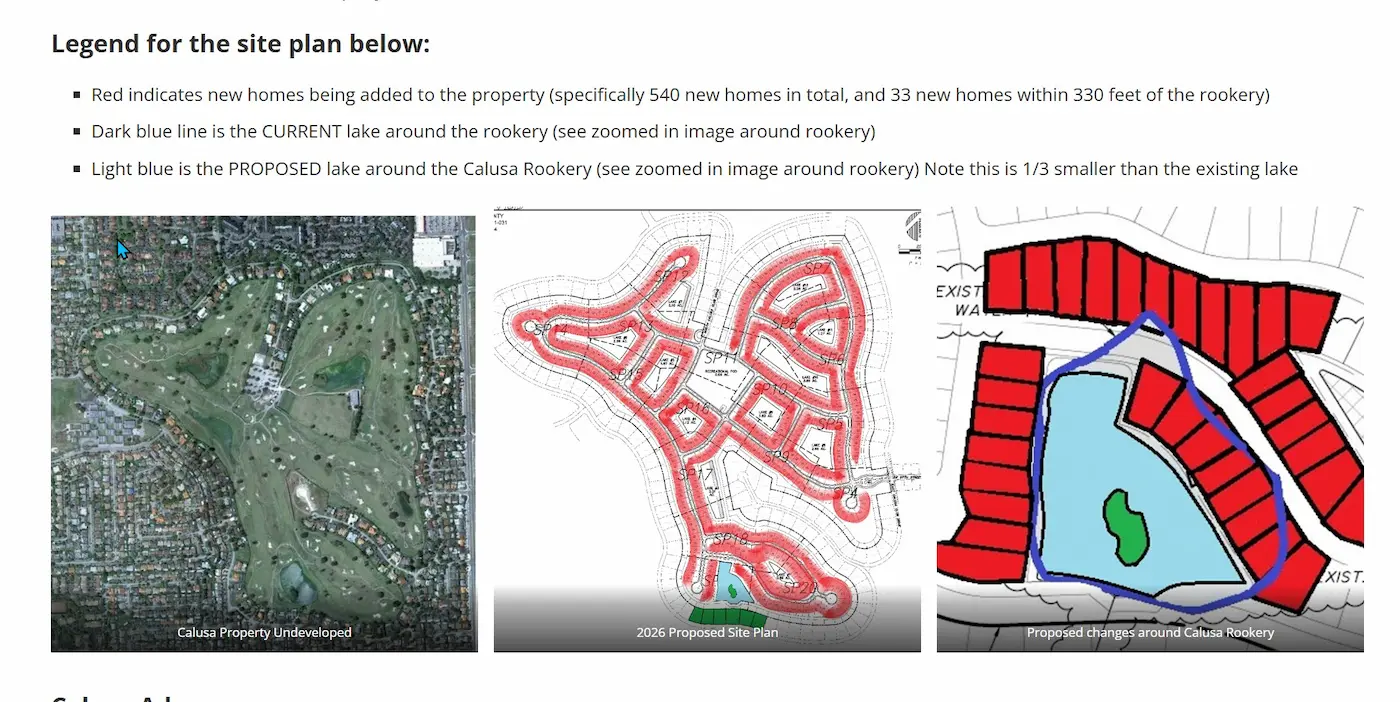
November 26, 2024. According to the county’s legal notice for 2026, the new plans for the redone project were officially received on that date. That new version no longer speaks of 550 homes, but of 540 residential units on approximately 169.27 acres.
February 19, 2026. Docket Z2021000031 formally returns to public hearing before the Commission. The County’s legal notice indicates that the hearing was opened and closed that day and then the matter was deferred to a new date.
March 19, 2026. A new public hearing is scheduled to vote on the redone version of the project: 540 homes, new excavations, partial lake fill and several additional regulatory waivers. miami-dade
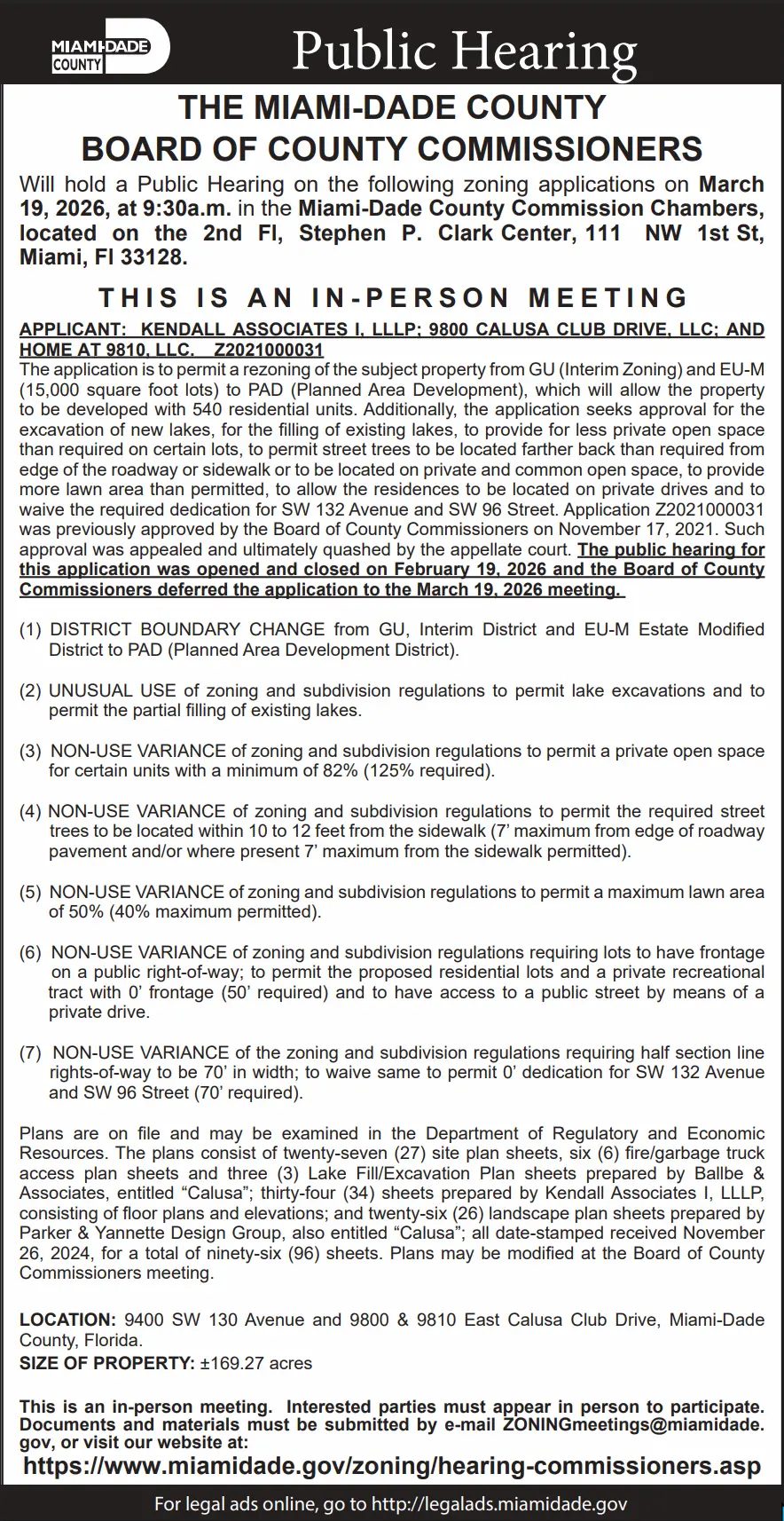
The most telling official fact is this: the county’s own legal notice states that the hearing on this application “was opened and closed” on February 19, 2026 and then deferred to March 19.
That means that, while the project continued to mutate and residents continued to ask for time, studies and clarity, the formal space for public comment had already been compressed into a procedural mechanic that favors the continuity of the file. Local 10 reported precisely that the vote was postponed to allow more time for conversations between developer and neighbors, not to restart the analysis of the project from scratch.
And therein lies the root problem. In community meeting transcripts contributed by residents, one hears something devastating: a neighbor summarizes that “the city says this traffic study is fine,” while the developer essentially acknowledges that “the city told us what to do” and that public comment was shut down before pushing the parties to negotiate further.
In that same exchange, another voice summarizes the political reality with crudeness: “the decision makers are the elected people”. In other words, the neighbor speaks, documents, protests, sues, wins in court… and still ends up sitting at a table where he does not decide whether the project should exist, but what version of the damage he can bear.
This is the real bias of the system. The community started out defending a position of principle: park, preservation, habitat protection, respect for the covenant, respect for the character of the area. But after years of attrition, lawsuits, postponements and redesigns, the public language changes. It no longer asks what is the right thing to do. It asks what is “good enough,” what is “better” than the previous version, what concession is livable.
The discussion itself turns on that logic: if 168 acres of parkland is not “realistic,” then the task becomes negotiating a smaller loss. That’s not robust participation. That’s management of citizen attrition.
The background of the covenant further compounds the distrust. Save Calusa argues that there was a 99-year covenant to maintain that land as a golf course until 2067, and that its partial release came about through agreements and consents that left much of the community feeling left out. Even in the transcripts shared by residents, this idea reappears: that the government released the covenant without demanding from the beginning the actual plan that later ended up opening the door to the massive project.
That sequence feeds a very dangerous perception: first the protection is dismantled, then the business is discussed, and in the end the resident is asked to react late.
That’s why Calusa matters beyond Calusa.
Here we see a pattern that is all too often repeated in Miami-Dade: the resident has to organize, learn administrative law, document birds, study traffic, mobilize signatures, attend hearings, pay lawyers and win in court only to return, years later, to the same starting point, with the project redone and the political pressure intact. The government does not appear first as a retaining wall. It appears as a channel for processing the project. And when the citizen cannot stop it, then he is invited to collaborate in the redesign of his own loss.
If the county wanted to demonstrate true neutrality, the standard would be different:
Redo the process with genuine openness, require all pending studies before voting, make every cumulative impact transparent, treat the rookery and green space as high-value public assets, not as obstacles to be mitigated just enough to keep the file moving. Until that happens, Calusa will remain the symbol of an uncomfortable truth: in Miami-Dade, too often government does not place serious limits on the developer; it places limits on the resident.
Raquel Regalado, the commissioners and the mayoress: the test of public power
In Calusa, the political question is not only what GL Homes wants to build. The underlying question is what did the officials who were obligated to protect the public interest do, what did they endorse and what did they fail to do. Because when a case ends up in court, is reversed due to due process failures and then returns almost intact to the public agenda, the problem is no longer only urbanistic. It is institutional.
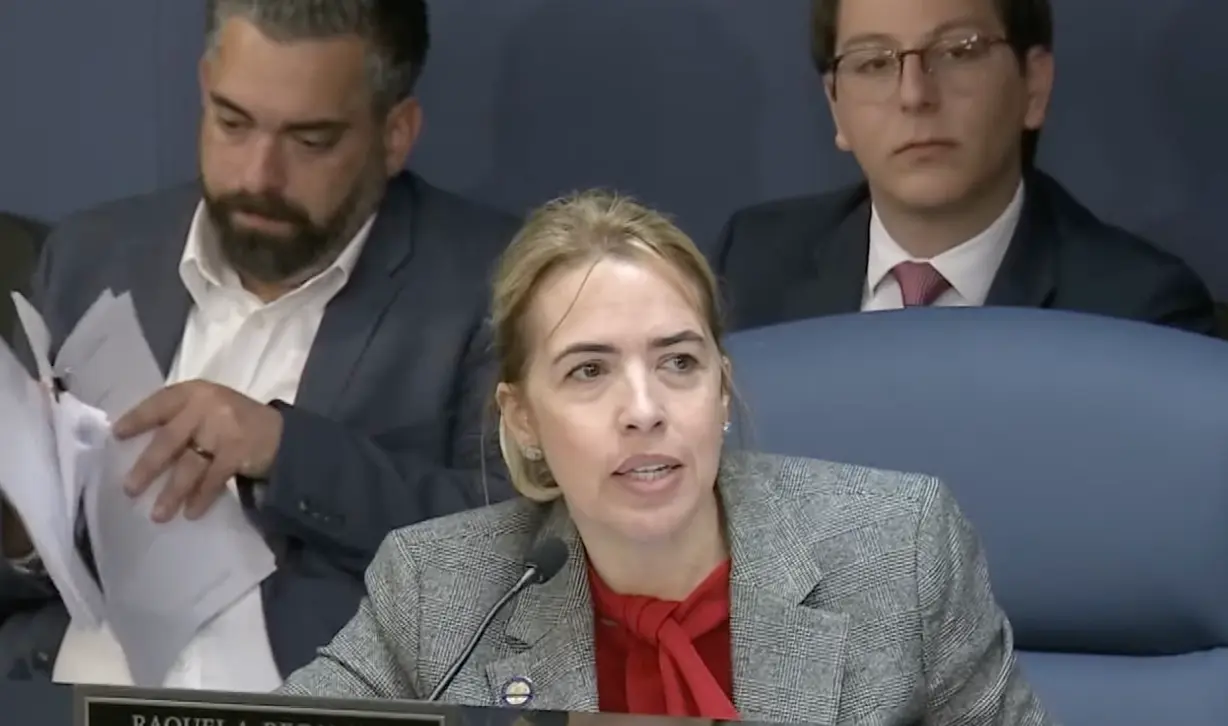
Raquel Regalado, as commissioner of District 7 where Calusa falls, was not a distant observer in 2021. At the Nov. 17 hearing she asked about notice, density, covenant, wildlife and park impact fee use; and in the end moved approval of Docket Z2021000031, which the Board adopted as Resolution Z-34-21.
At the same time, Save Calusa contends that for years residents asked for a properly advertised workshop or meeting and tried to contact Regalado to discuss the project “in the sunshine,” without getting that real space for public deliberation. That combination – neighborsasking to be heard and the district commissioner pushing for approval –is a central part of the distrust that still persists.
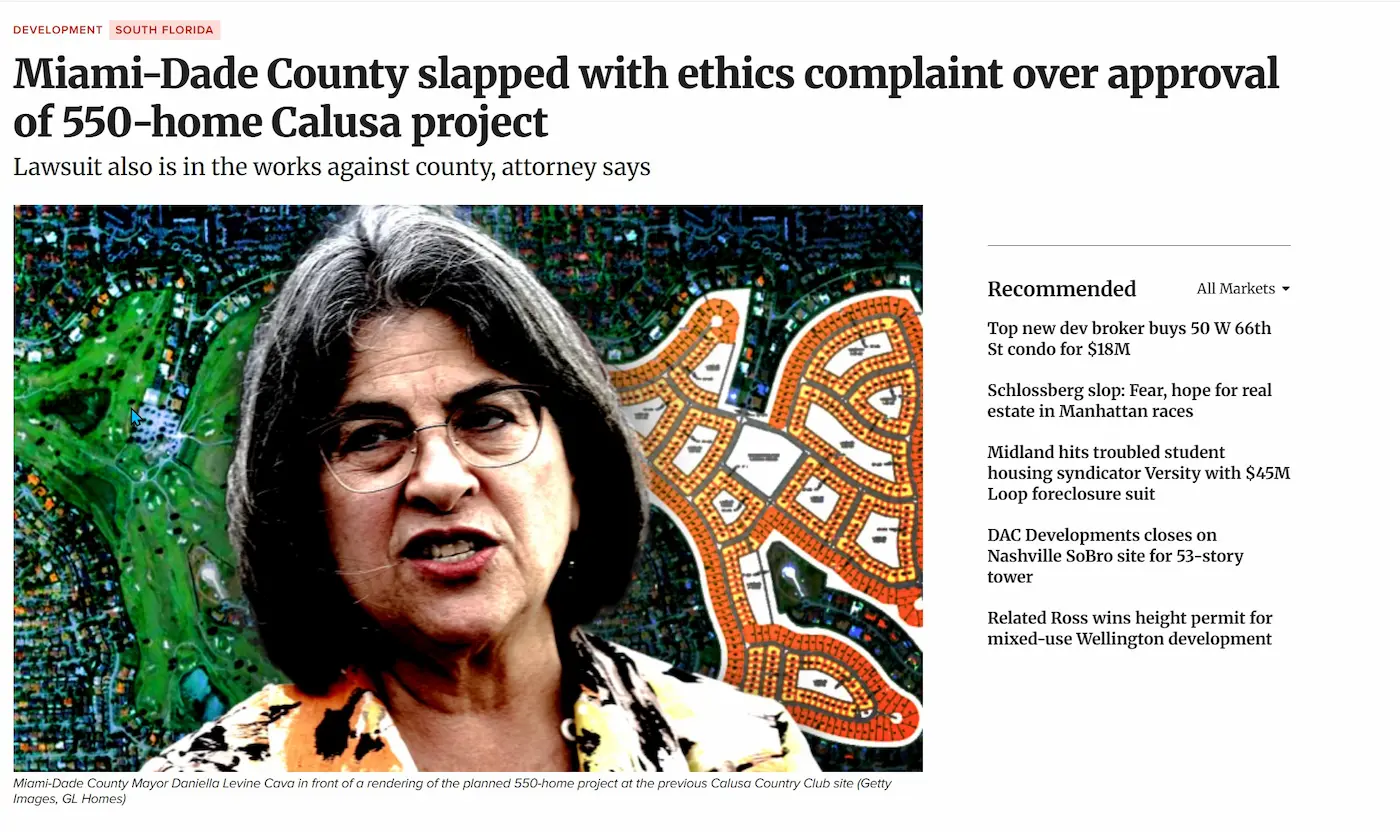
Daniella Levine Cava also cannot stand on the sidelines. After the 2021 vote, she did not veto the approval. In her Nov. 27, 2021 memo, she acknowledged that she had previously voted against releasing the covenant, but argued that since the property was privately owned and the Commission had approved the rezoning by 10-2, her administration would focus on imposing additional environmental protections, independent studies and better use of park impact fees in the area.
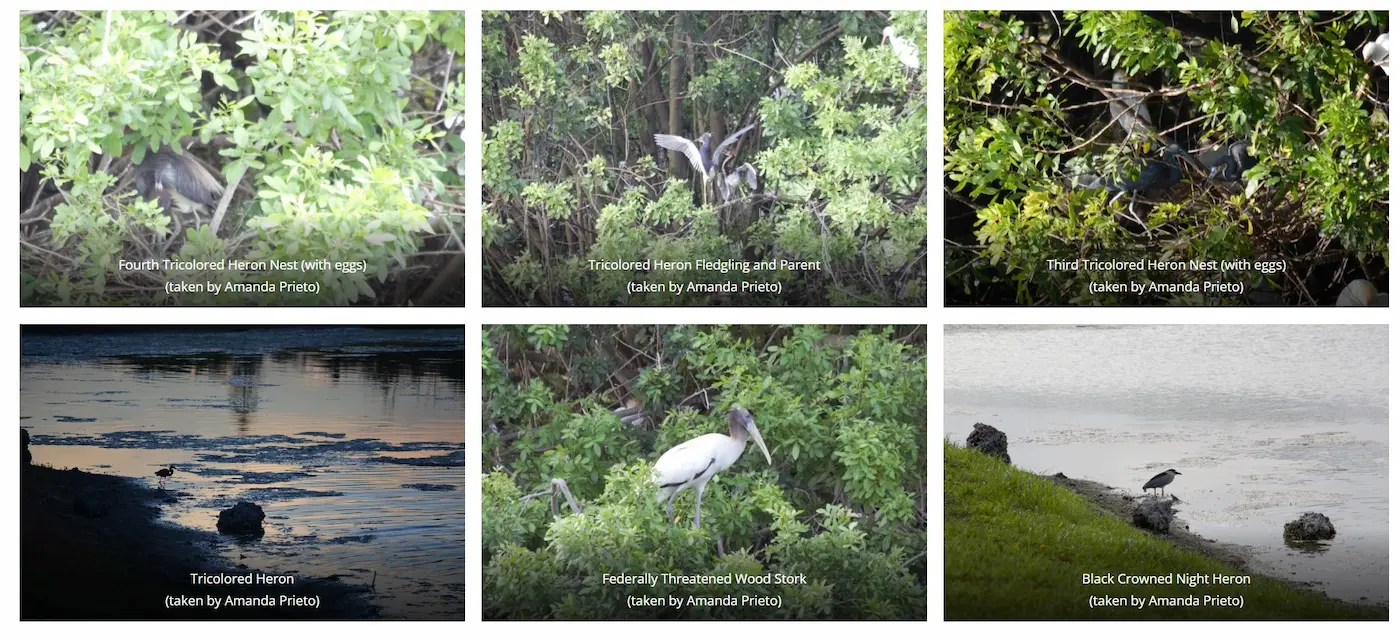
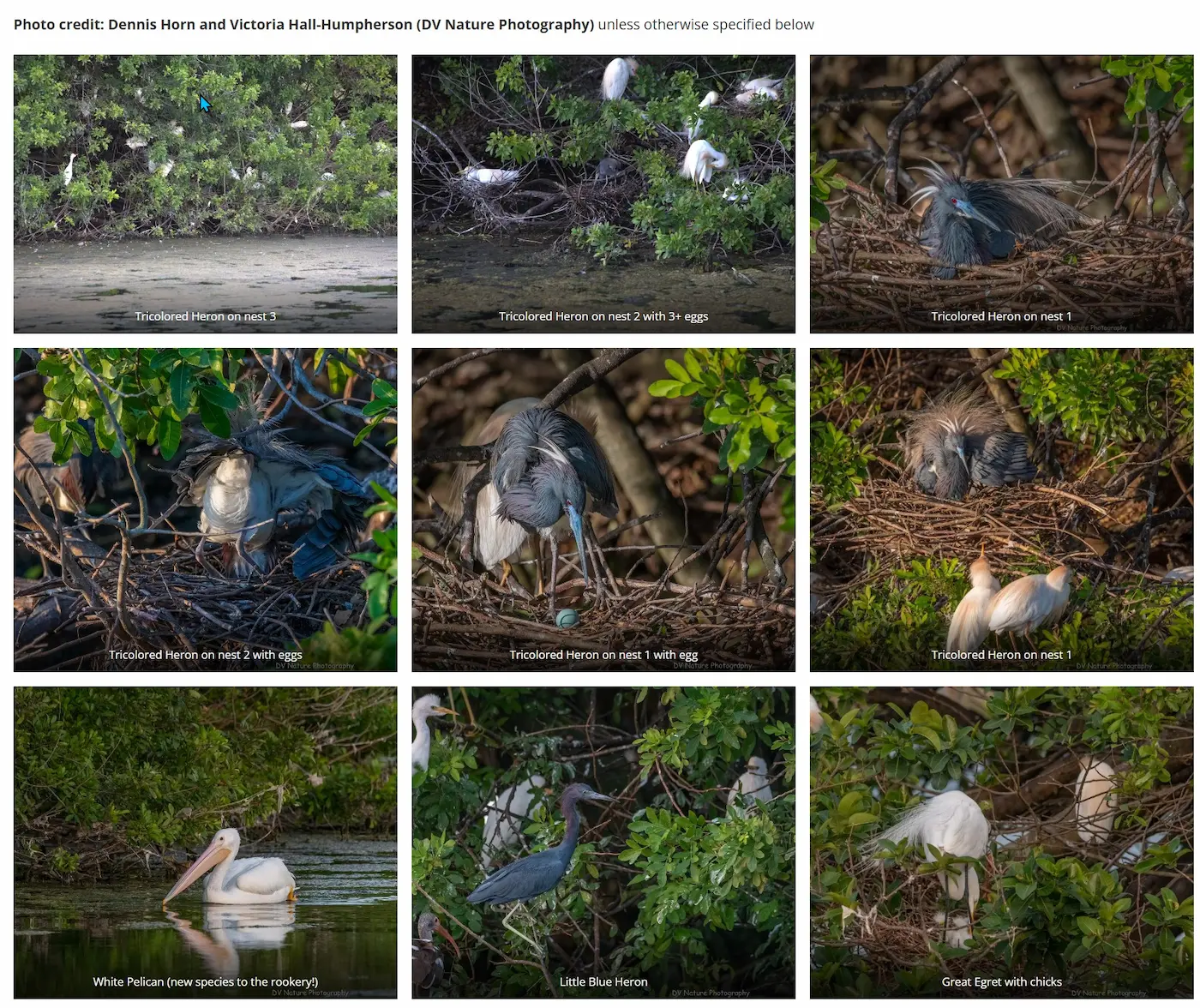
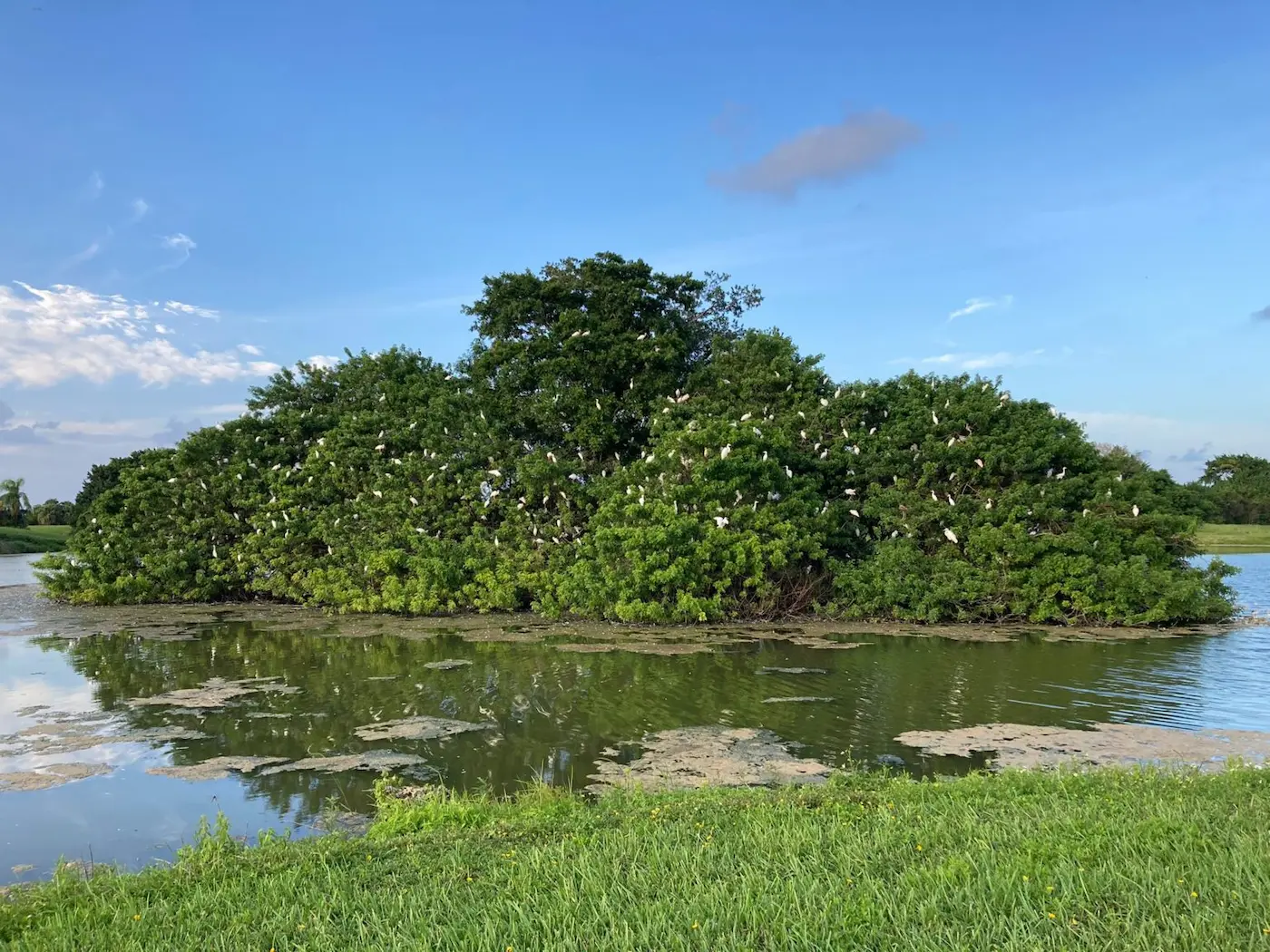
A year later, after DERM’s independent surveys, the mayor herself issued another memo concluding that the Calusa Rookery should be preserved because there was conclusive evidence of nesting tri-colored herons and other species, and that the developer had to modify the plan to accommodate that preservation. Those memos served to strengthen the environmental protection of the file, but they came after the political system had already let the initial approval pass.
The rest of the commissioners don’t wash their hands of it either. The Board approved a rezoning in 2021 that was later shot down by the courts because the county did not strictly comply with public notice requirements. And when the new 540-home version came back in February 2026, the Commission didn’t bury it: it deferred it until March 19 to allow more time for talks between the developer and neighbors, after strong public opposition. That showed political doubts, yes, but it also confirmed another reality: in Miami-Dade, even after a court defeat, the project comes back, gets readjusted and keeps moving forward.
Added to that is the problem of public appearance. Political Cortadito reported in January 2026 that entities linked to Kendall Associates I and parcels linked to the entrance of the project had made contributions to Raquel Regalado’s campaign. That reference should be read as exactly that: a journalistic pointing out of political contributions, not automatic proof of illegality. It continues to happen
The money behind the dossier: GL Homes and the architecture of influence
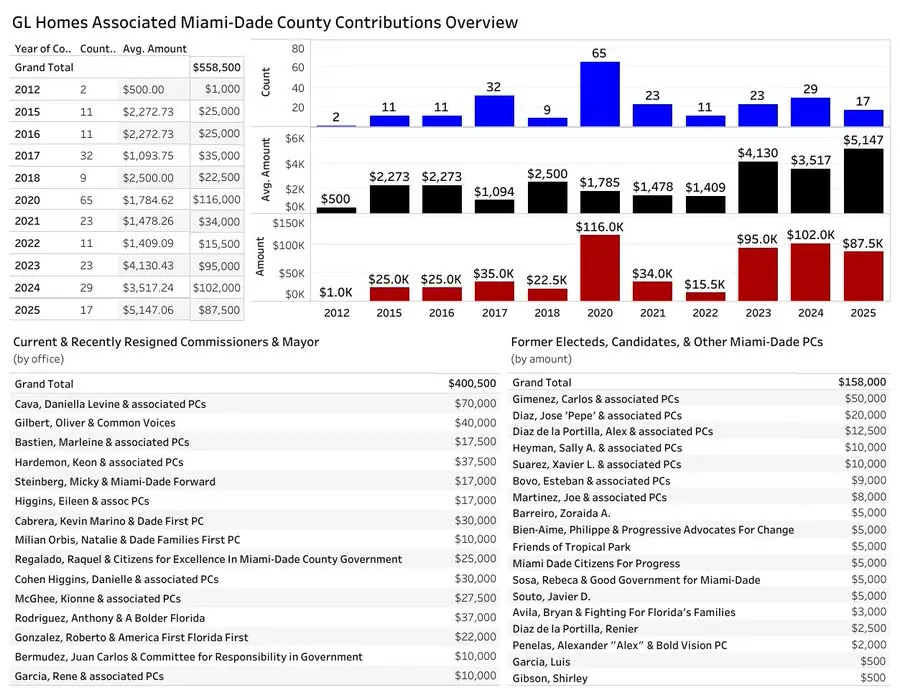
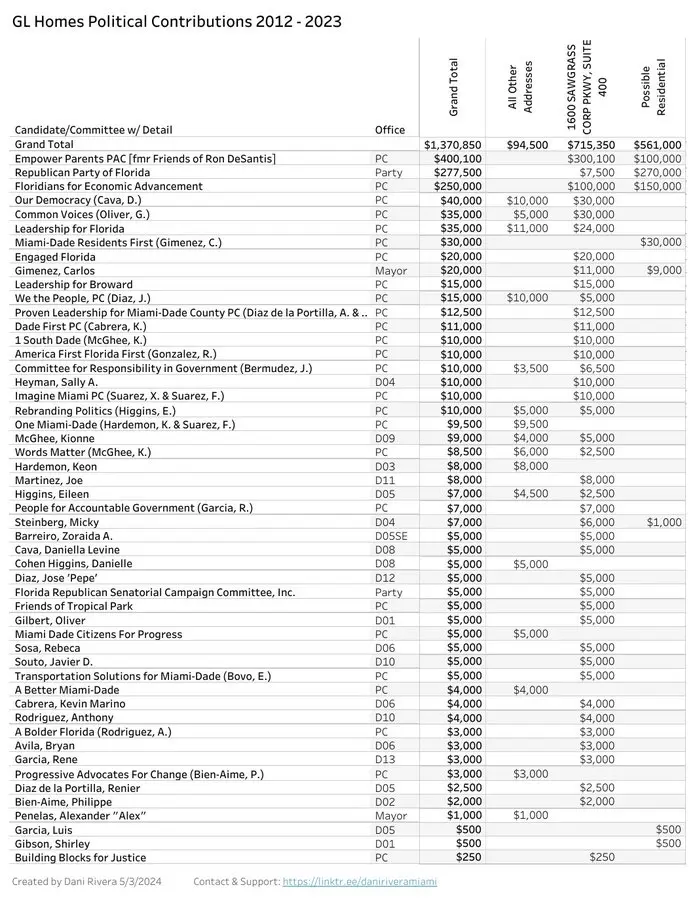
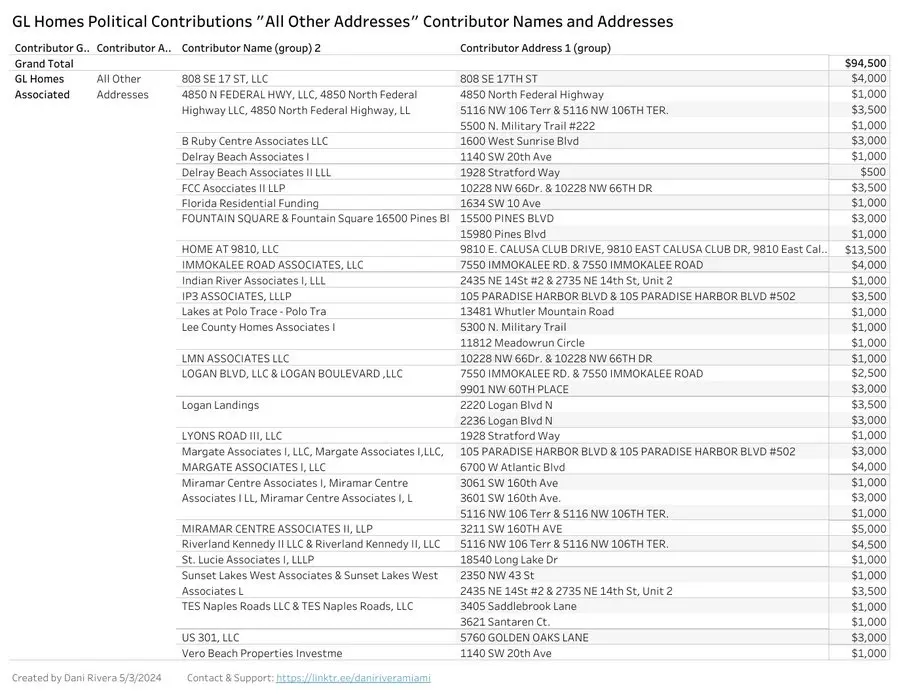
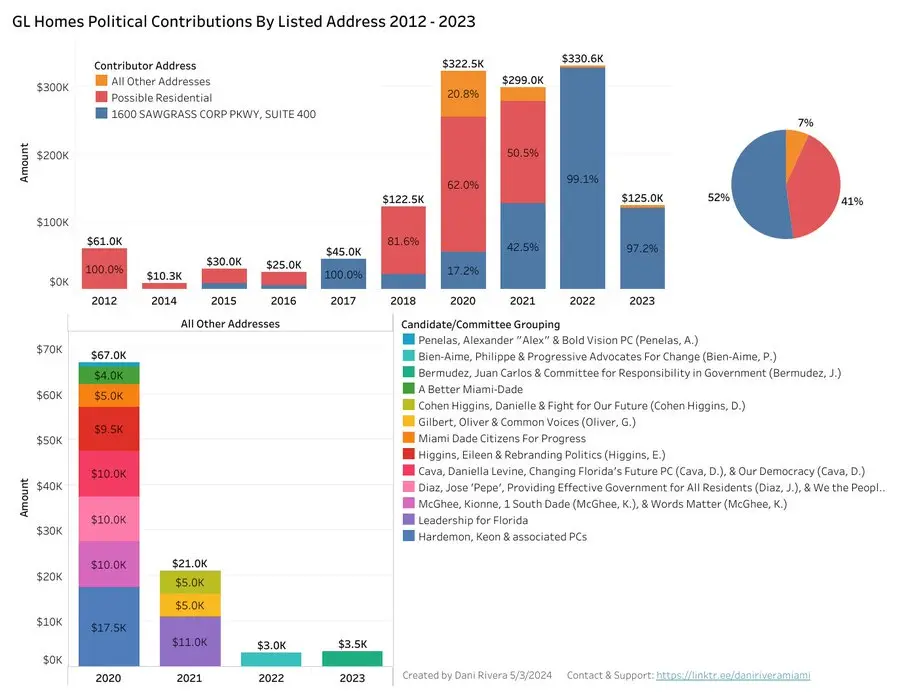
The Calusa case cannot be analyzed only as a conflict between neighbors and a developer. It must also be viewed within the political ecosystem in which large real estate interests operate in Miami-Dade. The charts shared on contributions associated with GL Homes point to a pattern that, at the very least, deserves serious public scrutiny: a consistent and extensive presence in local and state political financing.
According to those summaries, contributions associated with GL Homes in Miami-Dade total $558,500 between 2012 and 2025. The highest volume year in that series was 2020, with $116,000, followed by 2024 with $102,000, 2023 with $95,000 and 2025 with $87,500. In other words, these are not isolated or marginal contributions, but a sustained practice over time, with clear peaks in years of strong political and regulatory activity.
Even more revealing is the destination of that money. The “Current & Recently Resigned Commissioners & Mayor” chart attributes $400,500 to current, recently resigned and mayoral commissioners. That list includes, among others, Daniella Levine Cava and associated committees with $70,000, Oliver Gilbert with $40,000, Keon Hardemon with $37,500, Anthony Rodriguez with $37,000, Kevin Cabrera with $30,000, Danielle Cohen Higgins with $30,000, Kionne McGhee with $27,500, Raquel Regalado with $25,000, Roberto Gonzalez with $22,000, and other commissioners and related political structures. The rest, $158,000, would have gone to former elected officials, candidates and other political committees in Miami-Dade.
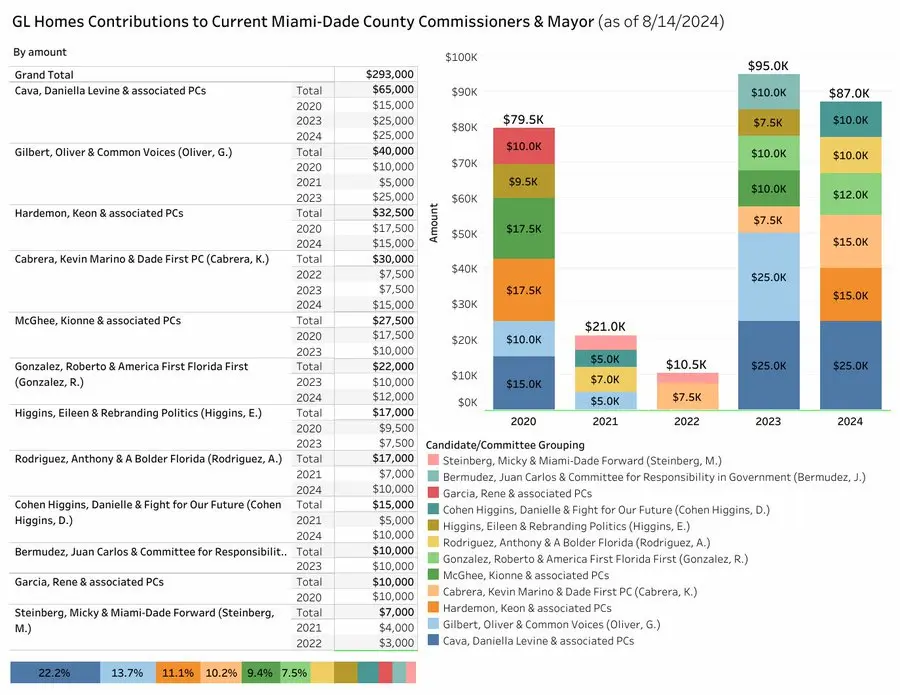
Another of the graphs, focused on commissioners and mayor, places contributions to current officials at $293,000 as of August 14, 2024. Relevant figures also appear there: Cava at $65,000, Gilbert at $40,000, Hardemon at $32,500, Cabrera at $30,000, McGhee at $27,000, Gonzalez at $22,000, Higgins at $17,000, Rodriguez at $17,000, Cohen Higgins at $15,000, among others. While each of these contributions alone may be legal and reportable, the big picture paints a more important picture: a widespread, persistent and cross-cutting network of political access.
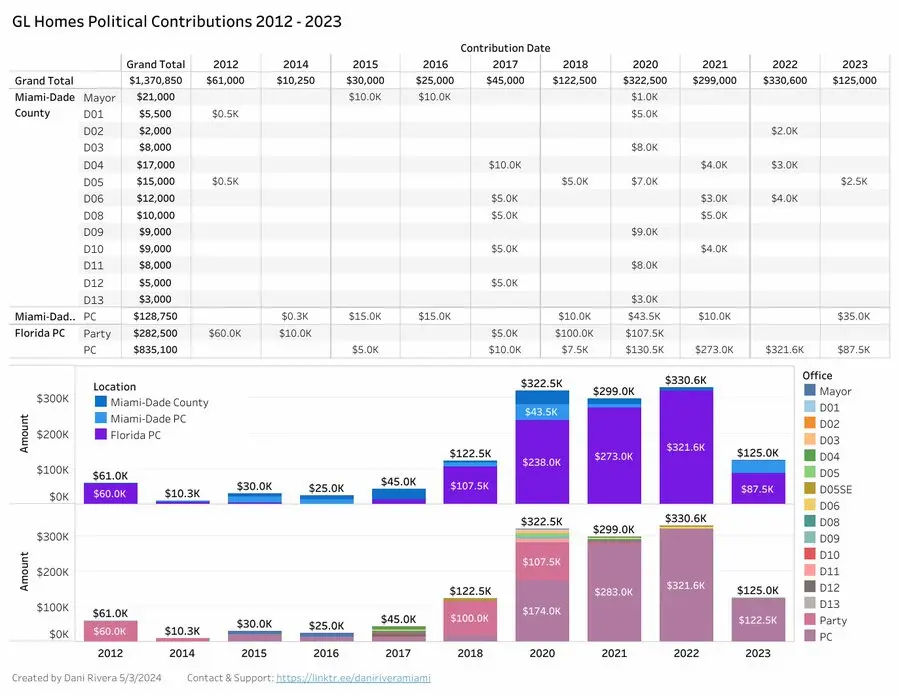
And when you zoom in to the 2012-2023 period, the picture becomes even more significant. The shared summary attributes $1,370,850 in political contributions between Miami-Dade County, county political committees and Florida political structures to GL Homes. Of that total, $128,750 would have gone to Miami-Dade county offices, $282,500 to Miami-Dade political committees and $835,100 to state political structures. This data is important because it reveals that we are not dealing with an actor who participates only in one file or one district, but with an operator with the capacity to sow political relationships in various layers of power.
Here it is necessary to be precise: this does not prove by itself a bribe, a quid pro quo or a concrete illegality. To say that without additional evidence would be irresponsible. But it does prove something politically serious: while residents face quasi-judicial rules, limited intervention times and opaque technical processes, large developers also play on another board, that of ongoing political financing. And that generates a deeply corrosive public appearance.
In Calusa, that contrast becomes almost obscene. The neighbors have to organize, protest, document birds, hire lawyers, win in court, and start over. The developer, on the other hand, not only returns with a redone project: he returns within a political environment where he has already invested for years. This is not a minor detail. It is one of the reasons why so many people stop believing that the process is balanced.
Therefore, the problem is not only how much GL Homes donates. The problem is what kind of political system we have built when a community must fight for its habitat, its tranquility and its right to be heard, in front of actors that not only have money to design projects, but also to insert themselves strongly in the political infrastructure that then decides those projects.
So Calusa is no longer just a fight over birds, traffic or green space. It is a test of institutional character for Raquel Regalado, for the commissioners and for Mayor Daniella Levine Cava: to decide if they are there to serve as a counterweight to the power of the developer, or if they will continue to manage the conflict until the community wears out.
The Parks Department’s mistake: confusing meters on a map with real community
One of the weakest – and most vexing – angles of the Calusa dossier has been the logic of the Parks Department. In the official 2021 discussion, the analysis turned in part on the park district itself reporting an “excess” of 346.01 acres, and from there the conversation shifted to how to use approximately $1.5 million in park impact fees to improve trails like Kendall Indian Hammocks Trail and West Kendall Trail. But that bureaucratic approach misses the bottom line: not every space counted as “park” replaces the value of this land in Calusa.
A trail improved elsewhere does not replace 168 acres of green space in the heart of a community; it does not replace an open landscape, it does not replace habitat, it does not replace neighborhood character, and it does not replace an ecological refuge that already exists.
Save Calusa’s own position underscores the contradiction: the redone 2026 project proposes no public park or publicly accessible recreational space, and the planned green space and amenities would be private and gated, reserved for the proposed walled community. Moreover, Save Calusa contends that in 2021 the County Parks Dept recommended a 5 acre park, but the developer was not required to deliver it and instead merely paid impact fees. Translated into plain language: the government agreed to trade park land for money for improvements elsewhere. That may fit on a spreadsheet, but not in a serious public policy.
That’s the underlying problem with the “there are already enough parks” rationale: it treats parkland as a fungible number, as if an acre in another area, a bike path, or a landscaping improvement will compensate for the loss of a large, continuous, environmentally sensitive green space in Calusa. They do not. A park is not just an inventory line. It is also location, accessibility, scale, ecological function, and community value. And in Calusa we are talking about land that for decades was protected by covenant, that continues to carry the Parks and Recreation designation in the public discussion of the case, and where the community itself has documented the relevance of the rookery and associated habitat.
That’s why the Parks Department’s position deserves a frontal critique: if its response to the loss of a large community green space is that the district “has excess” acreage and that the money can go to nearby trails, then it’s not advocating for parks; it’s managing their replacement. And when an agency charged with protecting open space ends up validating that logic, it ceases to be part of the solution and becomes part of the mechanism that normalizes the surrender of land to development.
For the resident, a park is community, landscape and respite; for the bureaucracy, it seems, it is enough that the inventory fits elsewhere.
Stay informed with the latest news!
Would you like to receive more information like this right on your screen? Visit our home page and find out what’s happening in South Florida: local news, events, weather, sports and much more.
👉 Click here! newsmiamidade.com/en
Don’t miss a single detail. #MiamiDade #News #Florida