
Affordable housing vs. agricultural land: national – state (Live Local Act) and county (Miami-Dade) framework – 2025. Warning signs for 2026
The pressure to produce “affordable housing” coexists with another urgency: preserving agricultural land and the rural fabric. This analysis organizes the debate at three levels (U.S., Florida, Miami-Dade) and lands how new state preemptions are reshaping local decisions, especially as developments approach – or encroach on – agricultural areas.
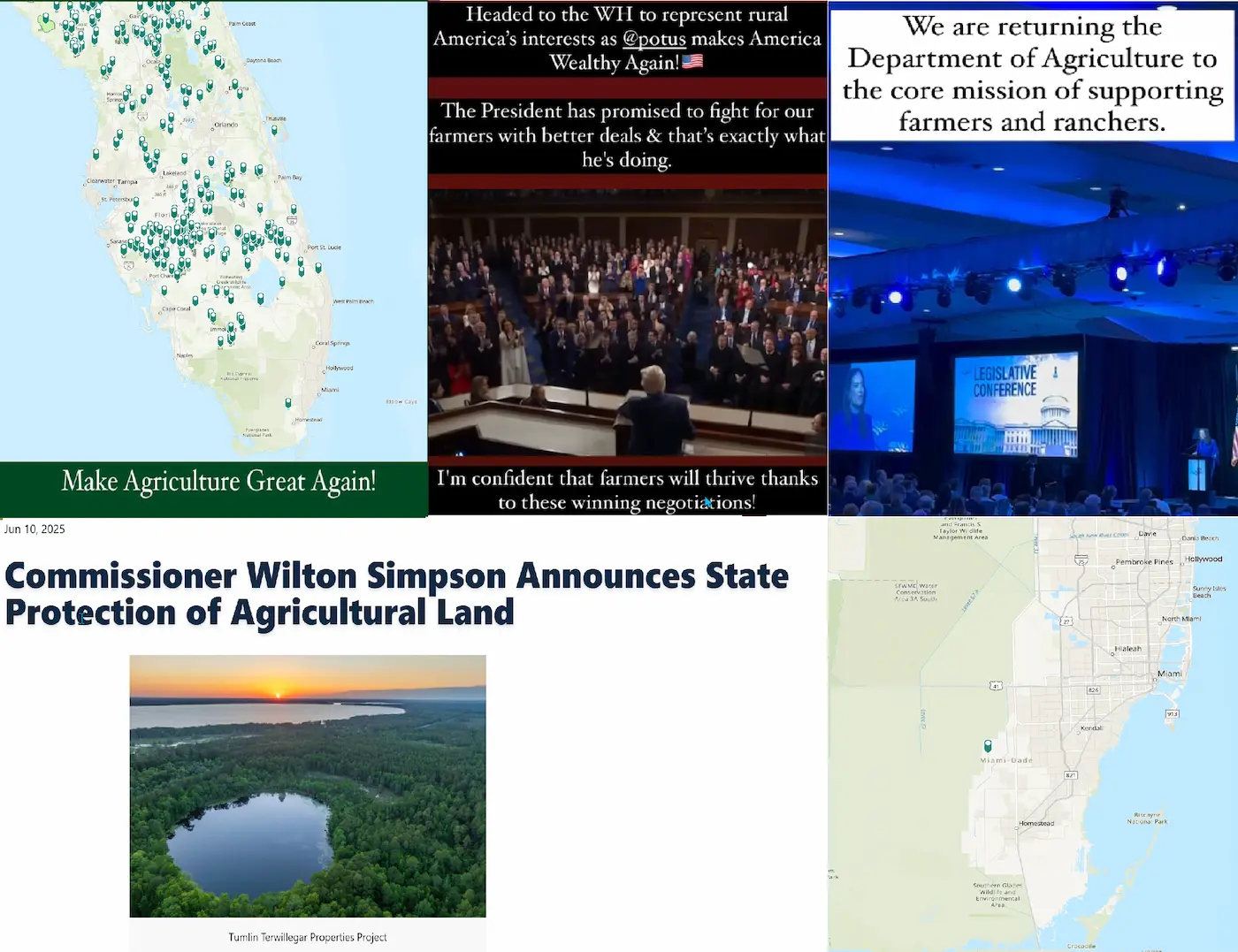
The Trump 2025 administration is moving the regulatory axis in favor of the agricultural and livestock producer.
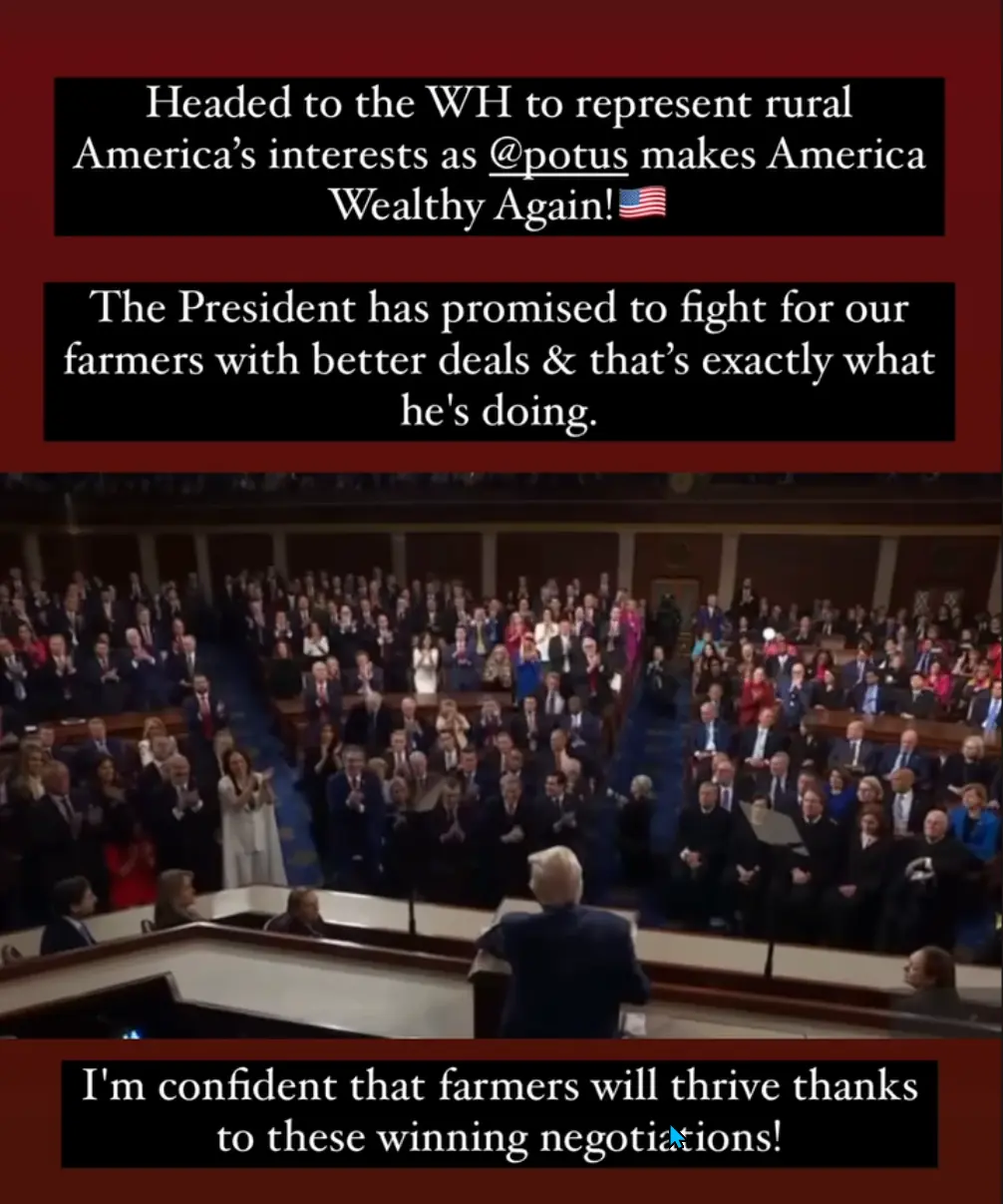
Two political keys explain this:
Interior, today in the hands of Doug Burgum.
The Senate confirmed Doug Burgum as Secretary of the Interior with an explicit mandate to streamline permitting, expand productive access to public lands and coordinate a National Energy Board (energy and land use go hand in hand). That’s a change from the previous cycle and directly affects the management of 500-640 million federal acres and permitting schedules that impact farming and ranching in the West but also set regulatory precedent nationally. Reuters
USDA, with Brooke Rollins, unclogs grazing permits.
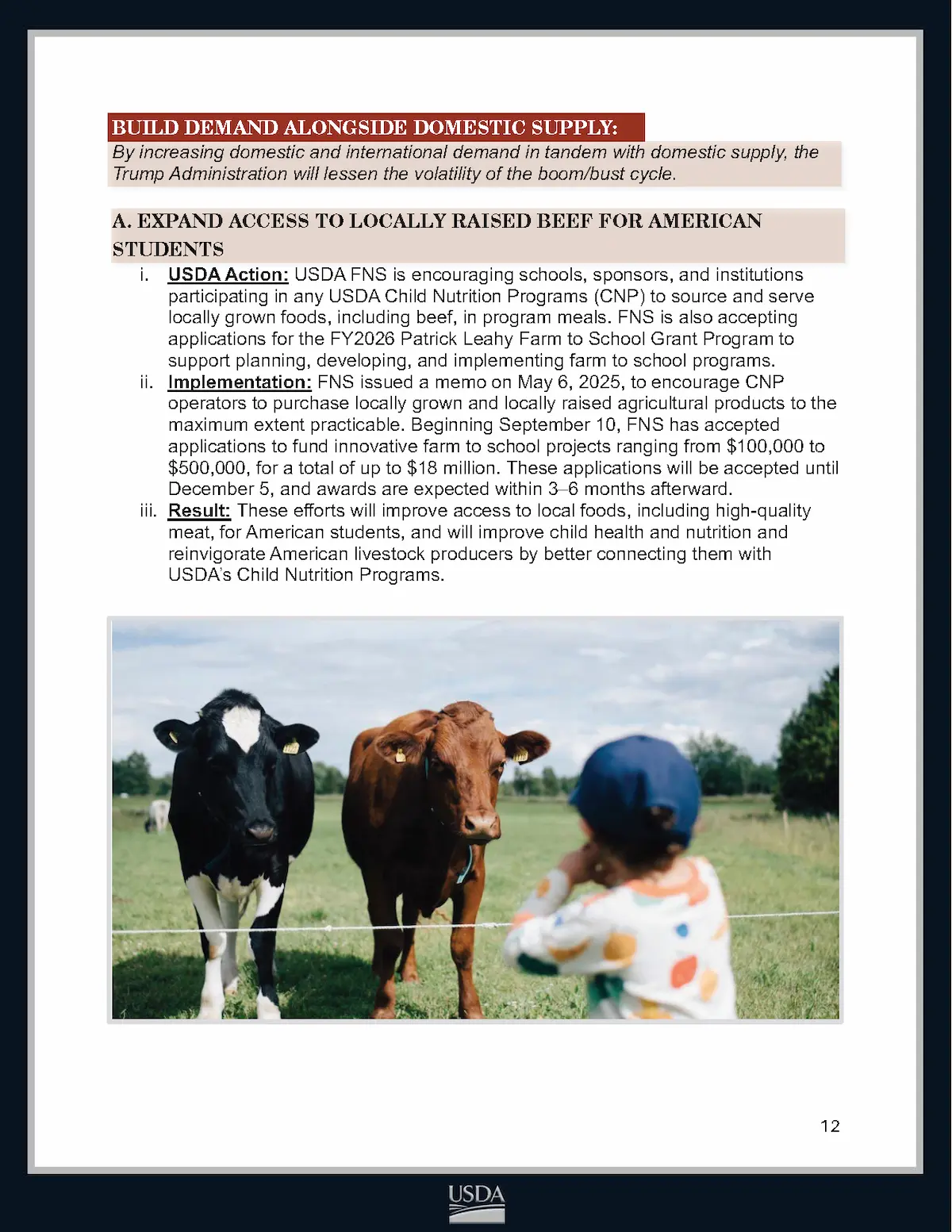
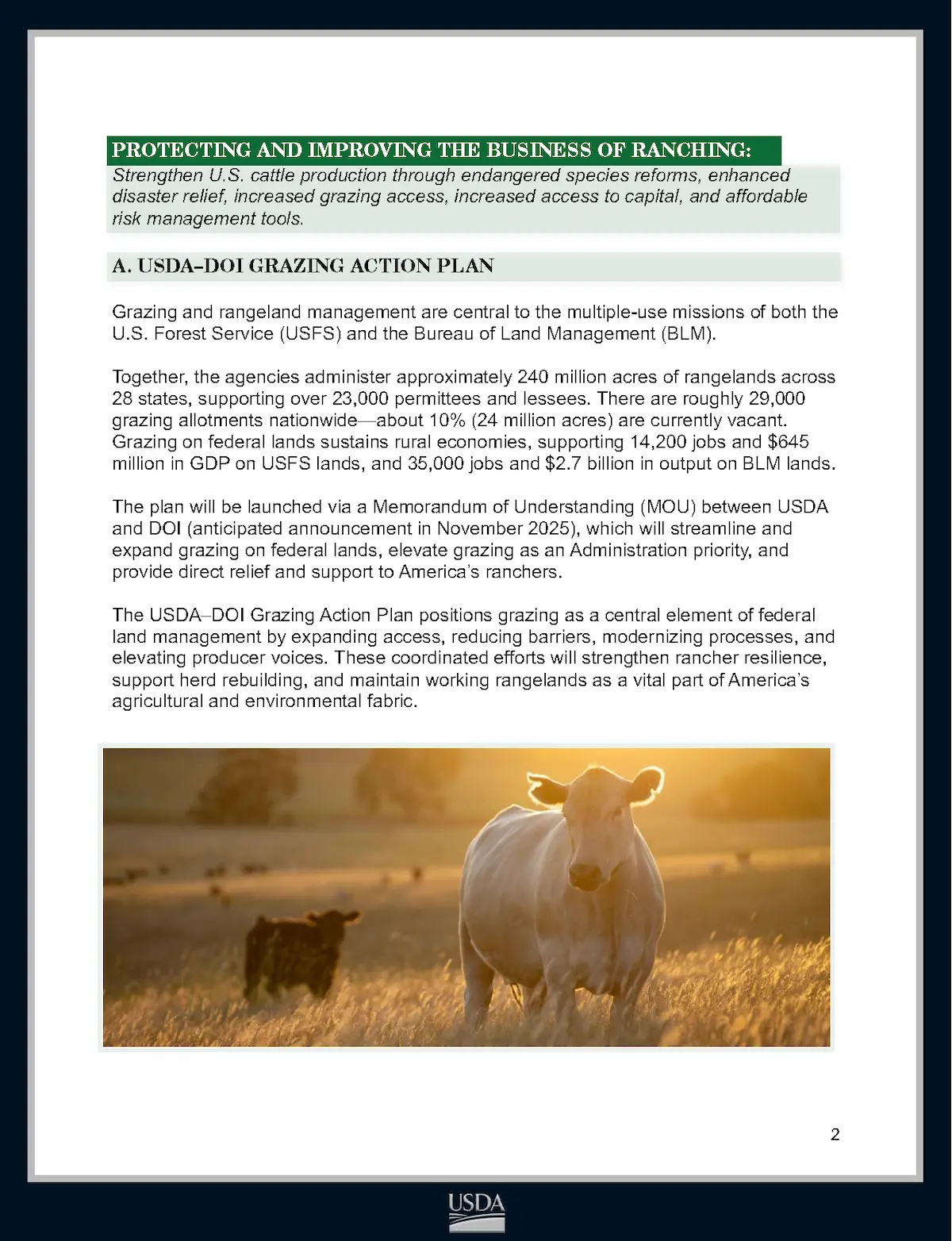
USDA announced a plan to reduce the “tangle” of thousands of backlogged grazing permits and coordinate with Interior to restore access on public lands, increase slaughter/processing capacity and get more local protein into public purchases (e.g., schools). Rollins put it bluntly, “The food chain is a national security priority; we stop tying ranchers’ hands.” USDA+1
The numbers behind the turnaround
- The federal government owns ~640 million acres (≈28% of U.S. territory). congress.gov
- Approximately 35% of those lands are actively authorized for grazing (with about 40% of US Forest Service forests in livestock use). Cattle Range
Political translation: less permitting delays, more predictability for the producer, and a clear signal to the rural market about productive use in the face of pressure for changes of use (industrial, data centers, residential developments).
Federal level: pro-producer and pro-efficient use of public land signals
- Livestock and agriculture: the 2025 federal discourse emphasizes reducing red tape for productive uses (e.g., grazing on public lands) and coordinating Interior-USDA, with the narrative that food security is a strategic priority.
- Local translation: although this turnaround does not regulate private land, it sets criteria: before changing agricultural use to residential, governments should test necessity, alternatives and proportionality (infill, public land, brownfields, TOD) so as not to erode productive capacity.
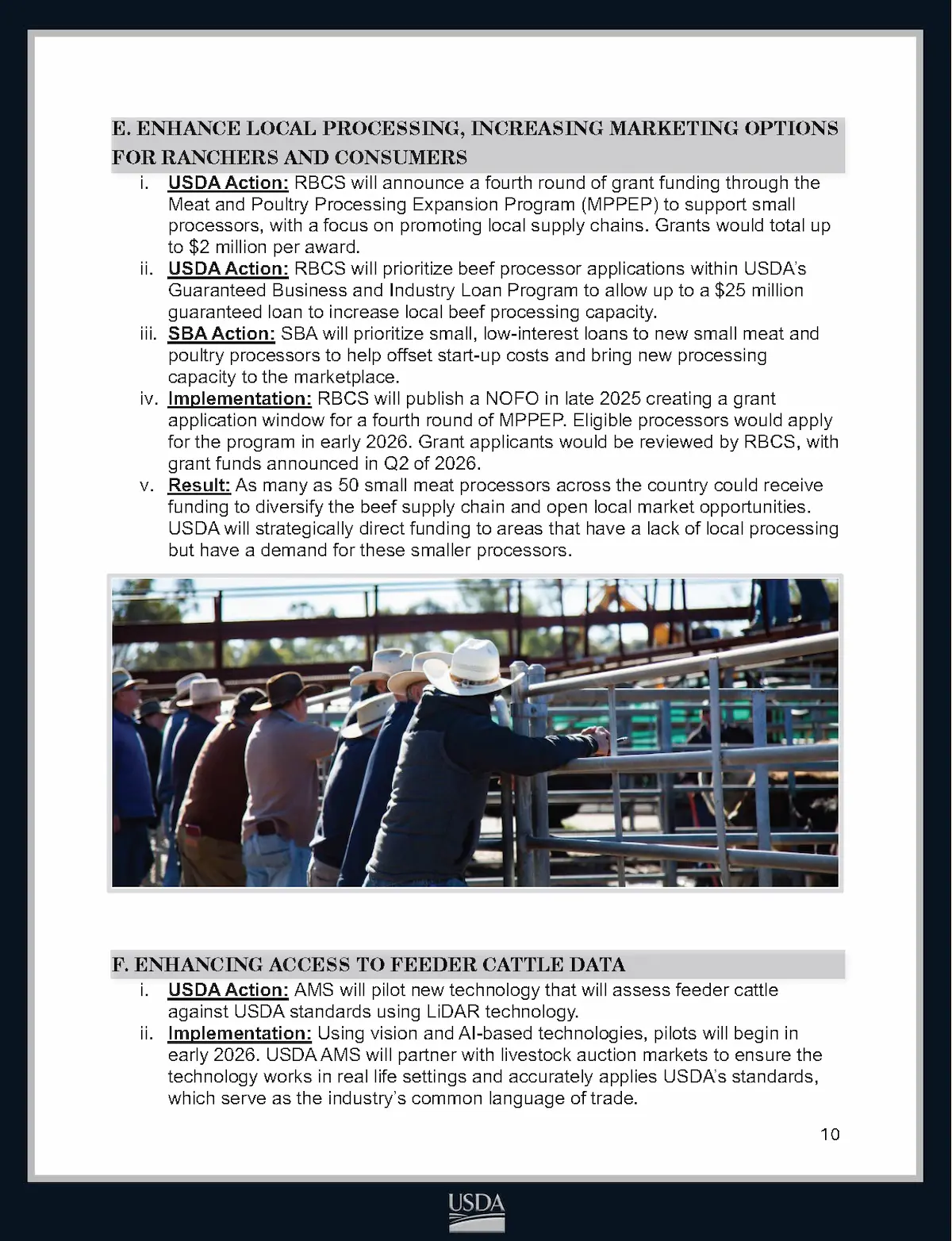
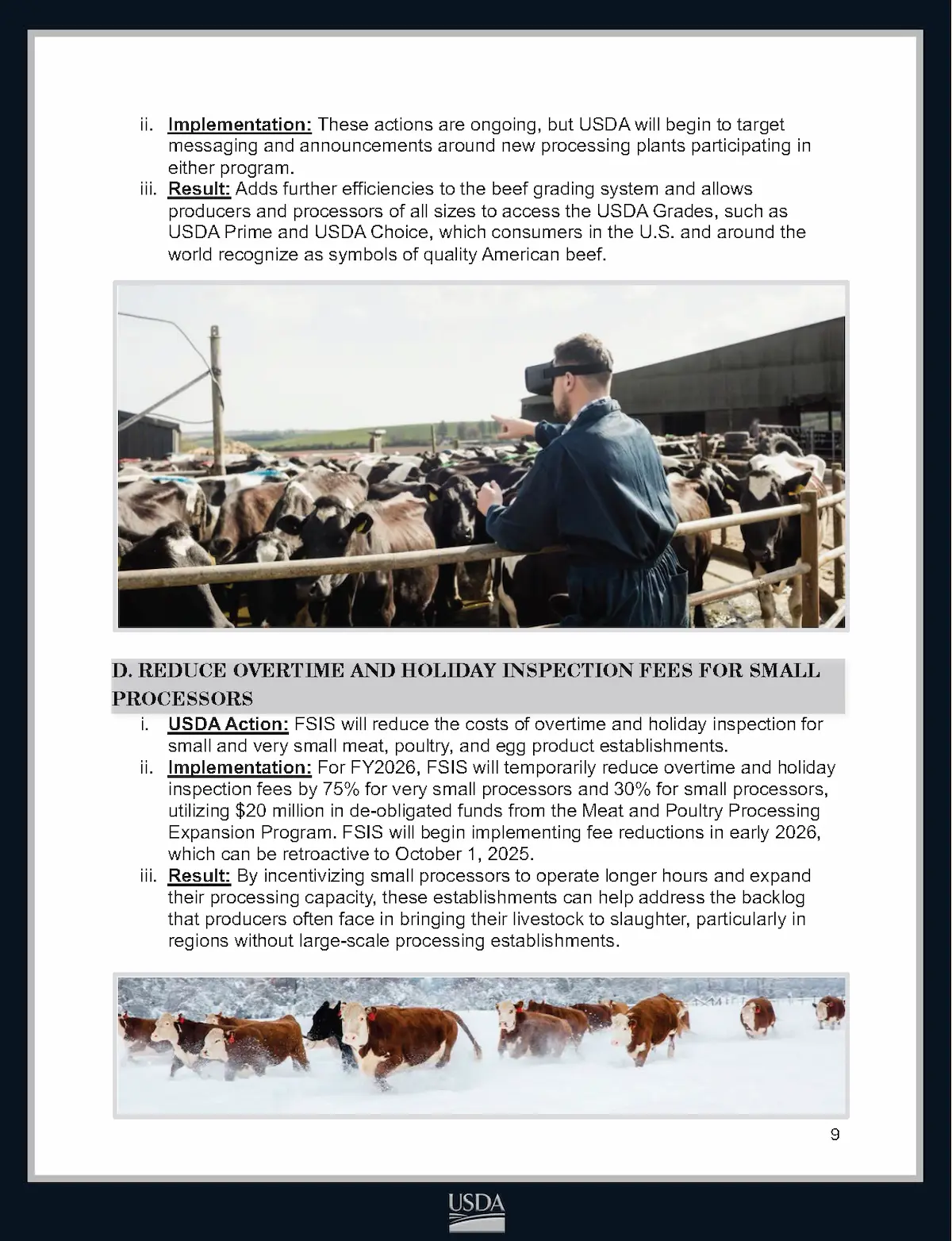
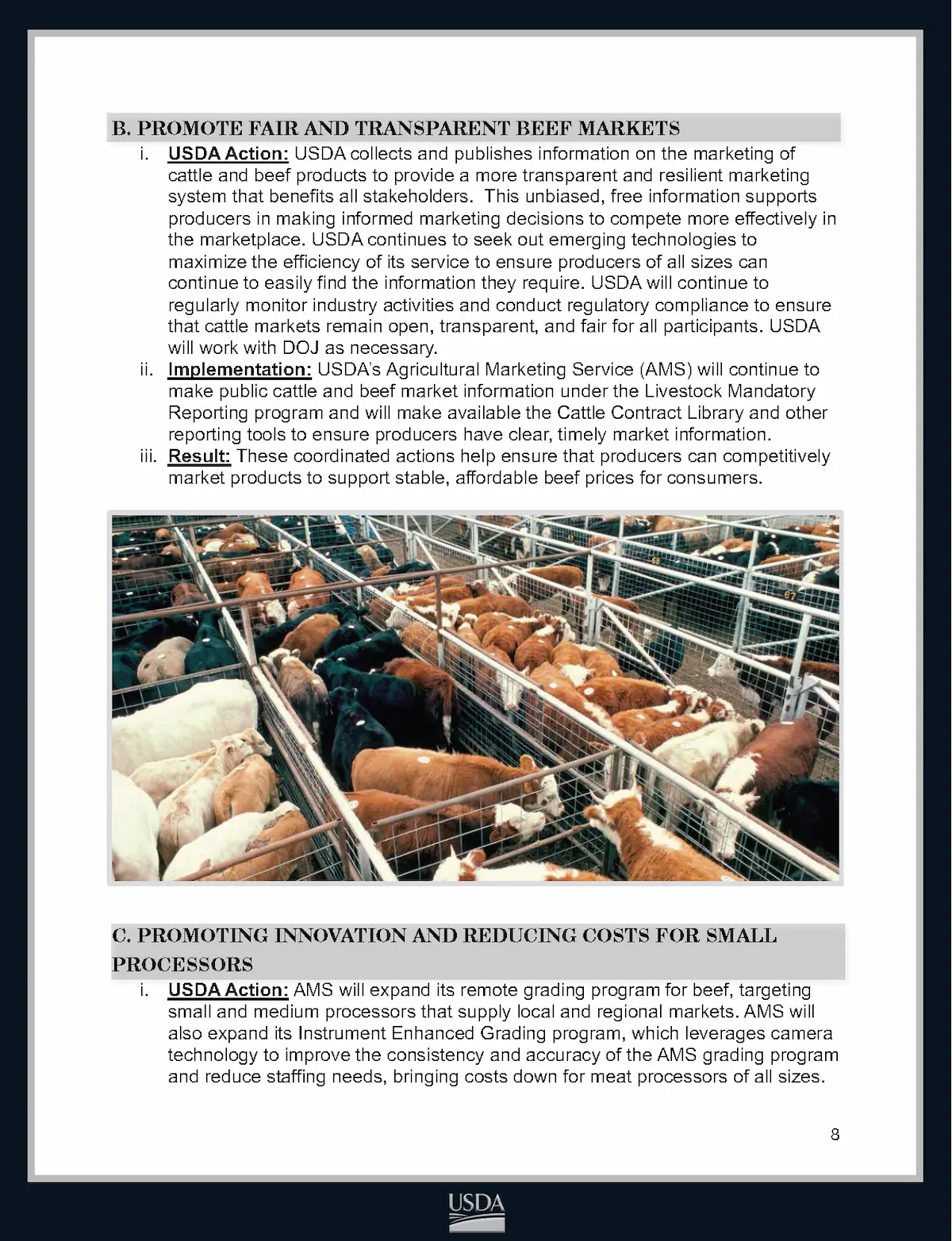
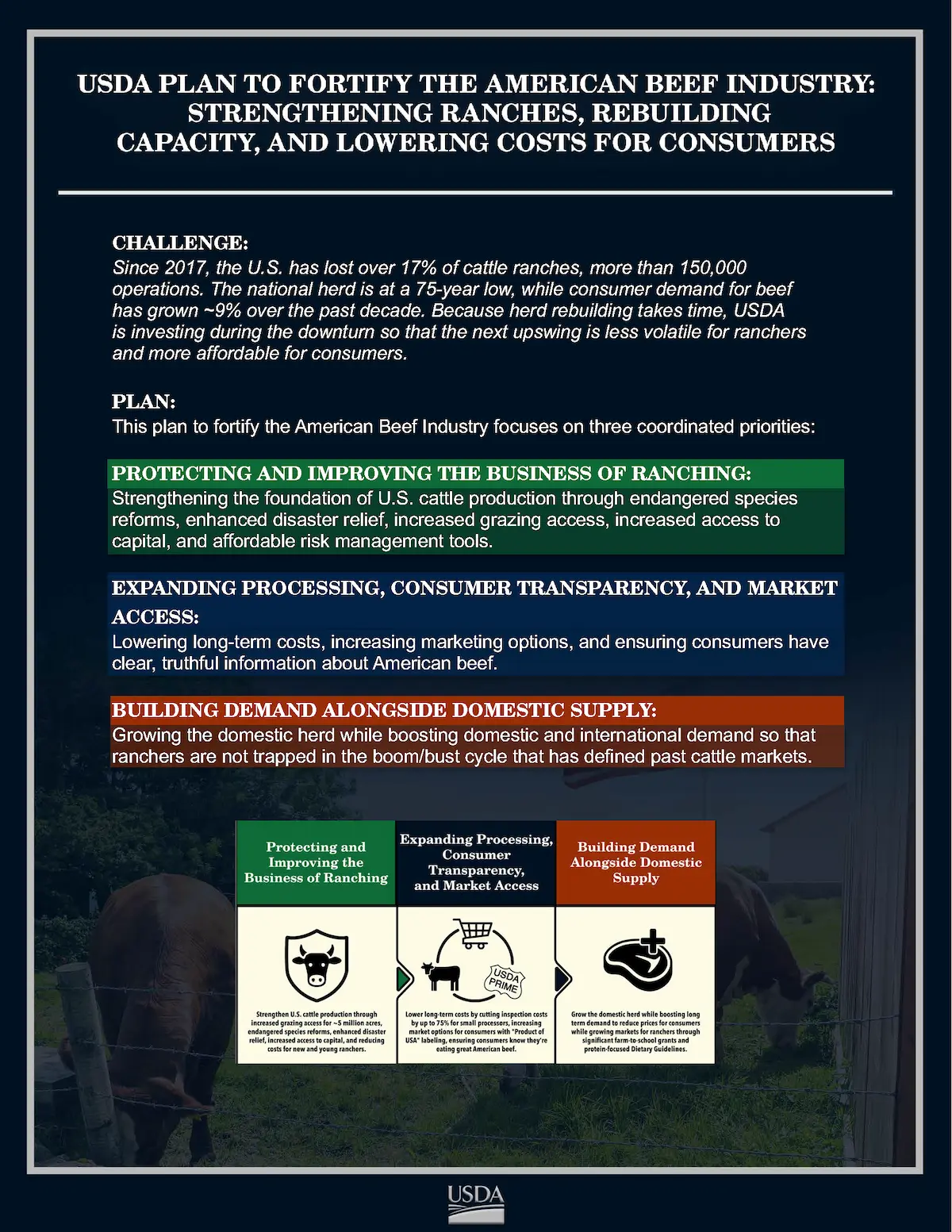
The federal administration is moving the regulatory and investment focus toward strengthening primary production and meat value chains. Key points of the USDA Beef Industry Plan:
- Access to grazing on federal lands (USDA-DOI Grazing Action Plan): inventory and priority reopening of vacant allotments; reduction of permit backlogs; quick routes after drought/fires; “no net loss” of AUMs.
- Risk and disaster mitigation: improvements to LIP/LFP; coverage for depredation and weather events; risk management tools cheaper and extended to beginning/veteran producers.
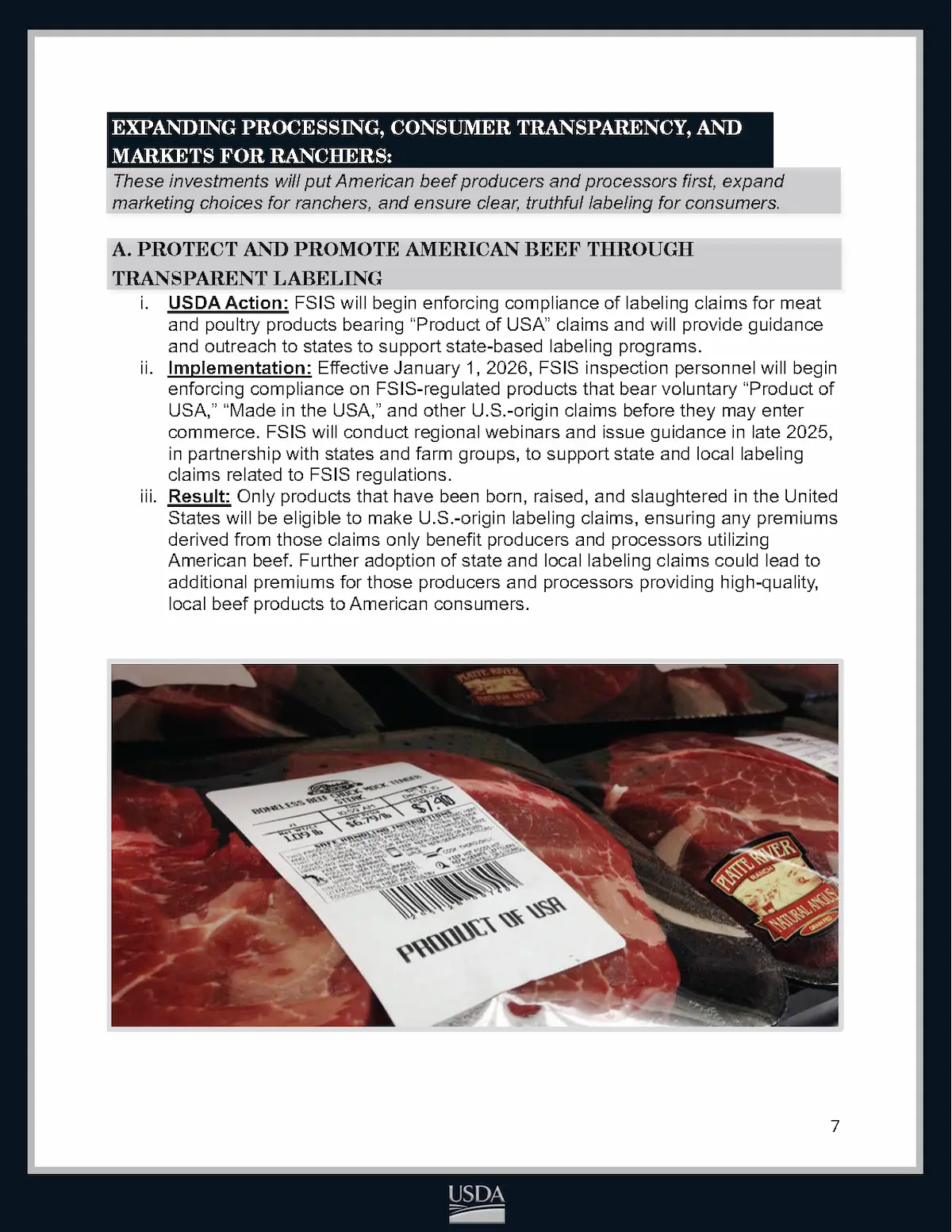
- Slaughter capacity & markets: fourth round of MPPEP (up to $2M per small plant), B&I loan guarantees (up to $25M), reduced after-hours inspection fees for small plants, and “Product of USA” labeling only for U.S. born-bred-farmed cattle starting in 2026.
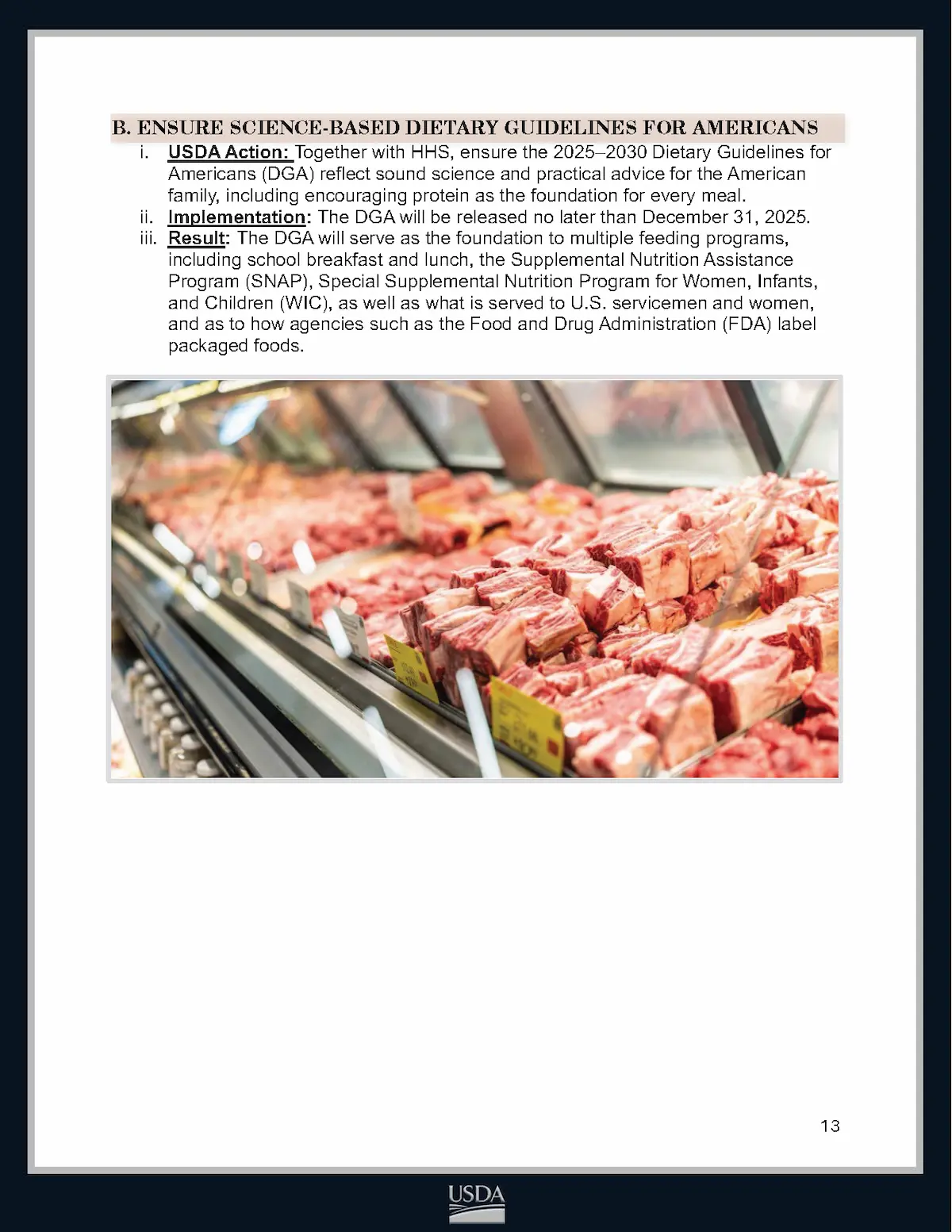
- Domestic demand: public procurement (schools) with more local protein; science-based dietary guidelines 2025-2030 in favor of quality protein.
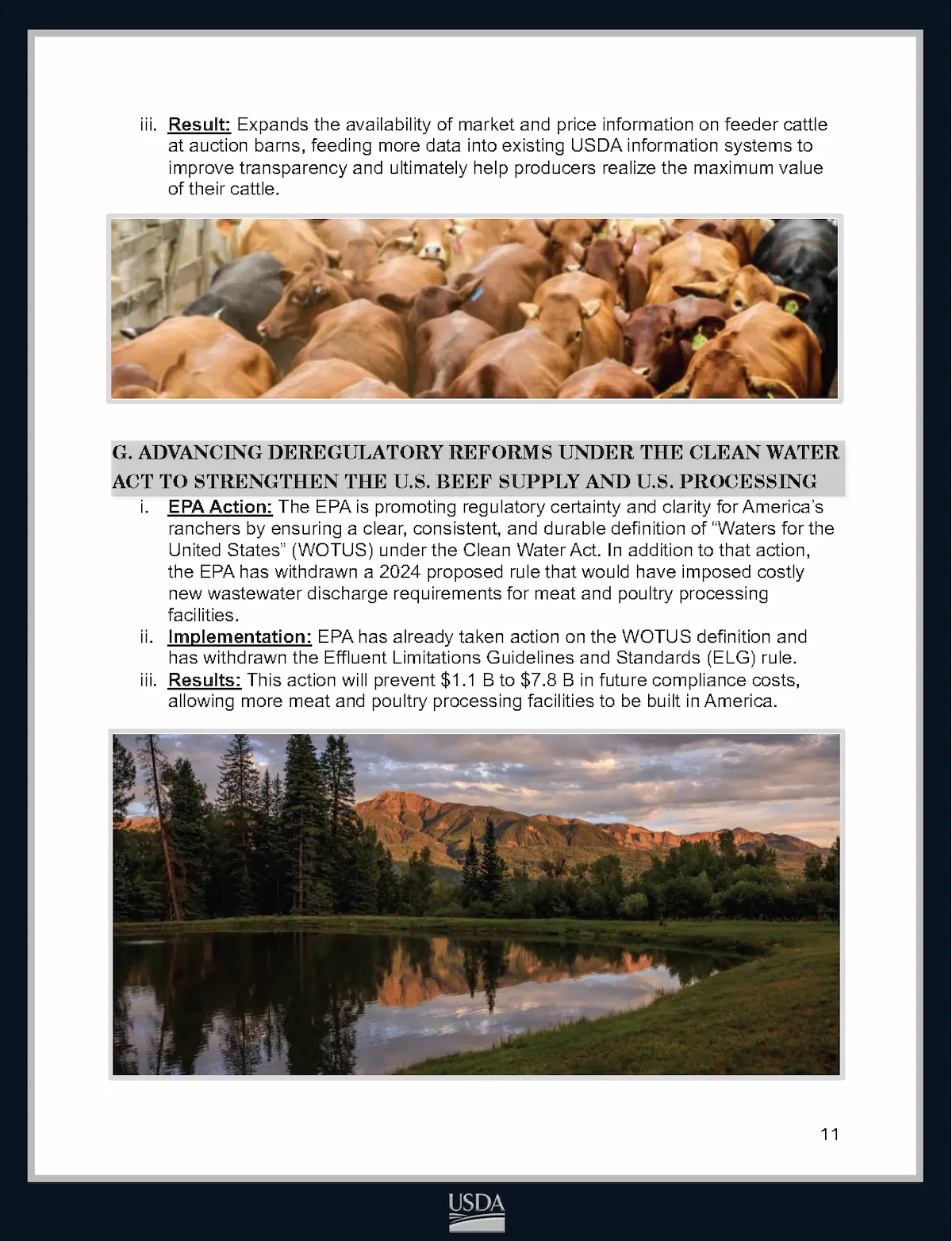
- Regulatory certainty: clarity in WOTUS and removal of costly effluent rules that made new plants more expensive.
These measures lower structural costs, add predictability and prioritize producers in the face of land use change pressures.
Is Wilton Simpson Defending Florida’s Farmers? Land Loss in Miami-Dade Reveals Insufficient Effort
In a state where agriculture generates $169 billion annually and employs 1.9 million people, the question is inevitable: will Wilton Simpson, Florida’s Commissioner of Agriculture since 2022, stand up for farmers in the face of the onslaught of land-devouring development? With more than 1.3 million acres lost since 1997 – 20% of the agricultural total – and Miami-Dade at the epicenter, farmers are crying out for protection.
Simpson, endorsed by Trump in October 2025, has announced spot preservations, but his advocacy seems selective, ignoring the county’s “green lung” -Redland, Homestead, near Everglades-where developers rake in county subsidies.
And behind: local politicians signing nebulous agreements. Here, an analysis with data; at the end, a key point about DOGE.
Land Loss: A Disaster in Miami-DadeFlorida loses ~100,000 agricultural acres per year, with Miami-Dade leading the way: From 200,000 acres in 1997 to 160,000 in 2025, 20% evaporated by urbanization.
In Redland and Homestead-the “green lung”-40,000 acres were converted to development since 2010, driven by fast-track zoning and tax breaks (e.g., 99-year tax-free PILOTs).
Farmers like those in the Redland Agricultural Association (RAA) plead: In March 2025 county hearings, witnesses cried about “losing the soul of Florida” to projects on ag land.
Simpson has ignored this, focusing on northern preservations. Simpson Defends Farmers? Punctual, but Insufficient Efforts
Critics: “Simpson protects north, ignores south” (WLRN, September 2025). wlrn.org
Endorsed by Trump (22/Oct/2025), Simpson promises “victories for farmers,” but local actions contradict. facebook.com
DOGE and Auditors: Keeping a Tight Grip on Developer-Policymaker Relationships
Here’s the key point: DOGE (Department of Government Efficiency) and auditors must keep a sharp eye on county and municipal relationships between developers and public representatives. In Miami-Dade, 99.99% of contracts and agreements have a “foggy coating” – opaque transparency that questions everyone from county residents to the national level.
Why? Because behind quick zoning and 99-year PILOTs (no taxes, devouring agricultural land).
Alarming benefits: Developers get tax breaks that cost the county $50M annually in lost revenue (2024 audit), while farmers pay full taxes and lose land.
DOGE, with its mandate to cut waste ($2T nationally), should audit these ties: How many developer endorsements influence zoning? Independent auditors (like county OIG) revealed in 2024 that 70% of PILOTs lack real scrutiny, benefiting cronies.
For American citizens, this is alarming: A county that loses 40,000 agricultural acres subsidizes those who destroy it, eroding food sovereignty. DOGE must go in with tongs: Disclose hidden donations, cancel abusive PILOTs and prioritize preservation – or Florida will turn to concrete!
Farmland farmers cry out for justice; Simpson and county must listen. Real defense or more haze? The people decide.
State level (Florida): what changes with Live Local Act
The Live Local Act reshapes the housing dashboard with tax incentives and, most importantly, a land use mandate for projects with ≥40 % affordable units (up to 120 % AMI) for 30 years in commercial, industrial or mixed-use zones. Key points:
- Land use mandate: mandates allowing multi-family/mixed-use in commercial/industrial/mixed-use zones with maximum parameters for density, height, FAR (per jurisdiction’s highest caps) and administrative approval if project meets rules, plus parking reductions in transportation environments. FHC-Overview-of-the-Live-Local-…
- Tax exemptions:
- “Missing Middle“: ad valorem exemption for units 80-120 % AMI (up to 75 %) and ≤80 % AMI (100 %); local opt-out option available under conditions. FHC-Overview-of-the-Live-Local-…
- 99-year affordability for FHFC-financed properties (100% affordable portion waiver, applicable to roll 2026). FHC-Overview-of-the-Live-Local-…
- Preemptions and limits: the mandate prevails over zoning changes, exceptions and local moratoriums (except in limited cases) and requires annual reports starting in 2026. Also sets exceptions (Everglades Protection Area, proximity to airports, etc.). FHC-Overview-of-the-Live-Local-…
- Public land: strengthen the inventory of “appropriate” public land for affordable housing and best practices (long-term leases, clear criteria, transparency). FHC-Overview-of-the-Live-Local-…
Key note for agribusiness: the Live Local mandate does not apply directly to agriculturally zoned land. But by relaxing height/density in commercial/industrial and lowering costs with tax breaks, it shifts demand to those corridors-and, at the same time, creates political pressure to rezone agricultural land when “easy” urban pockets dry up. That’s the friction zone in Miami-Dade.
County level (Miami-Dade): UDB, Redland/Homestead and the red line.
- UDB (Urban Development Boundary): is the barrier that separates the developable from the agricultural/environmental belt. In 2024-2025, the courts stopped relevant expansions, reminding that timing and form matter.
- Live Local effect in the county: within the developable perimeter, commercial/industrial corridors are now more “elastic” for affordable housing (height/density/FAR/mandated parking). Outside the UDB, any attempt to reclassify agricultural land remains highly controversial and under legal/technical magnifying glass.
Two comparative scenarios with “large developer”.
Within the UDB (now commercial/industrial parcel)
- With Live Local: if project reserves ≥40% affordable (up to 120% AMI, 30 years), can avoid zoning changes and get administrative approval with more favorable density/height/FAR caps and less parking near transit. Result: more viable than before and with potential tax breaks. FHC-Overview-of-the-Live-Local-…
- Agricultural impact: no directimpact(does not touch agricultural zoning).
- Indirect: by channeling investment to these axes, it reduces the pretext to go on rural land… provided that the municipalities offer a sufficient portfolio of infill sites.
Outside the UDB ( agricultural parcel in Redland/Krome/Homestead/WestKendall)
- Live Local does not “authorize” multifamily on agricultural land; would require reclassification (high scrutiny).
- Proof of need/alternatives: before touching agribusiness, the developer should show why it cannot meet goals in: public inventory, brownfields, commercial corridors with Live Local, TOD, etc.
- Risks: neighborhood protest, environmental/hydrological reports, drainage, urban heat, connectivity to services and, above all, precedent that erodes the agricultural belt.
Miami-Dade: sustained pressure on agricultural land and the UDB
What is happening right now
In parallel to the “affordable housing” discourse, multiple developers continue to propose residential complexes outside or bordering the Urban Development Boundary (UDB), i.e., on now agricultural or rural fringe strips:
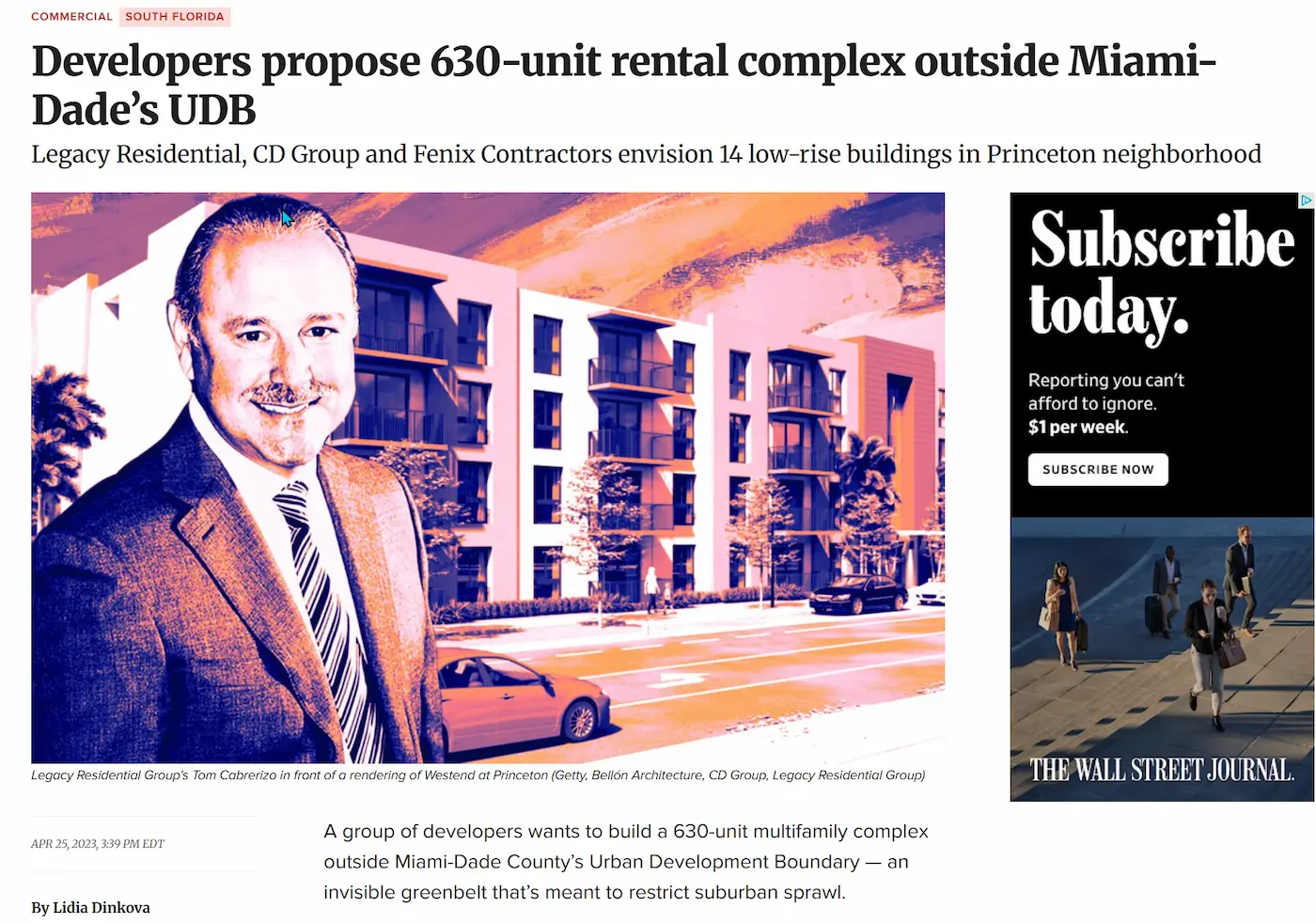
- Legacy Residential / CD Group / Fenix: propose 630 units in Princeton outside the UDB (14 low-rise buildings).
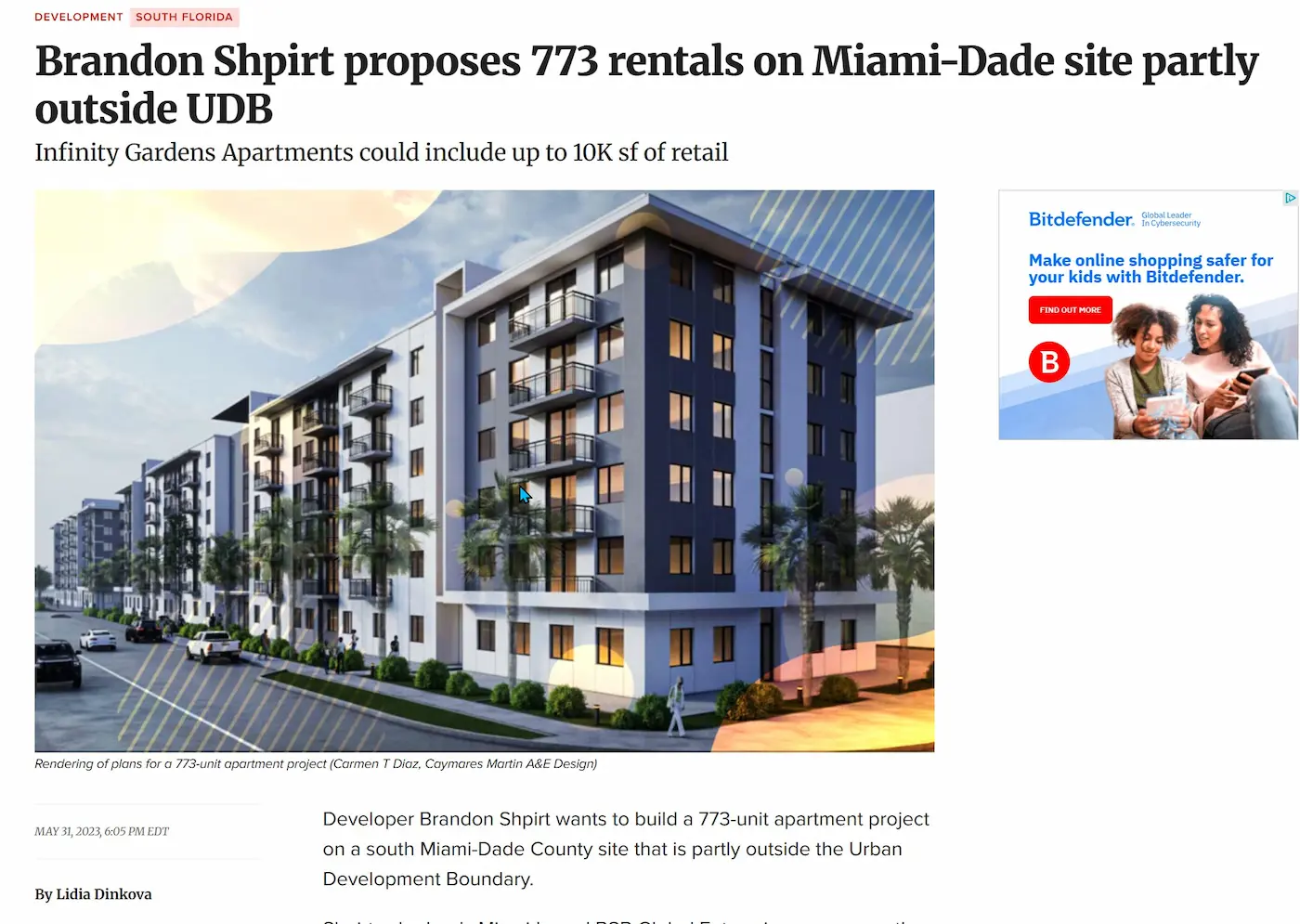
- Brandon Shpirt: offers 773 rentals in a property partially outside the UDB (Infinity Gardens Apartments).
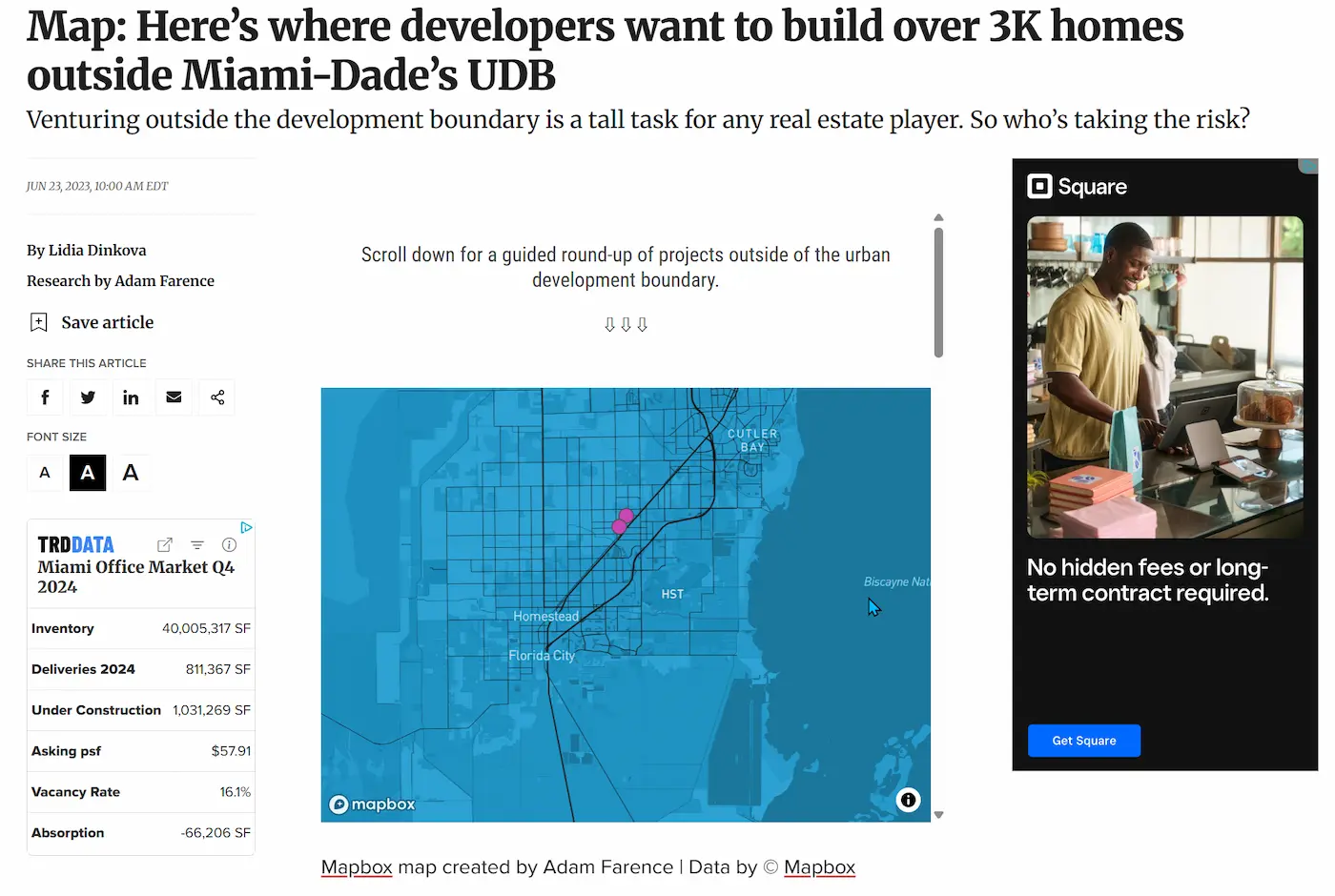
- TRD map (Jun 2023): inventory of >3,000 projected housing units outside the UDB in south county.
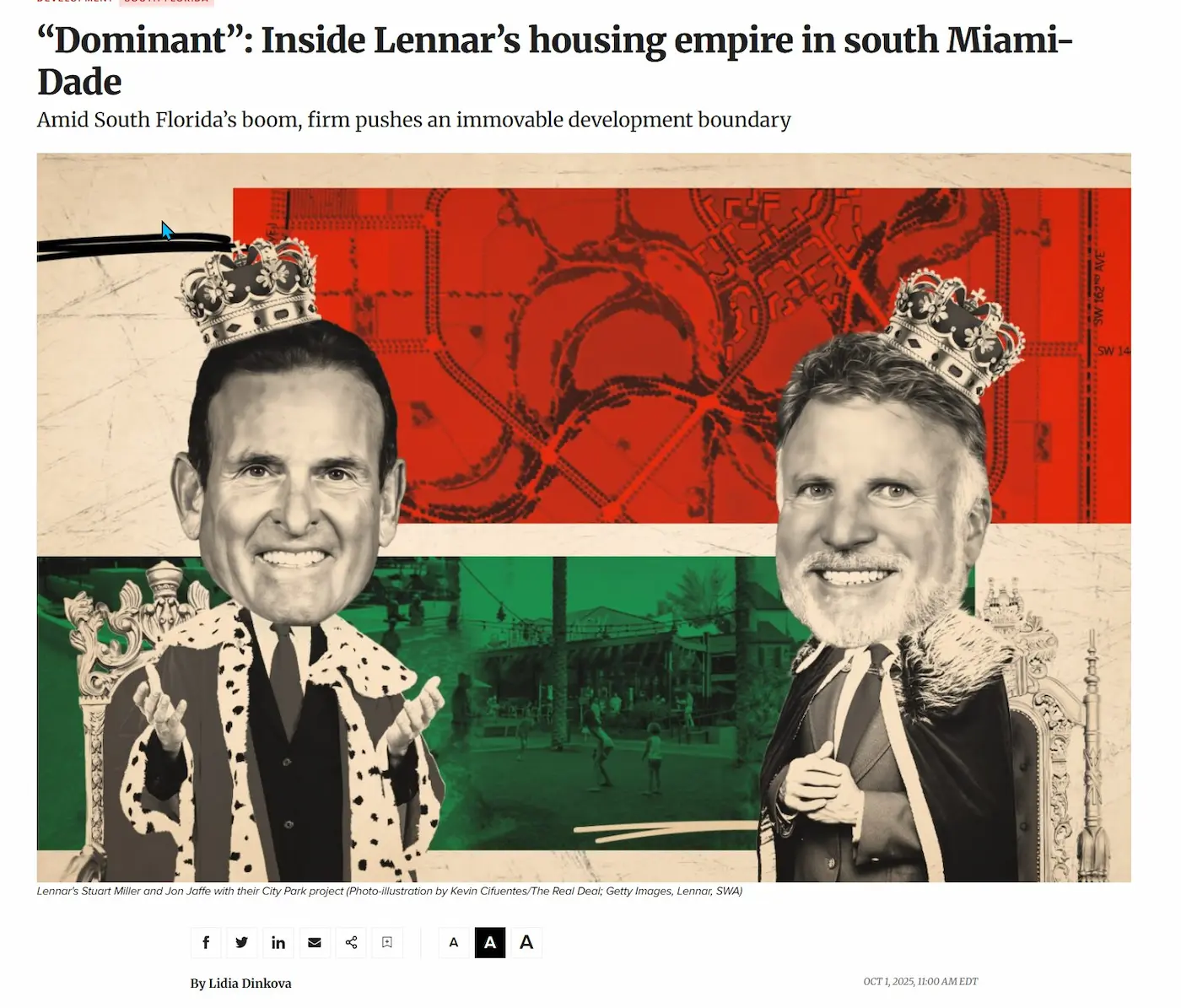
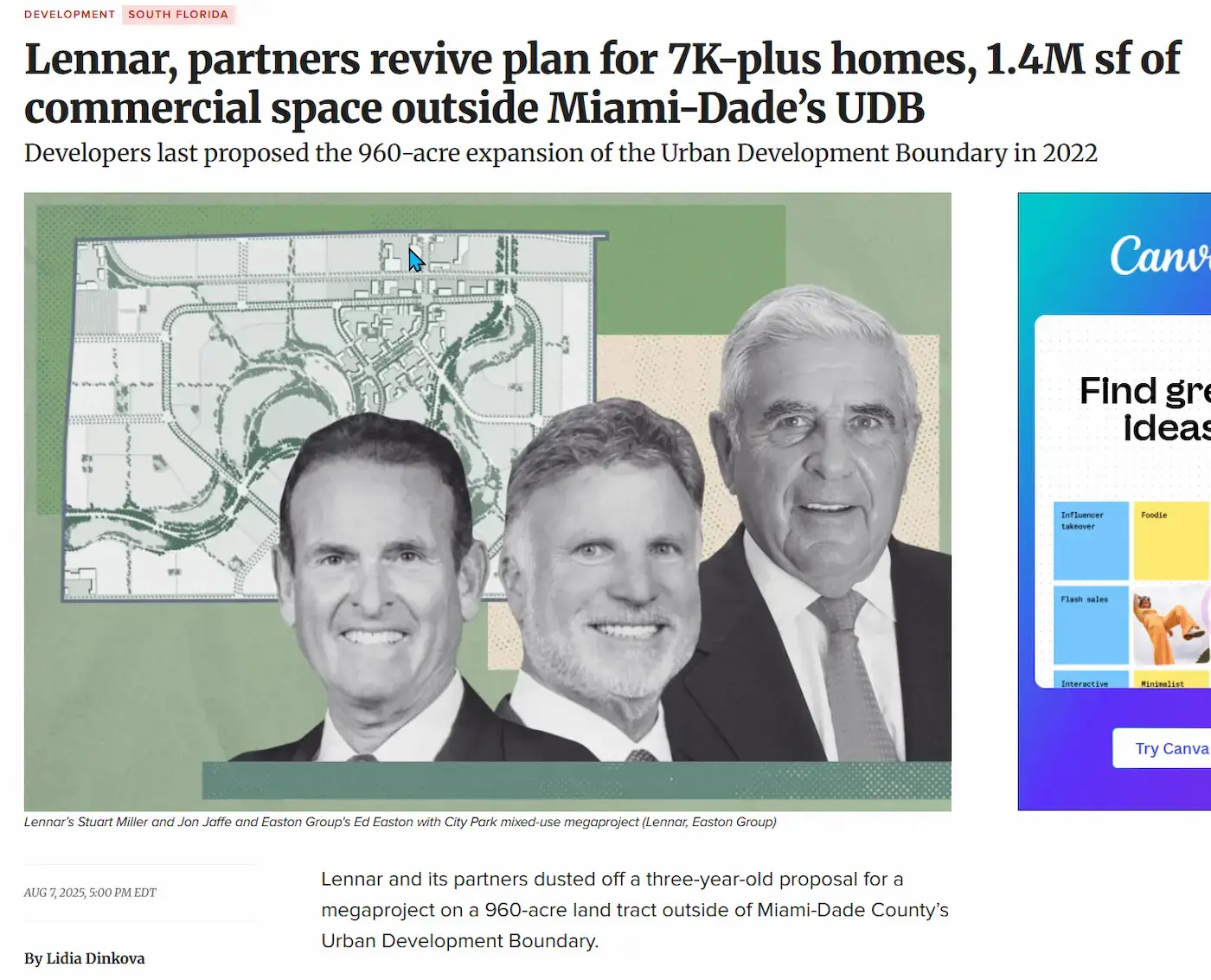
- Lennar + partners (City Park): revive in 2025 a ~960 acre megaproject outside the UDB (7,000+ homes and 1.4 M ft² commercial).
(All of these cases appear in recent notes from The Real Deal that you already have captured).
Why it matters
Each “exception” or advancement of the urban perimeter erodes three things at once: (1) agricultural capacity and environmental buffering (Redland/Homestead); (2) infrastructure – more traffic, more water/drainage network to finance; and (3) regulatory signals: if the UDB becomes porous, the market anticipates that the edge will move and speculation on farms rises.

The legal framework NOT to be ignored
- Miami-Dade CDMP / UDB: the UDB cannot move without meeting strict criteria (demonstrated need, infrastructure capacity, environmental mitigation, and public process with supermajority on the Commission; also, the courts already struck down expansions for procedural flaws in 2024-2025).
- Florida – Live Local Act (2023-2025): although it facilitates certain densities/heights for housing with affordable components, it does not repeal the Miami-Dade UDB or mandate development of agricultural land; the application must be compatible with the existing local plan and services.
- Agricultural protections: conservation easement programs (RFLPP/FDACS), Agricultural Zoning (AU) designations and Hold the Line policies are valid barriers to maintaining the rural belt.
- County (Mayor’s Office/Commission/IGO): Are these files being processed as CDMP/UDB amendments (with all their evidentiary standard) or as discrete variants that fragment the analysis? Where is the comparative study of “infill first” (public land, underutilized parking lots, TOD axes) vs. agricultural land?
- State – FDACS (Wilton Simpson): What conservation easements are being negotiated in Redland/Homestead to tie up (permanently) strategic farms? What is the 2025-2026 plan specific to Miami-Dade?
- DOGE (efficiency audit): How much “housing” outside the UDB is propped up by local tax incentives (PILOTs, CRA, fee waivers)? What is the traceability between political donations and votes on changes of use?
Red line for 2025-2026
- UDB inviolable except for “hard-hard” test: necessity, capacity and mitigation, with judicial review if necessary.
- Infill + TOD first: if urban alternatives are not exhausted, there is no case for touching agricultural land.
- Accelerated conservation in the South: RFLPP/FDACS easements prioritized in Redland/Krome/Homestead to cool speculation.
- Full transparency: publish site matrices, costs, networks and timelines prior to any vote; and enhanced lobbying/donor disclosure.
The projects cited above prove that the pressure on agriculture has not stopped; it just changes form and narrative.
Who protects the Miami-Dade countryside? The answer – whether the county, the state (Wilson) and DOGE
It will be seen in public filings, audits and, above all, in whether the UDB is maintained as a regulatory wall and not as a suggestion.
Lennar’s Miami-Dade Off-Broadway Affordable Housing (UDB) Project
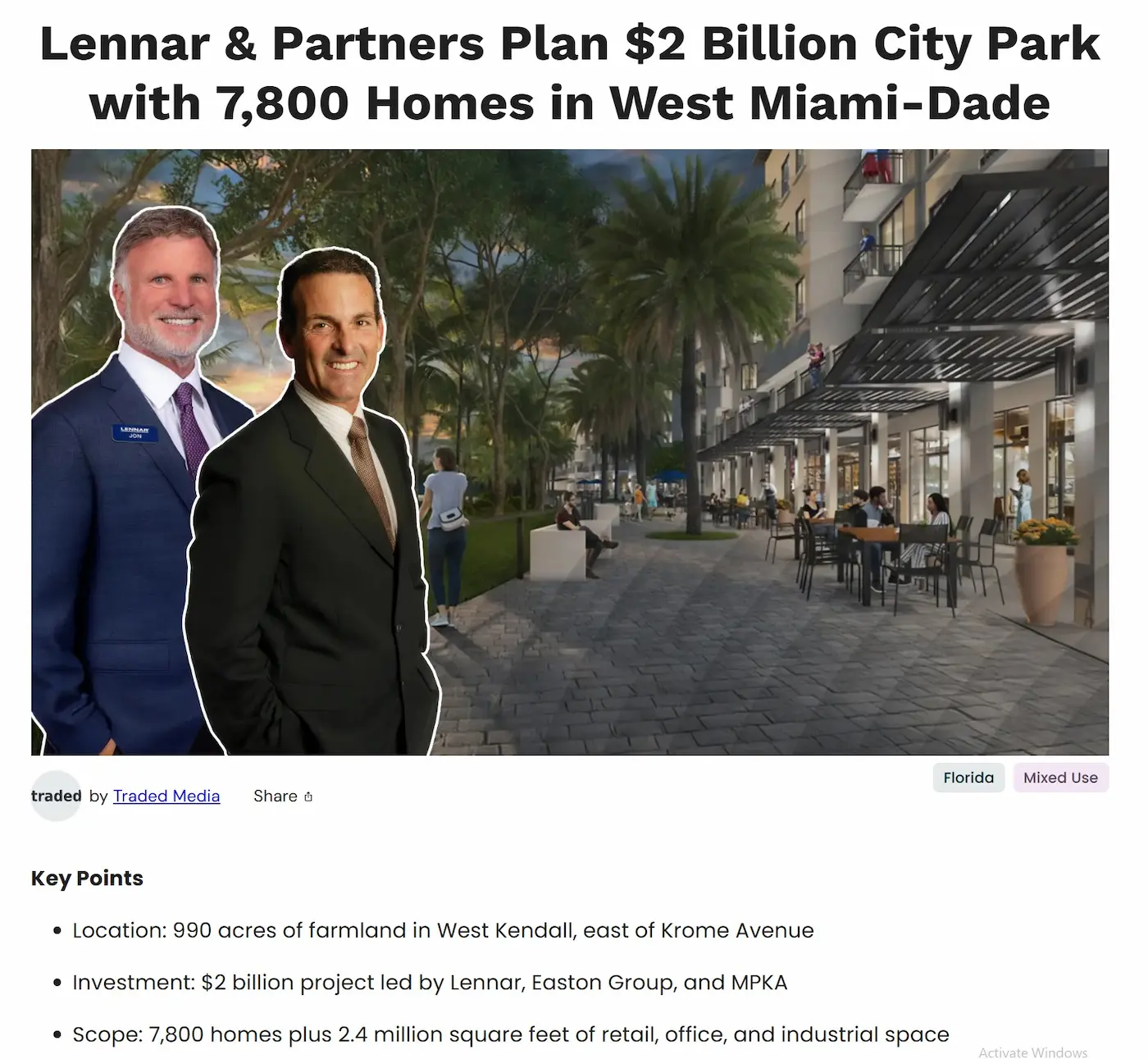
The project is City Park at West Kendall, a massive proposal by Lennar Corporation for a $2 billion mixed-use development on 990 acres (originally 960 acres) in southwest Miami-Dade, just outside the Urban Development Boundary (UDB).
Announced in August 2025 and formalized in October, it includes 7,800 units of housing (with an emphasis on affordable for teachers, police officers and low-income families), 1.4 million square feet of retail, 500,000 square feet of medical/professional offices, parks and public transportation.
It requires expanding the UDB, which generates controversy for converting agricultural land to urban, threatening the “green lung” of Redland/Homestead (near Everglades).
Lennar sells it as a sustainable “15-minute city,” but critics see it as urban sprawl that devours farmland.
Key Project Details
- Location: West Kendall, between SW 184th St and SW 344th St, parallel to Krome Ave (rural land, zoned RU-1/RU-1Z, suitable for agriculture).
- Components: 7,800 homes (40% affordable, ~3,120 units at ≤$300K), retail, offices, schools, hospitals and parks (20% open space). Includes BRT connection and renewable energy.
- Cost and Financing: $2B total; Lennar invests $1.5B, county/state grants via PILOTs (99 year tax exemptions). Approval pending at BCC (November 2025).
- Impact: Would generate 10,000 jobs, but would lose 960 agricultural acres (part of 40K lost in Miami-Dade since 2010).
- Supports Live Local Act (affordable housing), but violates UDB to preserve rural.
- Current Status: Application filed October 2025; public hearing November. Lennar argues “urgent need” for affordability crisis (94% residents cannot afford median $415K).
Relevant Articles and Information (October 2025)
- Political Cortadito (16/Oct/2025): “Lennar pitches 7,800 homes on 960 acres; monster ‘City Park’ project crosses UDB”. Details proposal as “megaproject” that expands UDB, with 40% affordable but risk of overburdening Redland. Critics: “Devours farmland for townhomes”. Link.
- South Florida Business Journal (6/Oct/2025): “Lennar proposes $2 billion community with 7,800 homes”. Covers filing for UDB expansion, emphasis on affordable (3,120 units), but warns of environmental impact on Everglades. Lennar: “Solution to housing crisis”. Link.
- The Real Deal (7/Aug/2025, updated Oct): “Lennar, Partners Revive City Park Megaproject Outside UDB”. Post-2024 revival story, with 7,800 homes and $2B investment. Controversy: RAA protests “loss of agribusiness”. Link.
- Political Cortadito (8/Oct/2025): “Miami-Dade: Lennar more homes rural South Dade Rodan”. Related project: 138 homes on 20 rural acres (outside UDB), with 50% affordable. Linked to City Park as “expansion”. Link.
- Florida YIMBY (7/Oct/2025): “City Park at West Kendall Files Application for $2 Billion, 990-Acre ’15-Minute City’ Development”. Details 1.4M sq ft retail, 500K offices; 40% affordable. Critical: Water/energy overload. Link.
Controversies and Context
- UDB Expansion: Requires BCC approval to move border, violating Comprehensive Plan (preserve rural). RAA and Everglades Foundation protest: “Devouring 40K acres since 2010, threatening water for 8M residents”.
- Affordability vs. Reality: Lennar promises 40% affordability, but past projects (e.g., Rodan in South Dade) raised prices 20% post-construction. Benefits: PILOTs exempt taxes 99 years, costing $50M per year.
- Political Connections: Lennar donated $10M to local 2020-2025 politicians (OpenSecrets), including commissioners like Bermudez (R) and Higgins (D). Simpson (Ag Commissioner) does not intervene, despite Farm Bill 2025.
This project is the largest outside UDB, symbolizing the affordable crisis vs. preservation.
Quick guide to decide without eroding agribusiness (applicable to Miami-Dade)
- Sequence of sites: first infill and public land; then brownfields; last: agricultural land with equivalent mitigation. FHC-Overview-of-the-Live-Local-…
- Comparative matrix (each proposal): acquisition cost, infrastructure, TOD, schedule, legal risks, utilities (water/sewer), drainage. FHC-Overview-of-the-Live-Local-…
- ClearLive Local criteria on the web (use, density, height, FAR, parking, approval). Annual reports from 2026. FHC-Overview-of-the-Live-Local-…
- Tax exemptions: use wisely; measure cumulative fiscal impact (city/county) vs. actual returns in affordability. FHC-Overview-of-the-Live-Local-…
- Agricultural compatibility: if agriculture is involved, justify why there is no alternative and provide for compensatory preservation/easements.
Warning signs for 2026 (what we should watch for)
- “Shortcuts” to rezoning on agricultural parcels invoking housing goals when there is still infill capacity under Live Local. FHC-Overview-of-the-Live-Local-…
- Side effect of exemptions: projects that reduce tax burden without delivering affordability durability or integrating TOD/services. FHC-Overview-of-the-Live-Local-…
- Misalignment between local (mandatory) annual reports and what is actually approved/denied on sensitive soil. FHC-Overview-of-the-Live-Local-…
Live Local boosts affordable housing in commercial/industrial fabrics; used well, it lowers pressure on agriculture. Misused-or when farm rezoning is forced-it accelerates the loss of agricultural land. FHC-Overview-of-the-Live-Local-…
- In Miami-Dade, the UDB perimeter and the Redland/Homestead belt remain the red line. If the county sorts out its infill portfolio with Live Local tools and applies stringent technical criteria, it can meet housing goals without mortgaging its agricultural base.
📰 Stay informed with the latest news!
Would you like to receive more information like this right on your screen? 🌟 Visit our homepage and find out everything that’s happening in South Florida: local news, events, weather, sports and much more.
👉 Click here! newsmiamidade.com/en
Don’t miss a single detail. #MiamiDade #News #Florida #florida #farmland #UDB #AffordableHousing