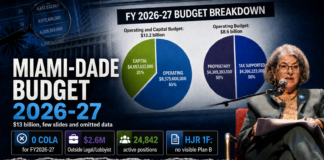

Crisis in Elections 2025? Alina García and the growing distrust in Miami-Dade: when presiding over elections means chaos, disorganization and lack of accountability.
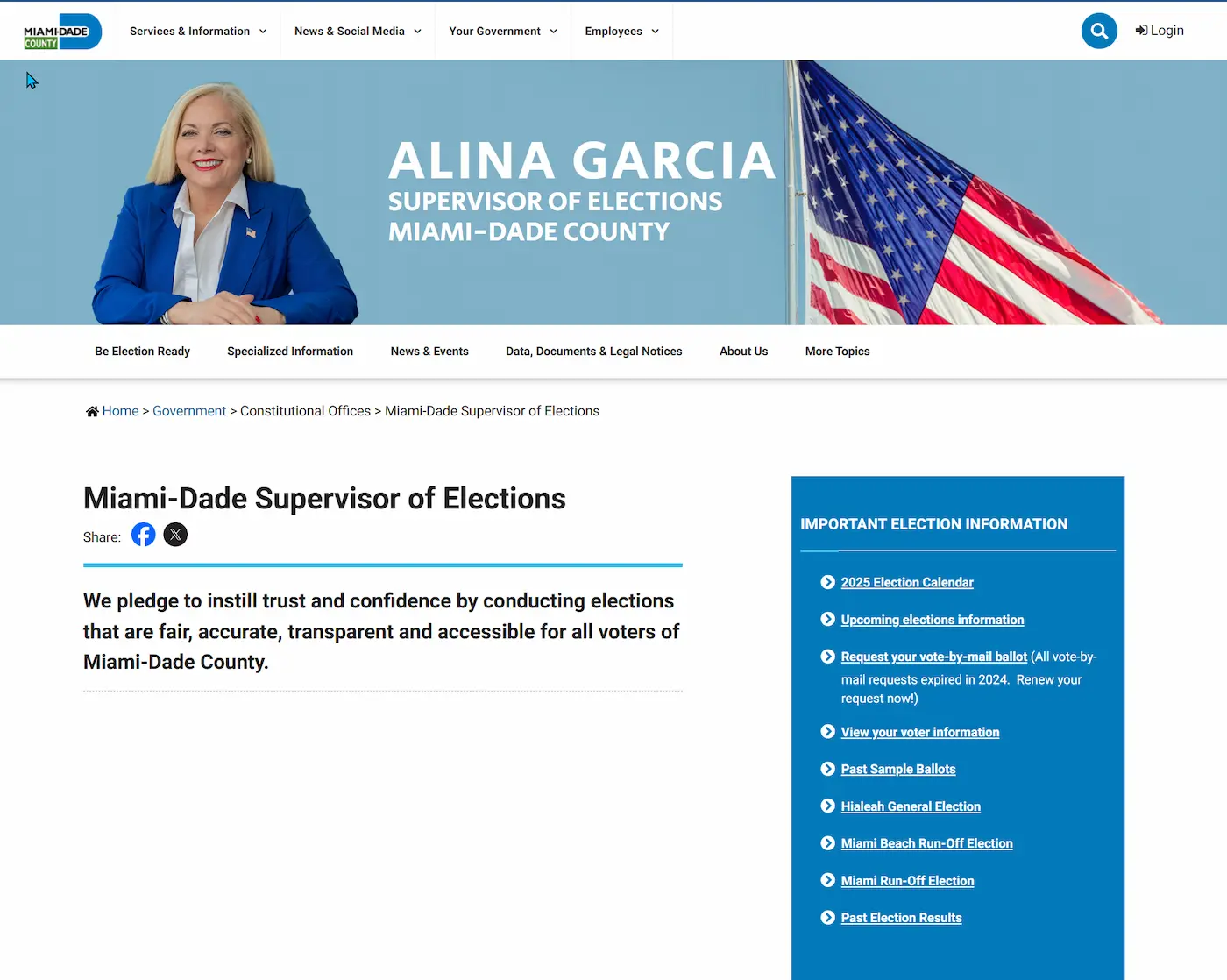
Miami, December 2025 – In a year marked by a busy election cycle in Miami-Dade – including municipal elections on Nov. 4 in cities such as Miami, Hialeah, Miami Beach, Homestead, Surfside and Marathon, with turnout reaching 49% in some cases cbsnews.com and a Miami mayoral runoff scheduled for December 9 en.wikipedia.org many voters and activists question the effectiveness of the electoral system under the supervision of Alina Garcia, who took over as the first voter-elected Supervisor of Elections in 66 years on January 7, 2025.
A 2025 of elections… and of controversies

The calendar included key positions such as mayorships, commissions and local referendums miamidade.gov
However, allegations of irregularities, misinformation and poor organization have marred the process.
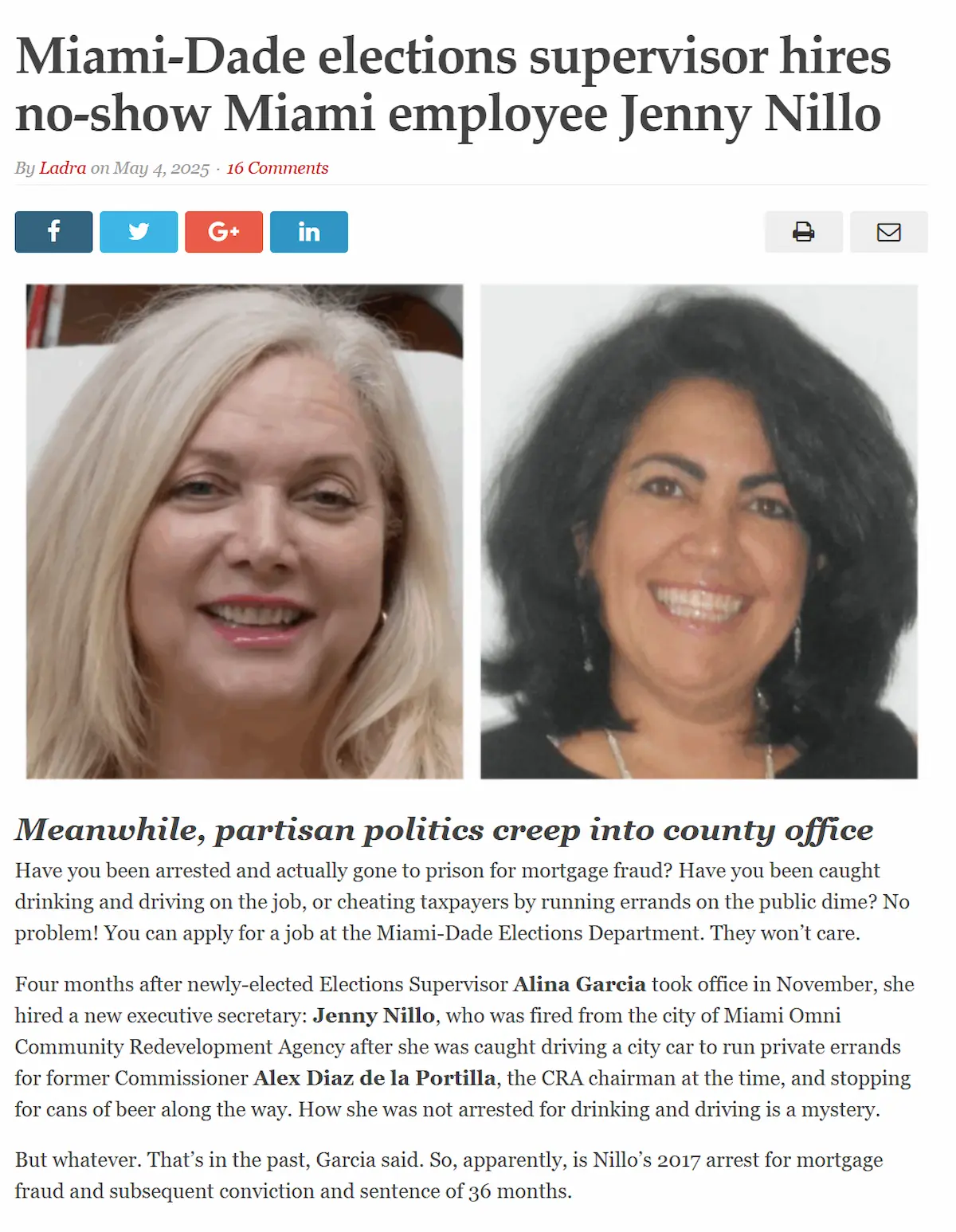
The Department of Elections, led by Garcia, has faced criticism for voter roll purges that disproportionately affected Democrats and nonpartisan voters – more than 100,000 removed in July, accused of Republican favoritism miamitimesonline.com and for hiring controversial staff, such as Jenny Nillo, a former Miami staffer involved in a “no-show” scandal in 2021 politicalcortadito.com.
Some recurring complaints include:
Lack of public information and clarity in procedures:
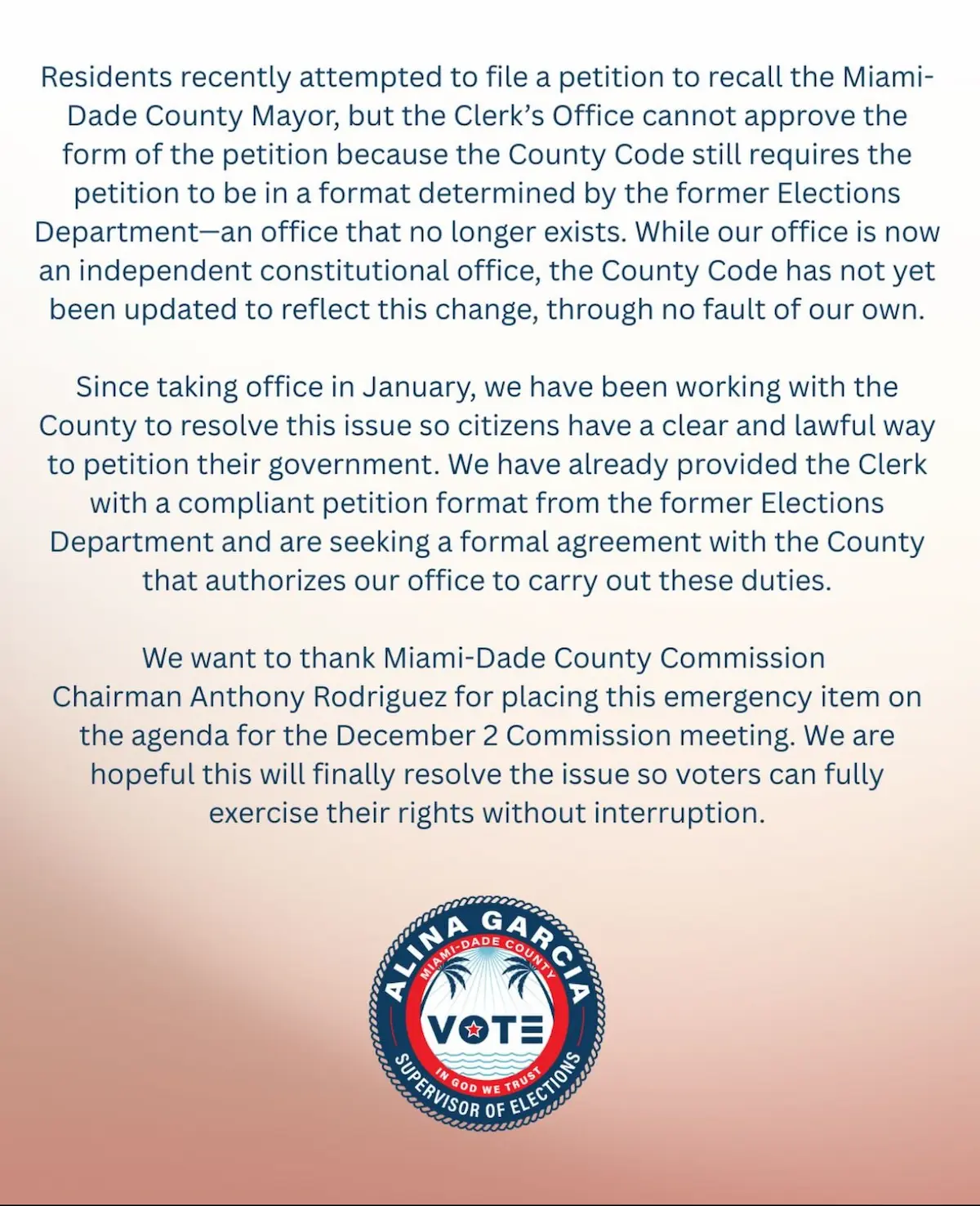
Voters report difficulties accessing data on polling places, requirements and mechanisms such as recalls. For example, in December, residents attempted a recall against Mayor Daniella Levine Cava, but the petition form was not approved due to an outdated county code, despite the department’s transition to an independent constitutional office in 2025 @NewsMiamiDade. Garcia admitted the problem but blamed the failure to update the code, without resolving it in a timely manner.
Poor management of personnel and resources:
Overcrowded lines, delays in requests and poor coordination. The hiring of Nillo as executive secretary in May raised questions about partisan nepotism politicalcortadito.com.
Sense of institutional impunity:
Complaints of irregularities – such as problems with ballots or oversight – do not receive clear answers. In 2025, the use of tools such as EagleAI to purge voter rolls was criticized for possible bias nbcnews.com, and a video of Garcia harassing an opponent during the 2024 campaign resurfaced, calling into question his impartiality floridapolitics.com
Recent cases highlighting underlying problems
In addition to municipal elections, controversies such as Miami’s attempt to postpone its elections from 2025 to 2026 – declared unconstitutional by judges in July and August, following lawsuits for violation of the local magna carta magna theguardian.com – highlight systemic failures. Although not directly attributable to the department, they involve electoral oversight and activated voter protection hotlines to report irregularities miamisao.com miamisao.com
Reports include:
Logistical problems at polling centers:
International voting chaos: only two ballot boxes for hundreds of Hondurans in Miami
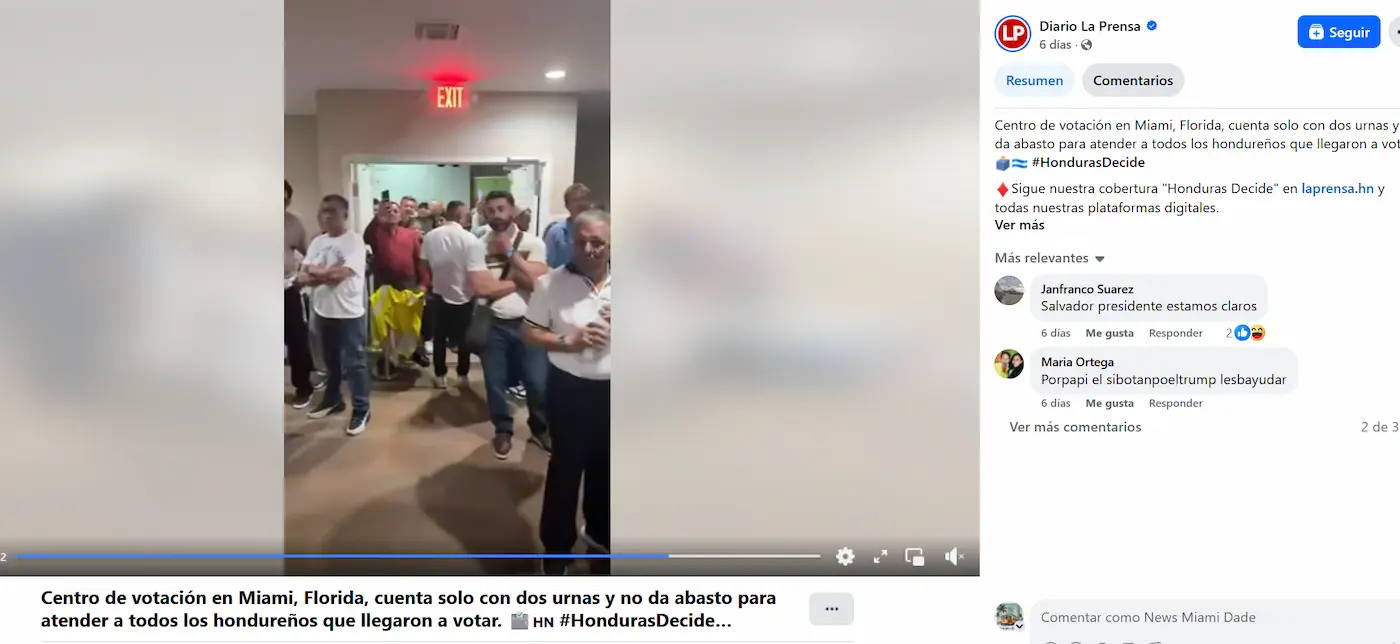
During the election day organized by the Honduran community in Miami, a voting center set up in the city had only two electronic ballot boxes, which was completely insufficient for the large number of citizens who came to exercise their right to vote from abroad.
Images shared by voters show long lines, disorganization and widespread discontent at what many described as a “total lack of foresight” on the part of the organizing and local authorities.
“Where is the respect for our voice as Hondurans abroad?” commented an indignant voter.
This fact, beyond reflecting a technical failure, evidences the little attention given to foreign voting in Miami-Dade, and puts back on the table the uncomfortable question:
Is the local electoral system prepared to facilitate and protect all democratic processes that take place under its jurisdiction?
Alina García, as the person most responsible for the institutional health of the county’s electoral system, has the duty to guarantee order, logistical support and fairness in all the processes carried out in her territory, including international voting that affects thousands of foreign residents who pay taxes and live in Miami-Dade.
Failures in official communication:
Bureaucracy holding back the will of the people: the case of the blocked “recall
One of the most shameful cases of citizen participation in 2025 has been the attempt to activate a recall process against the mayor of Miami-Dade, Daniella Levine Cava. The action, formally promoted by the team of communicator and activist Alexander Otaola, has faced a wall of administrative obstacles that exposes serious institutional flaws.
Although the citizen recall process is guaranteed by law, the county Elections Department, headed by Alina Garcia, and the County Clerk’s Office, headed by Juan Fernandez-Barquin, proved to be unprepared to process such a fundamental citizen petition.
According to Otaola’s own team, they had to appear multiple times before both offices to understand why the recall request was rejected without a clear and official reason. Finally, they were told that the County Code still required petitions to follow a format determined by the former Department of Elections – an entity that no longer exists since the January 2025 governmental restructuring.
“We ran into a legal vacuum created by sheer negligence. They knew since January that this transition was coming, but they did not update either the code or the internal processes to allow the people to exercise their right to remove an official,” stated one of the coordinators of the Recall Cava committee.
Even the official statement from Alina Garcia’s office acknowledges the institutional failure, claiming that “the County Code has not been updated to reflect that the Department of Elections is now an independent office,” and that the delay is not their fault. However, 11 months have passed since that change, and the citizenry still has no real access to political accountability mechanisms.
Inefficiency or blocking strategy?
While “legal formalities” are being resolved, the clock is ticking against citizens seeking to exercise their constitutional right to recall authorities. The Recall Cava committee, promoted by Otaola, needs to gather more than 61,000 valid signatures, but they have not even been authorized to begin the process due to this “administrative loophole”.
The case illustrates a key question:
Are we facing a simple technical negligence, or an institutional apparatus that protects itself from any citizen control mechanism?
Key points of the scandal:
Meanwhile, the people have been denied their basic right to begin a democratic recall process.
Since January 2025, the new department led by Alina Garcia knew that the County Code needed to be updated, but it was not done.
Otaola’s team had to insist multiple times to obtain clarity.
It was not until an emergency intervention at the County Commission (December 2) that public discussion of the issue was activated.
Be Alert, Be Well Informed
What happens in your city, county, state and nation affects you more than you think. Don’t sit on the sidelines. From political decisions to construction projects, from changes in the law to issues that impact the environment or your pocketbook, it’s vital to be in the know.
Follow us on newsmiamidade.com
and find out what’s really going on. No filters. No spin. Just the facts that matter to you and your community.