
When voices in Miami-Dade are not heard: Shocking silence – microphone shutdown to neighbors in 2025 – Circle of Brotherhood
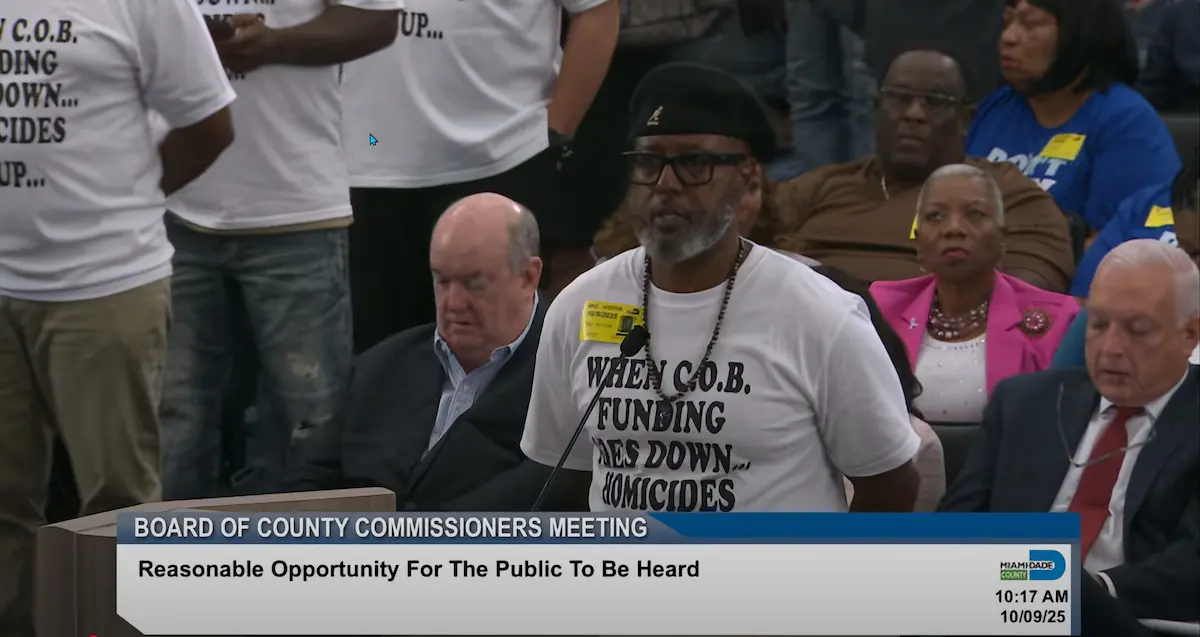
At the 9/10/2025 session, neighbors and Circle of Brotherhood attempted to speak. The Chair opened “reasonable opportunity,” but Commissioner Gilbert and Hardemon marked the court to cut off interventions as “not on agenda,” and the climate turned to exclusion.

Agenda of the day
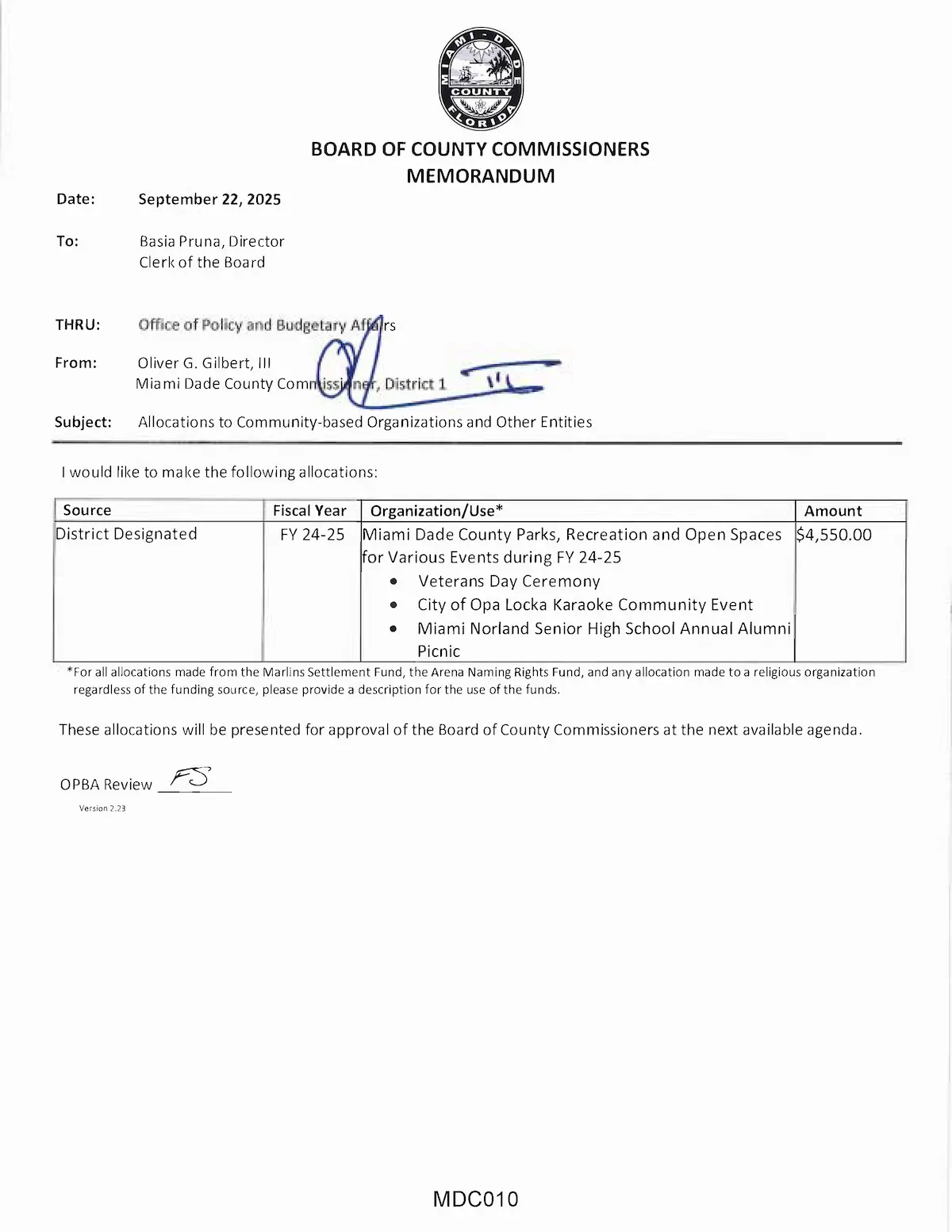
3A7
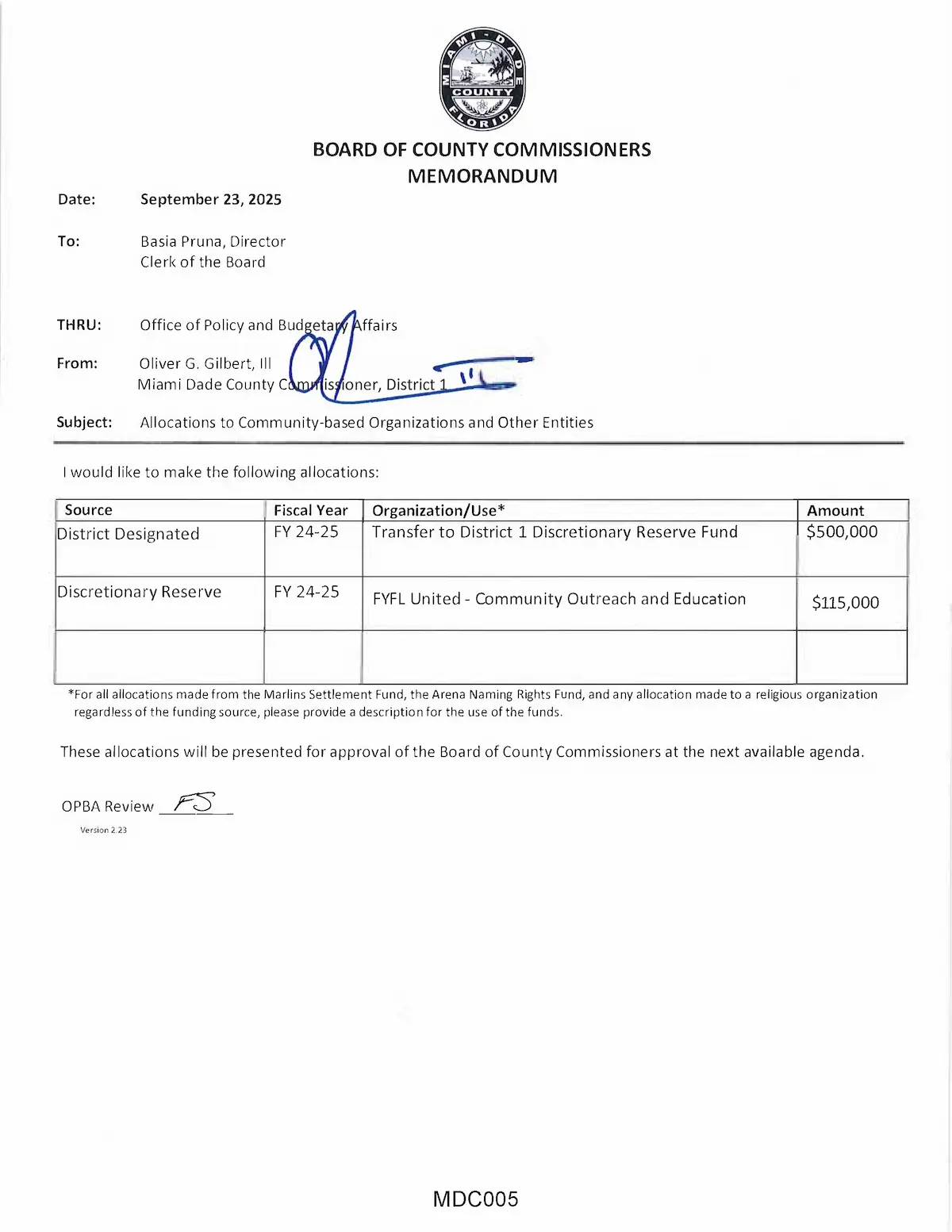
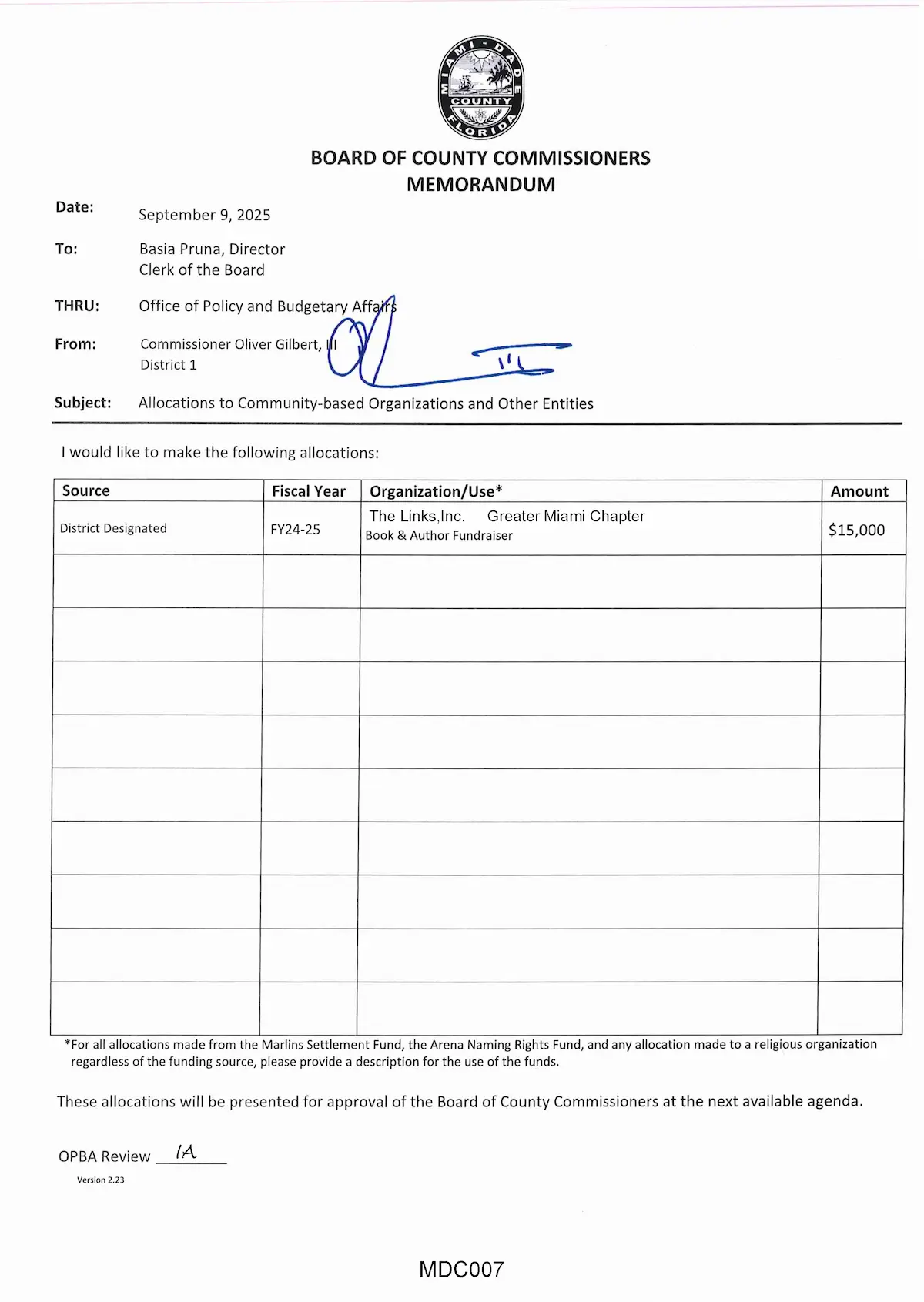
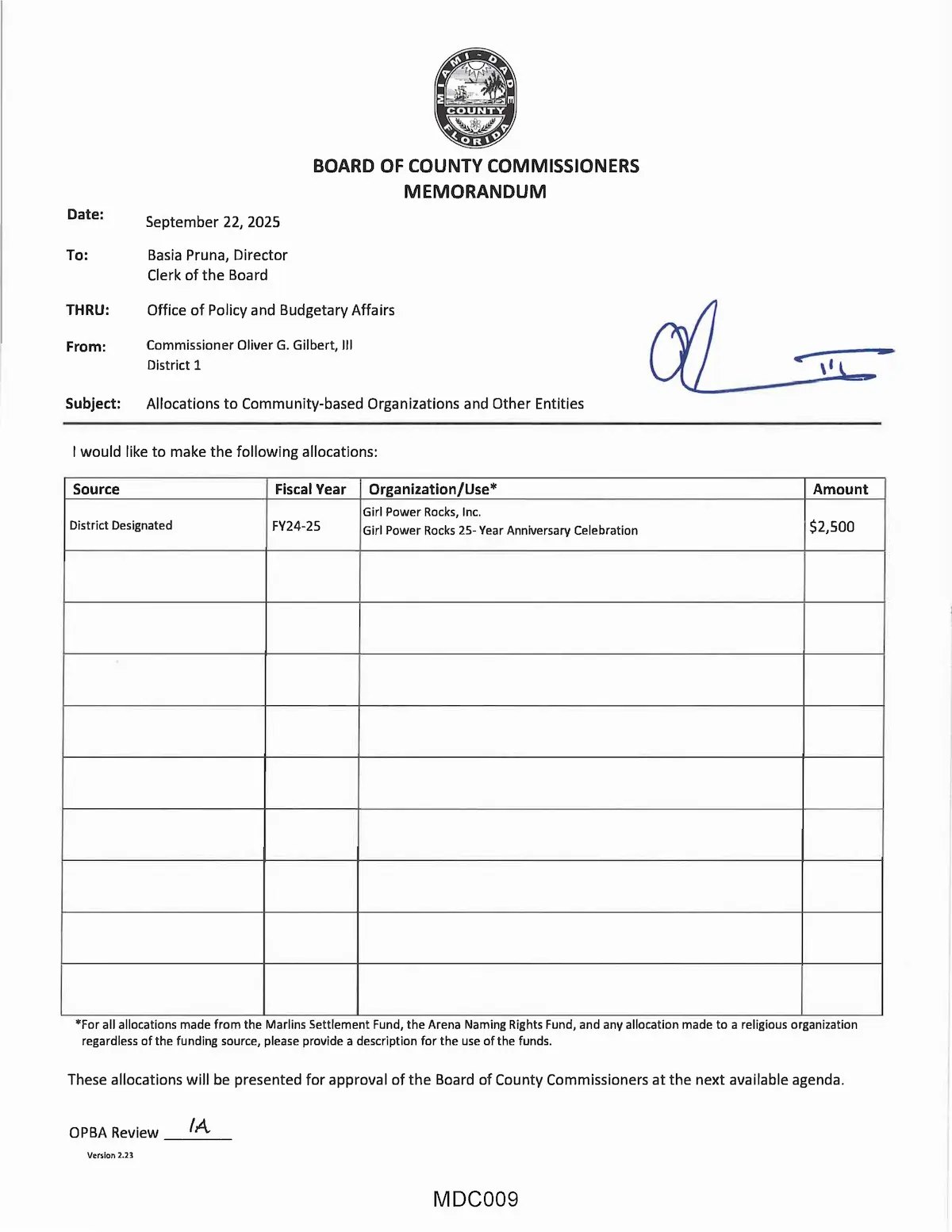
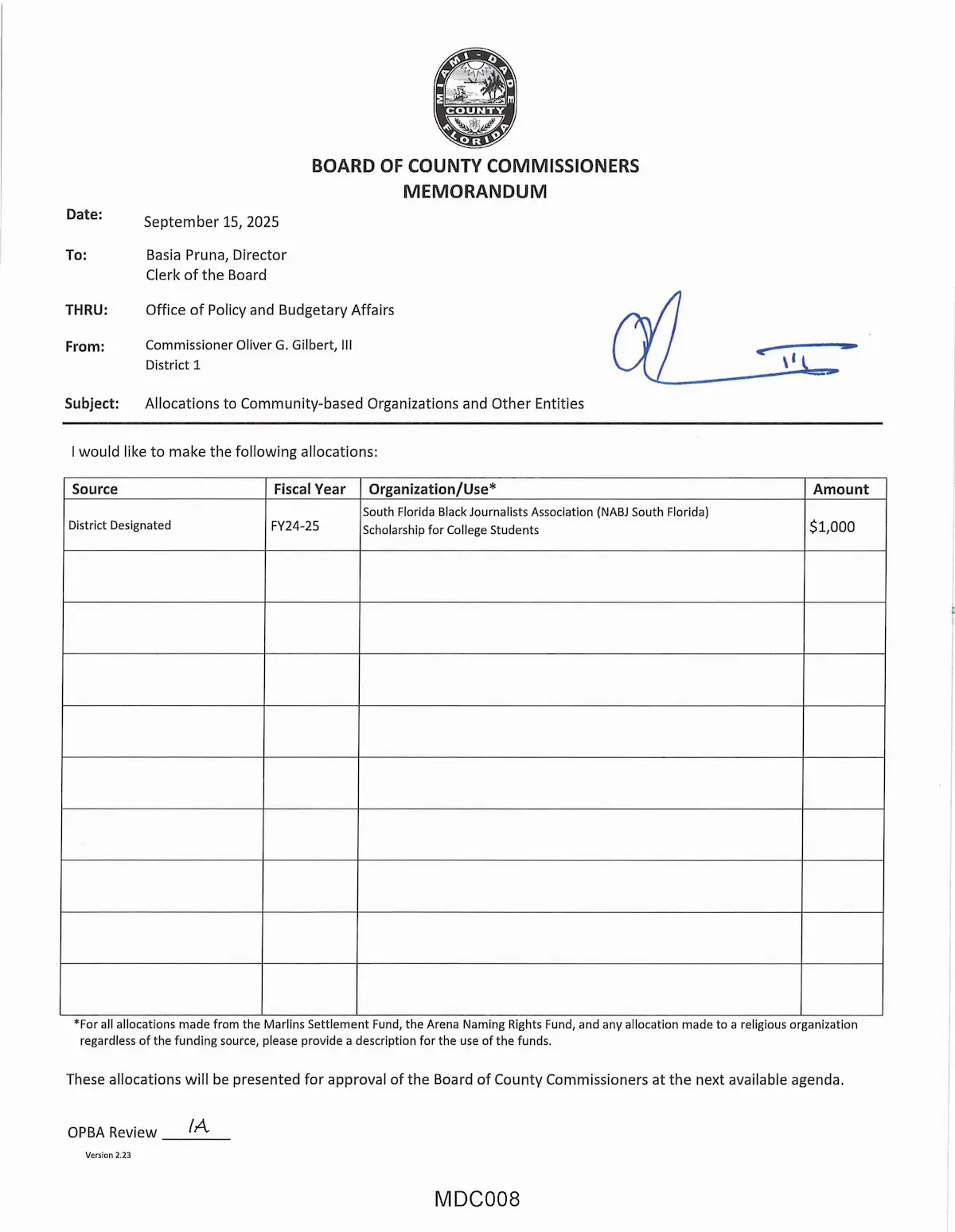
251925 Resolution Oliver G. Gilbert, III Prime Sponsor
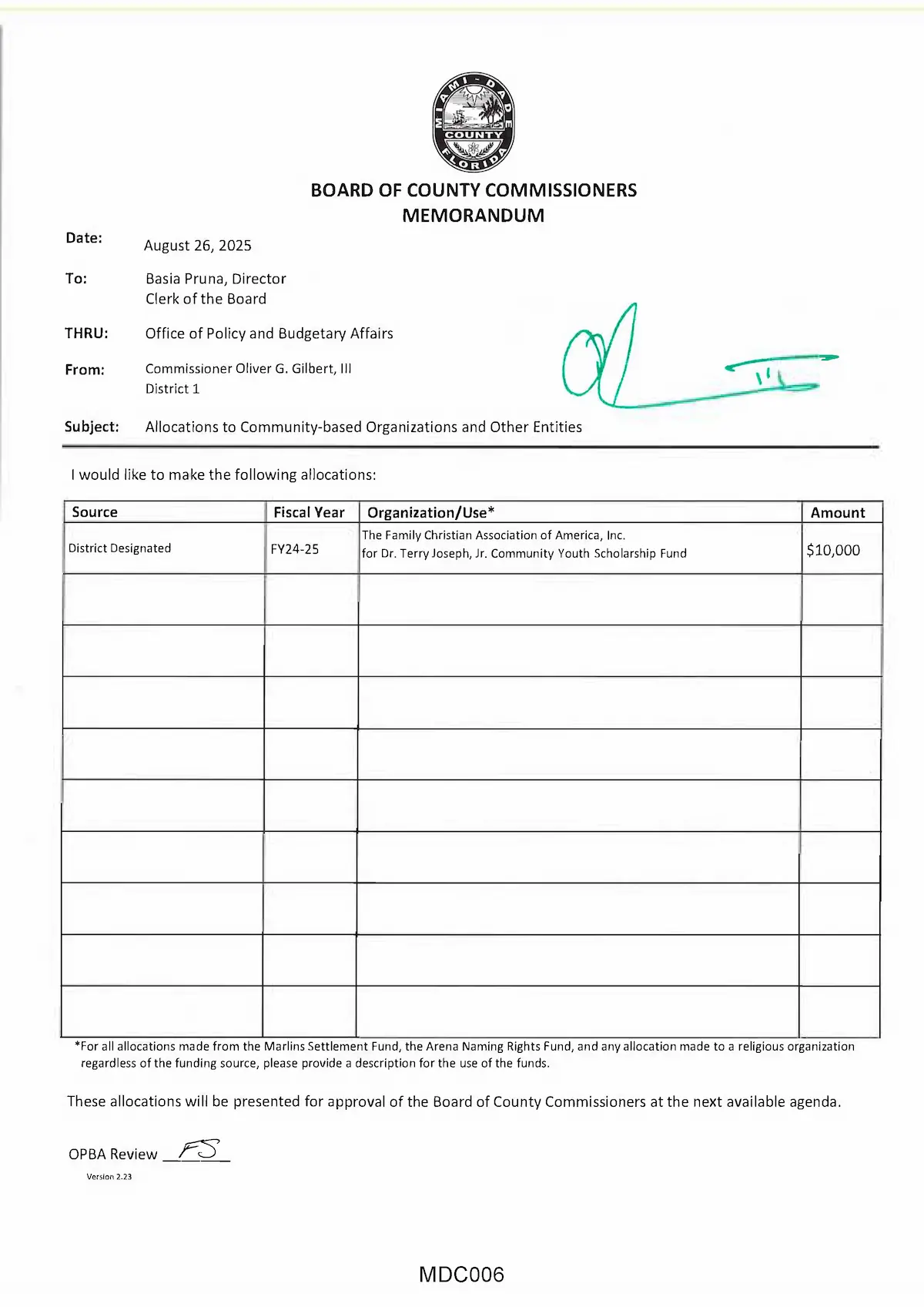
RESOLUTION APPROVING ALLOCATIONS FROM THE FY 2024-25 DISTRICT 1 DESIGNATED PROJECT PROGRAM AND FROM THE FY 2024-25 DISTRICT 1 CBO DISCRETIONARY RESERVE
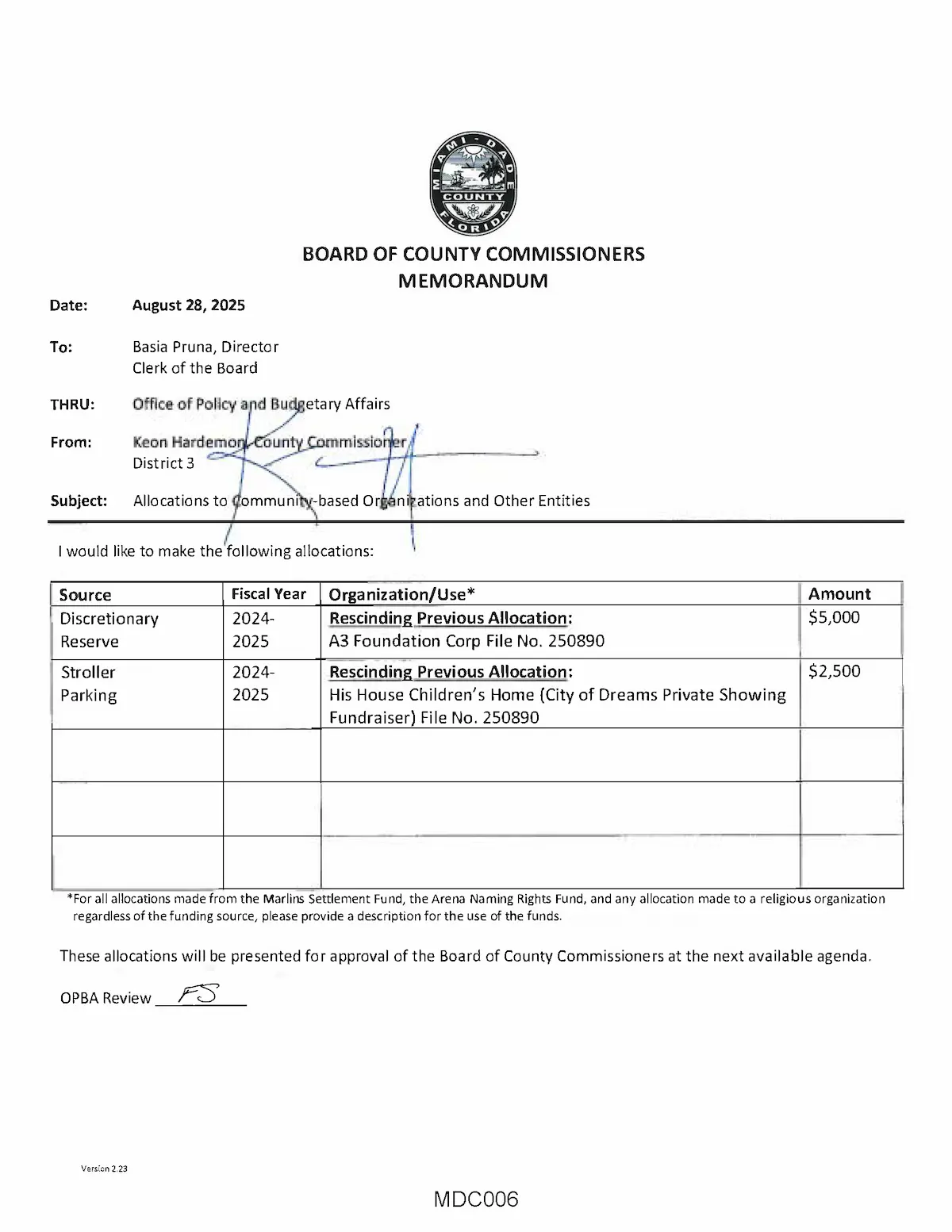
3A9
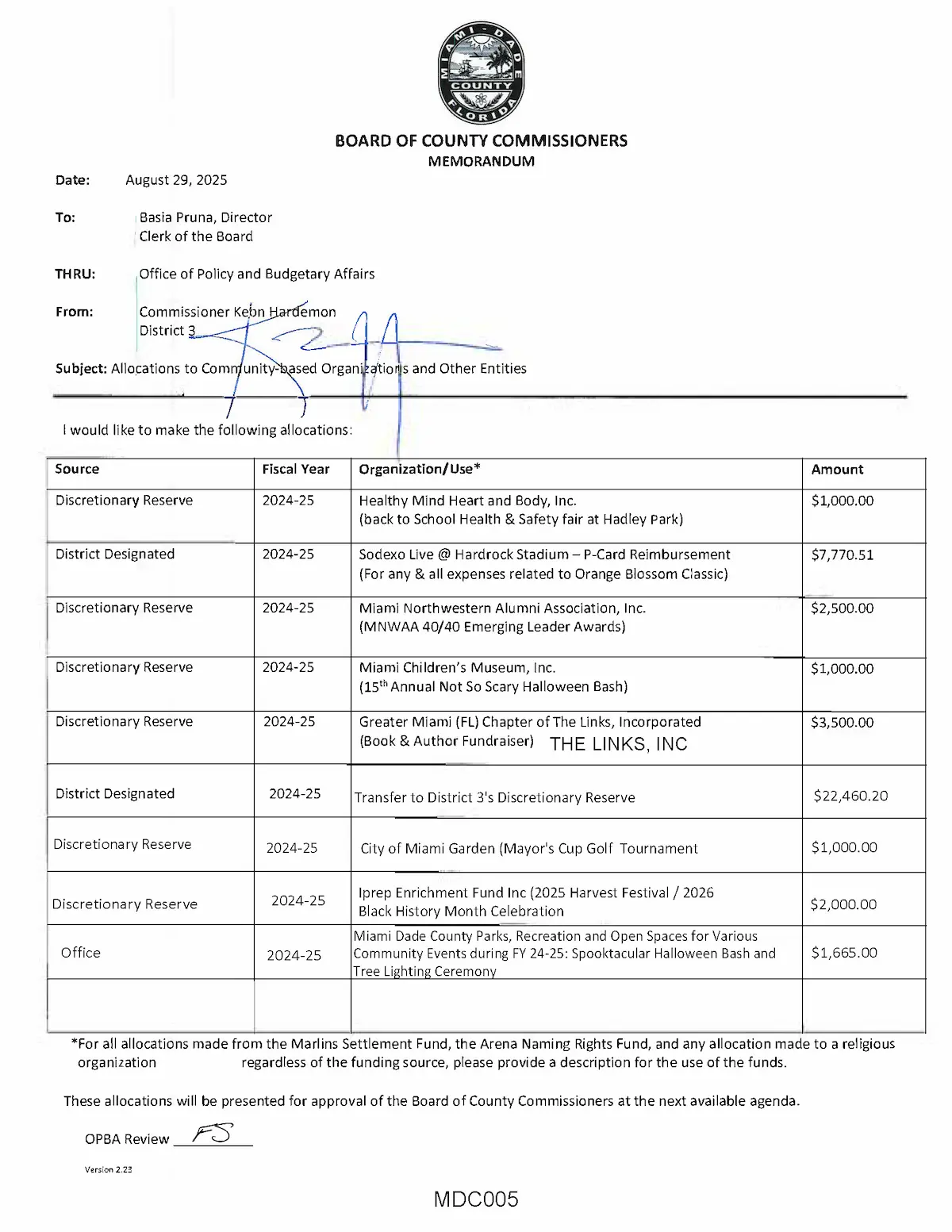
251927 Resolution Keon Hardemon Prime Sponsor
RESOLUTION APPROVING ALLOCATIONS FROM THE FY 2024-25 DISTRICT 3 CBO DISCRETIONARY RESERVE, THE FY 2024-25 DISTRICT 3 DESIGNATED PROJECT PROGRAM, AND THE FY 2024-25 DISTRICT 3 OFFICE FUND; AND RESCINDING ALLOCATIONS FROM THE FY 2024-25 DISTRICT 3 CBO DISCRETIONARY RESERVE AND THE FY 2024-25 DISTRICT 3 STROLLER PARKING FUND
The framing: “reasonable opportunity” that was not
The session began with an invocation and oath. The Chairman then announced the “reasonable opportunity to be heard” with 1 minute per person and roll call. Organizations, chamber of commerce, cruise industry, port unions and neighbors from neighborhoods with endemic violence arrived.
Circle of Brotherhood – with staff and youth mentors – asked for funding, continuity and a voice for their community intervention work. They wanted to explain that discretionary funding and contractual changes had left them out in the cold, with direct consequences for public safety, youth trauma and gun violence prevention.
Gilbert’s procedural wall
As soon as they started talking about what they live on (not just the file number), Gilbert interrupted to limit the microphone to “what’s in the item.”
“If we’re going to open up an exception like this, anyone could come in and say whatever they want… they have to stick to the agenda item.”
Later, with several matching T-shirts in the row, he finished off:
“They are confused because they are being duped. As long as you allow them to talk about something that is not on the agenda, there will be confusion.”
Translated: the realities of the neighborhood do not fit if they are not traced in the wording of a line. The “reasonable opportunity” ended up being a conditioned opportunity. The result: substantive silence for those who experience violence and ask for serious investment in prevention.
Point of clarification: there were funding items on the agenda.
- October 9, 2025 Official Agenda 5397 included, within “Commissioner Consent Items,” several resolutions for CBO / Designated Project funding allocations by district, including:
- 3A7 (District 1 – Oliver G. Gilbert, III): “Approving allocations from the FY 2024-25 District 1 Designated Project Program and from the FY 2024-25 District 1 CBO Discretionary Reserve”. 251925
- 3A9 (District 3 – Keon Hardemon): “Approving allocations from the FY 2024-25 District 3 CBO Discretionary Reserve, District 3 Designated Project Program and District 3 Office Fund; and rescinding previous allocations”. 251927
- It is clear from the legal memoranda for both items that they are appropriations resolutions requested by their respective sponsors (Gilbert at 3A7; Hardemon at 3A9). 251925 251927
- During the “reasonable opportunity for the public to be heard,” at least one speaker expressly stated that he was talking about item 3A9 (District 3), i.e., an appropriations item. meeting 10-9-2025
- Attachments to 3A9 show specific listings of recipients and amounts (e.g., Miami Children’s Museum, IPrep Enrichment Fund, etc.), confirming that this was public money to be decided that day. 251927 251927
Short conclusion: talking about CBO funds and allocations was relevant to the 9/10/2025 agenda, as there were specific items (3A7 and 3A9) on district allocations. If some commissioners claimed that “it was not on the agenda”, that claim does not hold up against the official documents and the speaking record itself. 5397 5397
Timeline – October 9, 2025 (Board of Commissioners)
00:00 – Opening with pastor (church representative)
Prayer for wounded police officers, victims of gun violence and breast cancer awareness month.
Reading: tone of unity and public service.
03:34 – “Reasonable opportunity to be heard”.
The Chair opens public comments (1 minute per person).
05:22 – Richard Dunn (Community Youth Against Violence)
“We support the Hardemon item…and ask to be considered in discretionary funds.”
07:18 – Theophilus/”Theopus” Williams (neighbor, District 2)
“The elderly suffer. Money always appears for friends, not for the taxpayer. Bring in the governor if there is no answer here.”
WHEN OUR VOICES ARE NOT BEING HEARD, WE VOTE!

09:02 – My (Advocacy Network on Disabilities)
Ask for real access (mats) on beaches for people with disabilities.
10:01 – Tatiana Silva (Beacon Council)
Supports investment projects and high-paying jobs.
10:47 – Samantha (Miami Waterkeeper)
“90% of living coral lost; restore is economic and environmental imperative.”
11:58 – Jason Liberty (FCCA; Carnival, MSC, Virgin, NCL)
” Reliable bunkering is non-negotiable. Acquire Fisher Island (negotiated or, if not, eminent domain) now.”
16:22 – Peter Campbell (Greater Miami Chamber)
“Rapid, collaborative solution; port is economic engine.”
17:12 – Shemica Pierce (Circle of Brotherhood)
“Cutting funding is not an Excel cell: it cuts hope and vital support for girls in foster care and violence prevention.”

18:27-21:09 – ILA (Longshoremen)
“Any cruise/cargodisruption hits jobs directly. Buy the fuel farm; it’s the only viable way.”
21:15 – Capt. James (Biscayne Bay Pilots)
“Moving the plant to the port involves risks, dredging, delays and reconfiguring operations. Fisher Island is strategic.”
23:18 – Cargo Operators (SE Florida Ports Employers)
“We can’t lose this ‘hub.’ It’s jobs, jobs, jobs. Vote for the buyout today.”
30:39 – Samantha Bazil (M-DC product; Circle)
“Invest in the one who heals trauma, reduces crime and opens opportunities. Circle works.”

32:04 – Albert Campbell (Circle of Brotherhood) – Item 3A9
“First I want to give thanks and prayers to all those who work for our communities….
Why am I in ‘furlough’ with all the great work I have done in my community?
…I came to the conclusion that our political space is like hell.
There are many of us in ‘furlough’ who do great work in the community. I wanted to share that in public.”

33:17 – Commissioner Oliver G. Gilbert, III – “Point of inquiry”.
“I’m listening carefully and they say good things, but it doesn’t seem to be on an agenda item….
If we’re going to open up such a big exception, anybody could come in and say anything.
They have to stick to the item. Referencing the item is talking about what’s in that item, not everything else.”
34:13 – Lamont Nanton (Circle of Brotherhood) – Item 3A9
Explains that Circle was removed from a key violence intervention contract (north and south county).
Admits confusion with the item number, but intends to put on record the public safety impact.

35:10 – Commissioner Keon Hardemon – Cutting by Rules
“I keep hearing ‘Circle of Brotherhood’ and I don’t see it [in the item].
They’re not following the rules. Some organizations think they ‘re above the rules.
The item says what it says. They’re confused because they’re being duped….
If you are allowed to speak off the agenda, there will be confusion. You are thinking honestly, but you are being spoken to with dishonest words.”
35:53 – Chair Anthony Rodriguez – Closing the Frame
“I would say – and I don’t like to assume – they ‘re wearing similar shirts and they’re coming to talk about the same thing that’s not on the agenda.
Unless they’re talking directly about item 3A9 appropriations, there’s nothing to talk about.
They can talk about 389 in general, but they keep mentioning things that aren’t in the item.”
36:23 – Final Clarification (Nanton)
“So that’s not what 3A9 is referring to?”
Chair: “No, it is not.”
End of block: chair closes comments.
36:47 – Brandon Jones (Circle)
“We ask that they use discretionary funds to sustain our work.”
37:15 – Terrence Johnson (Circle)
Defends CBOs and anti-violence entities; cut returns as “not on agenda”.
Closure of the public block
The Chair closes comments.
Balance: The industry spoke without hindrance (cruise ships, chamber, pilots). The neighborhood received cuts due to agenda technicalities.
What did they want to talk about?
- Cuts support for Circle of Brotherhood and community violence programs.
- They asked to make good use of discretionary funds and not to relegate those who put their bodies in the hardest areas.
- They pointed out destroyed streets, elderly people without transportation and lack of State presence in District 2 and surrounding areas.
- They demanded consistency: if there is money for street name changes, there should also be money for intervention against weapons where bullets are fired daily.
All of that is a matter for the county government. The problem is to close the microphone because the item label does not match 100% with the reality they describe.
Double standards: industry yes, neighborhood no
The room listened unhindered to the cruise industry, the chamber and port operators, with figures, projections and urgencies -valid, yes- about fuel and competitiveness. But when the neighborhood asks for security, mental health and prevention, stenographer’s technicality is demanded.
Politics exists for the people, not the other way around. If an organized community comes forward, the duty is to hear it and formally agendize their complaint to vote on it.
What was said (and hurt)
- “When our voices are not heard, we vote!” – the message on a speaker’s T-shirt and in a fed-up tone.
- Circle of Brotherhood workers explained that cutting funds is not a cell in Excel: it is cutting hope to foster care girls, removing conflict mediators, shutting down mental health workshops.
- Older neighbors complained about broken streets, lack of transportation and neglect: “Money always appears for some, never for us“.
Gilbert and Hardemon, under the spotlight of their own community
- Gilbert: you must represent your people, not shield yourself behind technicalities to close the discussion when it is uncomfortable. If the topic “is not on the agenda”, ask for it to be scheduled, to be passed to the Committee and set a date. That is leadership.
- Hardemon: if you bring the pastor to open with solidarity, maintain consistency and fight for a specific block in the agenda for prevention organizations that avoid funerals. It is not enough to greet; you have to ensure vote and budget.
Concrete proposal (the least decent)
- Fixed popular session: weekly would be ideal; monthly as a minimum. Exclusive agenda for organizations and neighbors.
- Translation to item” rule: when an “unlisted” item arrives, the secretary records it and an item is created for the next session ( sponsored by the commissioner of the district involved).
- Public metrics: each community intervention must end with “next step” assigned, responsible party and date.
- Respect in the room: phones put away; no laughter or swaying while the taxpayer speaks. The people pay their salaries.
Representation or simulation
October 9 left an uncomfortable picture: the organized economy had a microphone; the hot neighborhoods didn’t. If Gilbert and Hardemon want to lead for their people, let them enable debate, put out the vote and move money to where it saves lives. If Gilbert and Hardemon want to lead for their people, let them enable the debate, put out the vote and move the money to where it saves lives.
Without community in the center, the Junta is a formality. With community inside, the Board becomes a Republic again.
Who they are and what they do: Circle of Brotherhood (COB)
- Origin and purpose. Founded in 2013 in Miami (Fifth District) as a direct response to rising violence. Today its work extends throughout South Florida.
- Mission. To engage African-American men and women of all backgrounds-from street to professional-to solve community problems and make neighborhoods decent places to live. Pillars: youth development, crime prevention and economic sustainability.
- Focus. “One Brother One Hood“: all men and women, regardless of past or status, can and should contribute to rebuilding communities as the foundation, protectors and providers for their families.
- Programs and services. Workshops, retreats, leadership training, counseling, conflict mediation, and school and community-based programs.
- Working Committees. Economics, youth development, community service, civic affairs, violence prevention, recreation/family and community health.
- Structure.
- Founding members and executive team (trained inner circle).
- Governing officers (volunteers for legal and social affairs).
- General membership by recommendation, with emphasis on integrity and commitment.
- Current leadership.
- Leroy Jones (Main Organizer)
- Pastor Jeffrey Mack (President)
- Lyle Muhammad (Executive Director)
- Dr. Mike Davis (Vice President)
- Pastor Anthony Tate (Secretary)
- Christopher Sweeting (Treasurer)
- Lamont “Popp” Nanton (Dir. of Communications and Logistics)
- Relevance to the public debate. COB operates on the front lines of violence intervention and youth mentoring in Miami-Dade. Any budget decision that cuts its involvement directly affects crime prevention, trauma-informed care and opportunities for youth in highly vulnerable neighborhoods.

“Approvals without committee: the silent shortcut.”
What’s Happening
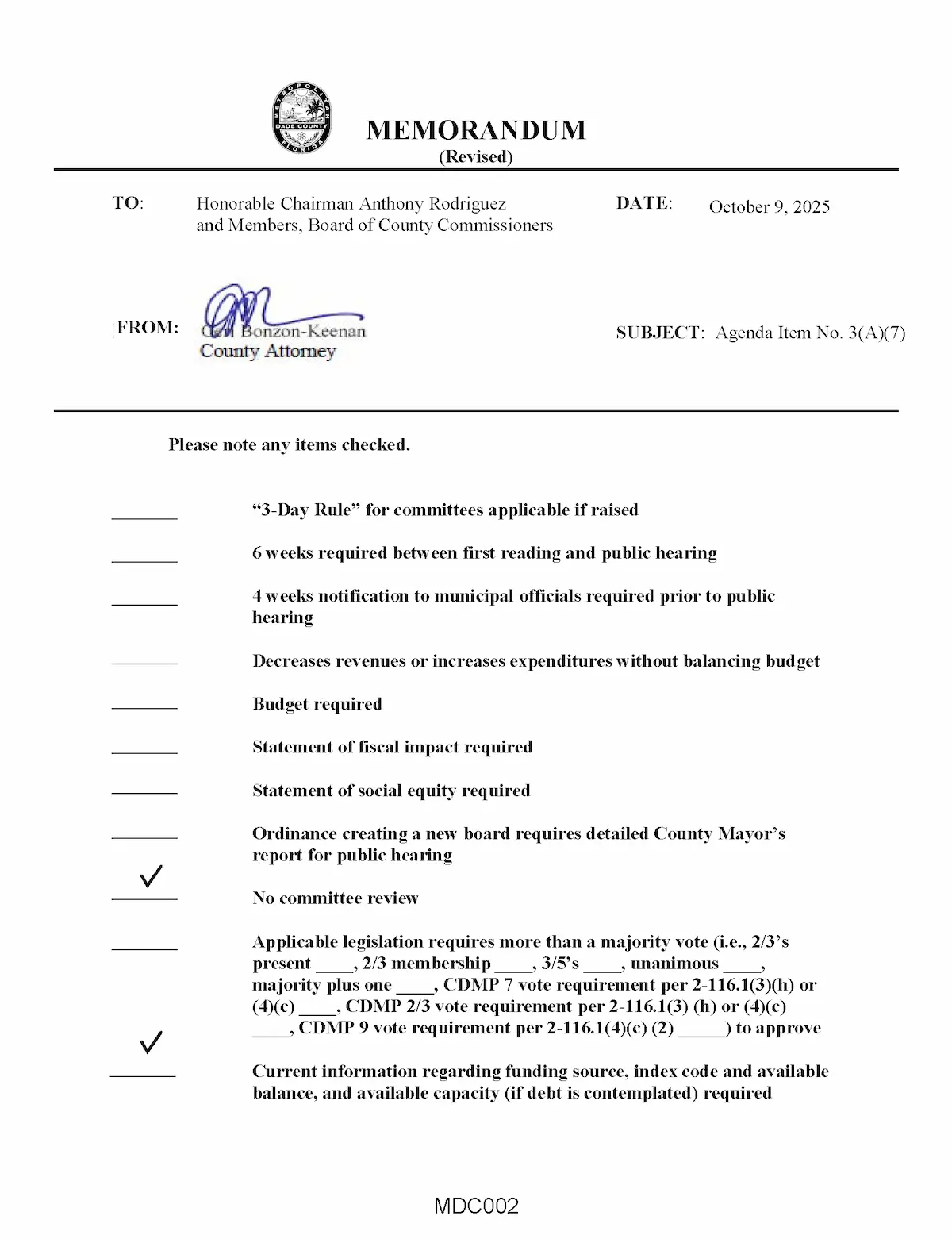
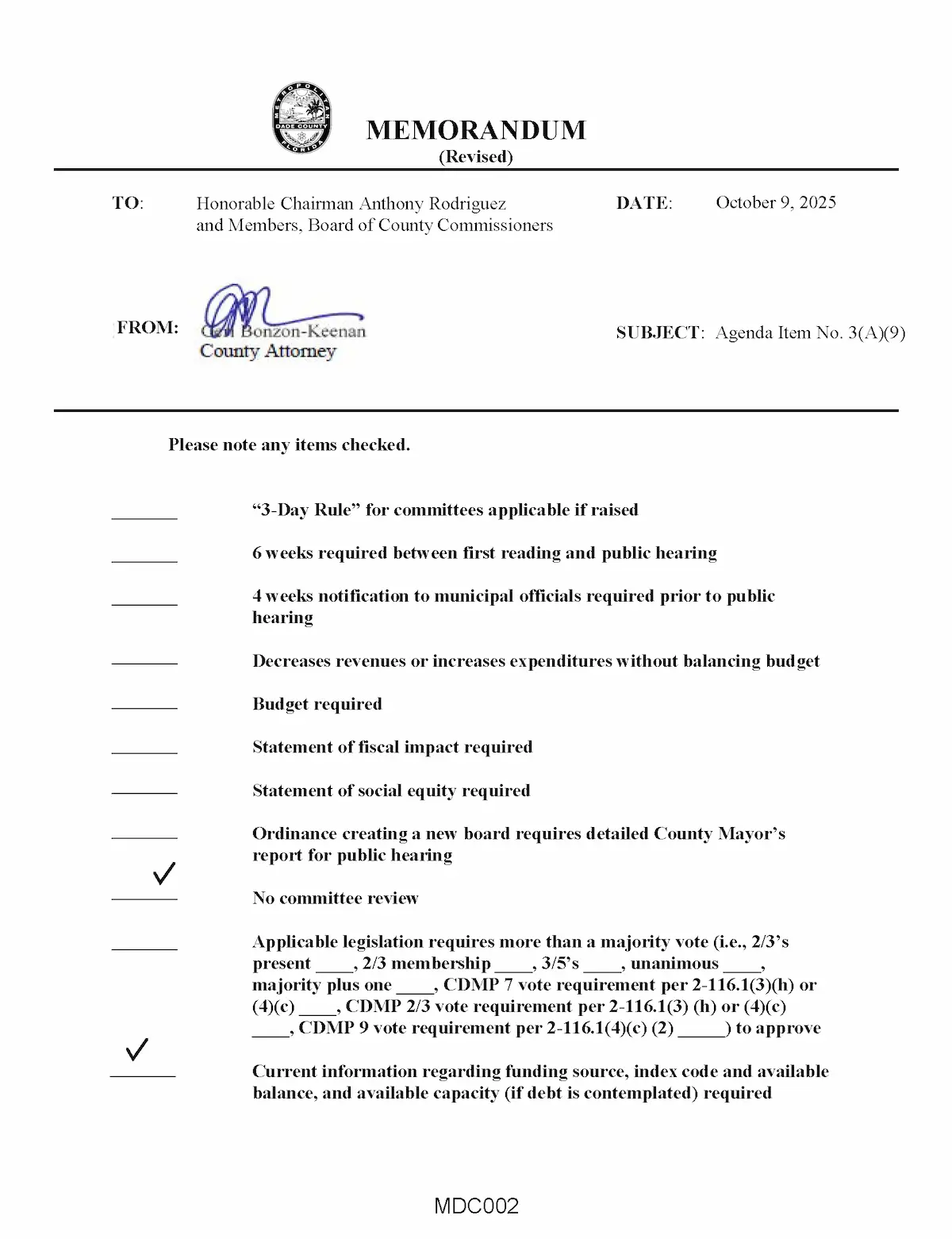
A very high percentage of Miami-Dade County actions reach the plenary without going through any review committee. On the official stationery itself, the “No committee review” box is checked (see the October 9, 2025 memo, Agenda Item 3(A)(7)). That check means that the measure is submitted directly to a plenary vote, without the prior technical and political filter provided by committees.
Why it matters
- Less scrutiny: no committee, no technical appearances and no detailed questions before voting day.
- Less transparency and participation: the public loses an opportunity to intervene in time.
- More “fast-track”: complex decisions are approved en bloc or with minimal debate, based on agenda rules.
- Tax and operational risk: by skipping the commission analysis, the probability of detecting hidden costs, social impacts or legal risks decreases.
Documented example
- Official memorandum (9/10/2025): for Items 3 (A)(7) and 3(A)(9) it is marked: “No committee review” and “Current information regarding funding source… required”. In other words, it is recognized that the funding source still needs to be detailed, but it is still brought to the plenary without a committee.
Signs of a pattern
Although the aggregate data is not clearly published, the repetition of memos with the “No committee review” box checked shows a systematic use of the procedural shortcut. In practice, the vast majority of sensitive items end up in the plenary without having passed through at least one subject committee.
What to change (reform proposals)
- General “go through committee” rule: every measure not declared an emergency must have at least one committee session.
- Public justification of the shortcut: if “no committee” is invoked, the sponsor must publish a necessity report and risk matrix.
- Minimum package of attachments: fiscal analysis, social equity impact and legal notes mandatory before being agendized in the plenary.
- Timing and traceability: public logbook showing how many items used the shortcut, by office, subject and economic amount.
- Real comment window: opening of citizen comments (48-72 h) for items without committee, with written response from the sponsor.
Why now
At a time of budget shortfalls and strategic decisions (port, fuel, public safety contracts, etc.), shortening controls erodes confidence and raises the cost of mistakes. Fast-track can be useful in emergencies, but should not be the rule.
Want more news like this?
Visit our homepage to stay up to date on the latest happenings in South Florida and beyond:
Stay informed with the latest news!