
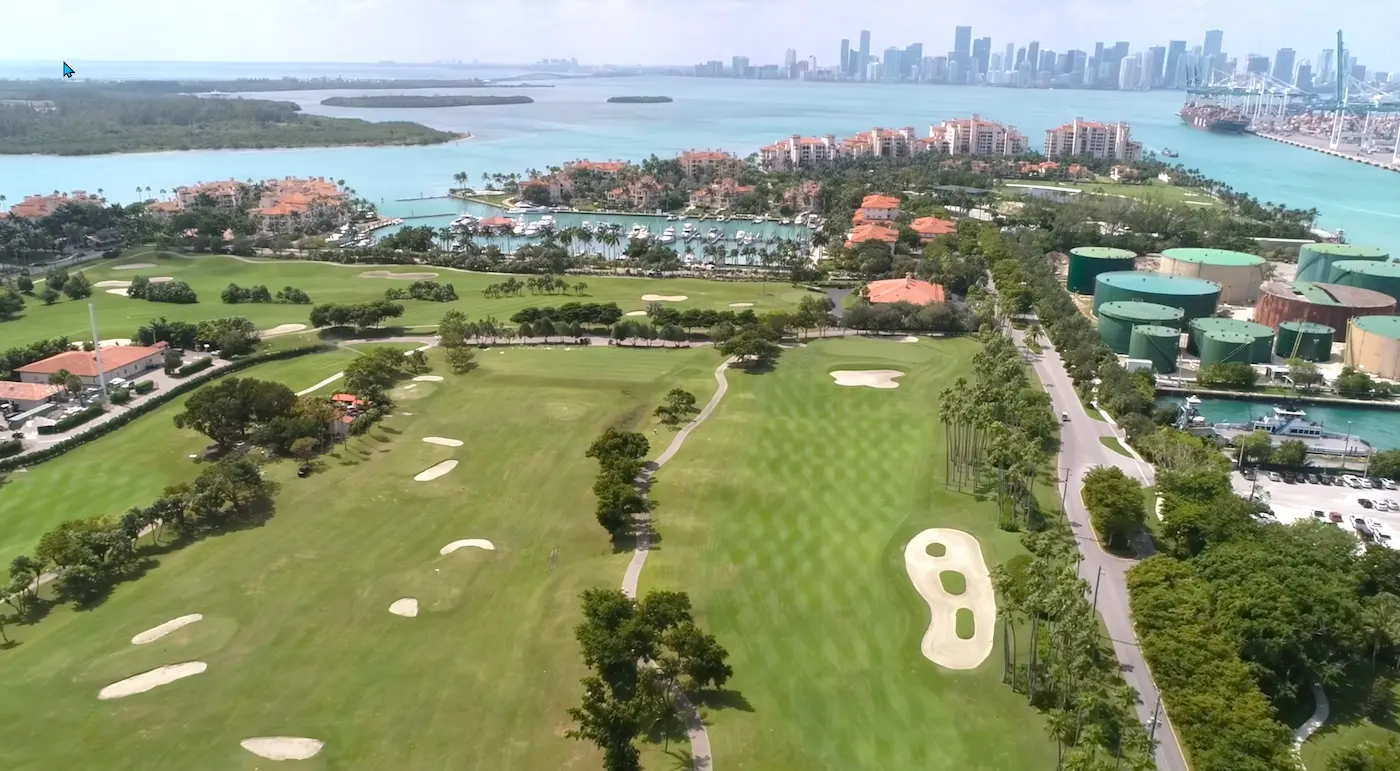
PortMiami in check 2025: to keep a tank museum… or to build the future? The two routes on the table for not having a proactive plan
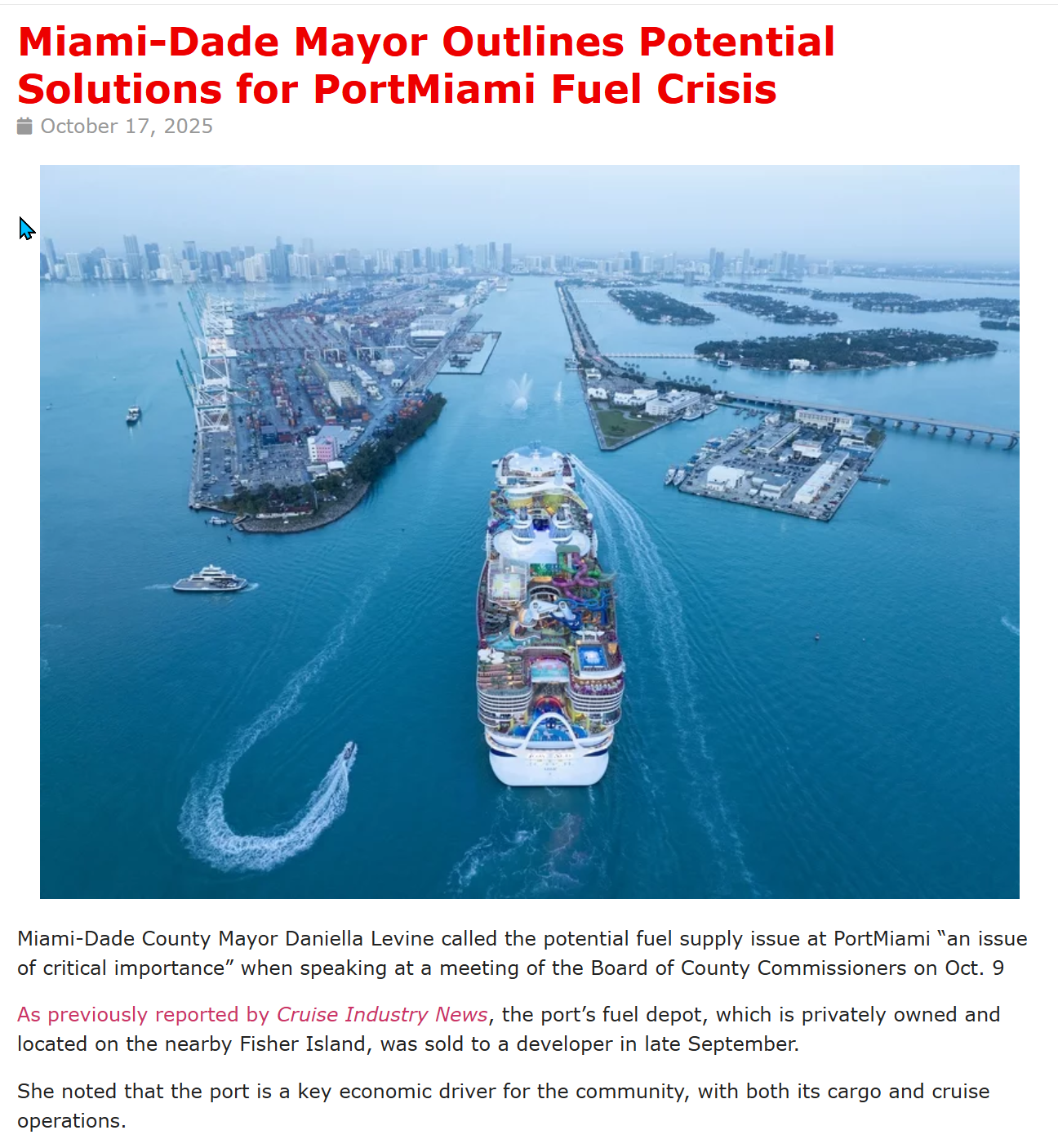
PortMiami is not just a pretty skyline or a selfie before boarding. It is the engine room of the local economy: it is the engine that drives Miami-Dade. Tens of thousands of jobs, local income and the worldwide reputation of “cruise capital” depend on it, moving tourists, cargo, cabs, hotels, restaurants and tens of thousands of salaries. When a ship sails, it moves bank accounts all over the city. That’s why “fuel” is not a boring subject: without safe and timely fuel, the orchestra runs out of music.
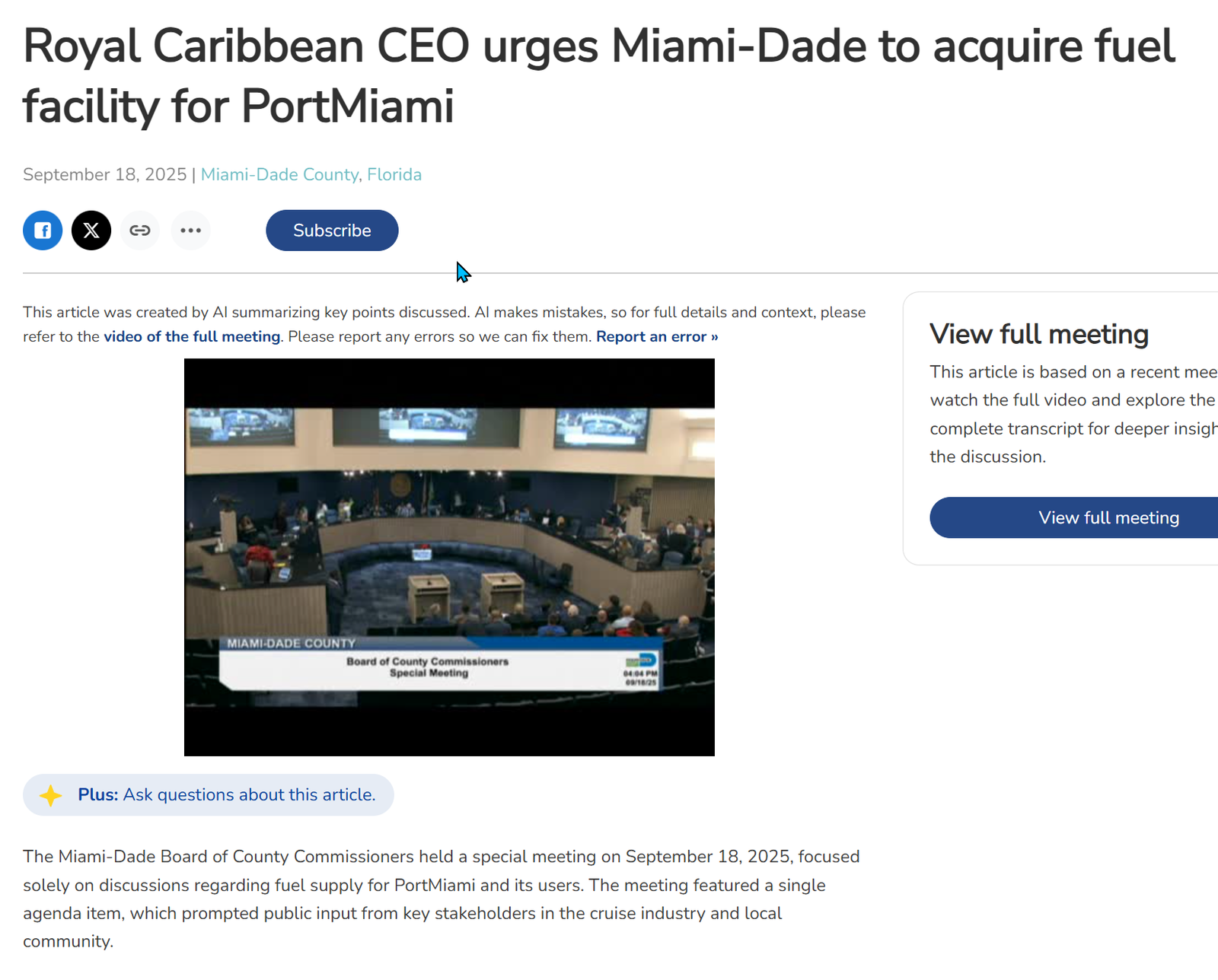
The PortMiami “fuel case”. It is based on County audits, the resignation of PMCM’s CEO, and the debate at the special Commission meeting(transcript of 09.18.2025 – Special Meeting – special meeting on the Port of Miami Fuel issue).
“The cruise capital’s critical asset – fuel supply – was left up in the air following the sale of the Fisher Island “fuel farm” to a private developer. The case uncovered a chain of political omissions, control failures, and late decisions. This report explains how we got here, who was supposed to be watching, and what responsible path lies ahead.
Express chronology: from red flag to emergency
- 2019-2023: PMCM (Port of Miami Crane Management, Inc.) spends $1.45M on Paceco Spyder system; in 2023 pays $547,022 that year alone. Several cranes go out of service due to corrosion and lack of preventive maintenance.
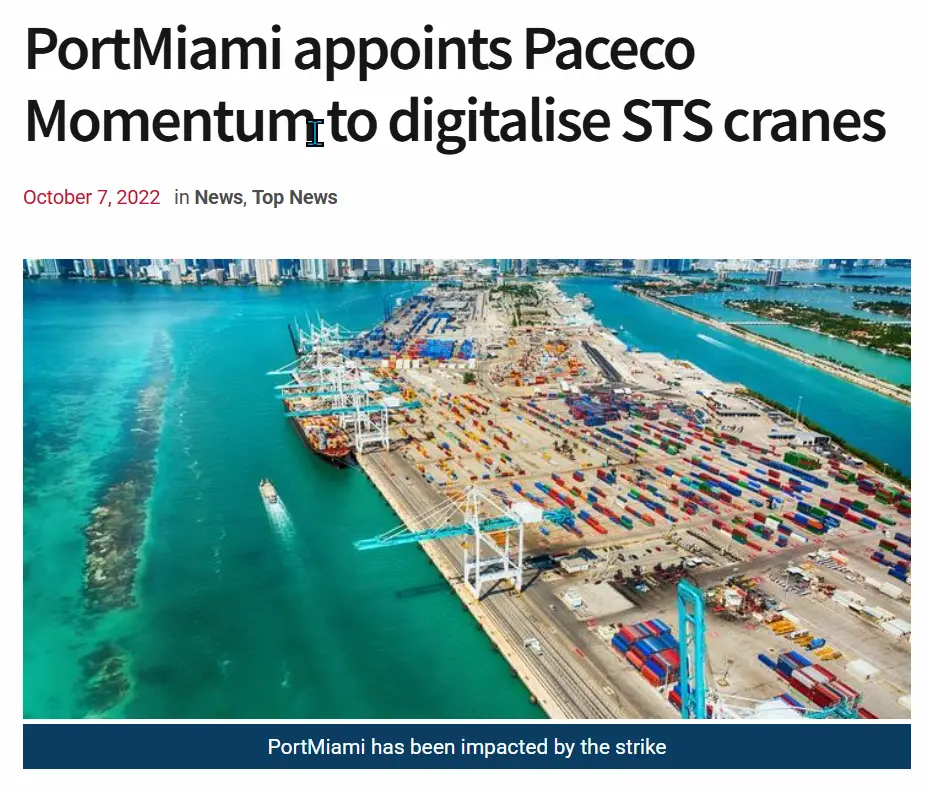
- Audits 2024 (AMS, internal audit of the County).
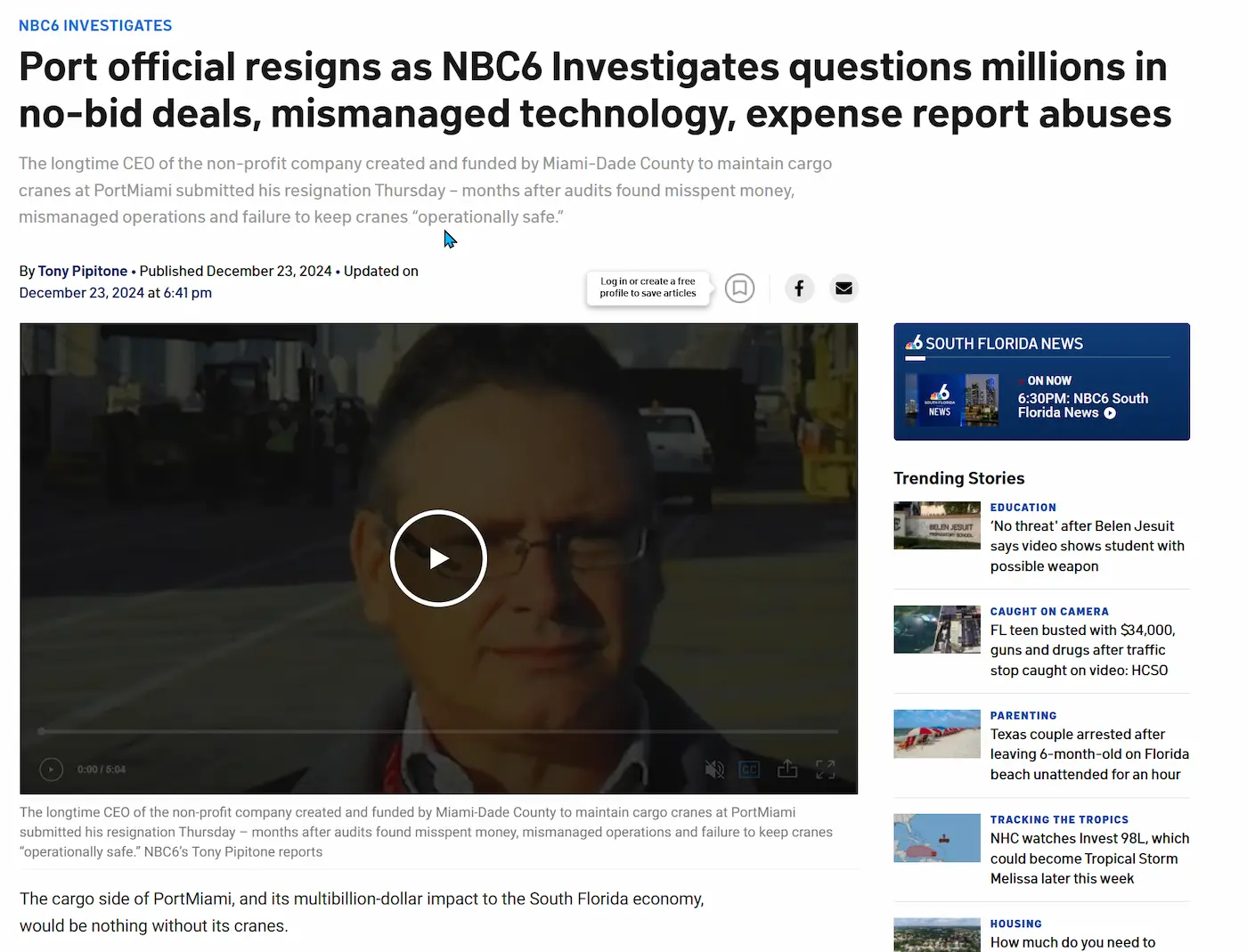
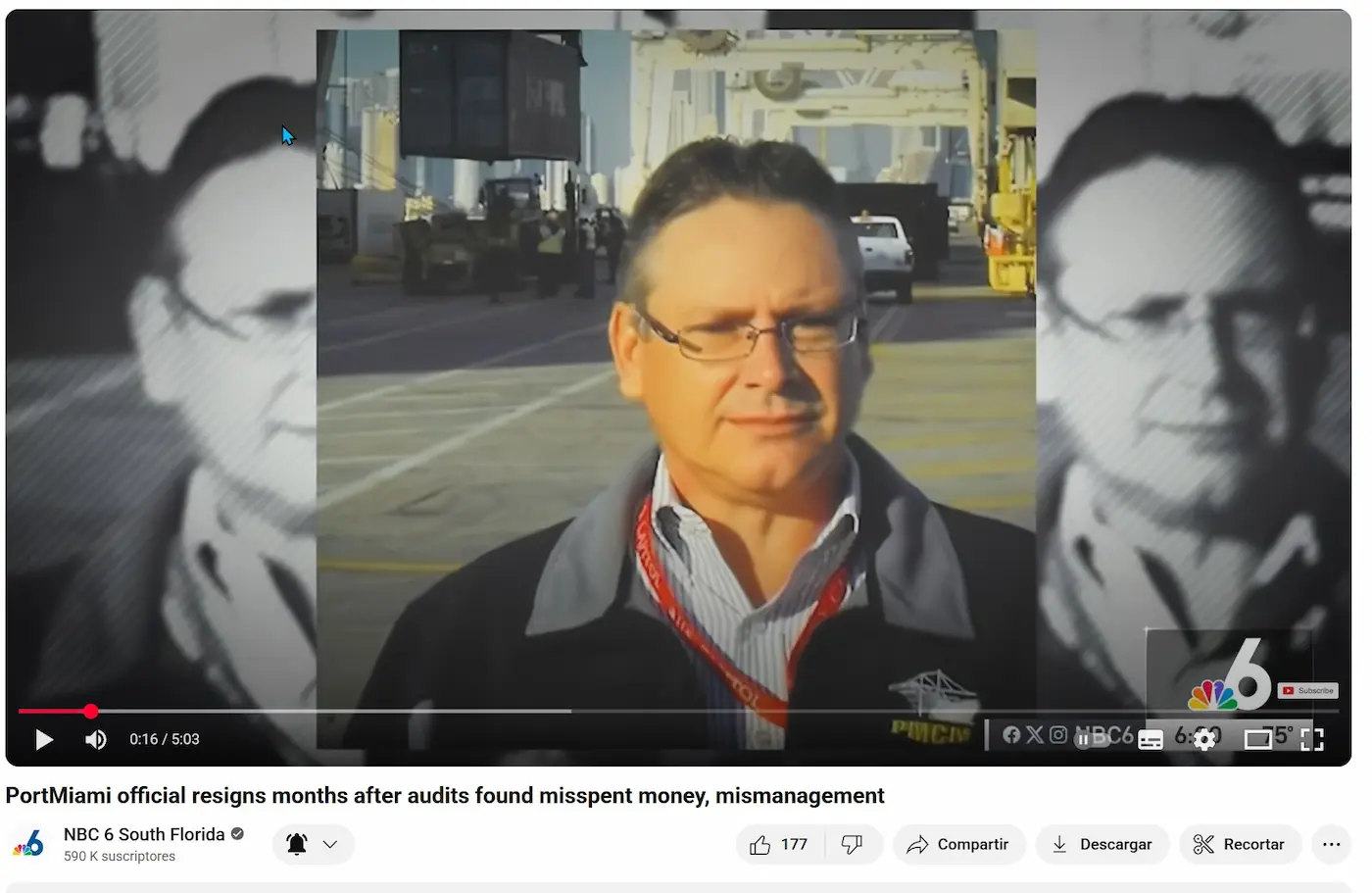
- They found no-bid purchases, use of personal cards and poor maintenance at Port of Miami Crane Management (PMCM). The visible consequence: resignation of its CEO, Aguedo “Ed” Bello (Dec-2024, effective Jan-2025). The invisible consequence: a weak control culture was evidenced in critical port assets.
- Fuel knot (September 2025).
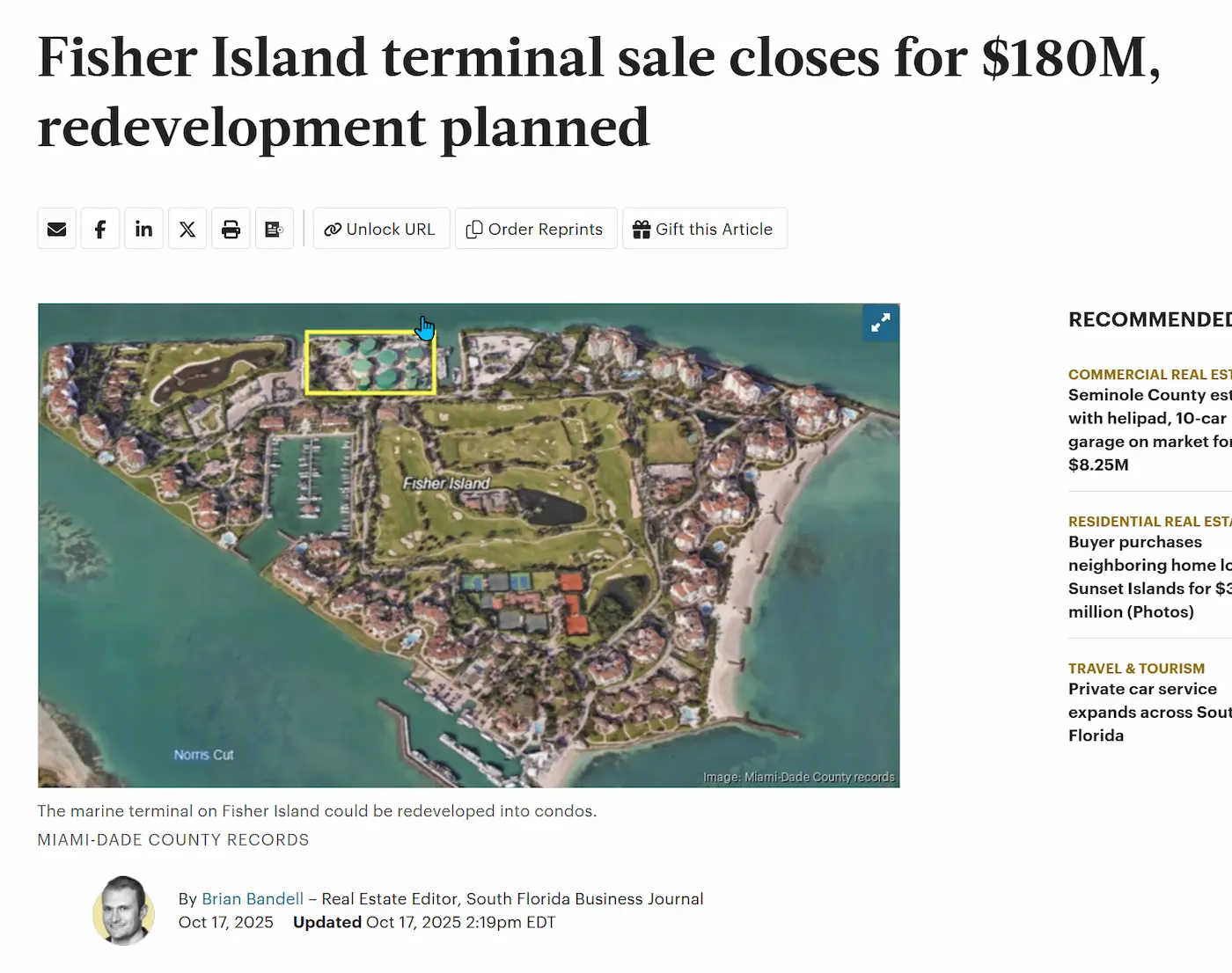
- The Fisher Island fuel farm – historically operated to supply cruise ships and cargo – is in the hands of TransMontaigne (seller) with an expiring contract, and its property was sold to HRP Fisher Island LLC (buyer), which plans to remove tanks in ~2-3 years. The Commission is called to a special emergency meeting: either the County buys/expropriates the site, or is left without a stable solution of its own.
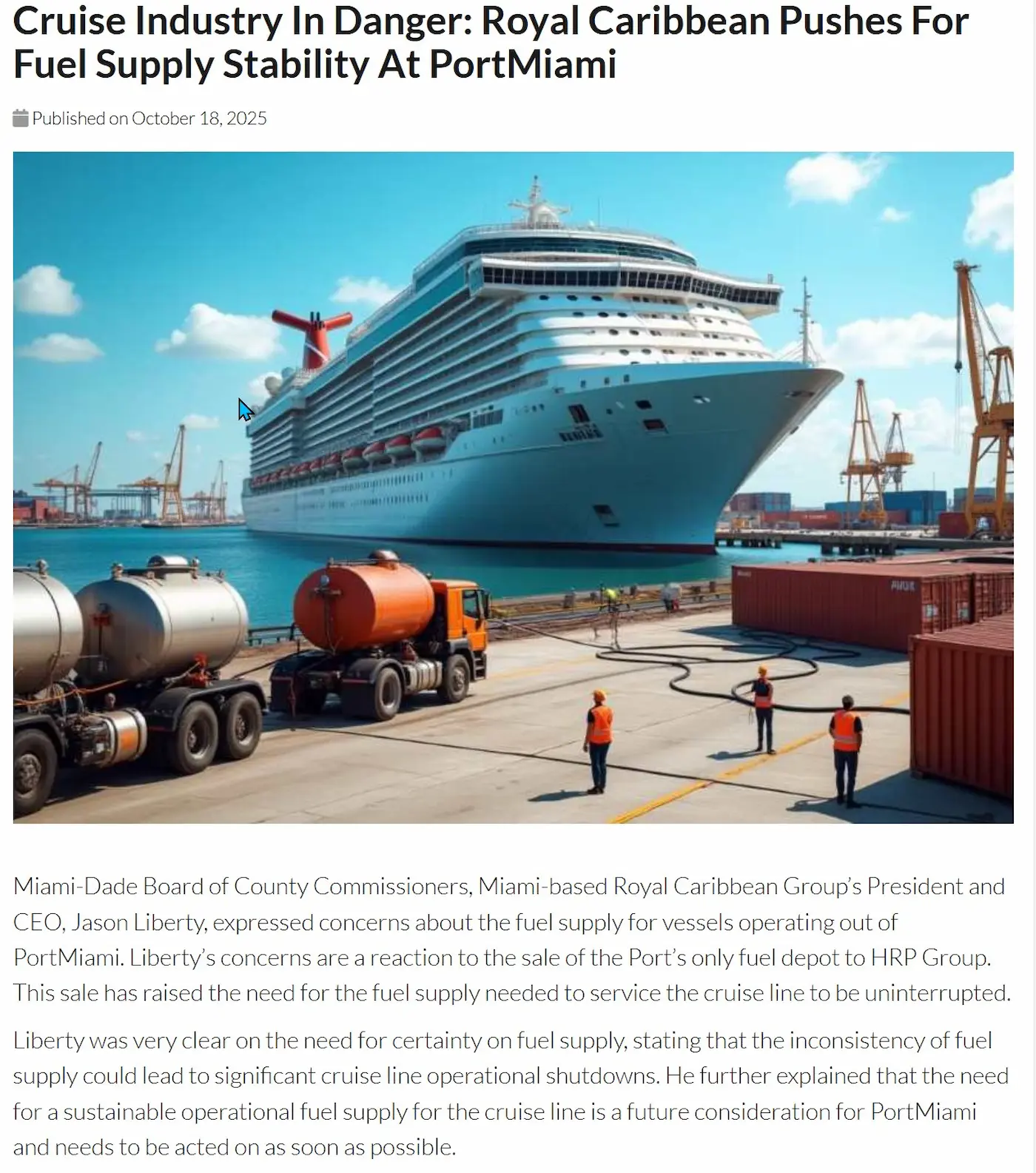
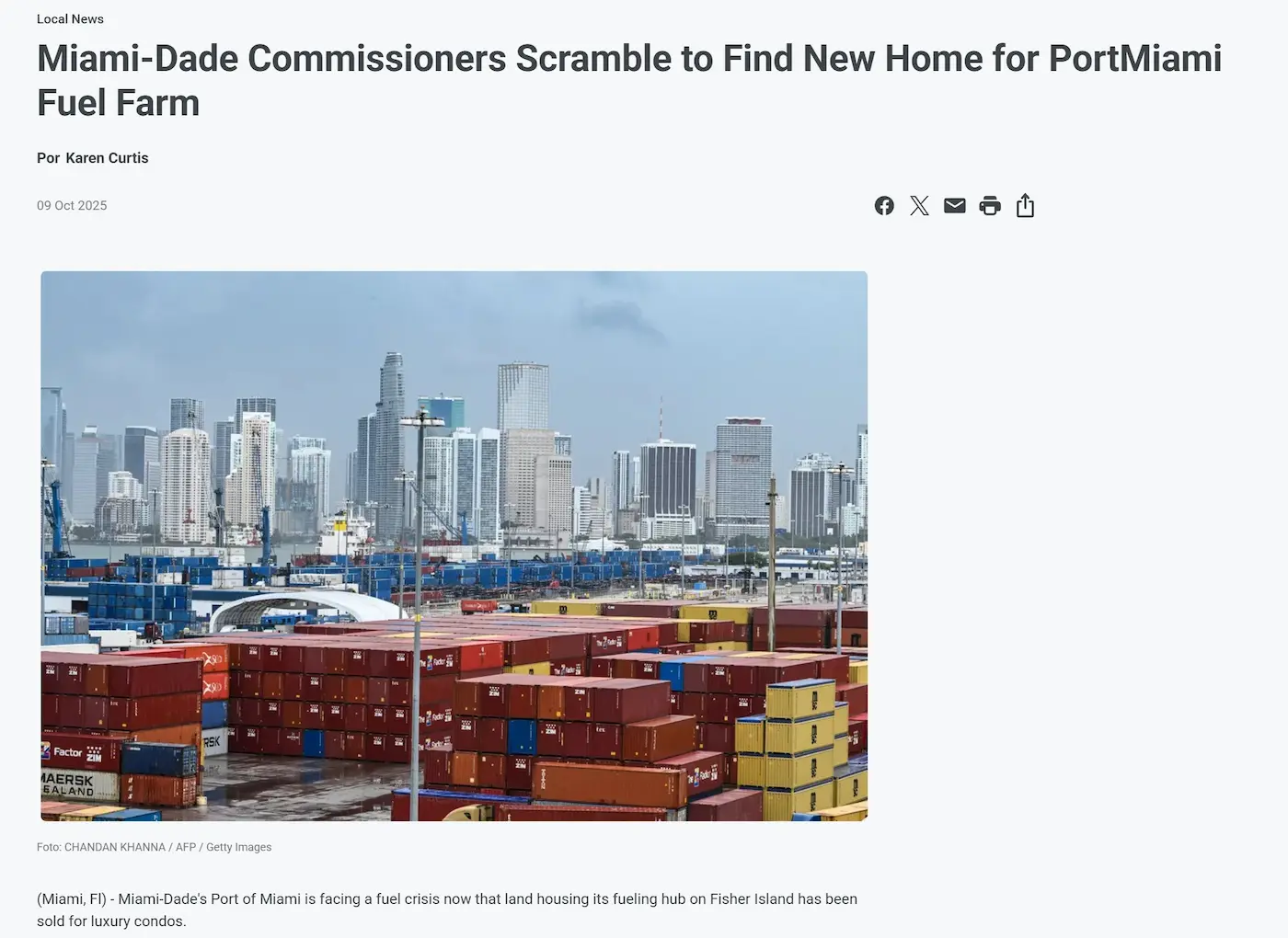
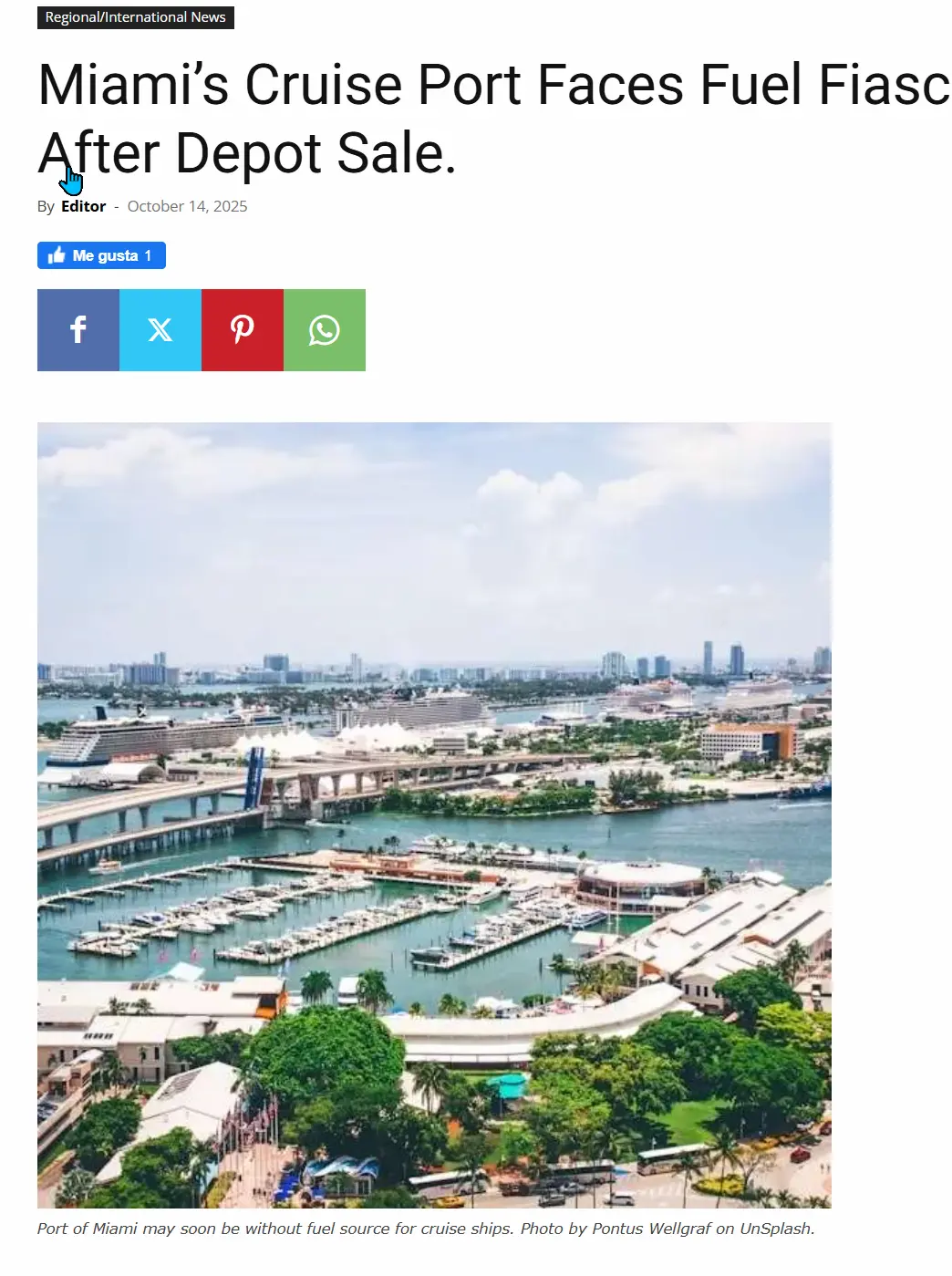
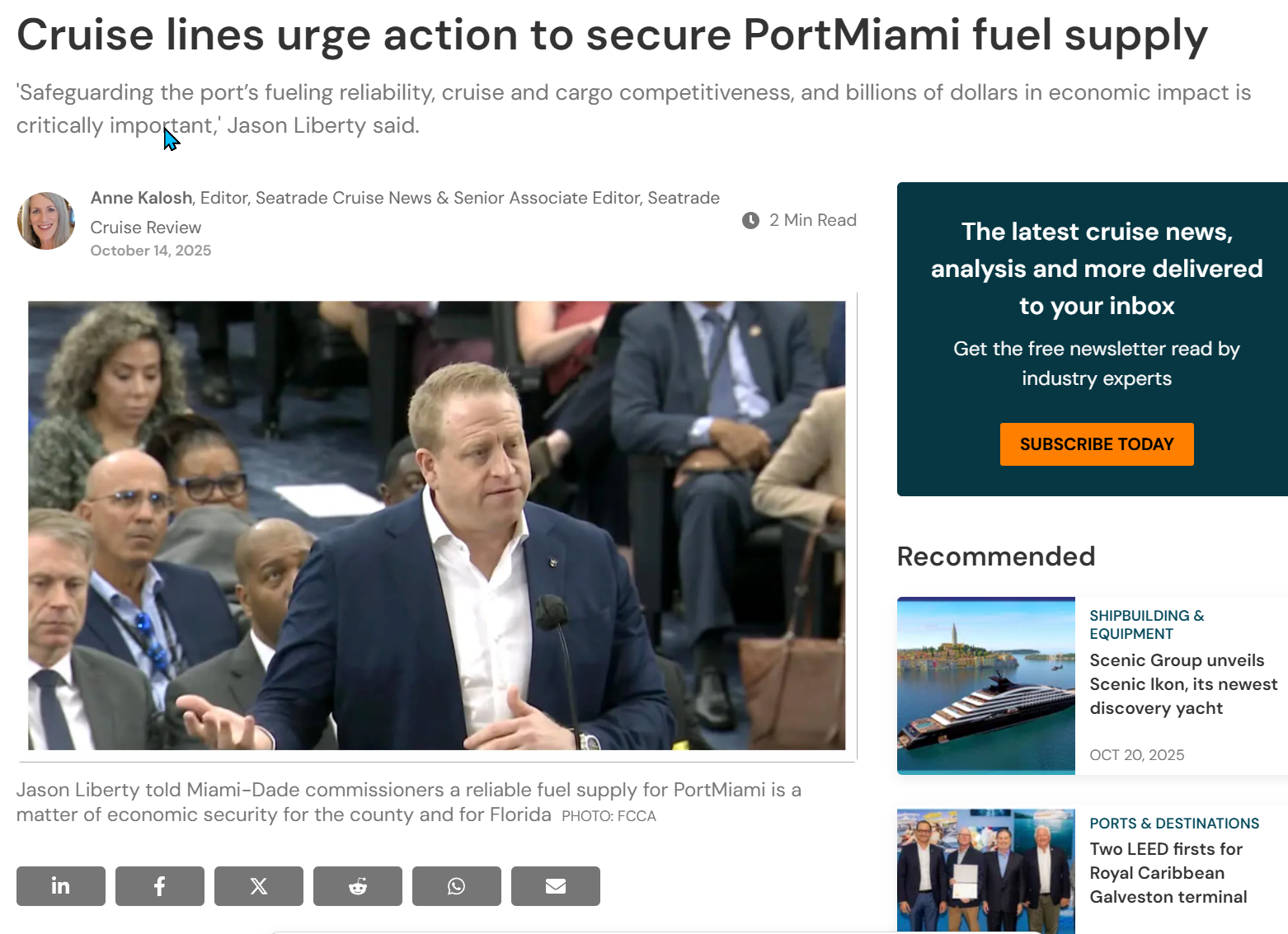
- Special meeting (public excerpts): Cruise industry (CEOs of Royal Caribbean, Carnival, etc.) asks to shield supply; Mayor Daniella Levine Cava and COO Jimmy Morales raise buying the property or initiate expropriation (eminent domain). Several commissioners question why the issue came so late and without all the actors (seller/buyer) in the room.
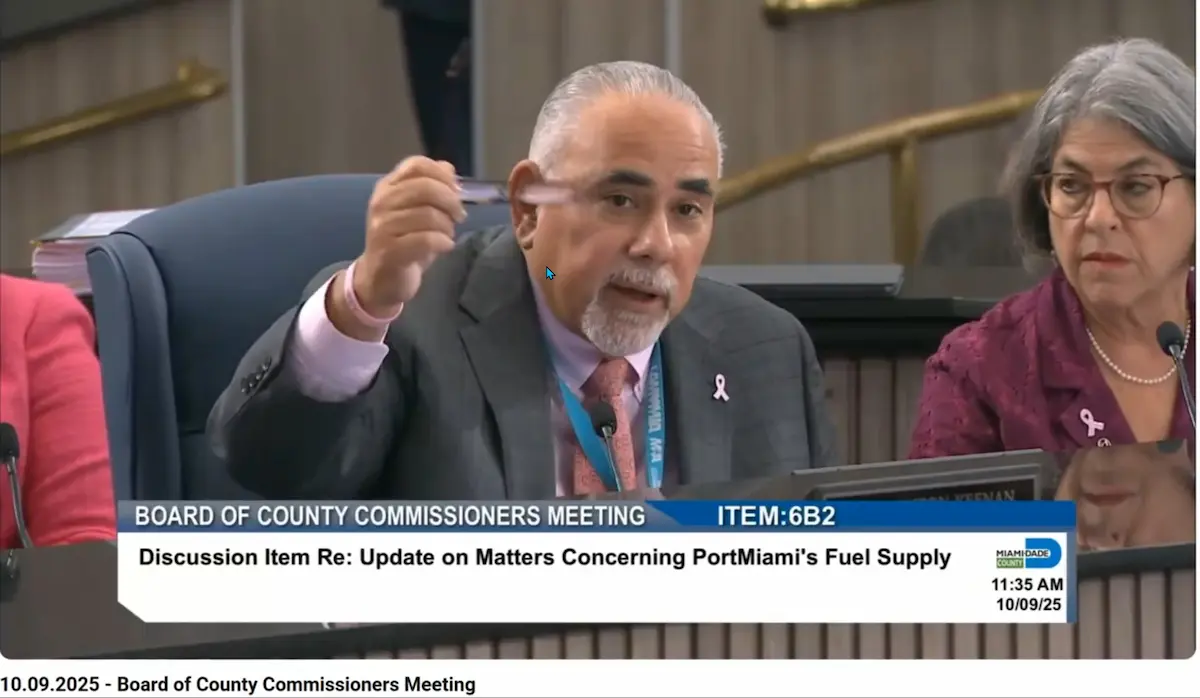
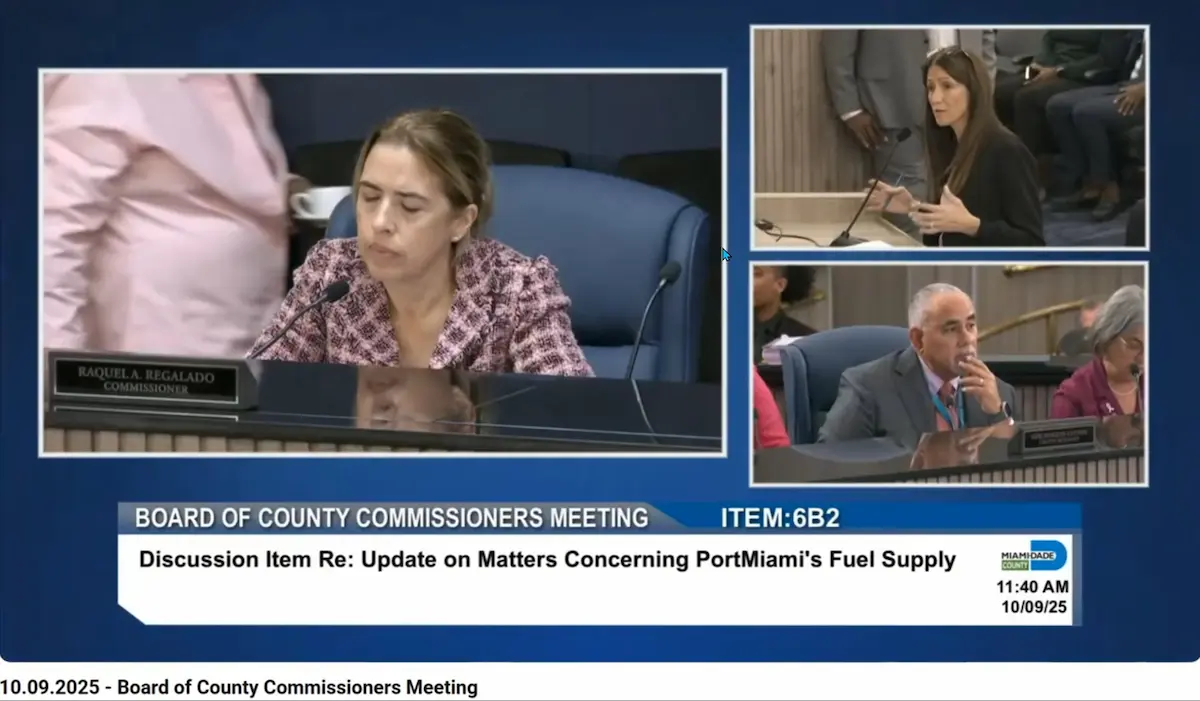
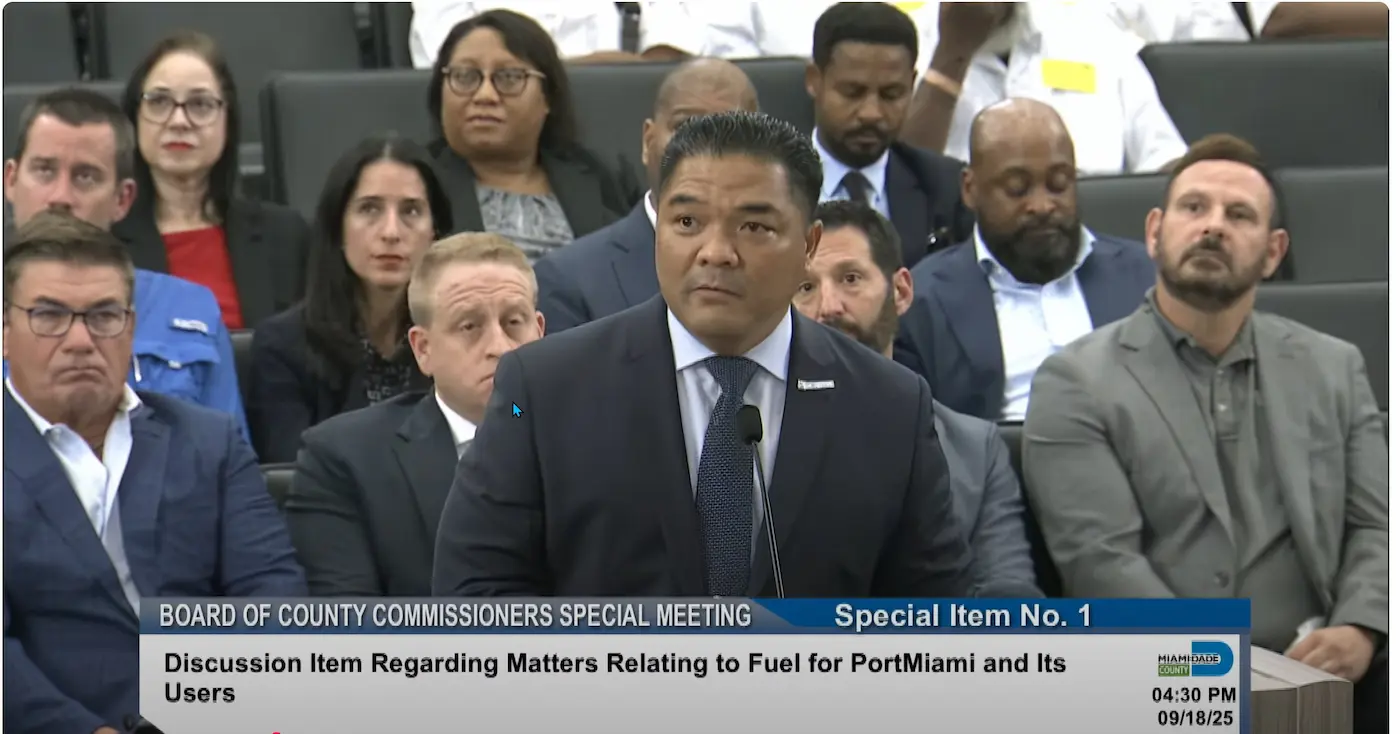
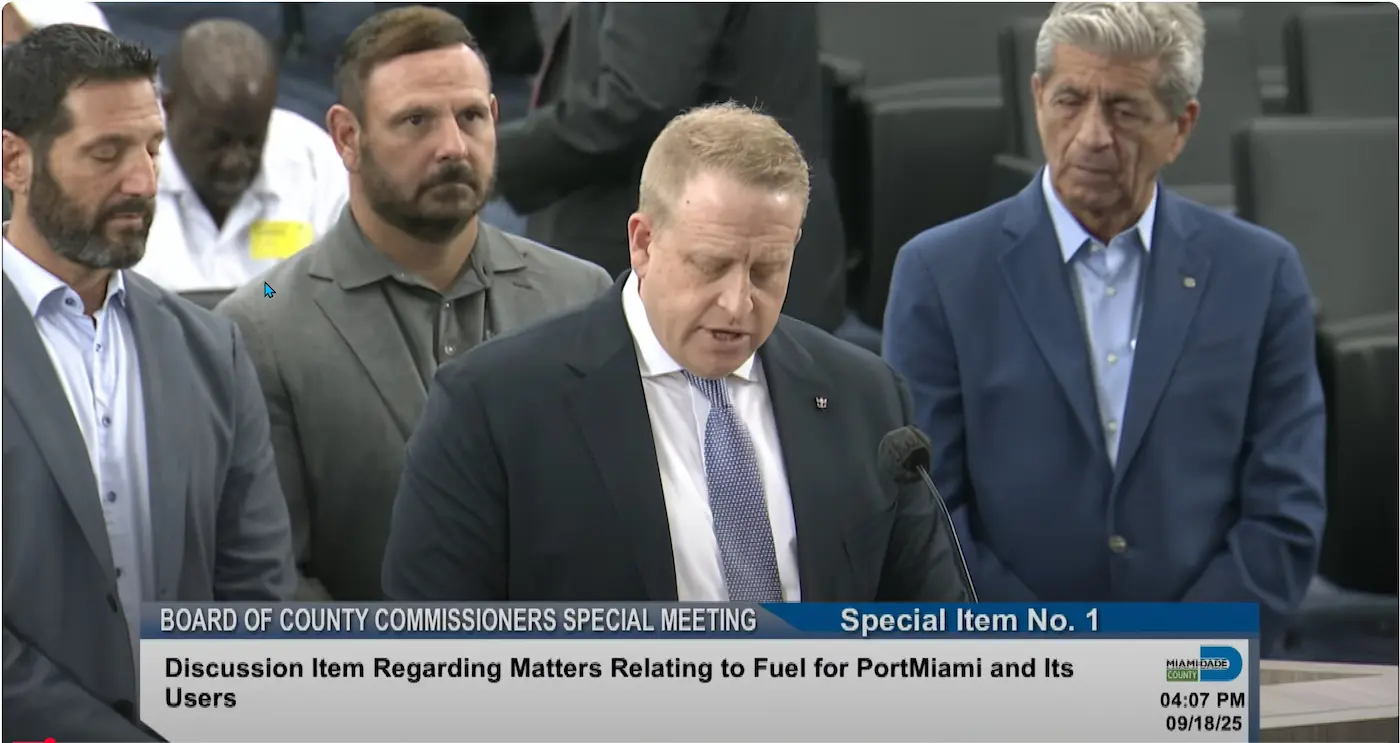
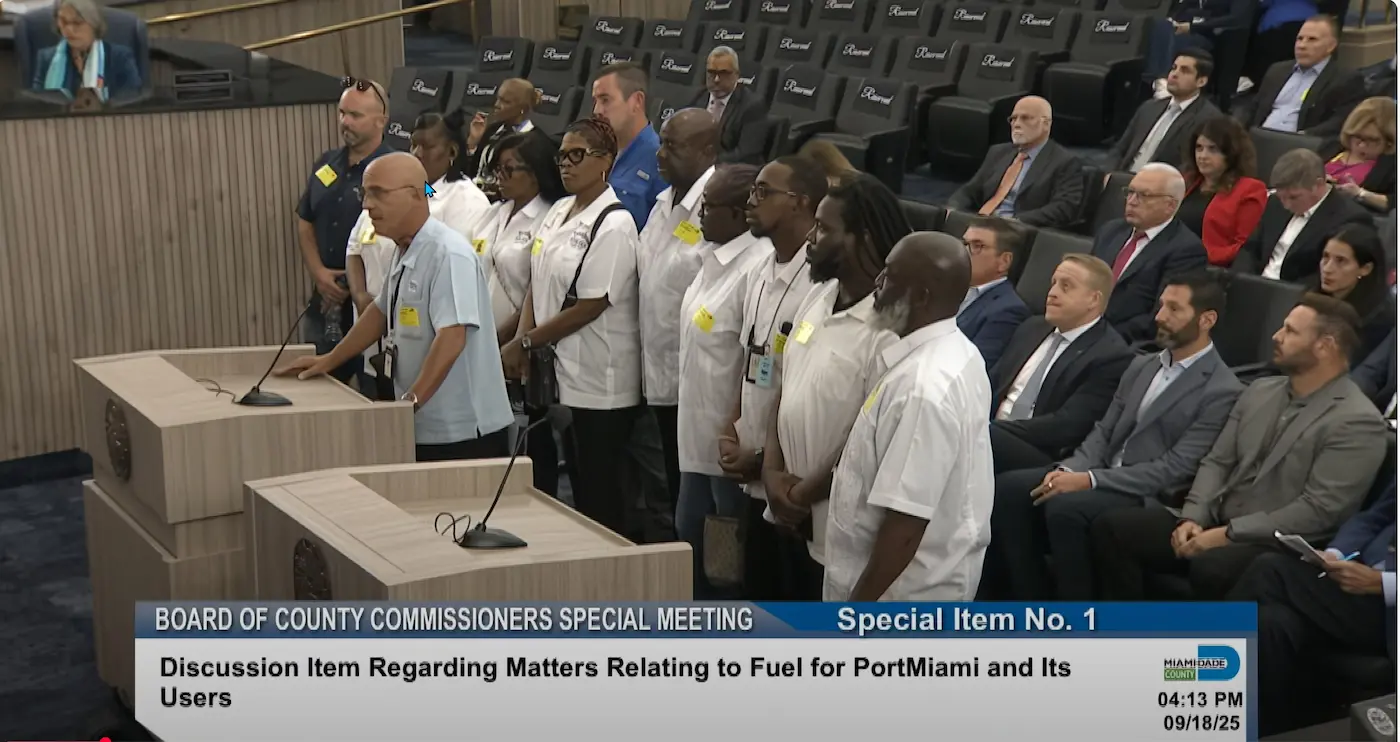
- Oct 2025 (script twist): Buyer HRP proposes a different way out: instead of paying billions for the old fuel farm, TransMontaigne (current operator) would invest ±$200M in a new depot within the port itself, via land lease to the county. The discussion shifts from “save the old” “put out the fire” to build the new and modern “design the port of the 21st century”.
Who is responsible (and why)
1) Port and County Administration
- Hydi Webb – PortMiami Director. Had to provide early warning of fuel farm sale and operational risks; received audits on PMCM in 2024.
- Jimmy Morales – Chief Operating Officer. Led/backed the buyout strategy; acknowledged that the issue came late to the Commission.
- Mayor Daniella Levine Cava – Spearheaded the petition to authorize acquisition or eminent domain and argued that fuel is critical port infrastructure.
2) Miami-Dade Commission (Plenary)
- Anthony Rodriguez – Chairman. Called the special meeting and moderated the discussion where the lack of early warning and the tension between negotiating vs. expropriating was evident.
- Key commissioners by committee function (2025):
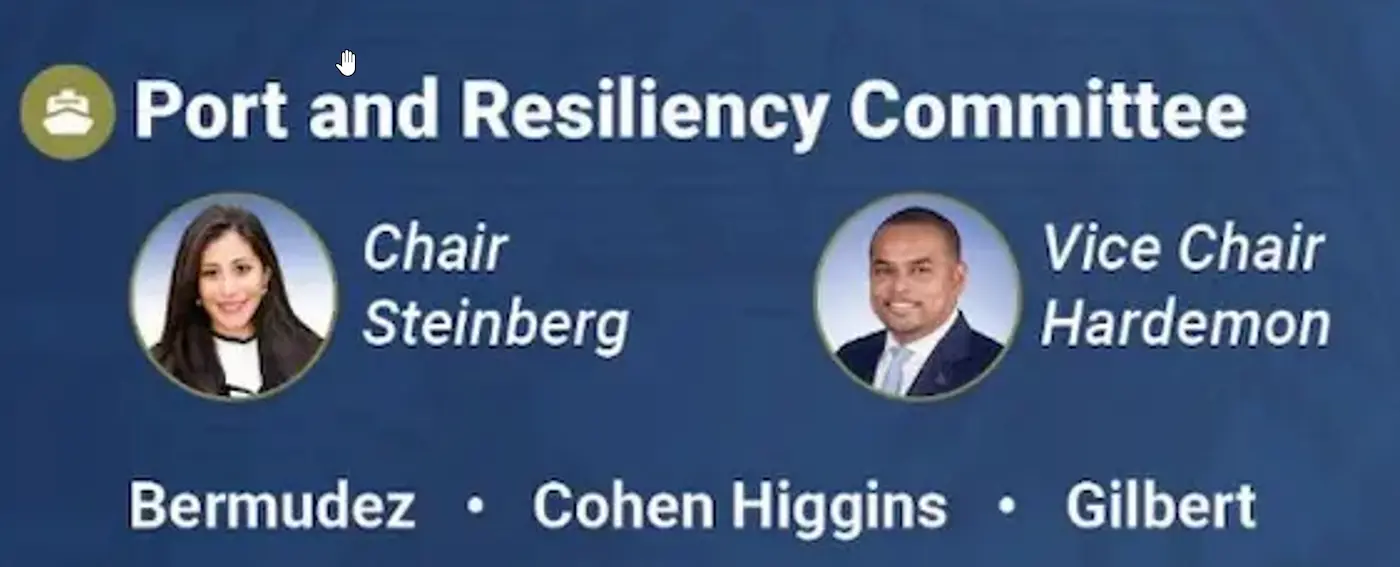
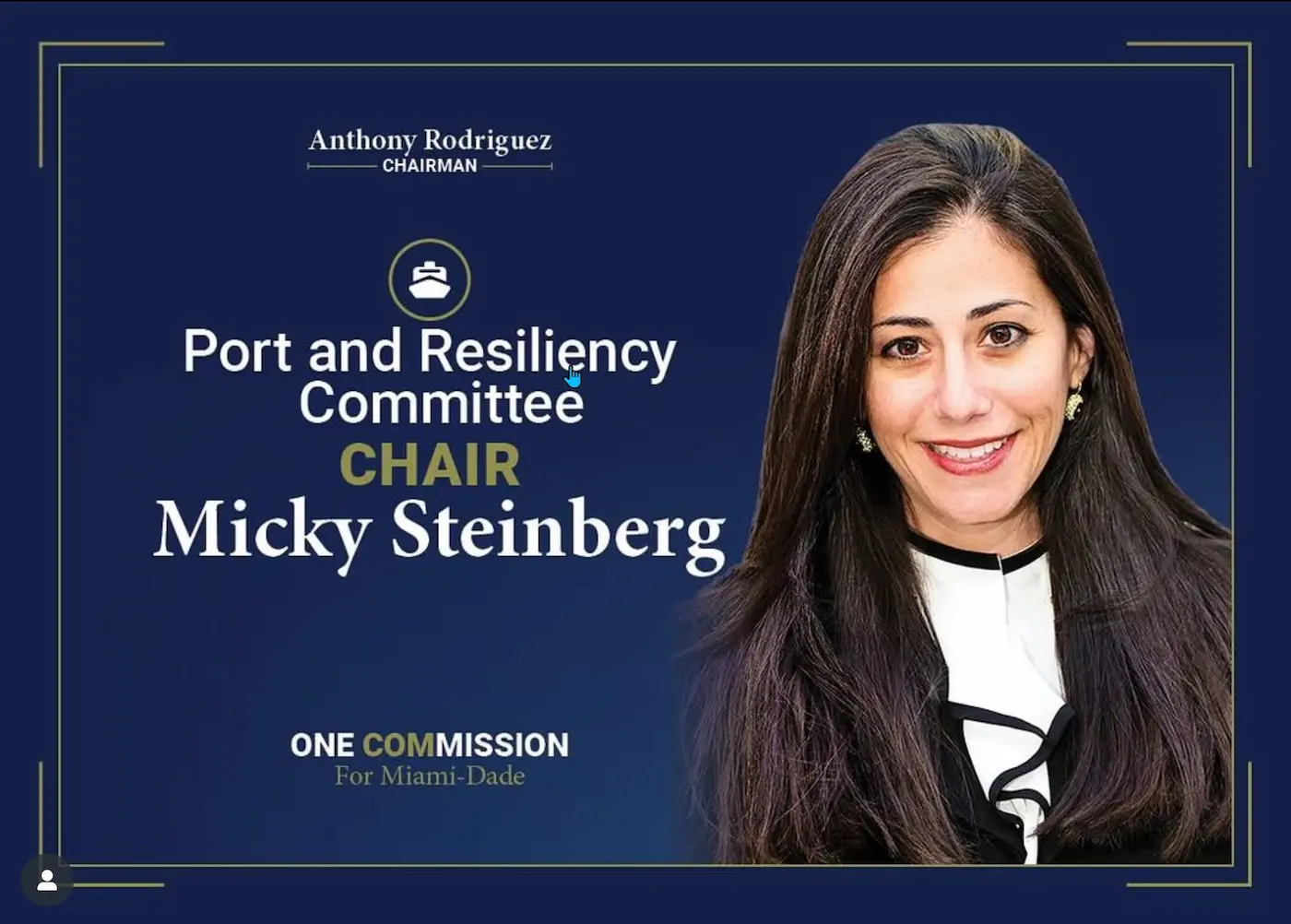
- Micky Steinberg – Chair, Port and Resiliency Committee. Keon Hardemon Vice Chair: This is the direct port committee; it was to monitor operational continuity (fuel) and asset resiliency (cranes).
- Oliver G. Gilbert III – Chair, Infrastructure, Innovation & Technology Committee. Should have required maintenance and modernization plans (cranes, systems).
- Danielle Cohen Higgins – Vice Chair in Infrastructure and Vice Chair in Appropriations; dual role on infrastructure and money.
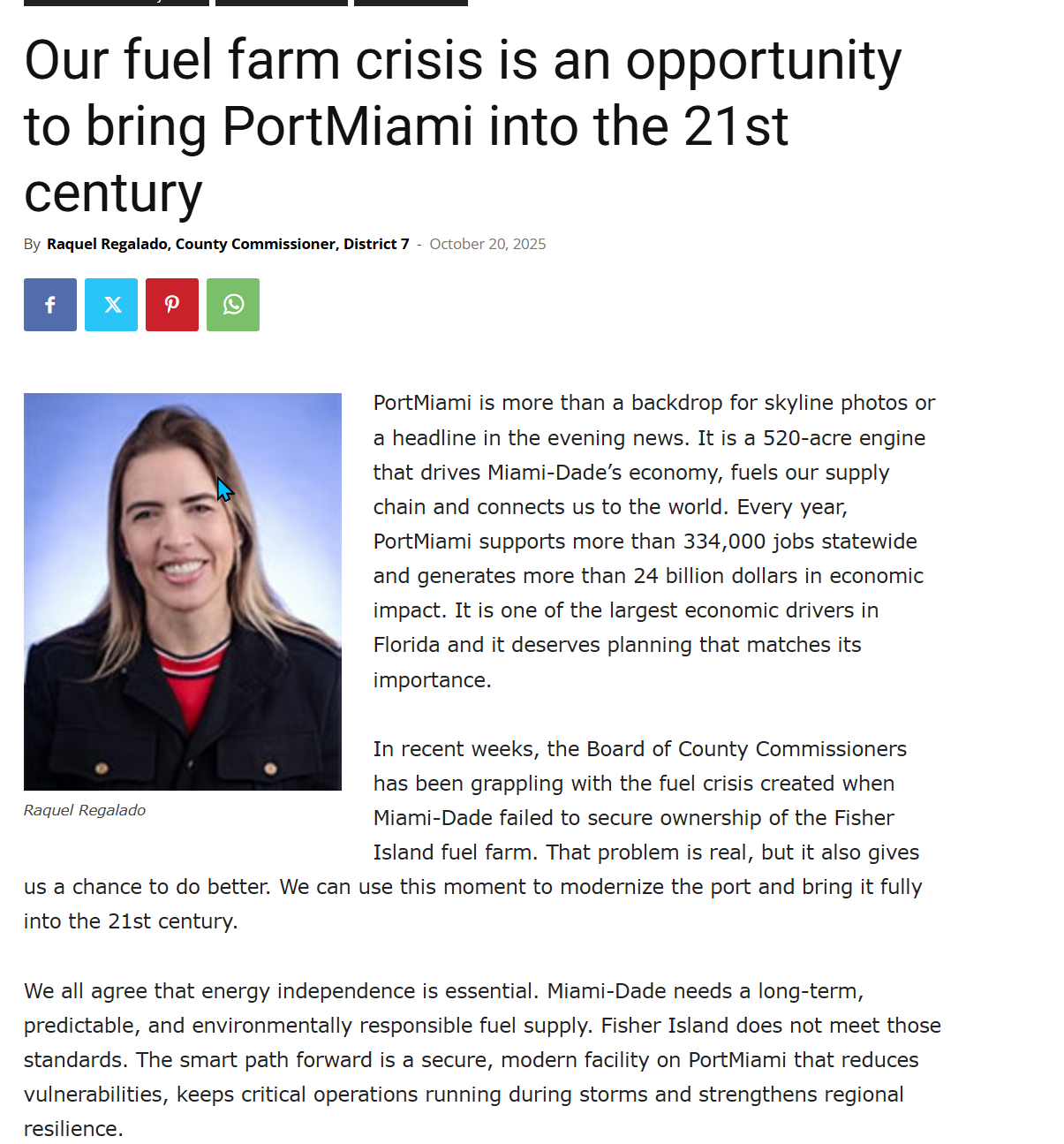
- Raquel A. Regalado – Chair, Appropriations Committee (budget) and Infrastructure member. Called for changing the Port’ s culture to detect strategic purchases and prioritize critical infrastructure (e.g., obsolete fire station).
- Juan Carlos Bermudez – Chair, Government Efficiency & Transparency (Ad Hoc). He had to promote monitoring and early warnings of risks/inefficiencies.
- Natalie Milian Orbis – Vice Chair, Government Efficiency & Transparency; Should have been on efficiency and process monitoring.
- Other relevant members of these three commissions: Gonzalez, (also a member of other commissions), etc.
Translation of responsibilities for practical purposes
- Port & Resiliency (Steinberg): port operational continuity (fuel, contingency plans, shock resilience).
- Infrastructure, Innovation and Technology (Gilbert / D. Cohen Higgins, Regalado, Steinberg): crane maintenance, useful technologies (not “gadgets”), and critical asset status.
- Appropriations/Budget (Regalado / D. Cohen Higgins, Gonzalez, Milian Orbis, Steinberg): prioritize funds for essentials (fuel, station 39, modernization).
- Efficiency and Transparency (Bermudez / Milian Orbis, D. Cohen Higgins, Gilbert, Regalado): hold PMCM accountable and trigger alerts when a strategic fuel farm comes into market play.
Where the public chain of custody failed
- Outdated planning. The 2011 Master Plan does not address the port’s current density, climate pressure, security and post-pandemic reality. Investment concentrated on façade (cruise terminals) and left gaps in essential services (e.g., Fire Station 39 in precarious conditions).
- Alerts under-attended. PMCM audits (untendered purchases, poor maintenance) should have triggered hearings and follow-up in the Infrastructure/Ethics committees and the port committee -chaired by Micky Steinberg-, with action matrices and dates.
- Ignored real estate market. The sale of the Fisher Island property simmered for months. The Port did not compete on the purchase, nor did it raise a plan B in time; the Commission ended up deliberating just days before the private closing.
- Reactive governance. The Board debated expropriation vs. negotiation, with crossed positions and without all the private actors present. Result: political stalemate, more time wasted.
What is at stake (in simple terms)
- Competitiveness: without a stable bunker “in port”, shipping lines relocate ships where there is certainty.
- Employment and income: less scales = less work (ILA), less hotel/aviation/consumption = less taxes.
- Future costs: postponing a decision makes the asset more expensive if it is “tied up” urbanistically for condominiums.
Responsible options on the table
- Intraport Plan (HRP turnaround)
– TransMontaigne to invest ~$200M in a new fuel farm within PortMiami.
– County leases land (recurring revenue), controls environmental standards and mitigations.
– Requires permitting, resilient design and hard timeline (but creates own modern solution). - Acquire Fisher Island property (purchase or eminent domain).
– Pros: short uncertainty today.
– Cons: contaminated site, expensive remediation, and community pressure to remove tanks. - Logistical alternatives (barge/pipeline/rail)
– Expensive, slow and vulnerable to weather; useful as a redundancy, not as the main solution.
Accountability: specific questions
- Mayor Daniella Levine Cava
- Early notice: On what date was your office informed of the sale of the Fisher Island fuel farm and who notified you?
- Red flag” protocol: Why was a formal early warning (memorandum and timetable for action) not issued to the full Commission when the operation became known?
- Chief Operating Officer Jimmy Morales
- On what date and time was your office notified of: (a) the sale of the Fisher Island fuel farm and (b) the key findings of the PMCM audits?
- What alert did you trigger (memo number, date, recipients) to inform the mayor/mayor and the Board?
- Prior to the private closure, what intra-port alternatives did you raise (layout, easements, security, CAPEX/OPEX costs), and why were they not presented in time to the plenary?
- Detail all the negotiations with seller and buyer (dates, proposals, counter-proposals).
- What milestones did you miss (e.g. closing dates, objection periods, appraisal) and what economic impact did this delay generate?
- To the port committee chair (Micky Steinberg):
When and how were the fuel farm alerts and aftermath of the PMCM audits agendized? What follow-up hearings were held? Where is the committee’s timeline – with milestones, responsible parties and dates? - To Infrastructure/Ethics:
What control matrix was required following the 2024 audits (purchasing, cards, maintenance)? What are the compliance KPIs and who reports progress? - To Port Management:
Why was no timely purchase option or Plan B (intra-port) presented prior to closure? What actual site capacity is there for a resilient fuel farm (layouts, easements, security, Bay-proof)? - To the (full) Board:
Will an updated “Port 2035” (master plan) with critical infrastructure priorities (bunker, fire station, power, cyber/security) and quarterly public metrics be adopted?
Where was the negligence (in layman’s terms)?
- Late and wrong: the County knew that the only bunker point was for sale and did not act in time to secure the asset or its replacement.
- No plan B: no fuel redundancy or intra-port “shovel-ready” project was created for years, despite relying on a single external site.
- Lax governance: hard audits in 2024 and a resignation in 2024/25 without immediate reengineering of procurement, maintenance and control.
- Avoidable economic risk: bringing the issue at the last minute pushed to discuss expropriation in the heat of the moment, exposing to higher costs and legal uncertainty.
- Lagging vision: a port that is an “engine” operated with an outdated master plan, prioritizing facades (terminals) over critical resilience (fuel, fire, energy, security).
What happened and why should you care?
For decades, the port has been supplied from a neighboring site on Fisher Island. There are old tanks that have completed their cycle. That land changed hands: a developer bought it with the intention of, sooner or later, removing the tanks and building housing. So far, nothing unusual: in Miami, bricks rule.
The problem is that the port depends on those tanks every day. If they go without replacement, there is no convenient or cheap plan B: bringing fuel by barge from another port is slower, more expensive and vulnerable to weather. That makes cruisers, stevedores, cab drivers, hoteliers… and anyone whose job touches tourism nervous.
The unexpected twist
Just when it looked like the county was going to pay a bundle to “rescue” the old site, along came a proposal that changed the script: build a new, modern fuel center within the port itself, with private investment, and have the county charge a lease for the land.
Let’s translate: instead of buying a tired asset and continuing to patch it up, something new, safer and cleaner is built, and the port also charges rent. Less “stop the blow”, more “sow value”.
And why wasn’t this done earlier?
Because PortMiami is a suitcase full: almost the entire floor is committed to terminals, yards and roads. It is the most efficient port per square meter, but that efficiency left little room for “invisible” services such as tanks, firefighters or backup power. In pandemic, cruise ships took the opportunity to modernize. The rest of the system, not so much. Today we pay that bill.
An example that speaks volumes: the port fire station is old, small and poorly located .How do we protect billions in ships, fuel and cargo with a base that looks temporary? That contradiction explains why this debate goes far beyond a few tanks.
The two routes on the table
Route A: hold on to the past
Buy the Fisher Island site, make it up and move on. It sounds “safe,” but it’s expensive, contentious with neighbors, and ties you to a design from the last century. It’s like putting new tires on a car without ABS brakes.
Route B: leap into the future
Build the new center within the port, with modern standards (detection, containment, spill protocols), private investment and leasing for the county. The challenge? Fitting a large construction site into a tight location without slowing down daily operations. The reward? More control, more safety and a money-making asset.
What must be demanded
- Don’t cut the music: transition plan so that no ship is left waiting for fuel.
- Work with clock and penalties: public calendar, monthly progress and penalties if late.
- Safety first: tanks with dikes, sensors, fire fighting foam, drills and open reports.
- Protected environment: barriers and protocols to prevent a drop from reaching the bay. Insurance and remediation fund paid by the operator.
- Decent firefighters: new Station 39 included in the package, with equipment and backup power.
- Clear accounts: how much the private sector invests, how much it pays in rent, what that income is used for (maintenance and resilience, not bows).
- Emergency Plan C: if “new” does not fit for space or permits, have a temporary scheme (barges) with strict service rules and expiration date.
What signs should set the alarm bells ringing
- Promises without a timetable. No dates, no commitment.
- A lot of “selfie” and little work. Inaugurating beautiful halls does not put out fires.
- Silence about the bay. A serious project starts talking about prevention and cleanup, it does not hide it in fine print.
- Pretext of “it can’t be done”. Yes it can if it is seriously planned: night phases, modules, temporary relocations. The port operates 24/7; the work must adapt, not the other way around.
What we gain if done right
- Reliable supply for cruise ships and cargo: fewer delays, lower costs, more itineraries that stay in Miami.
- A safer port for workers and neighbors.
- New leasemoney to reinvest in resilience (drainage, energy, cybersecurity, levees, elevations).
- Better reputation: a port that cares for the bay is worth a thousand green speeches.
And what we lose if the can is kicked down the road
- Dependence on third parties and weather for bunkering.
- Business opportunities migrating to other more predictable ports.
- More patches, more expenses, less control.
This case is not about “condos vs. tanks”. It’s about serious governance of a strategic asset. The Port Committee Chair (Micky Steinberg) and the Infrastructure and Ethics committees must take leadership: timeline, metrics, tracking and results. If Miami-Dade takes ownership of the problem with a modern, green, intra-port solution, PortMiami will continue to be the engine of our economy. If not, we will be left with the picture…and without the boat. Thinking
This is not a debate about “tanks yes or tanks no”. It is a choice between patching yesterday or building tomorrow. The offer to move fuel within the port with private money and clear rules is a rare opportunity: it solves the problem, improves safety and leaves a stable income.
Is it easy? No. Is it worth it? Yes, if the county signs with hard pencil, timeline in hand and bay ahead.
Let’s not have the same old thing happen again: photos, ribbons and applause… but the engine room without modernization. PortMiami does not need more “tours”. It needs decisions
📰 Stay informed with the latest news!
Would you like to receive more information like this right on your screen? 🌟 Visit our homepage and find out everything that’s happening in South Florida: local news, events, weather, sports and much more.
👉 Click here! newsmiamidade.com/en
Don’t miss a single detail. #MiamiDade #News #Florida