
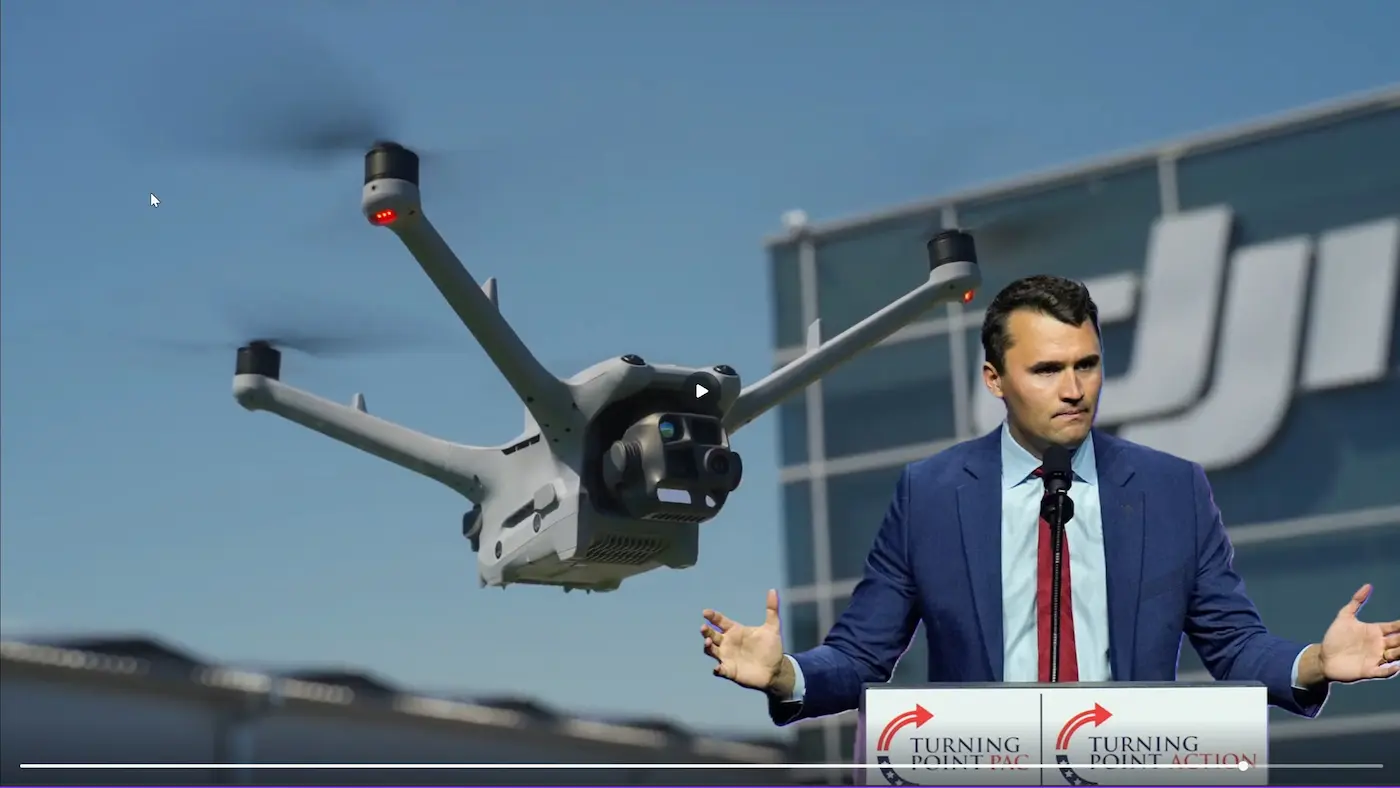
Tethered drones for open events: minimum standard that should be required for safety. Early detection, perimeter coverage, and coordinated response
Central idea: At large events with speakers and an audience, the most difficult threat to manage is remote attack from heights (rooftops/windows hundreds of meters away). A docked drone ecosystem—currently used by multiple security companies in Europe, America, and Asia—docks up drones, but it multiplies early detection, perimeter coverage, and coordinated response.
Note: Regardless of the veracity of a specific case, vulnerabilities (long-range shooting, elevated positions, panic, and evacuation) are real and require higher standards.

The “right” drone for perimeter security
Dock-type platform (autonomous)
- Weatherproof base with fast charging and automatic check; takes off in seconds after an alarm.
- Effective autonomy: 30–45 minutes per outing, with automatic return and recharging (24/7 cycles).
- Redundant communications (dedicated RF + 4G/5G) and Remote ID compliant with regulations.
- EO/IR sensors: 4K daytime camera, infrared night vision, 20–40x optical zoom for remote license plate/face reading.
- Integrated spotlight/speaker for deterrence and sectorized evacuation messages.
- VMS/FlightHub/PSIM integration: telemetry, maps, forensic replay, and audit trail.
Fixed alternative (tethered)
Drone with power/data cable (tethered) for continuous surveillance over a critical point without flying over people.
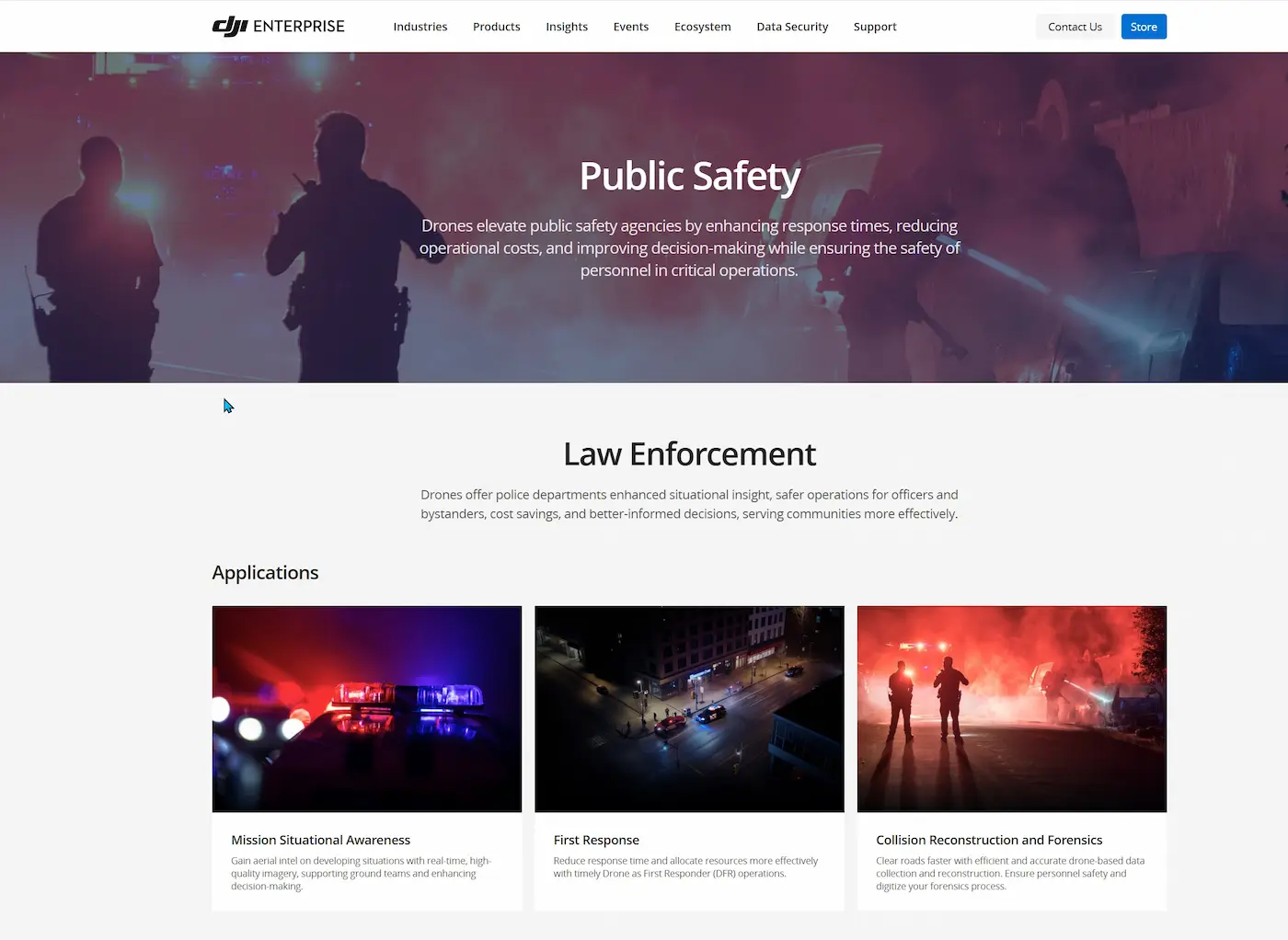
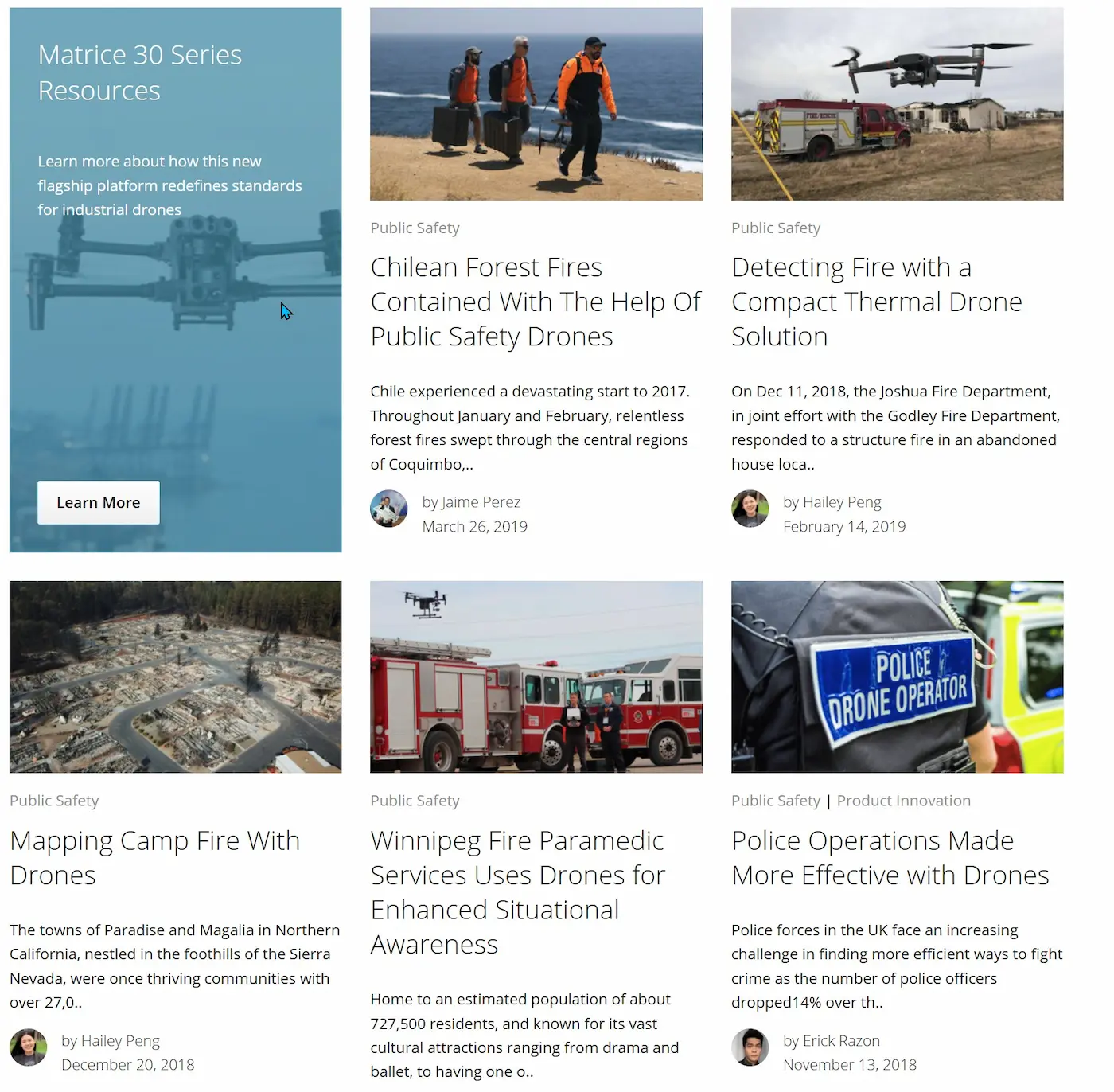
Minimum measurements for open events like the one Charlie Kirk participated in and was murdered live (layered model).
0) Legal framework and governance
- Operating agreement between the organizer, the police/locality, and the venue/campus owner.
- Operation under FAA/local authority rules (e.g., Part 107 in the US), with waivers if applicable and defined flight zones/times.
- Privacy and evidence retention policy, public signage, and specific insurance.
1) Site Design (Anti-Sniper)
- Real standoff between audience and stage; discrete ballistic-resistant panels/podium.
- Height Control: Building inventory with firing lines, temporary closures of critical rooftops, access patrols.
- Speaker and audience evacuation routes + TCCC (Hemorrhage Care) points on-site.
2) Surveillance and Detection
- Long-range CCTV on masts/towers + spotters (high-altitude observers).
- Acoustic shot sensors for triangulation of the source in seconds.
- Drones in dock:
- 3–6 bases depending on the perimeter, with scheduled rounds on rings (rooftops, edges, shooting corridors).
- Automatic takeoff in the event of: gunshot detection, rooftop intrusion, anomalous activity.
- Night patrols with IR to detect presence on roofs/windows.
- Tethered drones at static points requiring continuous surveillance without flying over crowds.
3) Command and Response
- Unified Command Post (UCP) with live video (CCTV + drones), mapping, and decision logging.
- Drone cell linked by radio with spotters and ground teams.
- “See-identify-communicate-intervene” protocols: the drone confirms and guides the response team; loudspeakers to guide evacuations by sector.
4) Medical Assistance and Exit
- Ambulance on site and at a previously coordinated referral hospital.
- Wave evacuation using the facility’s PA system + drone/tower loudspeakers.
- Telemetry/video backup and mandatory After Action Review.
Why isn’t it standard (yet)?
- Regulations (operating over people, TFR/NOTAM, Remote ID), which require planning and qualified pilots.
- Privacy and liability, which require clear policies and adequate insurance.
- Cost and integration: docks, aircraft, network, storage, and their fit with police/site security.
KPIs that matter
- Time to first “eye” (CCTV vs. drone) from alarm.
- Height coverage (% of rooftops monitored every X minutes).
- False positives/negatives and dispatches avoided by aerial verification.
- Regulatory compliance (zero violations) and privacy incidents (zero).
Quick checklist (scalable)
- Essential (minimum viable)
- Risk assessment + height control, stage buffer, CCTV, PA, medical equipment, clear routes.
- Intermediate
- 1–2 tethered drones + 1 response dock, acoustic sensors, discrete ballistic barriers, K9 teams.
- High risk
- Ring of 3–6 docks with 24/7 patrols, passive RF anti-drone detection, dedicated spotters, integrated PCU, pre-exercise red-team training.
Based drones—platforms with EO/IR cameras, long zoom, spotlight/speaker, and integration with the command—are already widely used by various security companies around the world. Integrating them as a fixed layer of the plan (and not as a gadget) turns a vulnerable event into an observed, verifiable, and evacuate environment in seconds. That difference saves lives.
📰 Want more news like this?
Visit our homepage to stay up-to-date on the latest happenings in South Florida and more: