
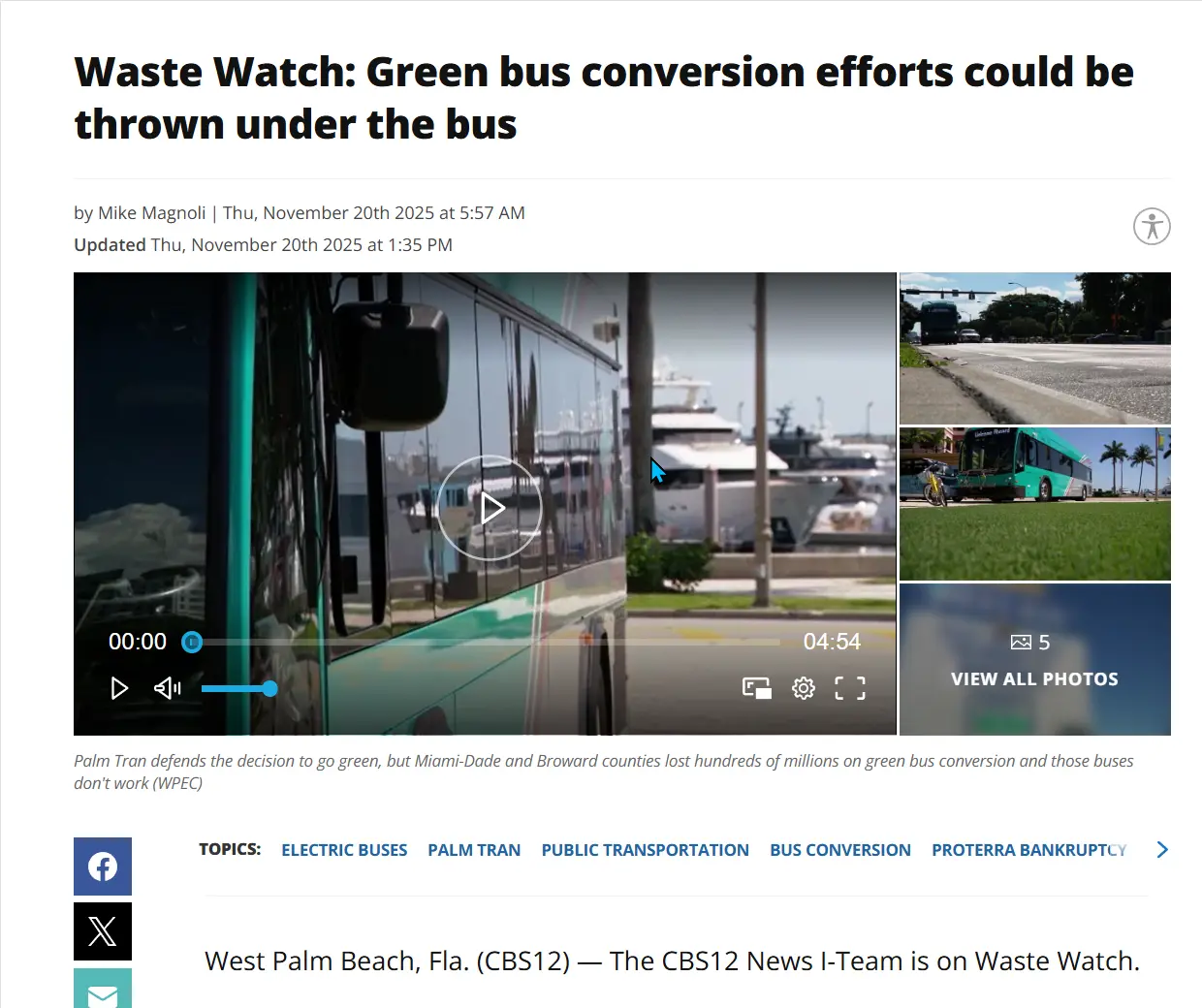
The Transition to Electric Buses in the U.S.: Lessons from Failures – Bankruptcies – Mismanagement in Miami-Dade. Major Bankruptcies in 2025: Detailed Cases
The transition to electric vehicles in public transportation represents one of the most ambitious bets to reduce greenhouse gas (GHG) emissions and combat climate change. However, in the United States, this evolution has been marked by corporate bankruptcies, persistent technical problems and public procurement decisions that reveal a lack of due diligence.
Miami-Dade County, through its transit agency (Miami-Dade Transit, MDT), exemplifies how a public administration can prioritize superficial “green” goals over thorough analysis, resulting in waste of public funds and operational delays. This research article delves into the chronology of key events, the companies involved, the actors involved, and systemic failures, highlighting why detailed studies available for years were not integrated into MDT’s decisions.
Electric Vehicle Industry Bankruptcies in 2025: A Year of Crisis and Lessons for the Sector
The year 2025 has been a critical inflection point for the electric vehicle (EV) industry, marked by a wave of bankruptcies that expose the vulnerabilities of a sector driven by hype, speculative investments and operational challenges. As the world moves towards electrification to combat climate change, startups and established companies have collapsed under financial pressures, demand reductions and supply chain problems.
This article delves into the key bankruptcies of 2025, analyzing causes, implications and common patterns, based on recent reports and industry analysis. From battery manufacturers to commercial vehicle producers, the landscape reveals a fragile ecosystem where initial optimism clashes with economic realities.
The Context: A Shrinking Market
2025 saw a cooling in EV adoption in the U.S. and globally, influenced by factors such as inflation, cuts in government subsidies and fierce competition from giants such as Tesla and BYD. According to IndexBox data, the EV sector faced “scores of bankruptcies” due to “economic slowdown and contraction in renewable investments.” Companies that raised hundreds of millions in previous funding rounds are now struggling for liquidity, with implications for jobs (thousands lost) and the energy transition.
A BatteryTechOnline report lists 11 battery and EV bankruptcies from previous years, but 2025 stands out for its concentration on ambitious startups.
Major Bankruptcies in 2025: Detailed Cases
The following is a breakdown of the most relevant bankruptcies, ordered chronologically by date of announcement or filing.
- Canoo (January 2025): Canoo, an “advanced mobility” startup founded in 2017, filed Chapter 7 bankruptcy in January, shutting down operations and liquidating assets. Reasons: Inability to scale production, rapid cash burn and lack of additional funding. They had raised partnerships with NASA and Hyundai, but lost $1 billion in market value since their SPAC in 2020. Implications: Loss of 1,000 jobs; highlights the collapse of SPAC EVs (companies that went public via reverse mergers). According to Wolf Street, Canoo joins a “line of SPAC EV bankruptcies.” electrek.co techcrunch.com
- Imperium3 New York, Inc. (January 2025): This battery company filed for bankruptcy after failing to restructure and raise capital. Reasons: Factory cost overruns and saturated market. Implications: Affects local battery supply, emphasizing dependence on Chinese imports. pressconnects.com bloomberg.com bkdata.com wbng.com
- Nikola Corporation (February 2025): Nikola, a pioneer in electric trucks and hydrogen, filed Chapter 11 on February 19. Reasons: Weak demand, previous fraud scandals (2021) and competition. Had raised billions, but burned cash on inefficient production. Implications: Reuters notes that it puts US EV startups “under the spotlight”; seeks asset sales, affecting investors and supply chain. nikolamotor.com dm.epiq11.com prnewswire.com cnn.com
- Natron Energy (September 2025): Sodium-ion battery startup abruptly shut down on September 2. Reasons: Inability to scale and attract investment in a volatile market. Implications: BatteryTechOnline uses it as a “reminder” of risks in innovation; sodium-ion promised to be cheaper than lithium, but failed in commercialization. michigan.gov energy-storage.news datacenterdynamics.com sodiumbatteryhub.com subscriber.politicopro.com hollandsentinel.com
- Bollinger Motors (November 2025): Commercial electric truck manufacturer shut down operations on November 21, with no formal bankruptcy filing. Reasons: Lack of liquidity after receivership in May 2025; lost two payrolls. Launched B4 in 2024, but did not scale. Implications: TheStreet links it to “financial distress” in EV; job losses in California. act-news.com cleantrucking.com insideevs.com gmauthority.com porterfreightfunding.com thetruthaboutcars.com
- Rad Power Bikes (December 2025): E-bike manufacturer filed Chapter 11 weeks after warning of closures without funding. Reasons: Post-pandemic sales slump and competition. TechCrunch calls it a “collapse”; seeks sale in 45-60 days. Implications: Affects micromobility; thousands of e-bikes unsupported. seattlebikeblog.com micromobility.io rideapart.com bicycleretailer.com techcrunch.com
- Ample Inc (December 2025): Battery swap startup filed Chapter 11 on December 16 in Texas. Reasons: Insufficient liquidity, regulatory delays, supply chain disruptions, and contraction in renewable investments. Raised $330M (including from Shell and Stellantis), but laid off ~200 employees. Electrek and Inc. highlight “mismanagement” and “overvalued hiccups”. Implications: Battery swapping failure (5 minutes per charge); follows Better Place (2013) and Tesla’s failed attempt. Assets: $10-50M; debts: $50-100M; seeks $6M in financing for restructuring. bondoro.com veritaglobal.net thestreet.com cleantrucking.com inc.com electrek.co
- Luminar (December 2025): LiDAR manufacturer filed for bankruptcy after layoffs and disputes (e.g., with Volvo). Reasons: Failed agreement with Volvo and executive departures. TechCrunch groups it with Rad Power. Implications: Affects EV autonomy; further consolidation in ancillary tech. luminartech.com manufacturingdive.com techcrunch.com telemetryagency.com wsj.com therobotreport.com
Common Causes and Patterns
- Economic: Contraction in renewable investments (post-inflation, subsidy cuts); cash burn in R&D without scalable sales.
- Operational: Overcustomization, insufficient ranges, battery failures (e.g., Proterra 2023 influenced 2025).
- Market: slower EV demand (Fortune: Ford lost $19.5B in EVs); Chinese competition (banned by NDAA 2019).
- SPAC Collapse: Many (e.g., Nikola, Canoo) exited via SPAC, inflating values without fundamentals.
Implications for Industry EV2025 accelerates consolidation: Giants survive (Tesla, BYD); startups fail due to hype without viability. Job losses (~10,000 estimated); innovation delays (e.g., battery swapping). Governments (U.S.) lose subsidies; investors wary. Positive: Lessons for standardization and due diligence. In summary, 2025 reveals a painfully maturing EV sector, with bankruptcies as a warning: Innovation requires solid foundations, not just speculative capital.
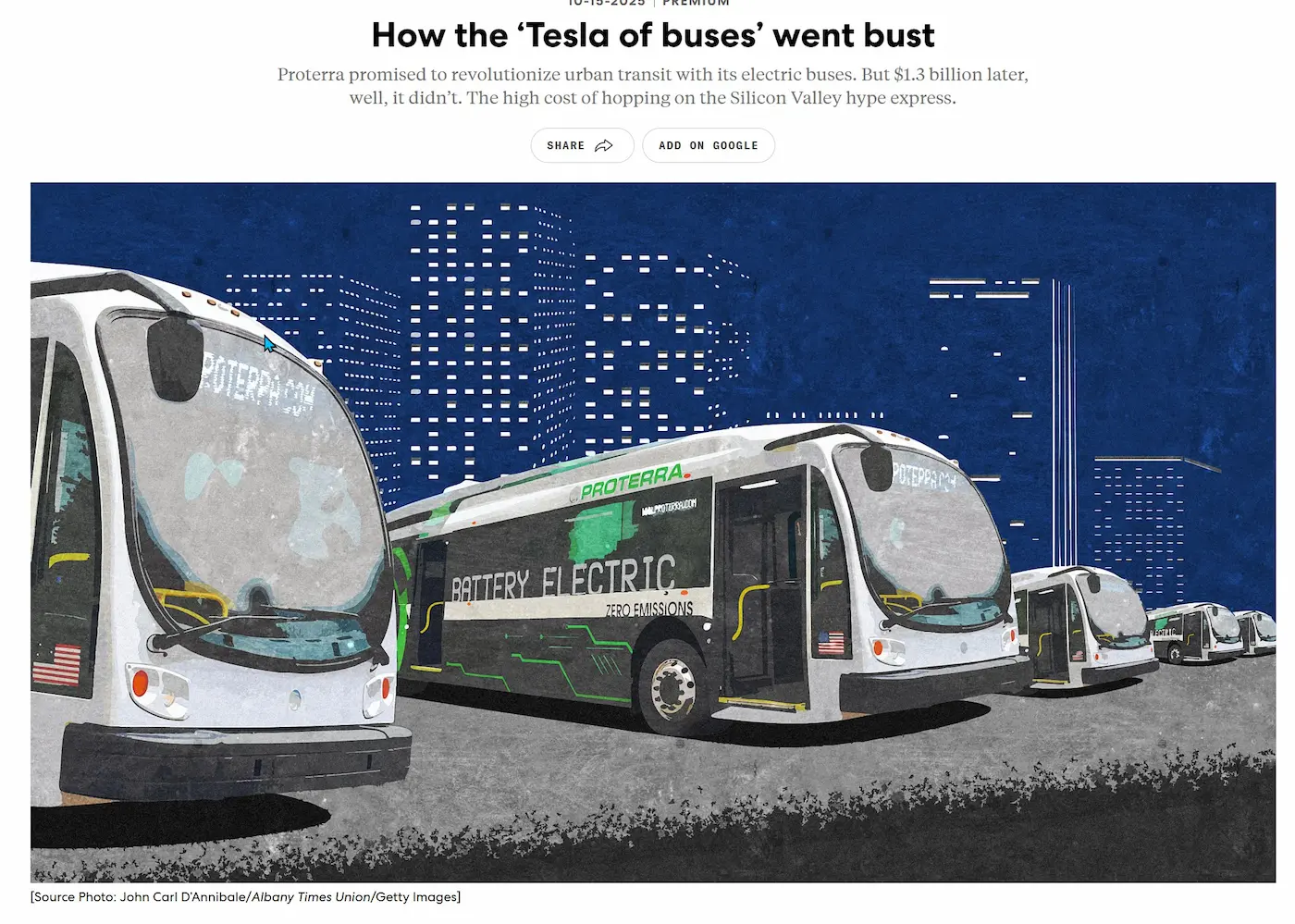
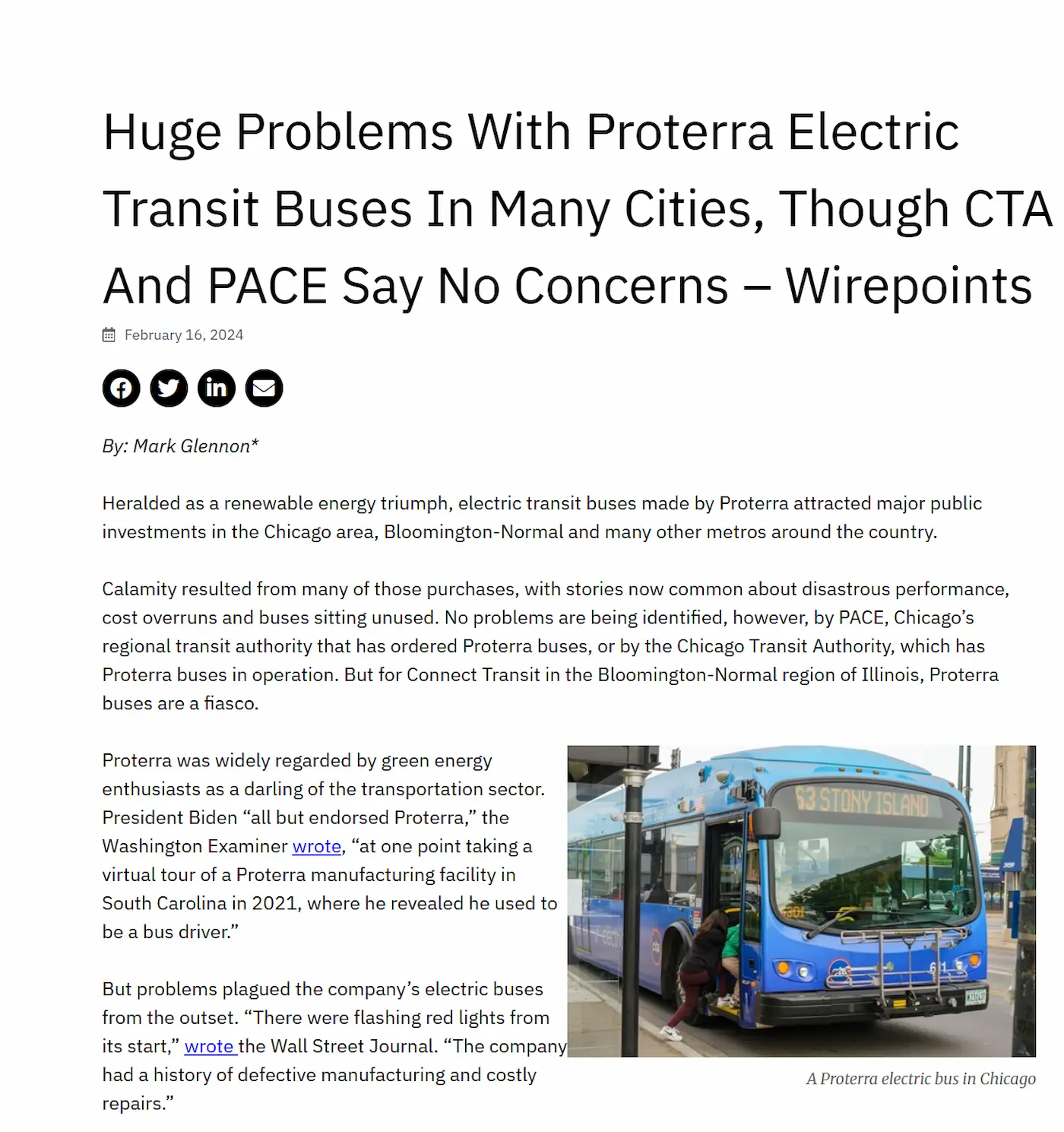
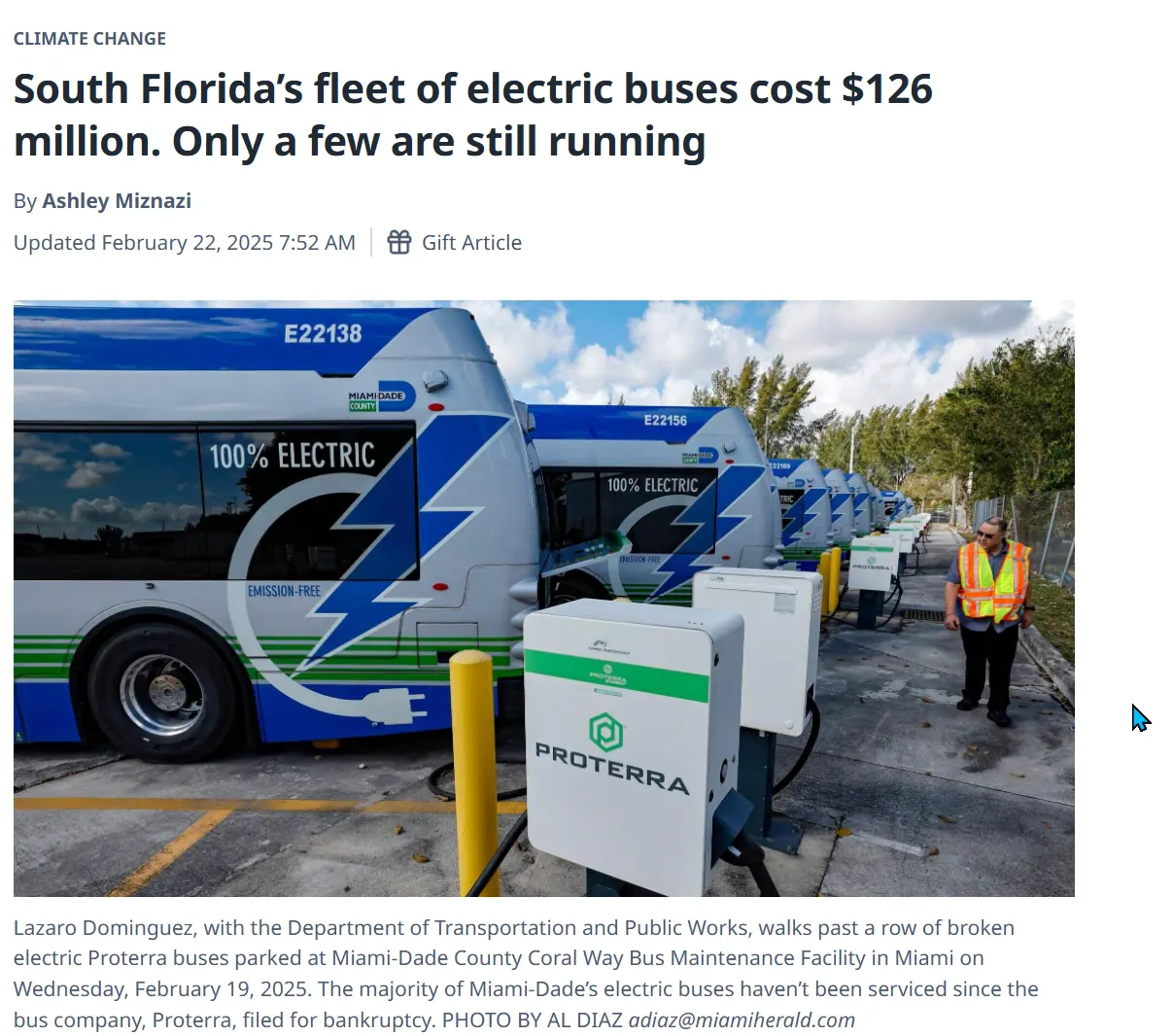
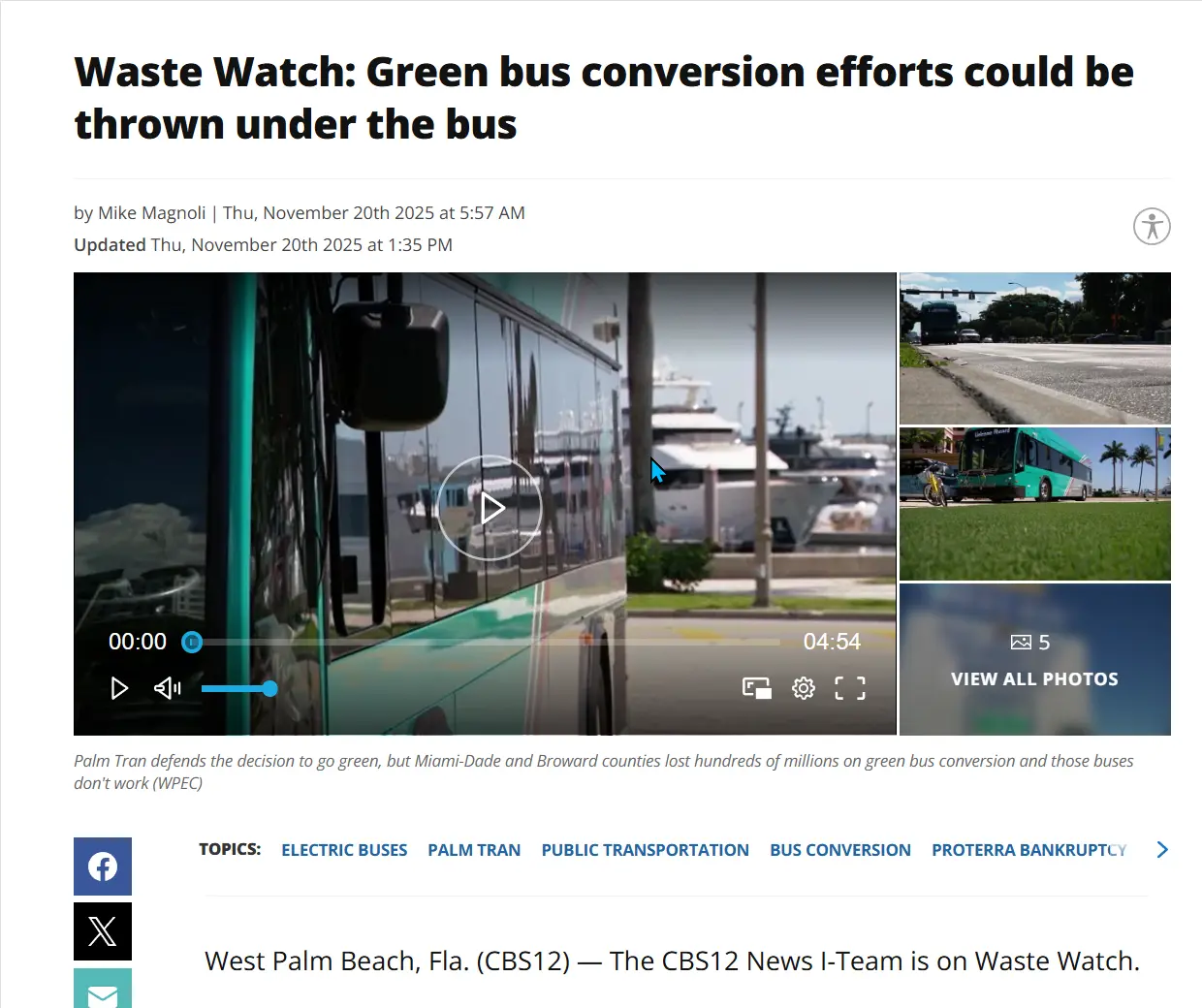
Based on official reports, audits and independent analysis, it shows how “public money does not hurt” the administrators, but it does hurt the taxpayers and users of the system.
Chronology of Analysis and Decisions: What was Known and Ignored
The electric bus (eBus) industry has been studied extensively since the late 2010s, with tests revealing failures in reliability, range and support from emerging manufacturers such as Proterra and BYD. However, MDT opted for risky acquisitions without incorporating these lessons.
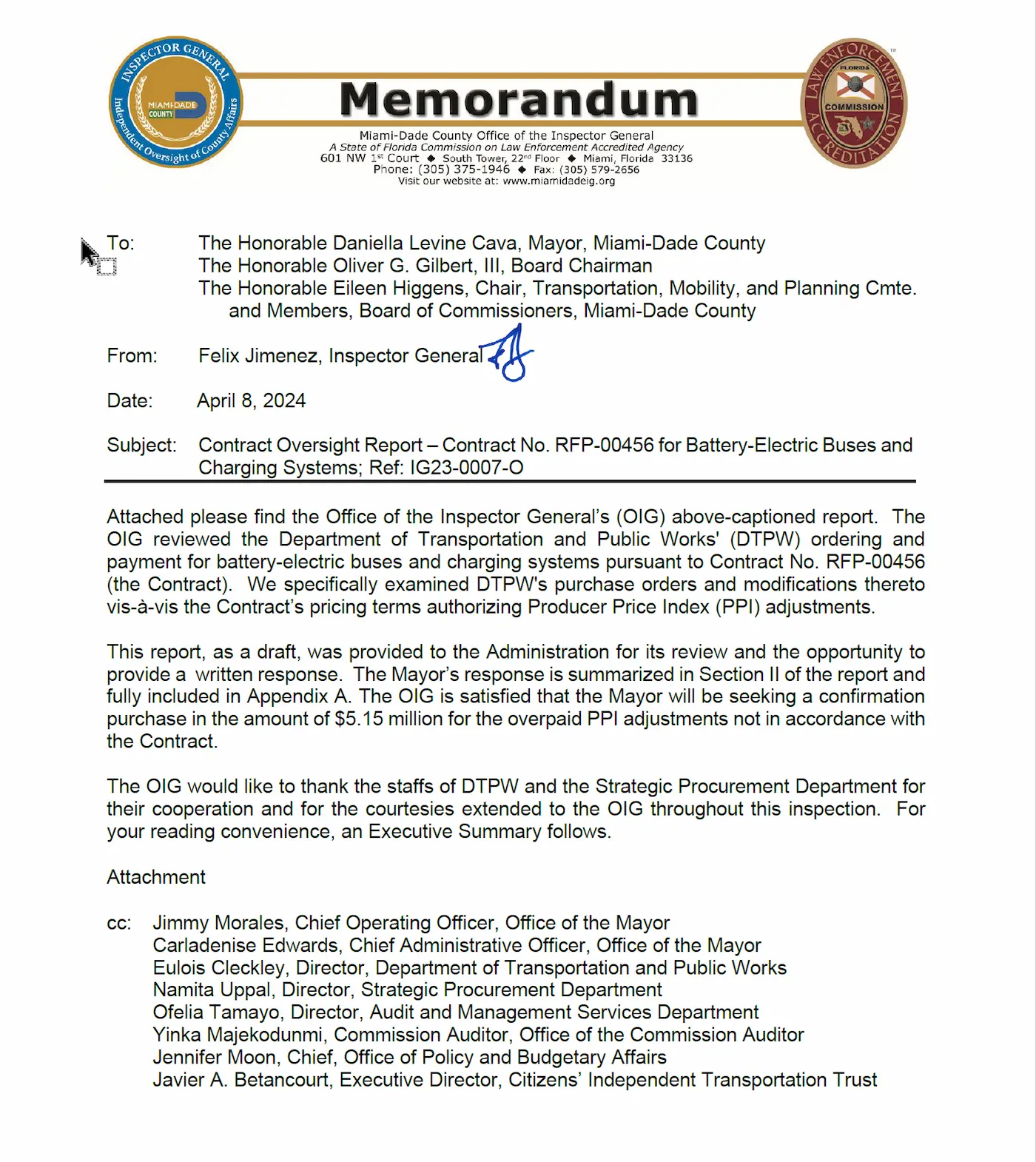
Detailed chronology of the Proterra and MDT relationship:
- 2017-2019: Initial Testing and Early Warnings: Agencies such as the Toronto Transit Commission (TTC) began comparative evaluations of eBuses.
- The RFP (Request for Proposals) process began in 2018, but formal award occurs in October 2019. miamidadeig.org +1 Proterra wins bid highlighting its EV technology, aligned with MDT’s “green” goals.
- October 2019: Initial Contract Signing (RFP-00456). MDT awards Proterra a contract for33 Catalyst E2 electric buses and up to 75 plug-in chargers, for an initial value of about $50 million (part of a larger plan for 75 buses). railwaygazette.com miamidadeig.org gazitua.com. This marks the beginning of the “historic” agreement to electrify MDT’s fleet, with an emphasis on sustainability.
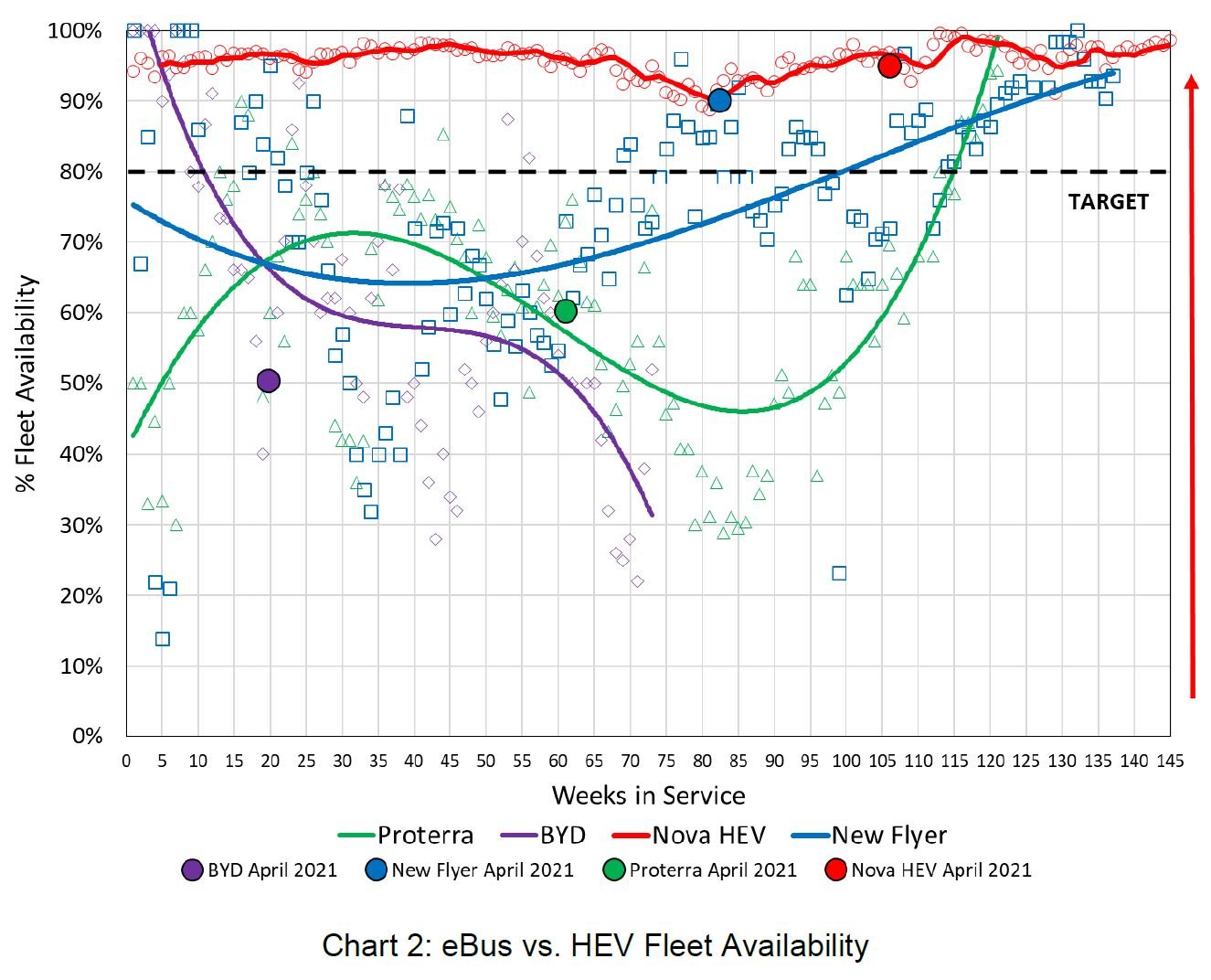
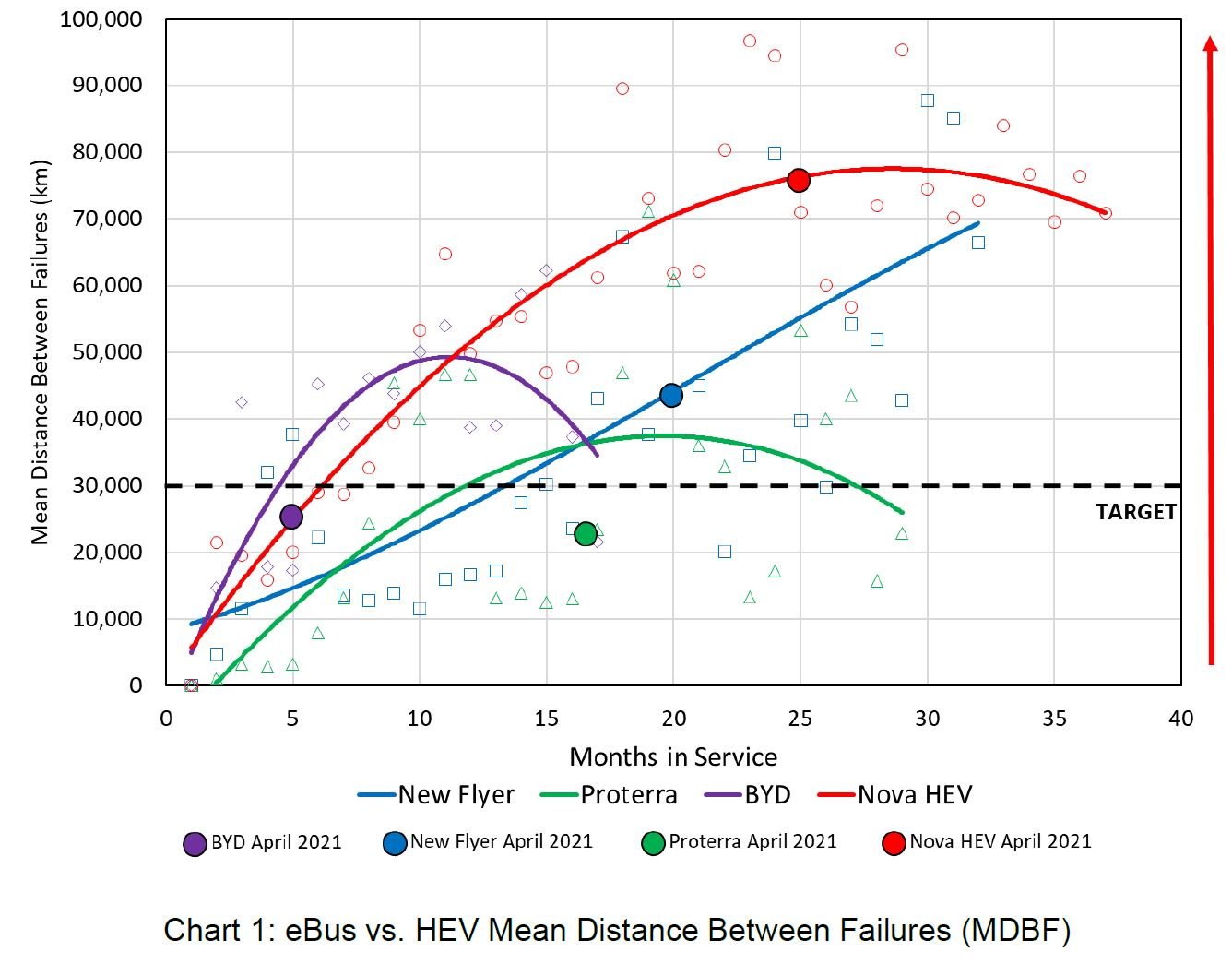
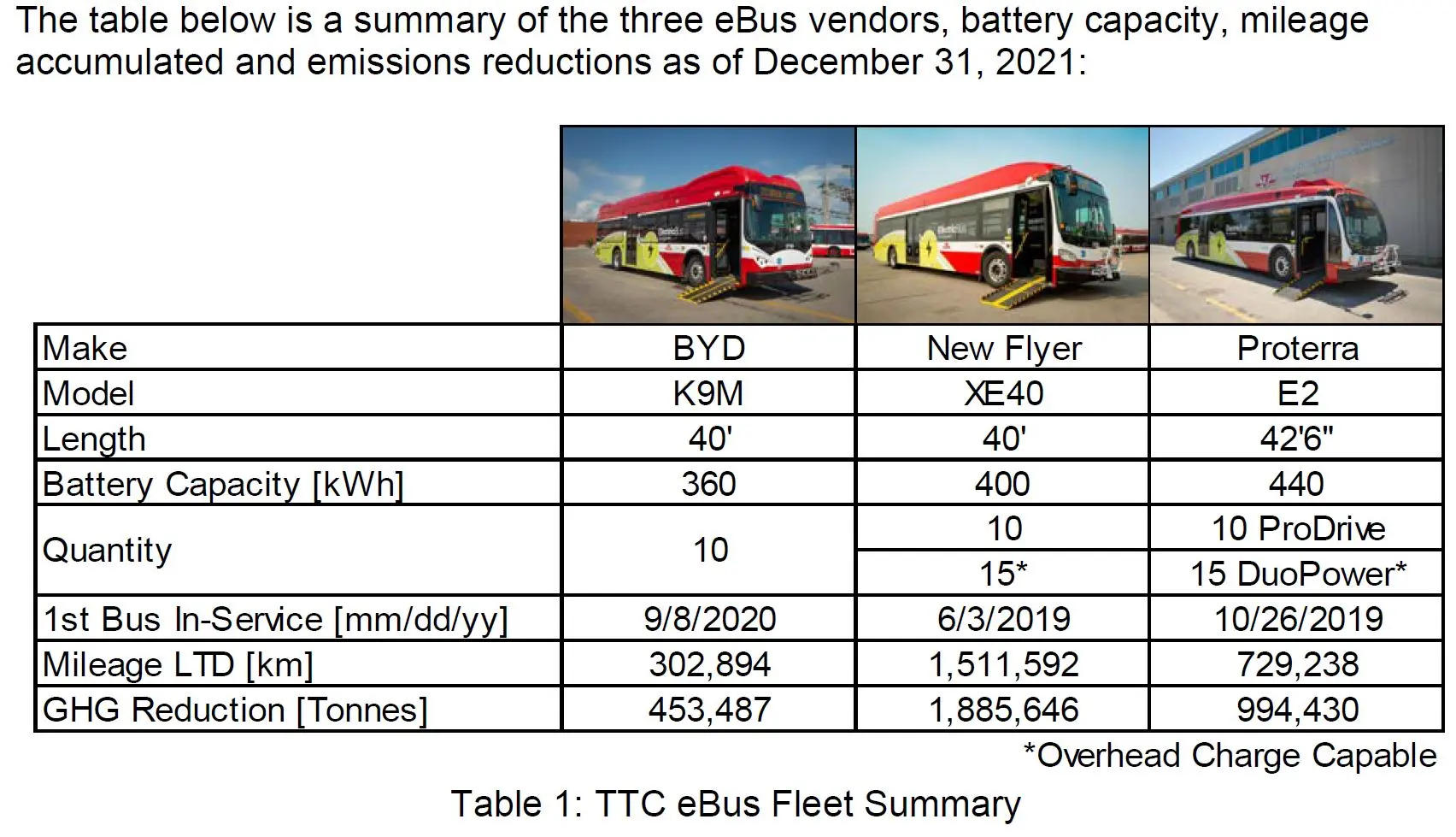
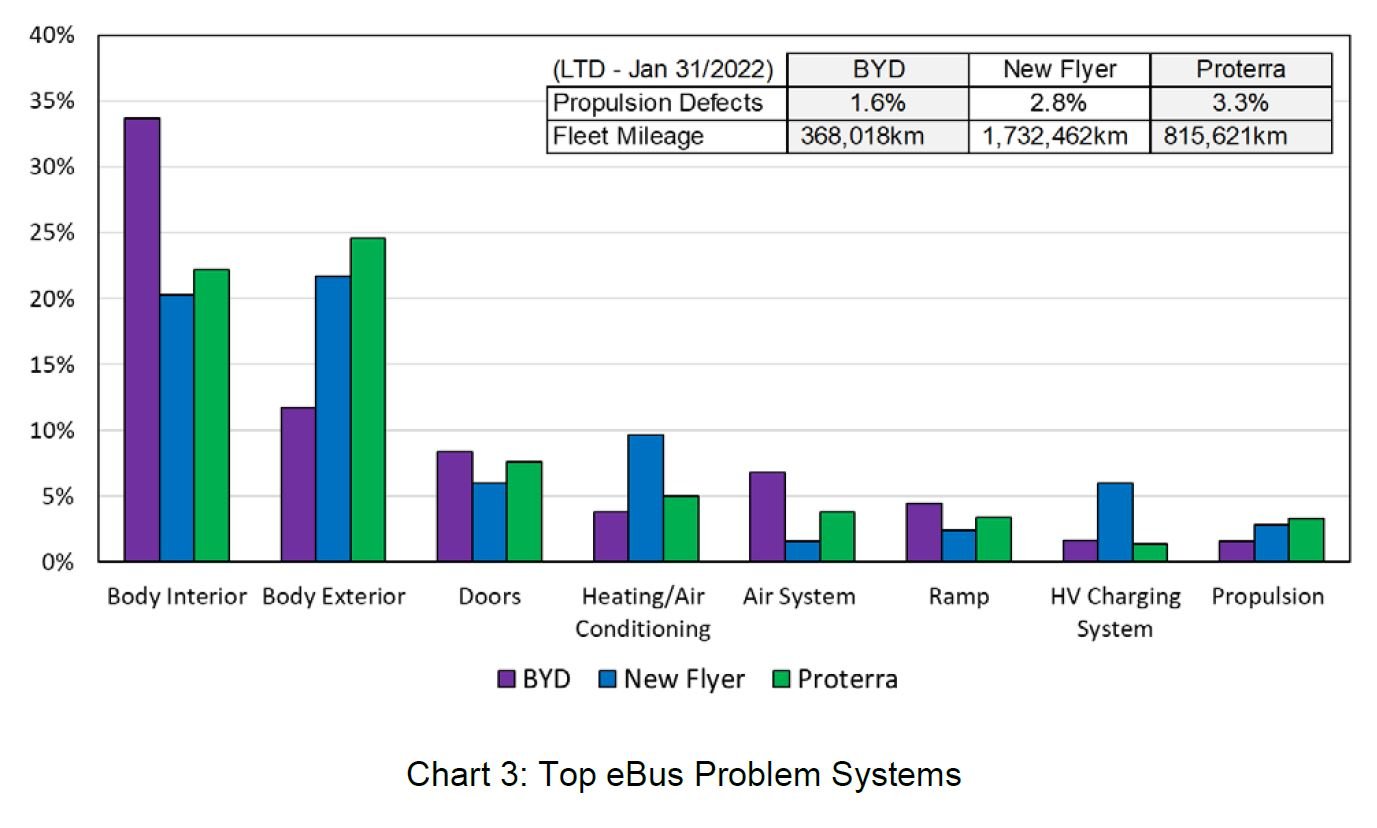
- In 2019, TTC initiated a head-to-head trial with New Flyer, Proterra and BYD, revealing problems such as frequent failures in Proterra (e.g., actual range <150 miles) and BYD (e.g., long charging times and sparse parts). Reports from other cities(e.g., Edmonton sued Proterra for $82M in 2024 for failures) highlighted risks.
- MDT ignored this and signed with Proterra in 2019 for 117 buses ($126M), without analyzing its limited track record (only ~700 buses sold globally).
- December 2019: NDAA Act and Ban on Chinese Companies: Congress passed the 2019 NDAA (S. 1790), prohibiting federal funds for rolling stock purchases from companies “owned or controlled by” Chinese corporations (e.g., BYD, CRRC). With a 2-year delay (effective 2021), the law penalizes agencies using proprietary funds (loss of State of Good Repair appropriations). MDT did not adjust its strategy to avoid similar risks in non-Chinese like Proterra, despite warnings about vulnerable startups.
- 2020-2022: Deep Studies Ignored: TTC study (completed April 2022) detailed flaws: Proterra with low availability (15% dissatisfied operators), BYD with height and parts issues (e.g., buses vetoed at stations like Don Mills). Errors in GHG metrics (inflated 1,000 times) and recommendations for “must haves” (e.g., stainless steel structure, range >400 kWh).
- Florida Inspector General audits (2020) criticized internal controls in MDT procurement, but were not enforced. MDT continued Proterra deliveries (75 buses by 2023).
- August 2023: Proterra bankruptcy: Proterra collapsed with debts of $500M-$1,000M, due to high costs and low sales. Assets sold (e.g., transit unit to Phoenix Motor for $10M).
- MDT was left with 66 inoperative buses, losing $50M+ in public value.
- Subsequent audits (2024) revealed a lack of due diligence in Proterra’s financial structure.
- Miami-Dade OIG audits (2024) exposed inefficiencies in procurement (e.g., $6M in IT contracts without documentation). Annual report (2024) highlighted “unbalanced procurement” in A/E, recommending more scrutiny. MDT sued Phoenix in October 2025 for insufficient support, but did not prevent initial losses.
- 2024-2025: Cascading Bankruptcies and Critical Audits: Lion Electric bankrupt in July 2025 (factory closed, 3,400 buses unsupported). Nikola in February 2025 (fraud and weak demand).
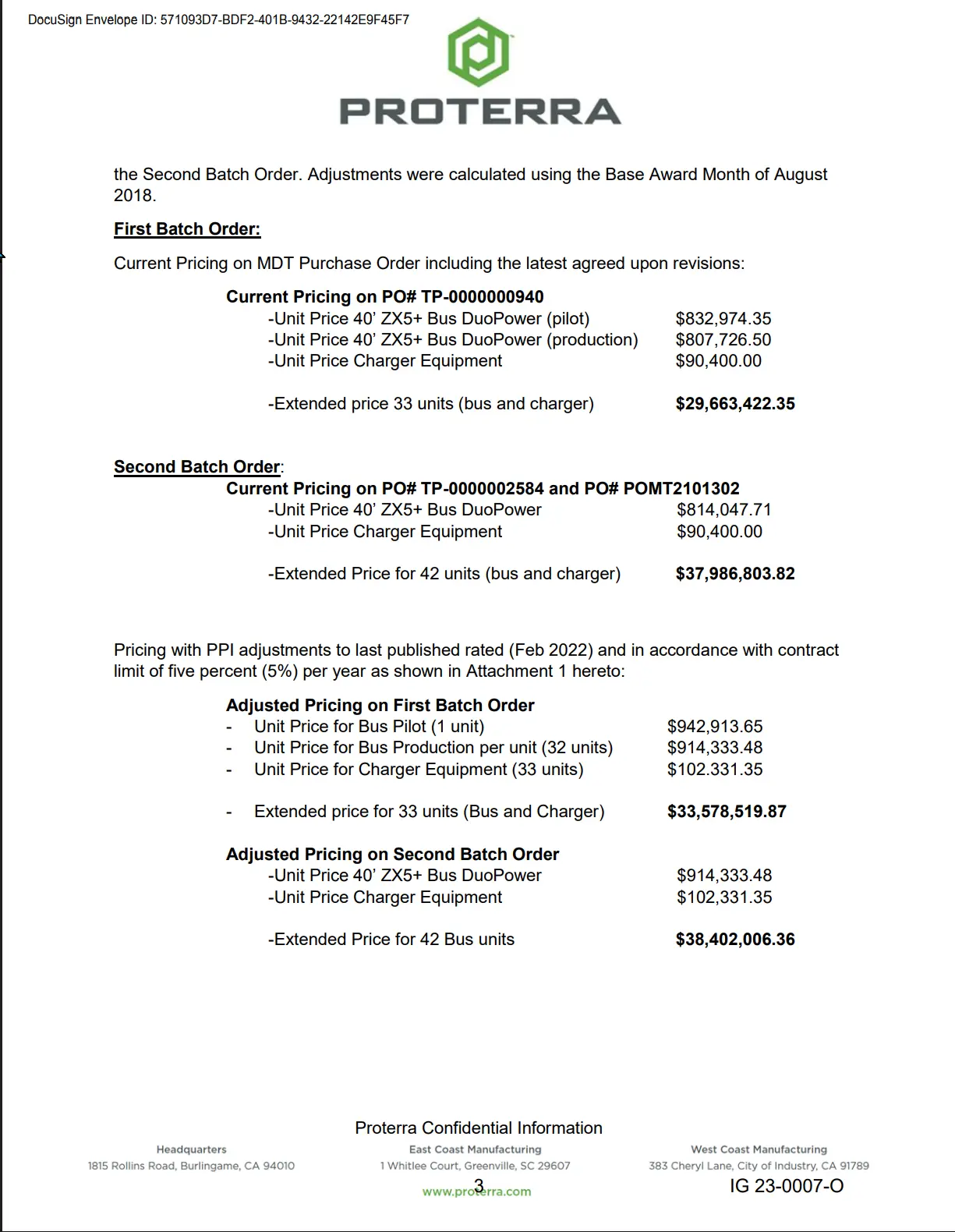
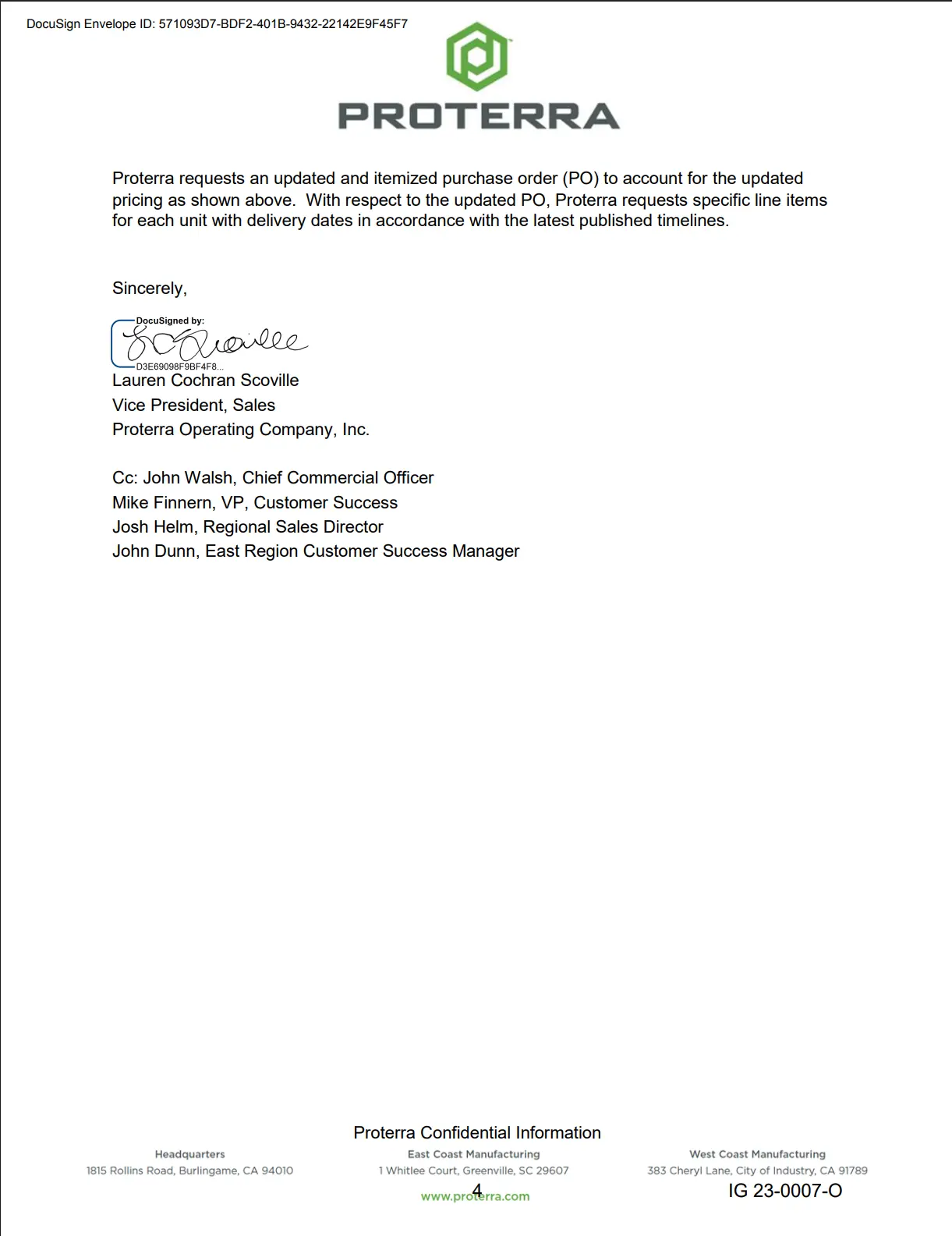
- 2024-2025: Post-Bankruptcy Impact and Transition: In 2024 memos, Morales calculated post-bankruptcy price adjustments and managed the transition to New Flyer (XE60). miamidade.gov
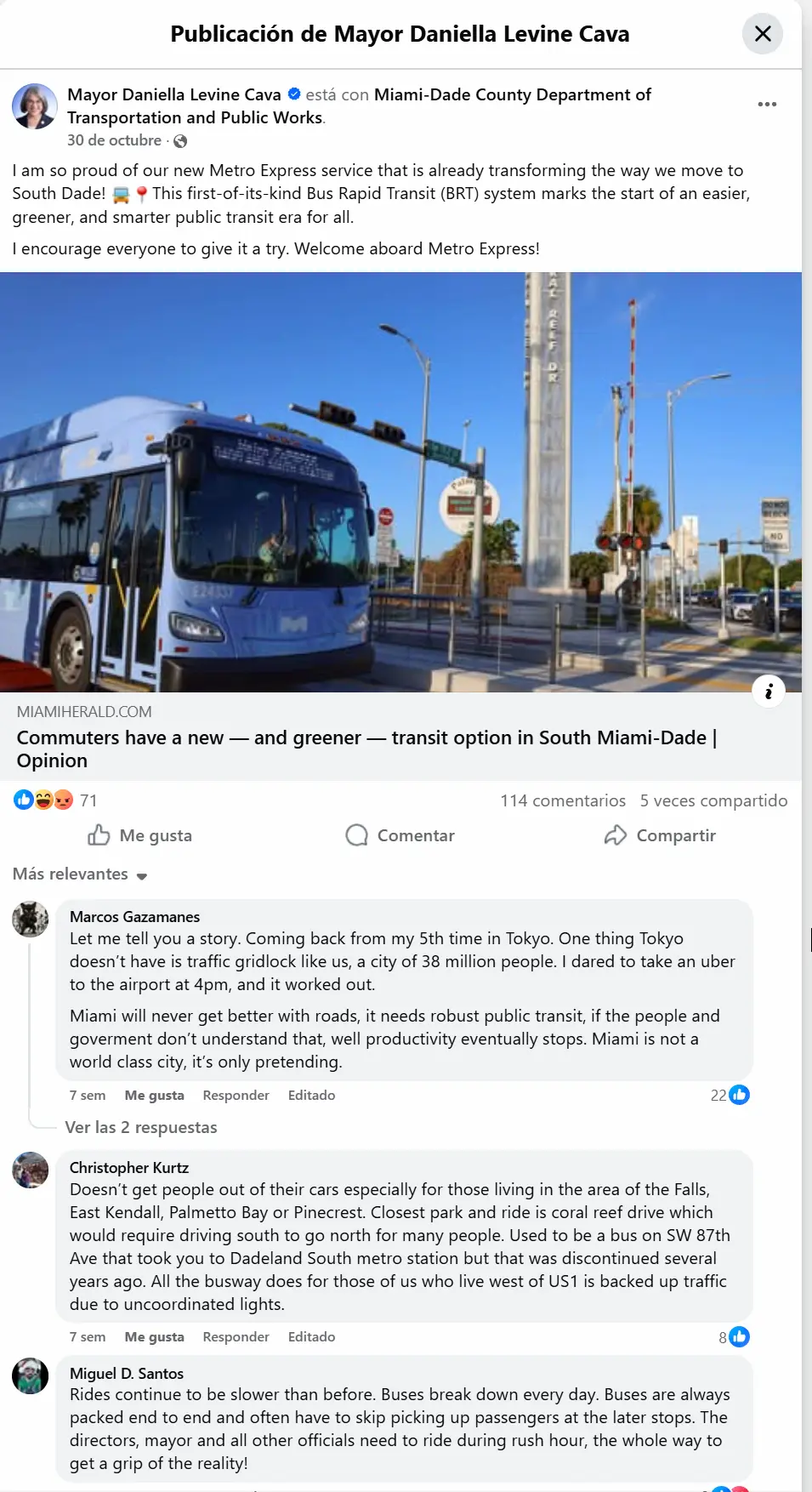
- In October 2025, endorsed Metro Express BRT with New Flyer, recognizing lessons from Proterra. facebook.com
MDT did not delve deeper because it prioritized political “green” goals over rigorous analysis, ignoring chronologies such as TTC’s (detailed in 102 pages, with metrics such as MDBF and actual GHG).
This reflects a culture where “public money does not hurt”: administrators face little accountability, as in the Proterra case, where millions were lost without immediate consequences.
Companies Involved and Their Failures
- Proterra: Startup (2004-2023), focused on eBuses. Flaws: Low actual range (150 miles), frequent breakdowns (e.g., 17/30 idle in Spokane). Bankruptcy due to high costs and poor support. MDT lost $126M in inoperative buses.
- BYD: Chinese, vetoed by NDAA 2019. Flaws: excessive height (vetoed at stations like Don Mills), sparse parts, insufficient range. Worse than Proterra in TTC testing (low MDBF).
- New Flyer, Gillig, Nova: Established, outperforming startups. New Flyer (XE60) is preferred by MDT post-Proterra (100 buses 2023-2025). Nova exited US in 2023 due to losses, despite advantages as local manufacturing.
Bankruptcies highlight startup risks: Dependence on subsidies, over-customization and volatile markets.
Stakeholders and Hidden Benefits
- Daniella Levine Cava, Miami Dade County Mayor
- Oliver G. Gilbert III, former Chairman of the Miami-Dade County Board of County Commissioners
- Eileen Higgins, Past Chair of the Transportation, Mobility and Planning Committee. Actual Mayor of city of Miami
- Jimmy Morales: Chief Operations Officer (COO) since 2021, Morales oversees day-to-day county operations, including the Department of Transportation and Public Works (DTPW), which manages Miami-Dade Transit (MDT). Morales signed memos for related acquisitions, such as 15 electric buses for South Dade Transitway in May 2022, part of a broader plan for 100 eBuses. miamitodaynews.com
- He supervised the rollout, but Proterra’s bankruptcy in August 2023 left 66 buses inoperative, generating criticism for lack of due diligence.
- MDT and Miami-Dade Administration: Directors like Alice Bravo (former director, 2019-2023) prioritized “green” without due diligence. Benefits: Political image (e.g., 2040 zero emissions goals), but no accountability for losses.
- Lobbyists and Manufacturers: Proterra/BYD lobbyists influenced purchases (e.g., TTC saw political pitches in 2017). Benefits: million-dollar contracts ($126M for Proterra), federal subsidies.
- Federal Government/FTA: NDAA 2019 warned of Chinese risks, but did not extend to US startups. Benefits: National security, but failed to guide local procurement.
- Auditors/IGO: Inspector General (e.g., 2024 reports) exposed flaws, but recommendations are not implemented quickly. Benefits: Transparency, but limited by bureaucracy.
Back: Political interests (e.g., “green” for elections) and lobbying outweigh analysis.
Public money is lost in lawsuits/reparations, benefiting lawyers and consultants.
Lessons to Avoid Public Waste. Miami-Dade exemplifies how lack of investment depth (ignoring timelines like TTC 2022) leads to crises like Proterra. Recommendations: Comprehensive due diligence mandates, pre-contract audits and prioritization of established vendors. Without change, “money doesn’t hurt” will continue to erode public funds, delaying an effective EV transition.
Evidence of Bad Decisions in Procurement in Miami-Dade County
Miami-Dade County has been criticized for procurement decisions that prioritize options with problematic track records, without a thorough analysis of the business history, financial structure or reliability of suppliers. This has led to significant losses of public funds, as high-value purchases (millions of dollars) result in inoperable or failed equipment, affecting essential services such as transportation. The following is key evidence, with the case of electric buses as a prime example, where the money “doesn’t hurt” the administrators but does hurt the taxpayer.
Flagship Case: Proterra’s Purchase of Electric Buses (2019-2025)
- Context and Initial Decision: In 2019, Miami-Dade Transit (MDT) awarded a $126 million contract to Proterra for 117 electric buses and charging stations as part of the zero-emissions transition. miamiherald.com
- Proterra was a startup with only 700 buses sold in total (average <7 per customer), but the county did not perform a thorough analysis of its track record: range issues (under 150 actual miles), frequent breakdowns (e.g., every 600 miles in Broward) and impending bankruptcies already reported in other cities like Edmonton ($82M lawsuit in 2024). wirepoints.org
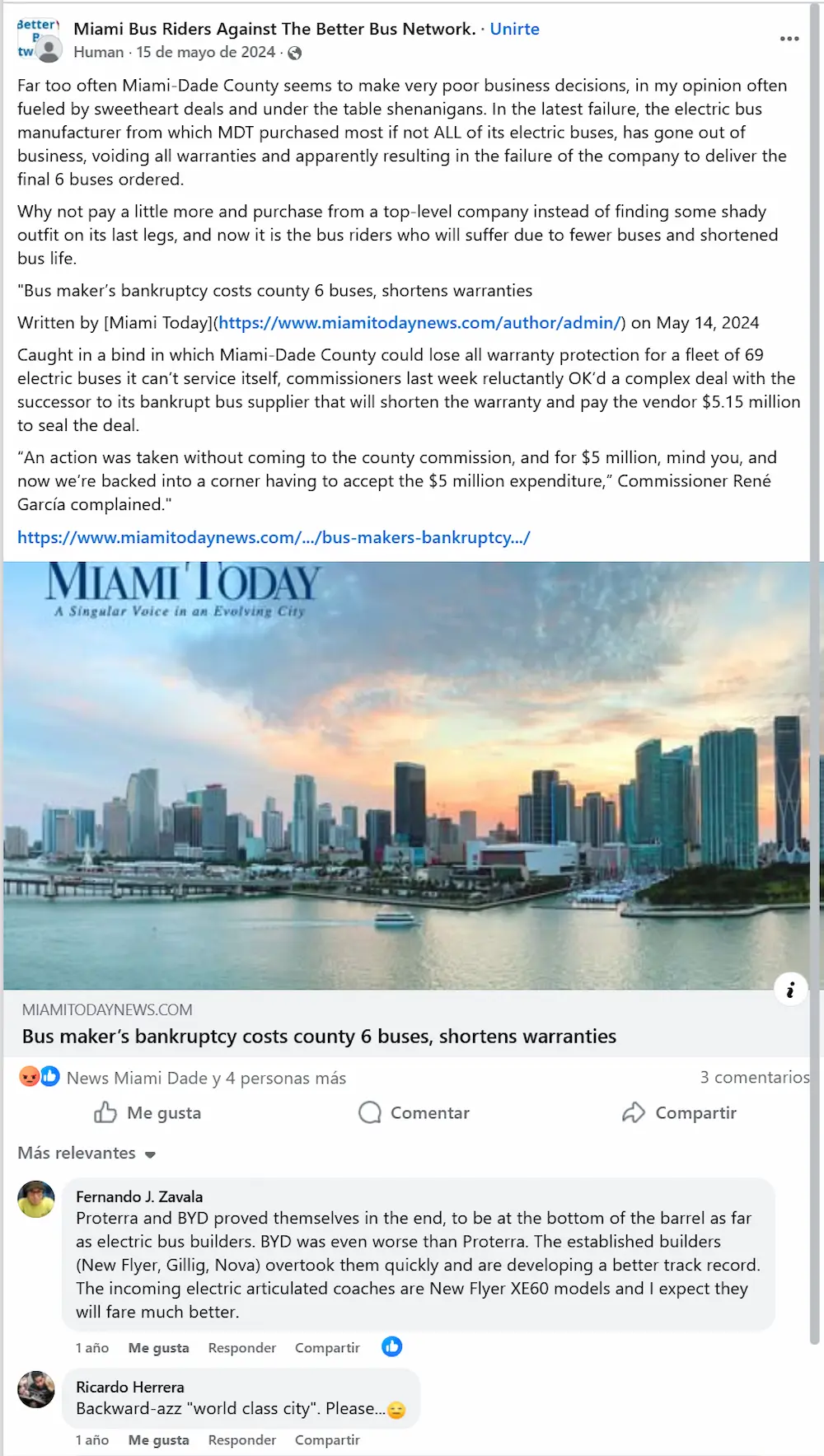
- Impact of Bankruptcy (2023): Proterra went bankrupt in August 2023, leaving 69 buses delivered inoperable due to lack of parts and support. As of February 2025, most are still idle, with MDT seeking legal action against Phoenix Motor (asset purchaser). miamitodaynews.com
- This represents a direct loss: $50M+ in unusable buses, plus maintenance costs and electrification delays. miamitodaynews.com
- Lack of Analysis: Inspector General reports (2024) highlight that the contract was based on administrative recommendations without assessing Proterra’s financial risks (e.g., low sales, dependence on subsidies). miamidadeig.org
- Critics point to “lack of due diligence” for a startup vs. established suppliers like New Flyer (which MDT later used for 100 XE60 buses in 2023-2025). reddit.com
Other Evidence of Bad Decisions in Procurement
- Bus Shortage and Inefficient Contracts (2025): MDT blames a “bus shortage” for service cuts, but evidence points to operational failures and poor procurement: e.g., $50M in unreliable special transport, with riders reporting chronic delays. facebook.com +1 Similar to Proterra, did not analyze vendors with solid track record, wasting public funds.
- General Contracts and Scandals: Miami Today reports (2024) highlight expensive lessons from Proterra, but the county repeats patterns: e.g., awards to shaky startups without structure review (e.g., Proterra relied on volatile investors). miamitodaynews.com Other cases include Tri-Rail/Palm Tran with similar problems in electrification, where green procurement fails due to lack of scrutiny, costing millions in repairs. cw34.com
In summary, these decisions reflect an administration that does not prioritize exhaustive analysis (history, finances, real evidence), resulting in waste (e.g., $126M in Proterra). Public money is wasted on repairs and lawsuits, while services suffer, highlighting the need for greater transparency.
Proterra Bankruptcy Details
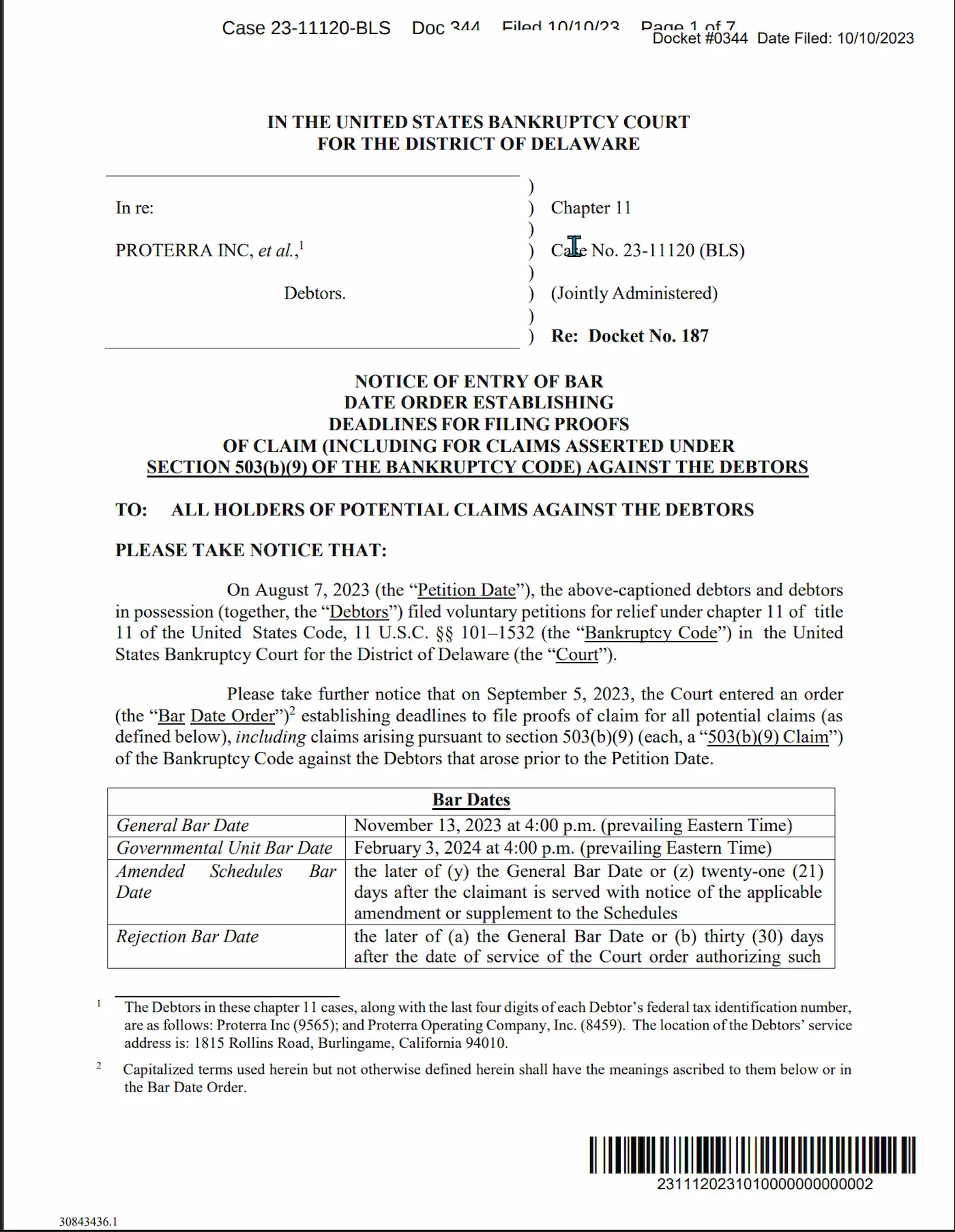
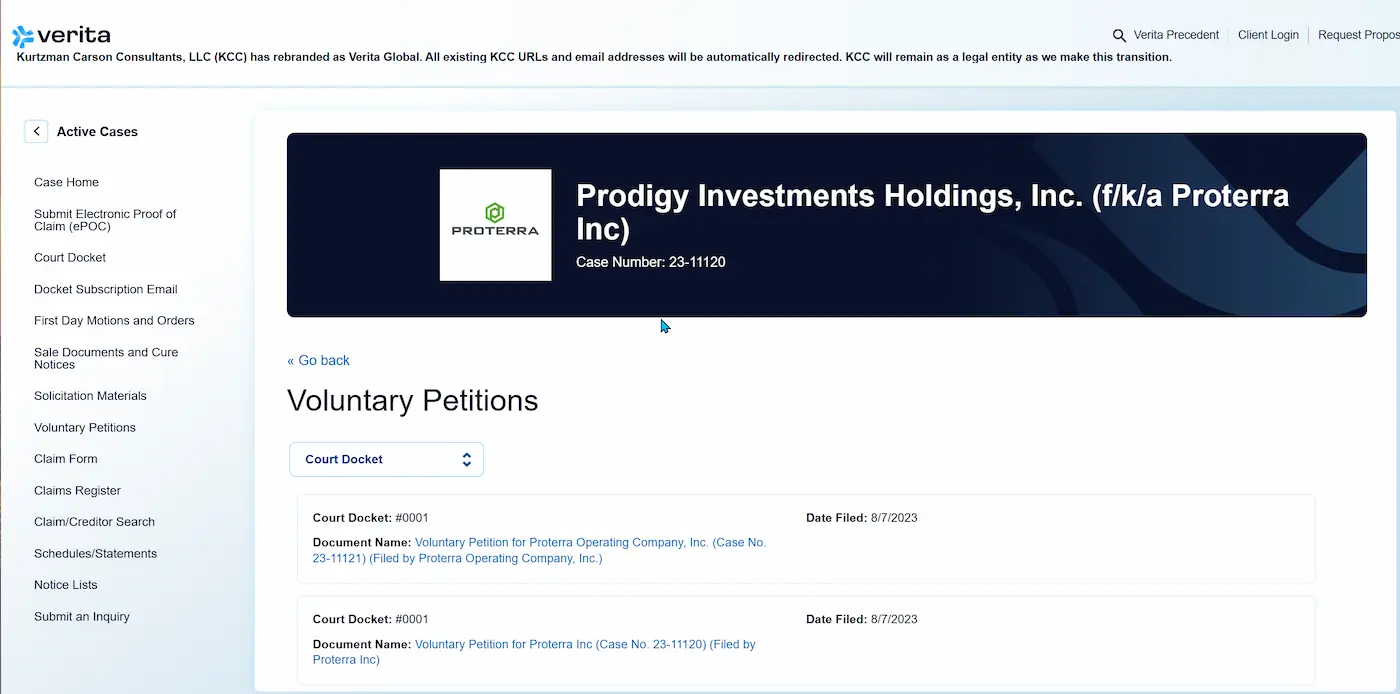
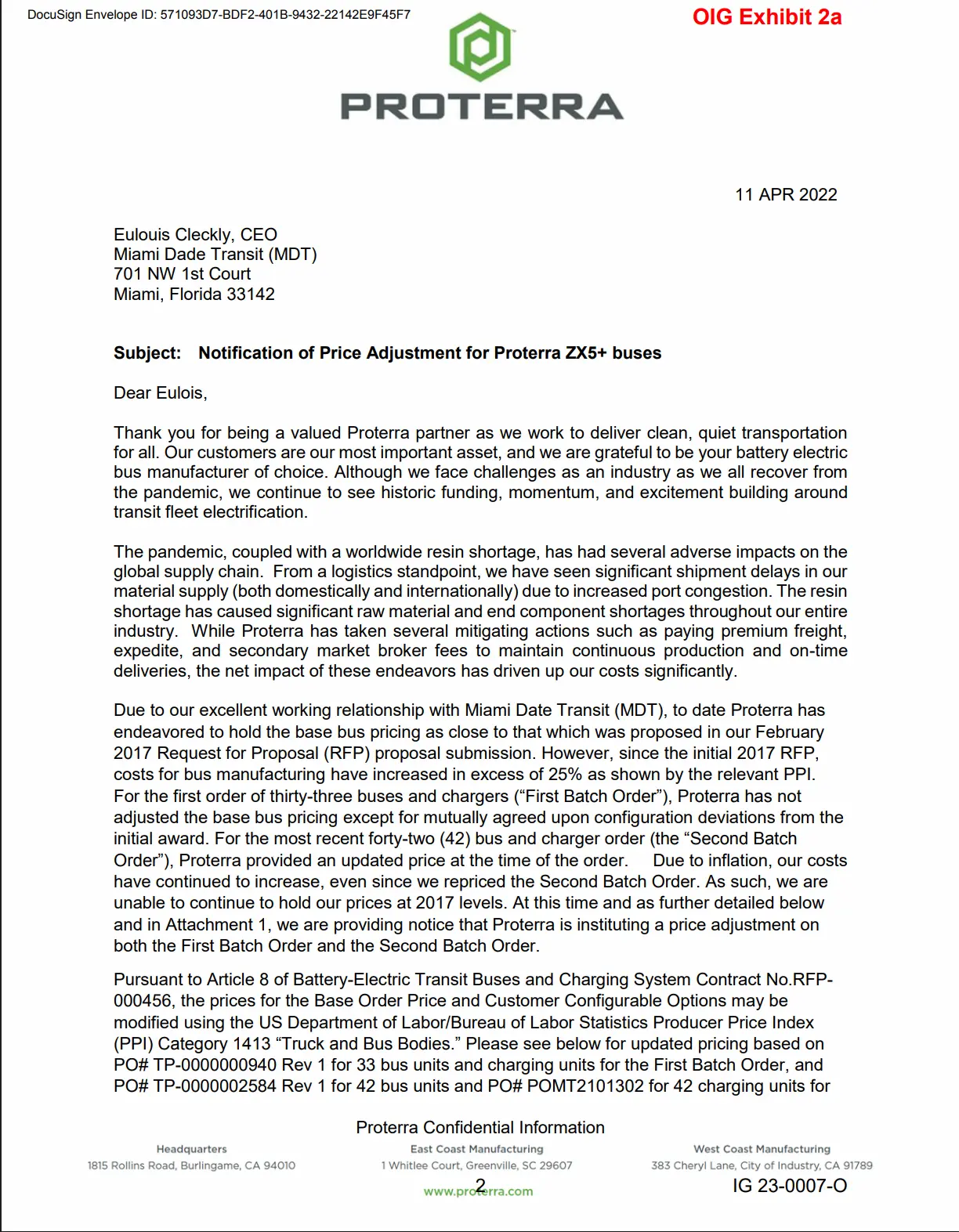
Proterra Inc, a manufacturer of batteries and components for electric vehicles (especially buses), filed for Chapter 11 bankruptcy on August 7, 2023. veritaglobal.net reuters
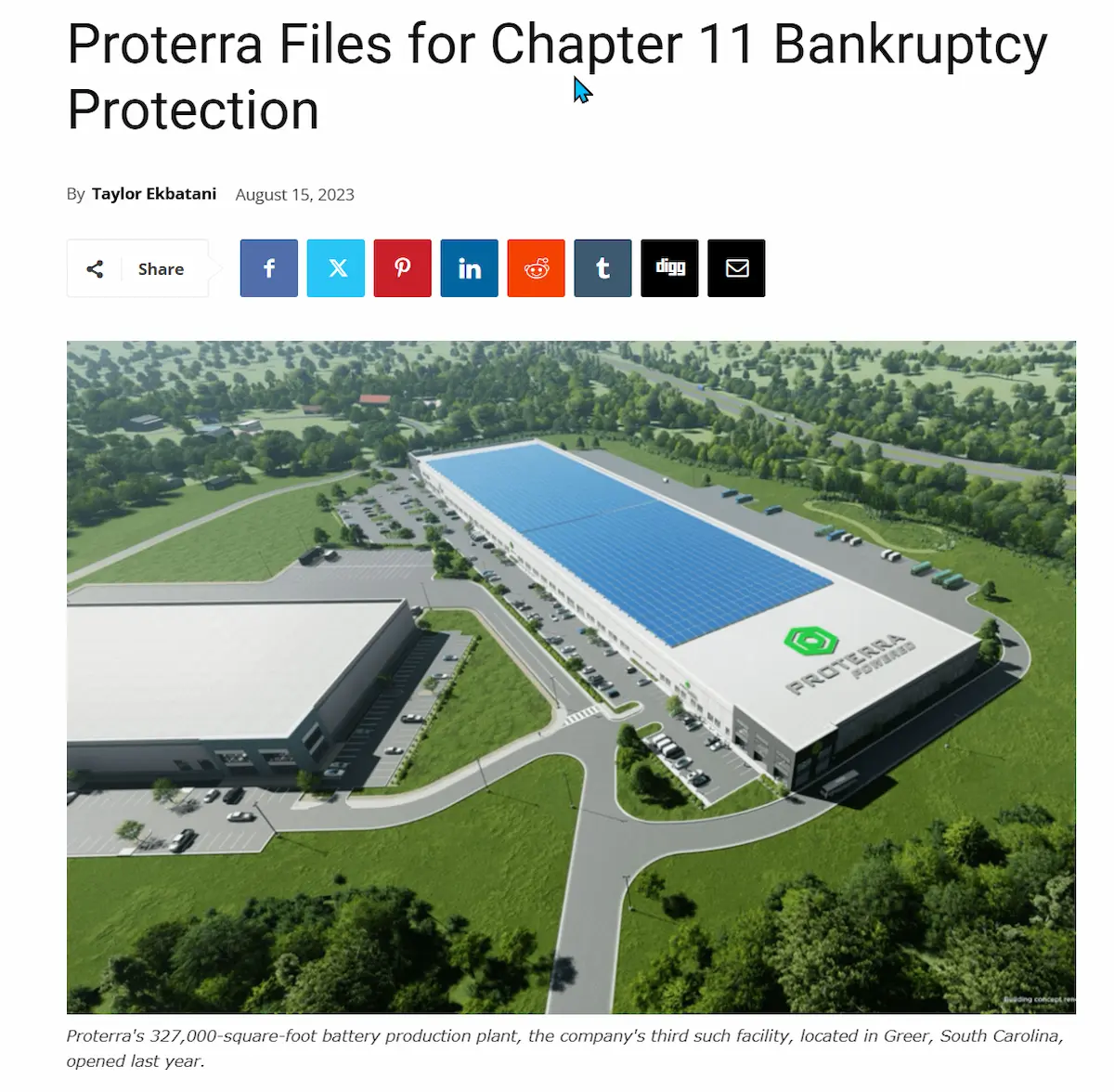
The company, founded in 2004 and headquartered in Burlingame, California, was facing chronic financial problems, including an urgent need for additional capital for its Powered and Energy divisions. sec.gov
At the time of bankruptcy, Proterra reported assets between $500 million and $1 billion, and similar debts. s.wsj.net
Main Reasons for Bankruptcy
- Operational and Financial Issues: Proterra struggled with high production costs, unstable supply chain and lower than promised actual battery range (e.g., less than 150 miles in testing), which generated complaints from customers such as Miami-Dade Transit (MDT). techcrunch.com The company relied on federal subsidies and limited sales (only ~700 buses sold through 2023). trellis.net +1
- Competitive Market: As a startup, it could not compete with established manufacturers such as New Flyer or Gillig, which offered better reliability and support. trellis.net +1 The bankruptcy was seen as a “significant stumble” in the electrification of heavy transport. trellis.net
Consequences and Sale of Assets
- Judicial Sale: In January 2024, the bankruptcy court approved the sale of assets: The transit unit (buses) to Phoenix Motor Inc. for $10 million; the battery unit to Volvo Battery Solutions LLC for $38 million; and other assets to CSI Taunus for $210 million. miamidade.gov
- Impact on Clients: Operators such as MDT (which bought 75 buses for $126M) were left with inoperative fleets due to lack of parts, generating lawsuits and public losses. miamidade.gov The bankruptcy left lessons on startup risks in public contracts. paconsulting.com
Proterra reorganized as Prodigy Investments Holdings, Inc. but its legacy highlights challenges in the EV industry.
News Miami-Dade is a truly independent media: no hidden owners or sponsors, just the voice of the people and the truth, plain and simple.
Connect with us:
📧 Email: [email protected]
📱 WhatsApp: +1 (786) 748-2386
🌐 Website: https://newsmiamidade.com/es
🎧 Follow us on social media to stay up to date with the latest news.
If you have a story to tell, a complaint or want to make your voice heard, contact us. Miami-Dade deserves a media that works for its people, not for the powerful.